The End of an Era: Seth Rogen and the Permanent Severing of the James Franco Partnership
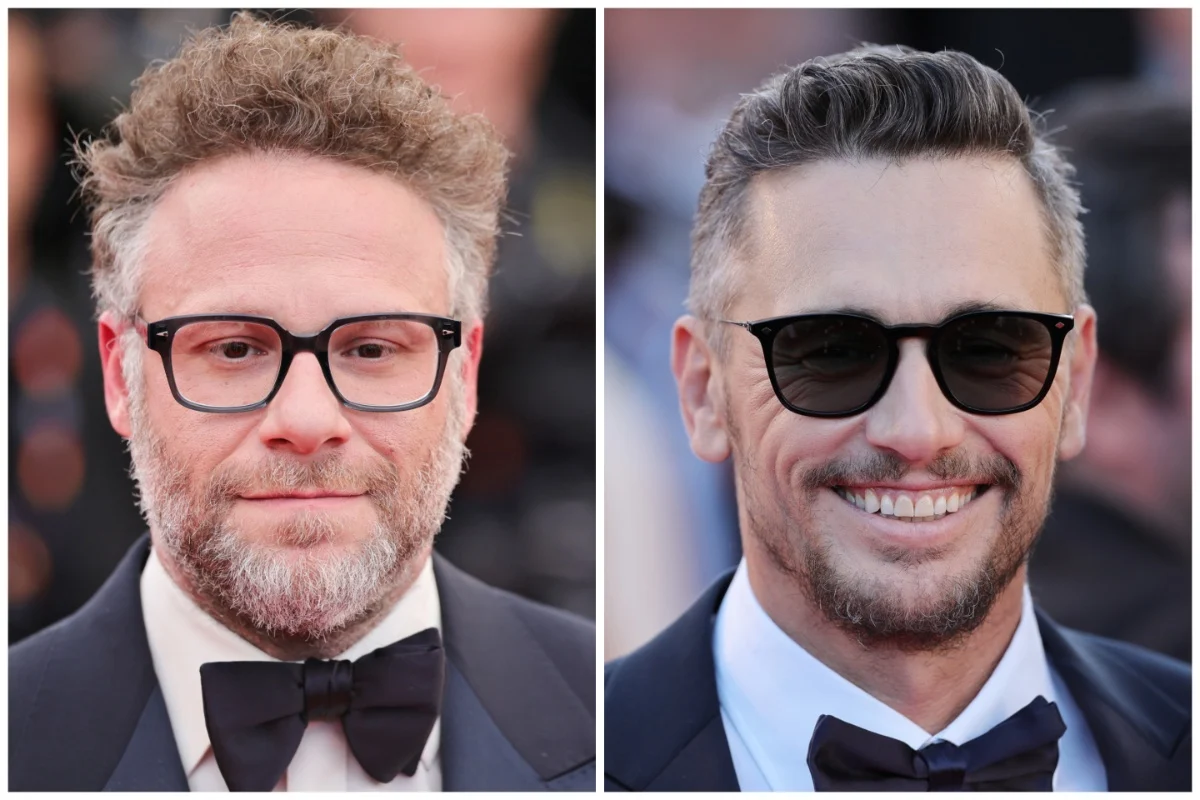
The landscape of 21st-century American comedy was, for nearly two decades, defined by the creative synergy between Seth Rogen and James Franco. From the cult-classic halls of high school in Freaks and Geeks to the apocalyptic meta-comedy of This Is the End, the duo represented a "bromance" archetype that dominated the box office and influenced a generation of filmmakers. However, that era has officially reached a definitive and seemingly permanent conclusion.
In a recent, candid interview with The New York Times, Seth Rogen reaffirmed his total professional and personal estrangement from Franco, citing the long-standing allegations of sexual misconduct against his former collaborator as the catalyst for a rift that time has not healed.
Main Facts: A Relationship Beyond Repair
In his latest conversation with The New York Times reporter Lulu Garcia-Navarro, Seth Rogen provided the most direct update on his relationship with James Franco in years. When asked where the two stand today, Rogen’s response was characterized by a mix of professional distance and personal solemnity. He confirmed that he has not spoken to Franco in a "long time" and, perhaps more significantly, stated he has "no plans" to ever work with him again.
Rogen’s rhetoric during the interview suggested a desire to move past the public scrutiny while maintaining a firm ethical boundary. He noted that the "nuance" of the situation is deeply personal, involving individuals and emotions he felt were inappropriate to broadcast to the public. However, he was clear that his public stance—one of accountability and distance—remains unchanged.
"I think the proof is in the pudding," Rogen told the Times. "I have not worked with him in years." This statement serves as a punctuation mark on a collaboration that once seemed inseparable. Rogen’s refusal to "drag" others into the conversation highlights the complexity of the fallout, suggesting that the dissolution of their friendship wasn’t merely a business decision, but a profound shift in Rogen’s personal moral compass following the 2018 allegations against Franco.
Chronology: From ‘Freaks and Geeks’ to the Final Break
To understand the weight of this separation, one must look at the twenty-year trajectory of the Rogen-Franco partnership.
1999–2000: The Genesis
The pair first met on the set of Paul Feig’s short-lived but legendary NBC series Freaks and Geeks. Rogen, then only 16, and Franco, 21, were part of a "brat pack" of comedy actors fostered by producer Judd Apatow. While the show lasted only one season, it established a creative shorthand between the two that would define the next two decades of their lives.
2007–2014: The Golden Age of Collaboration
Throughout the mid-2000s and early 2010s, Rogen and Franco became a powerhouse duo. They starred together in Knocked Up (2007), but it was 2008’s Pineapple Express that cemented them as a premier comedic team. They followed this with This Is the End (2013), a film where they played heightened versions of themselves, irony-rich portrayals that now feel poignant given their current estrangement. Their final major collaboration, The Interview (2014), became a global flashpoint of political controversy, further bonding the two through shared professional adversity.
2018: The Turning Point
The trajectory shifted violently in January 2018. Following Franco’s Golden Globe win for The Disaster Artist, five women—four of whom were his former acting students—spoke to The Los Angeles Times, accusing Franco of sexually exploitative and inappropriate behavior. These allegations suggested a pattern of using his position of power as an instructor to pressure students into performing sexual acts on film.
2021–Present: The Final Severing
Initially, in 2018, Rogen stated in interviews that he would continue to work with Franco. However, by 2021, Rogen’s perspective had shifted. In an interview with The Sunday Times, he expressed regret for his earlier comments, stating, "The truth is that I have not [worked with him] and I do not plan to right now." His 2024 comments to The New York Times confirm that "right now" has become "permanently."
Supporting Data: The Legal and Professional Fallout
The allegations against James Franco were not merely restricted to the court of public opinion; they carried significant legal and financial consequences.
In 2019, two former students, Sarah Tither-Kaplan and Toni Gaal, filed a class-action lawsuit against Franco and his now-defunct acting school, Studio 4. The lawsuit alleged that the school served as a pipeline for Franco and his associates to exploit young women under the guise of "artistic" education. The plaintiffs claimed that students were subjected to "widespread inappropriate and sexually charged behavior" and were led to believe that complying with Franco’s sexual demands would lead to career opportunities.
Key Financial and Legal Milestones:
- 2018: The initial LA Times report goes viral, leading to Franco being largely "canceled" from major Hollywood awards circuits.
- 2019: The filing of the class-action lawsuit detailing specific instances of misconduct in "sex scenes" acting classes.
- 2021: Franco reached a settlement agreement. He agreed to pay $2,235,000 to resolve the lawsuit. Of this, approximately $894,000 went to the named plaintiffs, while the remainder was allocated to other students and legal fees.
- Admissions: In a 2021 interview with SiriusXM’s The Jess Cagle Podcast, Franco admitted to sleeping with students at his school, stating he had a "sex addiction" and was working through recovery.
This legal data provides the necessary context for Rogen’s distancing. For Rogen, whose brand has evolved into that of a successful producer, writer, and entrepreneur (including his cannabis and ceramics brand, Houseplant), maintaining a professional link to a settled sexual misconduct case represented both a moral and a brand liability.
Official Responses: Two Sides of a Broken Bridge
The public statements from both parties illustrate a stark contrast in how they view the end of the partnership.
Seth Rogen’s Perspective
Rogen has consistently prioritized the victims and the "nuance" of accountability. His responses in 2024 emphasize a lack of desire for personal gain or public drama. "I don’t know what I would benefit from getting deeply into it," Rogen noted. His stance is one of quiet, firm exclusion. By stating that "nothing has changed," he signals that Franco has not done enough—at least in Rogen’s eyes—to warrant a reconciliation.
James Franco’s Perspective
Franco, for his part, appears to have accepted the reality of the situation, albeit with a sense of loss. In a 2024 interview with Variety, Franco addressed the silence between them. "No. I haven’t talked to Seth. I love Seth, we had 20 great years together, but I guess it’s over," Franco said. He added that the silence was "not for lack of trying," claiming he had expressed to Rogen how much the friendship meant to him. Franco’s response leans into the nostalgia of their "20 great years," whereas Rogen’s response focuses on the ethical present.
Implications: The Death of the "Stoner Bromance" and Post-#MeToo Accountability
The permanent split between Rogen and Franco is more than just a celebrity feud; it marks the symbolic end of a specific era of Hollywood comedy. The "Stoner Bromance" genre, which flourished in the 2000s, often relied on a sense of "boys will be boys" immunity. The duo’s films frequently explored the limits of male friendship, often centered on juvenile behavior and shared escapades.
1. The Ethics of Professional Association
Rogen’s decision highlights the evolving standards of accountability in Hollywood. In the pre-#MeToo era, a powerful collaborator might have shielded a friend from the consequences of their actions. Rogen’s refusal to do so—and his public admission that he regretted his initial support—sets a precedent for other high-profile figures. It suggests that personal loyalty has a ceiling, especially when confronted with systemic misconduct.
2. Brand Evolution vs. Stagnation
Seth Rogen has successfully transitioned from a "slacker" actor to a respected mogul and producer (The Boys, Invincible, Teenage Mutant Ninja Turtles). His brand is now associated with high-quality, inclusive, and modern content. Re-associating with Franco, who remains a polarizing figure, would likely jeopardize the goodwill Rogen has built with modern audiences and studios.
3. The Future of Franco’s Career
While Rogen’s career has flourished, Franco’s has largely stalled in the domestic market. While he continues to work on smaller, international, or independent projects, the "A-list" door remains firmly shut. The loss of Rogen as a creative partner is perhaps the greatest blow to Franco’s career, as Rogen was often the writer and producer who provided the best vehicles for Franco’s comedic talents.
4. A Cultural Shift in Comedy
The dissolution of this partnership reflects a broader cultural shift. The "Apatow-style" comedy of the 2000s is being re-evaluated through a modern lens. Rogen’s distance from Franco is a physical manifestation of that re-evaluation. It signals that the industry, or at least its most successful players, are no longer willing to overlook personal conduct for the sake of creative chemistry.
Conclusion
The story of Seth Rogen and James Franco is a cautionary tale of how the "nuance" of personal relationships can be obliterated by the gravity of professional misconduct. For twenty years, they were the faces of a comedy revolution. Today, they are strangers. Seth Rogen’s latest comments serve as a final confirmation that in the post-#MeToo era, some bridges are not just burned—they are dismantled entirely. As Rogen puts it, the "proof is in the pudding": the silence between the two is the loudest statement of all.