The Enduring Reign of the Deck-Builder: A Deep Dive into Modern Card Gaming Staples
Since its groundbreaking debut, the deck-building game genre has solidified its position as a cornerstone of modern tabletop gaming. What began with the revolutionary mechanics of Dominion has blossomed into a diverse and vibrant ecosystem, offering players unparalleled strategic depth, replayability, and thematic immersion. This article explores the enduring appeal of deck-building, tracing its evolution and spotlighting six exemplary titles that showcase the genre’s innovation and broad spectrum of experiences.
The Core Appeal: Understanding Deck-Building’s Mechanics
At its heart, a deck-building game challenges players to construct a powerful and efficient deck of cards during gameplay. Unlike traditional collectible card games (CCGs) where decks are pre-constructed, deck-builders start players with a small, identical set of basic cards. As the game progresses, players use these cards to acquire new, more potent cards from a central market or pool, adding them to their personal deck. This iterative process of acquiring, shuffling, and playing cards allows for dynamic strategies, adaptation, and a unique narrative arc within each session. The core loop involves:
- Starting Hand: Drawing a small hand of cards from your current deck.
- Playing Cards: Using cards to generate resources (e.g., money, attack, influence) or activate special abilities.
- Acquiring New Cards: Spending resources to buy more powerful cards from a communal supply. These go into your discard pile.
- Discarding & Shuffling: At the end of a turn, played and unplayed cards go to your discard pile. When your draw deck runs out, your discard pile is shuffled to form a new draw deck.
- Iteration: With each shuffle, newly acquired cards become available, enhancing your deck’s capabilities and pushing your strategy forward.
This elegant system offers immense replayability, as the availability of cards, player interactions, and evolving strategies ensure no two games are ever quite the same. It fosters a sense of growth and accomplishment, as players literally watch their deck transform from a humble collection of basics into a finely tuned engine of victory.
A Brief History of Innovation: From Dominion to Diversification
The genesis of the deck-building genre can be unequivocally traced back to Donald X. Vaccarino’s Dominion, released in 2008. This seminal title introduced the core mechanics that would define the genre, earning numerous awards and sparking a revolution in board game design. Dominion‘s success demonstrated the profound strategic depth that could be achieved with a simple yet elegant card acquisition system, proving that a game could be both accessible and endlessly replayable without relying on pre-constructed decks or rare booster packs.
Following Dominion‘s breakthrough, designers began to experiment, integrating deck-building with other popular mechanics. Early innovations saw the introduction of direct combat (e.g., Star Realms, Ascension), cooperative play (e.g., Legendary: A Marvel Deck Building Game), and stronger thematic integration. The genre quickly diversified, moving beyond abstract card efficiency to tell rich stories and immerse players in compelling universes. This evolution led to "hybrid" games, where deck-building acts as a foundational engine supporting other game systems like worker placement, area control, or dungeon crawling. The late 2010s and early 2020s have seen further advancements, including app integration for complex campaign narratives and increasingly thematic experiences that blend card play with expansive board states and miniature components.
Spotlighting the Stars: Six Exemplary Deck-Building Experiences
The following games represent a cross-section of the genre’s current landscape, showcasing its versatility, thematic depth, and innovative design.

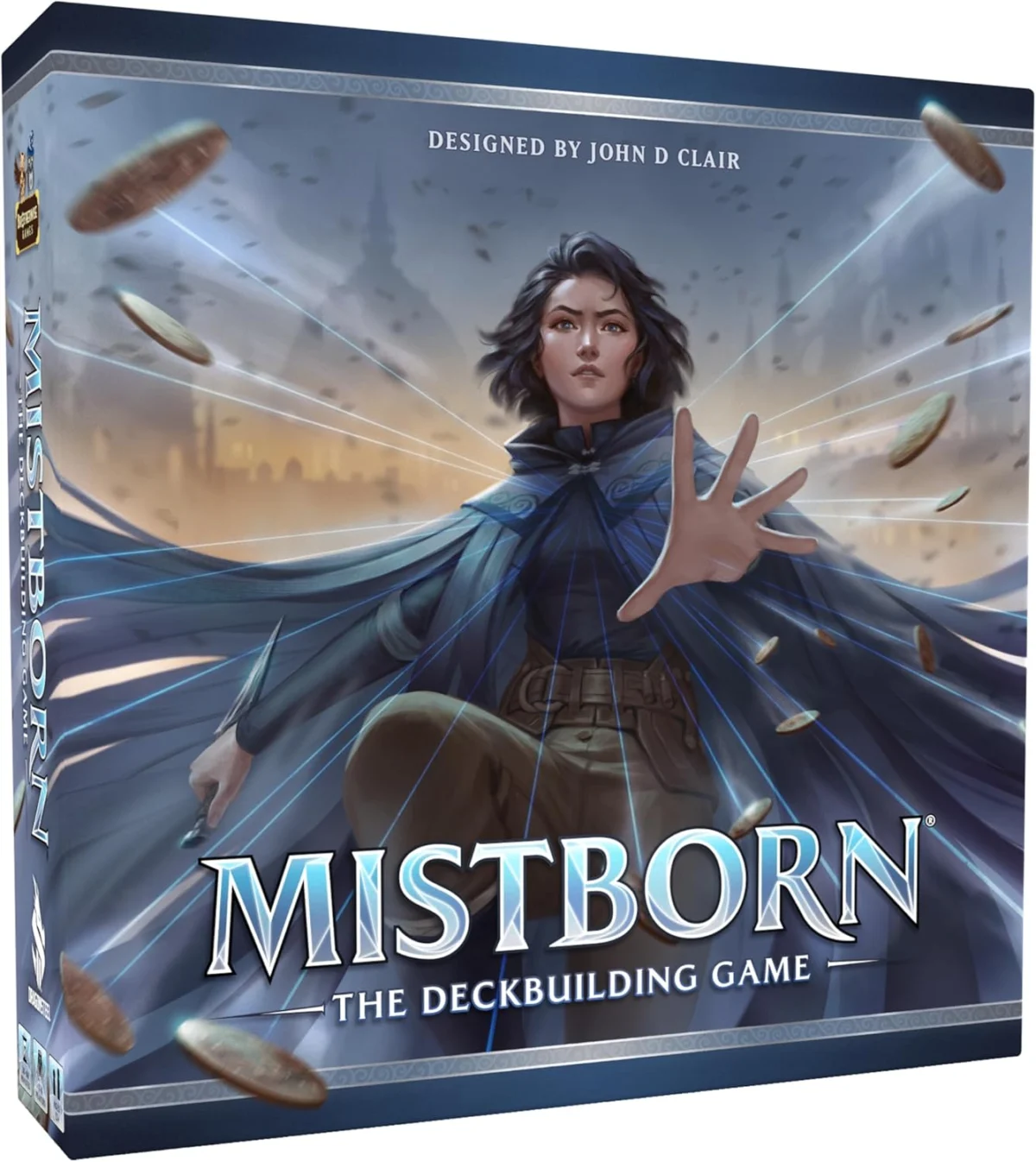
Mistborn Deckbuilding Game
For aficionados of Brandon Sanderson’s intricate high fantasy universe, the Mistborn Deckbuilding Game offers an unparalleled opportunity to delve into the dystopian world of Scadrial. Players step into the roles of iconic heroes from the Mistborn saga, wielding the powers of Allomancy and Feruchemy through a cleverly designed card system. The game masterfully translates Sanderson’s rich lore into tangible mechanics, allowing players to build decks centered around different metals, powers, and pivotal allies.
What truly distinguishes Mistborn is its commitment to accessibility without sacrificing depth. New players can grasp the fundamental rules quickly, yet the strategic nuances unfold over multiple plays as they learn to synergize their cards and adapt to evolving threats. The game provides flexible play modes, supporting competitive clashes, cooperative endeavors against the Final Empire, and even robust solo experiences, ensuring broad appeal. Through character-driven strategy and cinematic card play, players don’t just play in Scadrial; they embody its struggle, making pivotal decisions that resonate with the spirit of the beloved novels. The artwork, often depicting key moments and characters, further enhances the immersive journey into this deeply imagined world.
Dune: Imperium – Uprising
A standalone expansion to the critically acclaimed Dune: Imperium, Dune: Imperium – Uprising stands as a testament to the power of genre hybridization. This game ingeniously marries the strategic depth of deck-building with the tactical complexities of worker placement, all set within Frank Herbert’s iconic, treacherous universe of Arrakis. Players assume control of various Great Houses, vying for control of the spice, political influence, and military dominance.
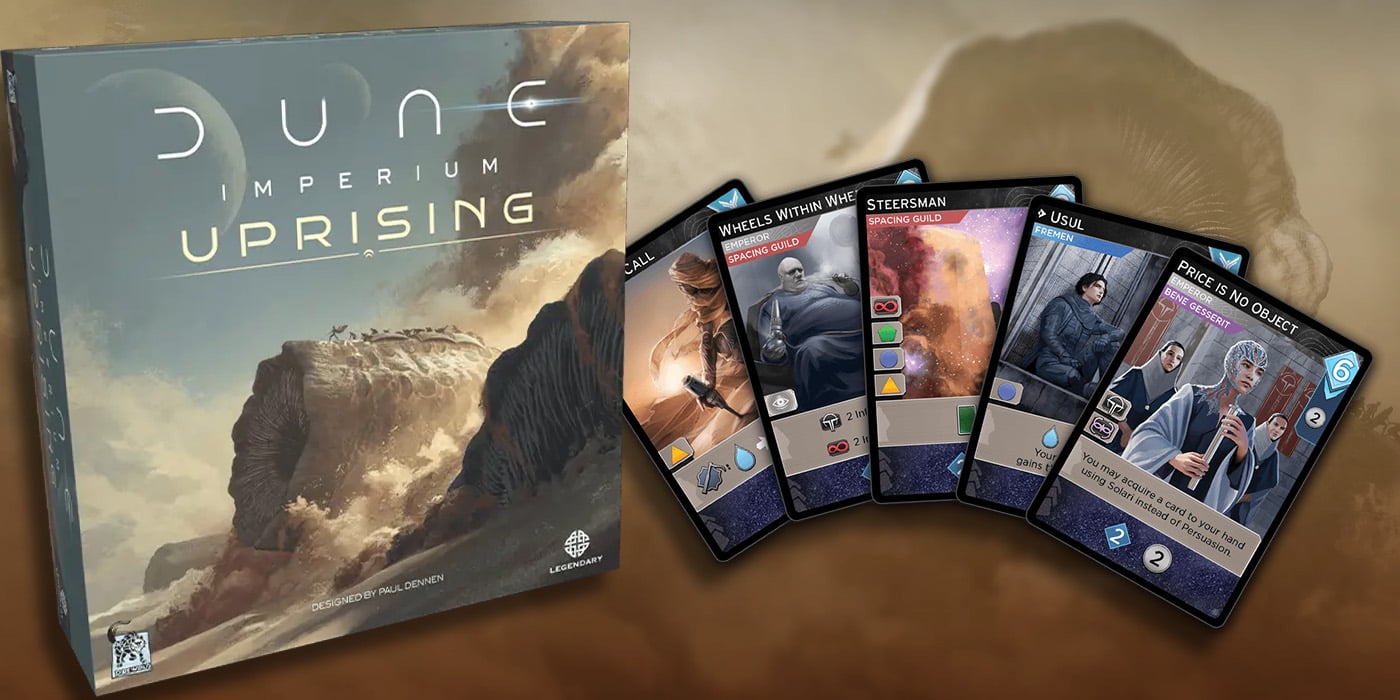
Uprising can be played independently or seamlessly integrated with the original Dune: Imperium and its expansions, offering immense versatility. The worker placement aspect sees players dispatching agents to key locations on the board, triggering actions and gaining resources, while the deck-building component ensures a constant evolution of available actions and strategic options. Players must carefully balance military might, political maneuvering with the Bene Gesserit, CHOAM economic prowess, and Fremen allegiance. The game vividly portrays the harsh realities of Arrakis, forcing players to contend with unpredictable sandstorms and the menacing presence of sandworms, which can disrupt plans and create dramatic shifts in power. The stunning card art, inspired by recent cinematic adaptations, enhances the thematic immersion, drawing players deeper into the intricate web of alliances and betrayals that define the Dune saga. Strategic resource management and adaptability are paramount to navigate the ever-shifting landscape of this cutthroat political and military struggle.
Star Realms
Star Realms distills the essence of space combat and economic engine-building into a lean, fast-paced deck-building experience. Players command formidable fleets, starting with a humble scout ship and a few basic fighters, then progressively expanding their military and economic capabilities through strategic card acquisition. The core objective is simple: reduce your opponent’s authority (life points) to zero.
The game’s genius lies in its faction-based mechanics. Cards belong to one of four factions (Trade Federation, Star Empire, Blob, Machine Cult), each offering unique synergies and playstyles. By playing multiple cards of the same faction in a turn, players unlock powerful "ally" abilities, encouraging focused deck construction while still allowing for tactical flexibility. Players must balance acquiring trade ships to generate currency for new cards, combat ships to directly attack opponents or destroy their bases, and outposts that protect their authority. Star Realms excels at providing a complete, engaging sci-fi battle narrative in a highly portable and accessible format, making it a perennial favorite for quick, competitive duels and an excellent entry point into the deck-building genre. Its expansions further diversify strategies, adding new factions, events, and ship types.

Here to Slay
From the creators of Unstable Unicorns, Here to Slay brings a whimsical, yet surprisingly strategic, take on the dungeon-crawling genre to the deck-building table. This adorable game tasks players with assembling a party of charming animal heroes, each with unique classes and abilities, to embark on quests and, ultimately, slay formidable monsters. The objective is either to be the first to slay three monsters or to assemble a full party of six different hero classes.
Here to Slay‘s appeal lies in its captivating blend of cute aesthetics and accessible gameplay with underlying strategic depth. While the initial turns are straightforward, players quickly learn the importance of hero synergy, managing their hand, and judiciously using item and magic cards to disrupt opponents or boost their own party. The game’s vibrant art and humorous card descriptions create a lighthearted atmosphere, making it suitable for almost any age or skill level. Yet, beneath the adorable veneer lies a competitive core, as players strategically challenge monsters, sabotage rivals, and build their ultimate monster-slaying crew. It’s a perfect example of how deck-building can facilitate a fun, interactive "take that" experience without feeling overly complex.
The Lord of the Rings: Journeys in Middle-Earth
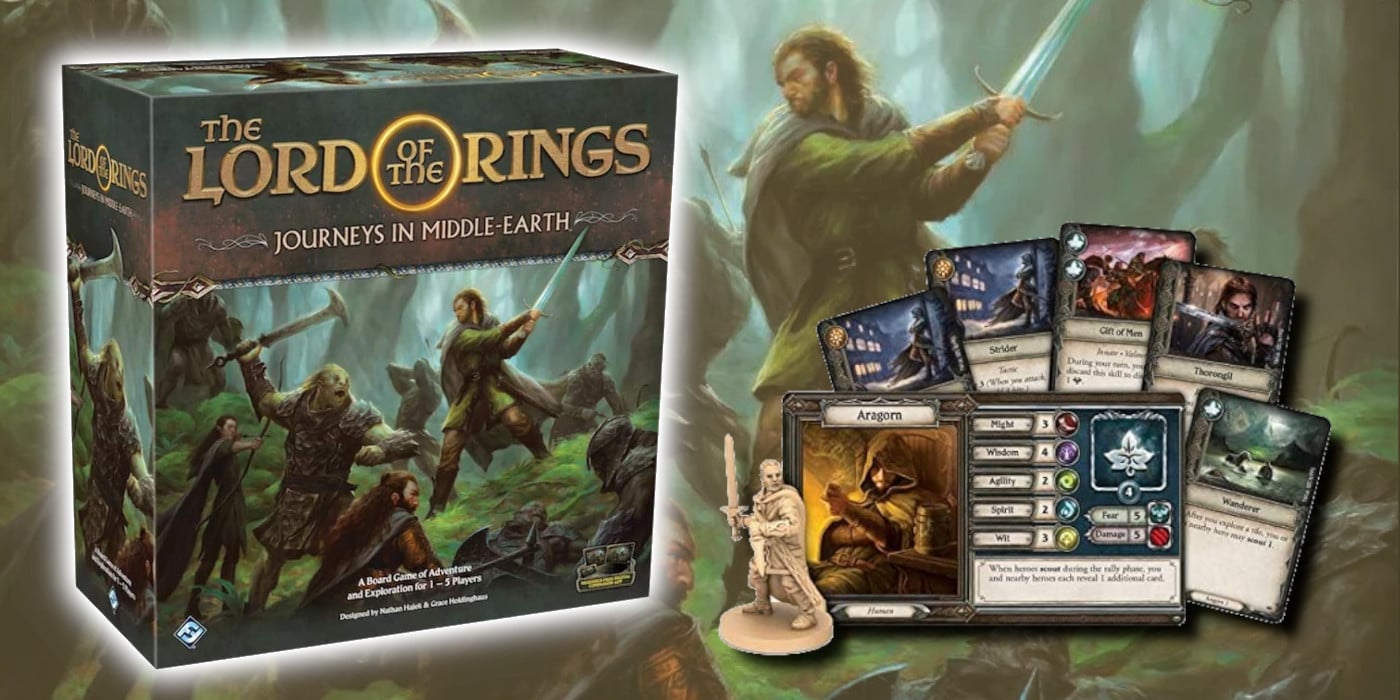
The Lord of the Rings: Journeys in Middle-Earth represents a frontier in modern board gaming, integrating a sophisticated deck-building system with a required, yet free, companion app. This design choice, initially met with skepticism by some traditionalists (including this writer), has proven to be a masterstroke, unlocking narrative depth and dynamic gameplay elements previously unattainable in purely analog board games. The app serves as a digital Game Master, managing scenario setup, enemy behaviors, event triggers, and complex narrative choices, allowing players to focus entirely on the immersive story and tactical decisions.

In Journeys in Middle-Earth, players assume the roles of iconic heroes from Tolkien’s Middle-earth, embarking on an epic campaign filled with exploration, combat, and moral dilemmas. The deck-building element is central to character progression and skill checks. Each hero begins with a unique starting deck, which players refine and customize throughout the campaign by acquiring new skill cards, items, and boons. Success in skill tests and combat encounters often depends on the cards drawn from a player’s ever-evolving deck, adding a layer of strategic planning to every action. The app’s ability to track player choices, reveal hidden information, and adapt the narrative based on outcomes creates an incredibly rich and branching story experience. It transforms deck-building from a simple card acquisition mechanic into a dynamic representation of a hero’s growth and mastery as they face the growing shadow of Mordor.
Battle Wizards: Annihilageddon (and Epic Spell Wars of the Battle Wizards: Duel at Mt. Skullzfyre)
For those who crave chaotic, over-the-top spell-slinging action with a hefty dose of humor, the Battle Wizards series delivers in spades. Battle Wizards: Annihilageddon continues the tradition established by the original, Epic Spell Wars of the Battle Wizards: Duel at Mt. Skullzfyre, offering a riotous arena battle where players concoct absurd and devastating spells to eliminate their rivals. The core mechanic involves combining three different spell components (Source, Quality, Delivery) to create unique and often hilariously powerful attacks.
The series is renowned for its wild, cartoonish art style and even wilder card effects. Games escalate quickly into surprisingly competitive and often unpredictable contests, as players leverage their cobbled-together spells, familiar companions, and magical items to gain an advantage. The emphasis is on big, splashy plays and the sheer joy of creating a ridiculous spell combo that obliterates an opponent. While strategy is present in managing your hand and timing your attacks, the true fun comes from the emergent narrative of spectacular spell failures and improbable victories. It’s a game designed for laughs and epic moments, providing a refreshing contrast to more serious strategic titles while still firmly rooted in the engaging loop of deck-building.

Industry Perspectives: The Enduring Allure
The sustained success and continuous innovation within the deck-building genre are not accidental. Industry veterans and game designers frequently point to several key factors contributing to its enduring appeal:
"Deck-building offers an incredible sense of player agency and growth," notes one prominent designer. "You start with so little, and by the end, you’ve built this magnificent engine tailored to your strategy. That progression is incredibly satisfying." This sentiment highlights the psychological reward inherent in watching one’s deck evolve and improve over the course of a game.
Furthermore, the genre’s inherent replayability is a massive draw. With a constantly shifting market of available cards and varied starting conditions, no two games ever feel identical. "We design our deck-builders with a strong focus on modularity," explains a representative from a leading board game publisher. "Players can explore different card combinations, adapt to opponents, and discover new strategies every time they sit down, which keeps the game fresh for years."

The adaptability of the deck-building mechanic also allows it to serve as a robust foundation for diverse themes and gameplay styles, from competitive combat to cooperative storytelling. This versatility ensures that the genre can continuously attract new players with varied preferences while retaining its core fan base.
Implications for the Future of Tabletop Gaming
The ongoing evolution and popularity of deck-building games carry significant implications for the broader tabletop gaming industry.
Firstly, the genre continues to push the boundaries of design, particularly in the realm of hybrid mechanics. The success of titles like Dune: Imperium – Uprising demonstrates that blending deck-building with other popular mechanics like worker placement or area control can create deeply strategic and engaging experiences that appeal to a wider audience. This trend suggests a future where designers will continue to explore innovative ways to combine systems, leading to even more complex and multifaceted games.

Secondly, the embrace of app integration, as seen in The Lord of the Rings: Journeys in Middle-Earth, indicates a growing acceptance and potential for digital components to enhance analog gameplay. Far from replacing the tactile experience of board games, well-implemented apps can act as dynamic GMs, manage complex rulesets, and deliver branching narratives that would be impossible with physical components alone. This opens up exciting avenues for narrative-driven campaigns and emergent storytelling in board games.
Finally, the genre’s inherent accessibility, from simple entry points like Star Realms to more thematic games like Here to Slay, ensures its lasting appeal to both seasoned gamers and newcomers. Deck-building games often provide a satisfying strategic arc without the steep learning curve of some heavier strategy titles or the financial commitment of CCGs. This accessibility is crucial for expanding the hobby and bringing new players into the fold.
In conclusion, the deck-building game genre has evolved far beyond its humble beginnings, proving itself to be a dynamic and infinitely adaptable force in tabletop gaming. From intensely strategic confrontations to whimsical dungeon dives and epic narrative campaigns, these games offer a rich tapestry of experiences. As designers continue to innovate and blend mechanics, the future of deck-building promises even more exciting and immersive adventures for players worldwide, cementing its status as a timeless staple.