Deathbringer Unleashed: Professor DM’s Brutal TTRPG Storms Backerkit, Featuring a Star-Studded Adventure Collective
FOR IMMEDIATE RELEASE
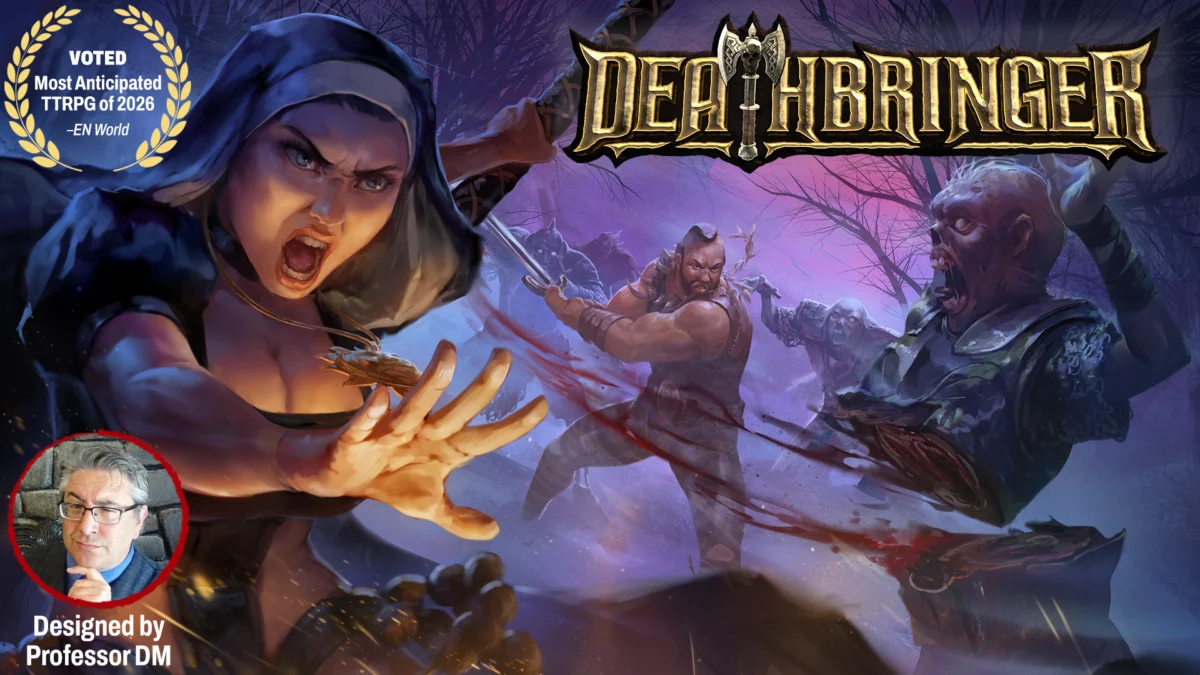
The highly anticipated tabletop role-playing game (TTRPG), Deathbringer, a brainchild of Dan De Fazio, famously known as Professor DM, and developed by Roll For Combat, has officially launched its crowdfunding campaign on Backerkit. Heralded as EN World’s Most Anticipated TTRPG of 2026, Deathbringer promises a visceral and unforgiving experience, redefining the role of death in heroic sagas and offering seamless compatibility with Shadowdark and a wide array of Old School Revival (OSR) systems. The campaign’s launch marks a significant moment for the TTRPG community, particularly with the announcement of a formidable "dark conclave" of acclaimed adventure writers contributing to the game, including none other than Justin Alexander of The Alexandrian.
Deathbringer positions itself as a stark departure from conventional fantasy TTRPGs, emphasizing fast, savage combat where death is not merely a setback but an integral part of the narrative journey. Its core philosophy, encapsulated by the tagline "Combat is fast. Victories are earned. Death is real," challenges players to confront mortality head-on, forging a deeper connection to their characters and the perilous worlds they inhabit. The enthusiastic reception leading up to its Backerkit debut underscores a growing appetite within the TTRPG community for experiences that prioritize gritty realism, high stakes, and a return to the challenging ethos of classic role-playing.
The involvement of a diverse team of renowned TTRPG creators, spearheaded by Professor DM, signals a collaborative effort to craft a truly unique and impactful game. Justin Alexander, whose contributions to TTRPG theory and adventure design through The Alexandrian blog are widely celebrated, expressed his profound excitement about joining the project, confirming he will be penning an adventure for Deathbringer. This collaboration, alongside other yet-to-be-fully-revealed talents, is poised to deliver a rich tapestry of perilous quests and memorable encounters, further solidifying Deathbringer‘s potential to become a cornerstone of the modern OSR movement.
The Main Facts: A New Era of Brutality in TTRPGs
Deathbringer, the brainchild of Dan De Fazio (Professor DM) and Roll For Combat, officially launched its crowdfunding campaign on Backerkit, inviting players into a world where combat is relentless, victories are hard-won, and death is an ever-present, meaningful element of the journey. The game’s core design philosophy champions a brutal, fast-paced combat system that eschews conventional "hit point sponges" and embraces decisive, impactful encounters. It’s explicitly designed for ease of integration into existing OSR frameworks, boasting full compatibility with the popular Shadowdark RPG, making it an accessible yet challenging addition for veteran players and newcomers to the old-school aesthetic alike.
The pre-launch buzz around Deathbringer was considerable, culminating in its prestigious recognition as EN World’s Most Anticipated TTRPG of 2026. This accolade from one of the TTRPG community’s leading news and review sites speaks volumes about the innovative potential and widespread interest the game has garnered. The anticipation is not merely for another fantasy RPG, but for a system that promises to fundamentally alter how players perceive character mortality and the consequences of their actions within a game world.
A significant highlight of the Deathbringer campaign is the assembly of what Professor DM has aptly termed a "dark conclave of amazing adventure writers." This collaborative approach ensures a high standard of content and diverse perspectives on adventure design, enhancing the game’s replayability and depth. Among the first confirmed members of this esteemed group is Justin Alexander, the influential voice behind The Alexandrian. Alexander, known for his incisive analyses of TTRPG mechanics and his groundbreaking work on modular adventure design, expressed immense excitement at being invited to contribute an adventure to the Deathbringer universe. His involvement signals the project’s commitment to quality and innovative storytelling, bringing a wealth of experience to the game’s burgeoning lore.
The Backerkit campaign is structured to offer various pledge levels, providing backers with opportunities to acquire the core rulebook, exclusive stretch goal content, and potentially unique modules crafted by the contributing writers. The initial response to the launch has been overwhelmingly positive, reflecting the strong community interest cultivated by Professor DM and Roll For Combat over the preceding months. Deathbringer is not just a game; it is an experience meticulously crafted to resonate with players who seek genuine challenge, profound narrative consequence, and a rich, brutal fantasy setting.
Chronology: From Concept to Crowdfunding
The Genesis of Deathbringer
The journey of Deathbringer began deep within the creative mind of Dan De Fazio, better known to the TTRPG community as Professor DM. De Fazio, a seasoned game master and content creator, harbored a vision for a TTRPG that would strip away the layers of safety and predictability that, in his view, had begun to dilute the thrilling unpredictability of classic role-playing. His inspiration stemmed from a desire to return to a more unforgiving style of gameplay, where every decision carried significant weight, and the specter of permanent character loss loomed large, making triumphs all the more meaningful. He envisioned a system where death wasn’t a punitive end but a transformative, albeit brutal, part of a character’s epic narrative. This core concept, refined over countless hours of playtesting and design iterations, gradually coalesced into the foundational principles of Deathbringer. The goal was clear: to create a game that felt genuinely dangerous, where players truly "earned" their victories.
Professor DM’s Journey and Roll For Combat
Dan De Fazio’s reputation as Professor DM precedes him in the TTRPG space. His engaging content, insightful analyses, and passionate advocacy for impactful gameplay have cultivated a loyal following. Through his work with Roll For Combat, a prominent TTRPG publishing and content creation company, De Fazio has been instrumental in bringing innovative projects to life, often focusing on high-quality production and community engagement. Roll For Combat has established itself as a reliable force in the industry, known for its dedication to producing well-crafted game systems and modules that resonate with a dedicated player base. Their expertise in development, marketing, and community management provided the perfect platform for Deathbringer to evolve from a compelling concept into a polished, crowdfundable product. The partnership leveraged Roll For Combat’s logistical prowess and Professor DM’s creative vision, ensuring a robust framework for the game’s development and eventual launch.
Anticipation Builds: The Road to EN World’s Recognition
The journey towards Deathbringer‘s public unveiling was meticulously orchestrated, building a crescendo of anticipation within the TTRPG community. Early playtests, often streamed or discussed on Professor DM’s channels, offered tantalizing glimpses into the game’s brutal mechanics and unique approach to character mortality. These sneak peeks generated significant online discussion, with players eager to experience a system that promised genuine challenge. Developer diaries and interviews further elaborated on the game’s design philosophy, emphasizing its OSR compatibility and the innovative ways it would handle death.
The buzz reached a fever pitch when EN World, a respected authority in TTRPG news and reviews, bestowed upon Deathbringer the title of "Most Anticipated TTRPG of 2026." This prestigious recognition was a testament to the game’s unique selling propositions and the effective community engagement efforts by Professor DM and Roll For Combat. It validated the excitement of early adopters and drew significant attention from a broader audience, signaling Deathbringer as a title poised to make a substantial impact on the industry. The award underscored the game’s potential to carve out a distinct niche in a crowded market, setting the stage for a highly successful crowdfunding campaign.
The Backerkit Launch: A New Chapter Begins
With a groundswell of community support and critical anticipation, Deathbringer officially launched its crowdfunding campaign on Backerkit. Backerkit, known for its robust platform and tailored features for TTRPG projects, provided an ideal environment for the campaign. The launch was met with immediate enthusiasm, as backers flocked to secure their copies of the core rulebook and access exclusive content. The campaign page detailed various pledge tiers, offering options ranging from digital copies to deluxe physical editions, alongside an array of stretch goals designed to unlock additional content, art, and potentially new adventures. The initial hours and days of the campaign demonstrated a strong community response, reflecting years of development, anticipation, and the successful cultivation of a dedicated fanbase eager to dive into the brutal world of Deathbringer. This launch represents not just the beginning of a crowdfunding effort, but the dawn of a new era for brutal, meaningful TTRPG experiences.
Supporting Data: Delving into Deathbringer’s Mechanics and Collaborations
A Deep Dive into Gameplay Mechanics: Brutality, OSR, and the Meaning of Death
At the heart of Deathbringer lies a meticulously crafted system designed to deliver on its promise of "fast, savage combat where death isn’t the end — it’s part of the journey." This isn’t merely a tagline; it’s a fundamental design principle that permeates every aspect of the game.
Brutal Combat, Meaningful Death: Unlike many modern TTRPGs where characters can often endure multiple "downs" or easily bounce back from near-fatal blows, Deathbringer adopts a more unforgiving approach. Combat encounters are designed to be quick and deadly, often resolved in a few decisive rounds. This high lethality means tactical positioning, strategic resource management, and clever problem-solving are paramount. Players cannot rely on brute force alone; ingenuity and teamwork become essential for survival.
However, Deathbringer‘s innovation truly shines in its treatment of death itself. While death is indeed "real" and frequent, it’s not always the definitive end of a character’s story. The game introduces unique mechanics for handling character demise, transforming it into a narrative catalyst rather than a mere game-over state. This might involve systems for heroic sacrifices that grant boons to surviving party members, spectral existences where fallen heroes can influence the living from beyond the veil, or arduous quests for resurrection that come with profound, often permanent, physical or mental scars. The specifics are designed to ensure that even a character’s death contributes meaningfully to the ongoing campaign, adding layers of pathos, consequence, and lore. This approach ensures that players remain invested, understanding that while their current incarnation might fall, their actions and legacy continue to shape the world.
OSR Compatibility and Philosophy: Deathbringer‘s full compatibility with Shadowdark and its broader alignment with OSR principles is a crucial aspect of its design. The Old School Revival movement champions a return to the ethos of early TTRPGs, characterized by:
- High Lethality: Characters are fragile, and danger is ever-present.
- Player Skill over Character Power: Success often depends more on player ingenuity and problem-solving than on character sheet statistics.
- Open-World Exploration: Emphasis on sandbox environments and emergent gameplay.
- Rulings over Rules: Game Masters are encouraged to make common-sense rulings rather than searching for specific rules in every situation.
- Modular Design: Systems are often designed to be easily integrated with other OSR games.
By embracing these tenets, Deathbringer offers a familiar yet fresh experience for OSR enthusiasts. Its Shadowdark compatibility is particularly noteworthy, as Shadowdark itself has gained immense popularity for its streamlined, brutal, and atmospheric take on classic fantasy. This cross-compatibility means that GMs and players can easily port Deathbringer‘s unique combat and death mechanics into their existing Shadowdark campaigns or integrate Shadowdark modules into Deathbringer, vastly expanding the content available to players and fostering a vibrant ecosystem of interconnected games. This modularity underscores Deathbringer‘s commitment to player freedom and system flexibility, allowing for truly customized gameplay experiences.
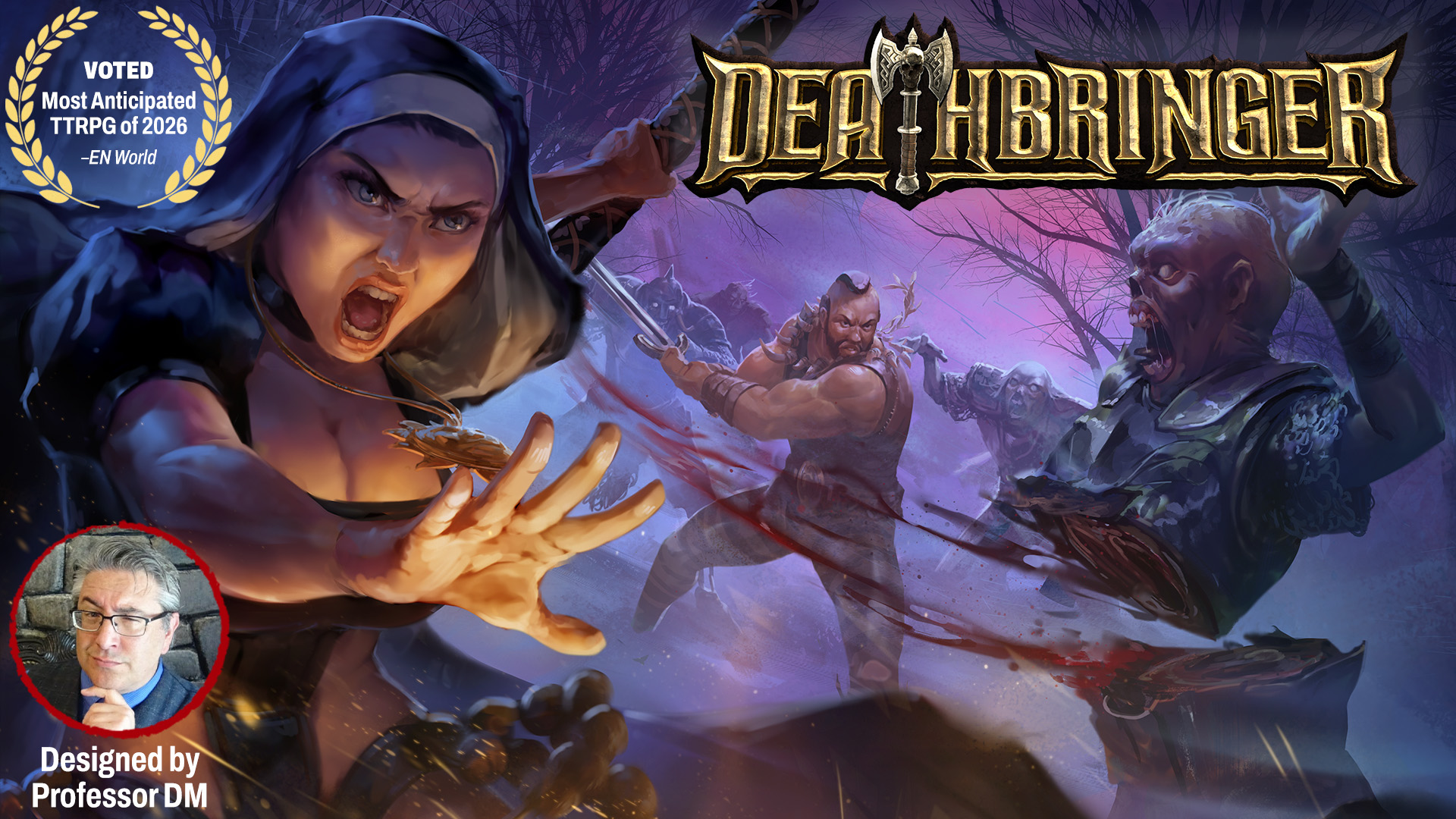
The World of Deathbringer: While the article snippet focuses on mechanics, the implied setting of Deathbringer is one of dark, perilous fantasy. The emphasis on "brutal" and "savage" combat suggests a world fraught with formidable foes, ancient evils, and perhaps a decaying civilization on the brink. Players are likely to explore dangerous dungeons, navigate treacherous wildernesses, and confront cosmic horrors or morally ambiguous entities. The game’s themes likely revolve around survival against overwhelming odds, the cost of heroism, and the enduring struggle between life and death in a world that offers no easy answers. This rich, evocative backdrop provides fertile ground for the kind of impactful, consequence-driven narratives that Deathbringer aims to deliver.
The Creative Collective: A Conclave of Master Storytellers
The success of a TTRPG often hinges not just on its core mechanics but also on the quality of its supplemental content, particularly adventures. Deathbringer distinguishes itself by assembling a "dark conclave of amazing adventure writers," ensuring that the game’s unique mechanics are showcased through compelling narratives and challenging scenarios.
Justin Alexander’s Contribution: The inclusion of Justin Alexander is a major coup for Deathbringer. Alexander’s blog, The Alexandrian, is a seminal resource for TTRPG GMs, celebrated for its insightful articles on topics ranging from scenario design (such as his acclaimed "Node-Based Scenario Design") to advanced GMing techniques. His work consistently advocates for emergent gameplay, player agency, and creating dynamic, living worlds. For Deathbringer, Alexander will be crafting an adventure that undoubtedly leverages his expertise in designing complex, interconnected scenarios that react dynamically to player choices. His adventures are known for their depth, replayability, and ability to challenge players both tactically and intellectually. His involvement lends significant creative weight and credibility to the project, promising an adventure that will fully embody Deathbringer‘s brutal yet narratively rich philosophy.
The "Dark Conclave" of Writers: While the full list of writers remains partially under wraps, the very concept of a "dark conclave" suggests a curated selection of industry veterans and rising stars. This collective approach ensures a diversity of voices and styles, enriching the Deathbringer universe with a wide array of potential adventures. Such a team might include:
- Veteran Module Designers: Creators with a proven track record of designing classic, impactful adventures for various systems.
- Innovative Scenario Architects: Writers known for pushing narrative boundaries and introducing novel gameplay elements.
- Loremasters and World-builders: Individuals adept at crafting deep, immersive settings that provide endless possibilities for exploration.
- OSR Luminaries: Designers with a strong understanding of old-school sensibilities and a knack for creating challenging, sandbox-style content.
The collaborative nature of this project underscores a commitment to providing players with not just a robust system but also a wealth of high-quality, engaging content right from the start. Each writer brings their unique perspective and expertise, promising a diverse collection of adventures that will explore different facets of the Deathbringer world, from grim dungeon crawls to perilous wilderness expeditions and intricate urban mysteries.
Roll For Combat’s Role: Beyond just publishing, Roll For Combat plays a crucial role in curating this talent and ensuring the overall coherence and quality of the Deathbringer line. Their experience in managing complex TTRPG projects, from editing and art direction to production and distribution, is vital. They provide the infrastructure that allows creative minds like Professor DM and the "dark conclave" to focus on what they do best: creating exceptional gaming experiences. Their commitment to a high standard of production ensures that the final product will not only be mechanically sound but also visually stunning and user-friendly.
Official Responses: Voices from the Front Lines
Dan De Fazio’s Vision: Embracing the Brutality
Professor DM, Dan De Fazio, articulated his profound excitement and the driving philosophy behind Deathbringer at the launch. "This game is a labor of love, born from a desire to bring back the true sense of danger and earned victory to our tables," De Fazio stated in a recent interview. "I wanted to create a world where every decision matters, where players truly feel the weight of their actions, and where even death isn’t a final defeat but a profound turning point. Deathbringer is about making heroism meaningful again, because when the stakes are real, every triumph is exhilarating."
He continued, emphasizing the game’s OSR roots: "We’ve built Deathbringer to be lean, mean, and modular. Its Shadowdark compatibility isn’t just a feature; it’s an invitation to GMs to easily infuse their existing campaigns with a fresh dose of brutality and narrative depth. We want this game to be a versatile tool for GMs who crave that old-school challenge but with modern design sensibilities." De Fazio’s passion for the project is palpable, and his vision clearly resonates with a community yearning for more impactful and challenging TTRPG experiences.
Justin Alexander’s Enthusiasm: A Deep Dive into Design
Justin Alexander, whose announcement of involvement galvanized the TTRPG community, shared his personal excitement for Deathbringer. "I’ve been looking forward to Deathbringer for a long time now," Alexander confessed. "When Dan invited me to join the party, I was absolutely thrilled. What drew me to Deathbringer is its unflinching commitment to making death a narrative element rather than just a penalty. As a designer, that’s incredibly exciting because it opens up entirely new avenues for storytelling and player engagement. It’s a game that respects player choice by making those choices truly consequential."
Alexander further elaborated on the design principles that attracted him: "The OSR compatibility is genius. It allows the game to slot seamlessly into established campaigns, providing a fresh twist without requiring players to learn an entirely new system from scratch. My goal with the adventure I’m writing is to fully explore the implications of Deathbringer‘s core mechanics, presenting players with dilemmas where their understanding of mortality becomes their greatest weapon and their most profound challenge. It’s an incredible honor to be invited to join this conclave of creators, and I can’t wait for players to experience what we’re building." His endorsement, coming from such a respected figure, speaks volumes about the innovative design and potential impact of Deathbringer.
Community Reaction: A Groundswell of Support
The initial community reaction to Deathbringer‘s Backerkit launch has been overwhelmingly positive, mirroring the intense anticipation that led to its EN World accolade. Social media channels, TTRPG forums, and the campaign’s comment section (already boasting 15 comments shortly after launch) are abuzz with excitement. Backers are praising the game’s bold premise, its commitment to OSR principles, and the high caliber of talent assembled for its development.
Comments range from "Finally, a game that takes death seriously!" to "The Shadowdark compatibility is exactly what I needed for my campaign." Many express enthusiasm for Professor DM’s vision and the promise of brutal, yet narratively rich, gameplay. The involvement of Justin Alexander has been a particular point of excitement, with many stating that his contribution alone is enough to guarantee their support. This early groundswell of support indicates not only a successful launch but also a strong foundation for a vibrant and engaged player community around Deathbringer. The enthusiasm underscores a collective desire for TTRPGs that dare to be different, offering meaningful challenges and unforgettable stories.
Implications: Shaping the Future of OSR and Beyond
Impact on the OSR Scene
Deathbringer is poised to make a significant splash within the Old School Revival movement. Its uncompromising stance on brutal combat and meaningful death, combined with its seamless compatibility with other OSR systems like Shadowdark, positions it as a potential trendsetter. It could inspire other designers to explore more deeply the narrative possibilities of character mortality, moving beyond simple resurrection spells to more integrated and consequential systems. By showcasing how a high-lethality game can still be narratively rich and deeply engaging, Deathbringer might attract new players to the OSR philosophy, demonstrating that "old school" doesn’t mean "outdated," but rather "timeless challenge with innovative twists." It reinforces the idea that player skill and cleverness are paramount, shifting the focus from statistical optimization back to imaginative problem-solving.
The Future of Roll For Combat
A successful Deathbringer campaign would undoubtedly bolster Roll For Combat’s reputation as a publisher committed to innovative and high-quality TTRPG content. It would solidify their position as a key player in the independent and OSR publishing space, potentially paving the way for future ambitious projects. The success of Deathbringer could enable them to expand their team, invest in more extensive artwork and production values, and explore new intellectual properties, further enriching the TTRPG landscape. It demonstrates their ability to identify and cultivate compelling game designs and bring them to fruition with strong community engagement.
Player Experience and Longevity
For players, Deathbringer offers a fresh and intense experience. The game’s emphasis on genuine consequences ensures that every encounter, every decision, and every character choice carries significant weight. This fosters a deeper level of immersion and emotional investment, as players truly bond with their fragile heroes. The unique death mechanics promise longevity for campaigns, as character deaths are not simply ends, but often beginnings of new story arcs, legacies, or challenges for the surviving party. This dynamic approach to mortality could lead to incredibly memorable campaigns filled with heroic sacrifices, grim resurrections, and a profound appreciation for every hard-won victory. Players seeking a TTRPG that consistently challenges them, both tactically and emotionally, will find Deathbringer to be an incredibly rewarding, albeit brutal, journey.
The Crowdfunding Landscape and TTRPG Market
Deathbringer‘s strong launch on Backerkit further highlights the platform’s growing importance for TTRPG creators, especially for projects seeking to differentiate themselves from the mainstream. It underscores the vibrancy and diversity of the modern TTRPG market, where niche genres and innovative mechanics can find dedicated audiences through crowdfunding. The success of projects like Deathbringer demonstrates that there is a substantial demand for games that challenge conventional norms and offer unique gameplay experiences, even in an era dominated by established franchises. It’s a testament to the power of a strong vision, effective community building, and a commitment to delivering a truly distinctive product in a competitive market.
In conclusion, Deathbringer is more than just a new TTRPG; it’s a statement. It’s a call to arms for players who crave challenge, embrace consequences, and seek narratives where every moment is charged with peril and potential glory. With Professor DM’s visionary design, Roll For Combat’s robust production, and a "dark conclave" of renowned writers including Justin Alexander, Deathbringer is poised not just to meet but to exceed the high expectations set for EN World’s Most Anticipated TTRPG of 2026. The campaign on Backerkit represents an invitation to join a movement that promises to redefine the boundaries of brutal, meaningful tabletop role-playing.
DEATHBRINGER – Back the campaign now on Backerkit: https://www.backerkit.com/c/projects/roll-for-combat/deathbringer-ttrpg