The Ghost of Providence: A Critical Anatomy of The Last Day of H.P. Lovecraft
The shadow of Howard Phillips Lovecraft looms larger over the 21st century than it ever did over the 20th. Once a marginal figure relegated to the yellowed pages of pulp magazines like Weird Tales, the "Gentleman from Providence" has been transformed into a cornerstone of global pop culture. Today, his cosmic indifferentism, tentacled deities, and pervasive dread are ubiquitous across cinema, gaming, and literature. However, this saturation has led to a critical paradox: in an era where "Lovecraftian" has become a generic shorthand for any narrative featuring a fish-person or an existential crisis, is there anything left to say about the man himself?
This is the central challenge facing The Last Day of H.P. Lovecraft, a French graphic novel written by Romuald Giulivo and illustrated by the visionary Jakub Rebelka. Originally published in France and recently serialized for the English-speaking market by Boom! Studios, the work attempts a phantasmagorical biography of the author’s final hours. Yet, as the medium of comics continues to grapple with Lovecraft’s complicated legacy, one must ask if this latest entry offers a fresh revelation or merely another echo in the void.
Main Facts: The Creative and Publication Framework
The Last Day of H.P. Lovecraft is a collaborative effort that bridges European "Bandes Dessinées" sensibilities with the American direct market. The narrative is penned by Romuald Giulivo, a writer whose work often leans into the lyrical and the macabre. The visual heavy lifting is performed by Jakub Rebelka, a Polish artist whose reputation has grown steadily through projects like Origins and Judas.
The English edition features a translation by Mercedes Gilliom and lettering by the veteran Ed Dukeshire. Interestingly, the American release followed a five-issue miniseries format via Boom! Studios before being collected into a single volume. This serialization, while standard for the US market, arguably disrupts the intended flow of the work, which was designed as a singular, immersive "stream-of-consciousness" experience.
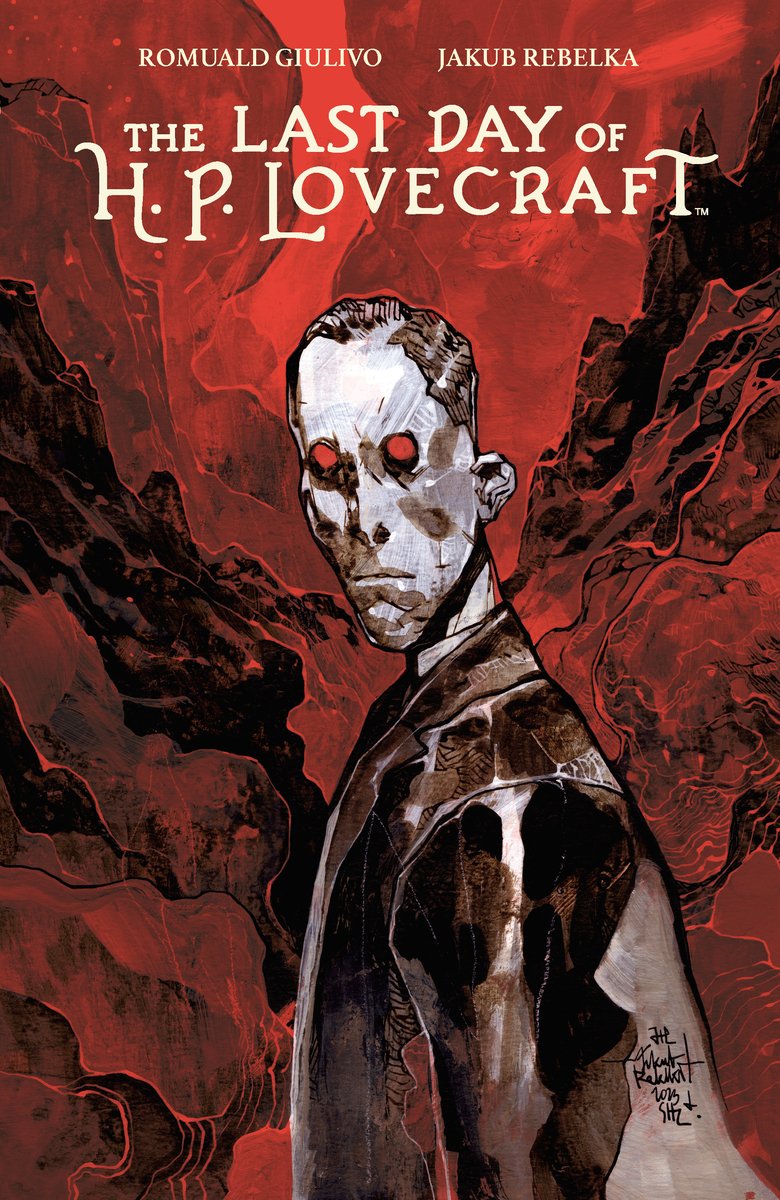
The book functions as a fictionalized biography, set specifically on March 15, 1937—the day Lovecraft succumbed to small intestine cancer at the age of 46. It eschews traditional linear storytelling in favor of a hallucinatory odyssey, where the dying author is confronted by the ghosts of his past, the giants of his future, and the monsters of his own making.
Chronology: From Pulp Obscurity to Posthumous Titan
To understand the weight of Giulivo and Rebelka’s work, one must consider the timeline of Lovecraft’s reputation, which the graphic novel attempts to synthesize:
- 1937: The End of the Man. H.P. Lovecraft dies in poverty and relative obscurity. At the time of his passing, he was a "writer’s writer" within a niche community of amateur journalists and pulp enthusiasts. He died believing his literary legacy would vanish with him.
- Mid-20th Century: The Cult Growth. Through the efforts of August Derleth and Donald Wandrei (Arkham House), Lovecraft’s stories remained in print. His "Cthulhu Mythos" began to spread like a literary virus, influencing everyone from Stephen King to Jorge Luis Borges.
- 2015-2017: The Moore Benchmark. Alan Moore and Jacen Burrows released Providence, a massive, scholarly, and deeply unsettling deconstruction of Lovecraft’s work and his personal bigotries. It was widely regarded as the "final word" on Lovecraftian comics.
- 2024-2026: The French Intervention. The Last Day of H.P. Lovecraft enters a market already crowded with sophisticated critiques. It seeks to pivot away from Moore’s clinical deconstruction toward a more visceral, emotional, and artistic interpretation of the author’s psyche.
Supporting Data: Visual Mastery vs. Narrative Redundancy
The Rebelka Aesthetic
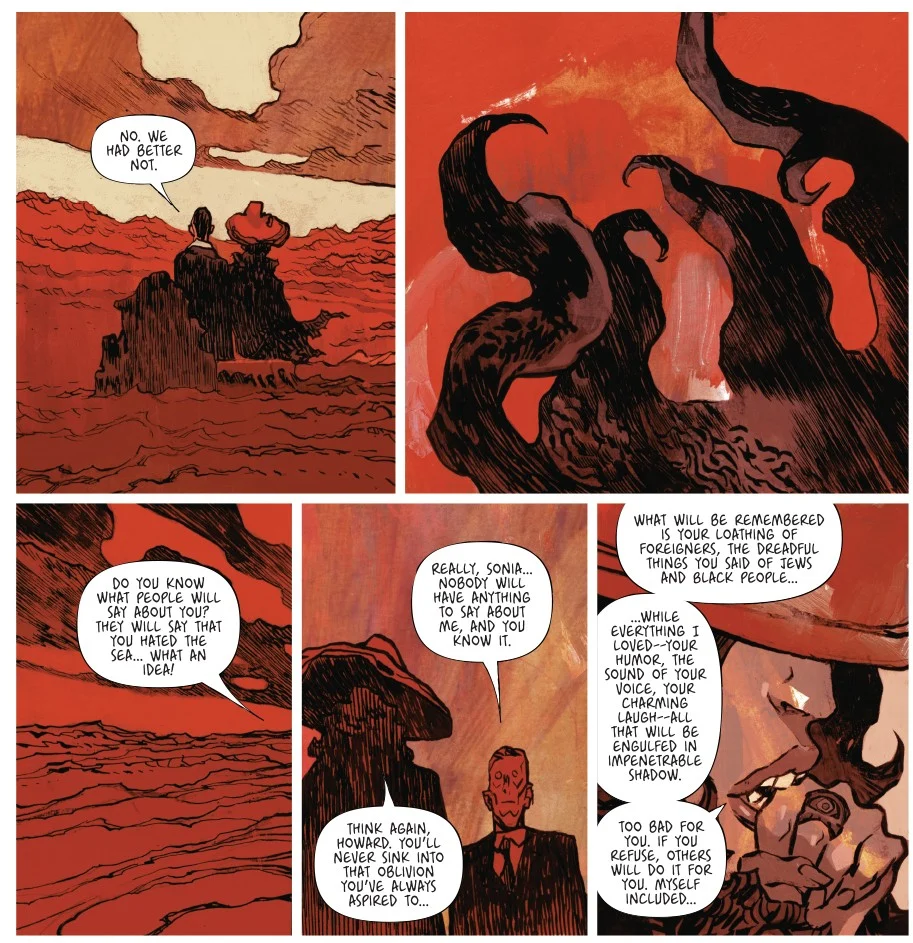
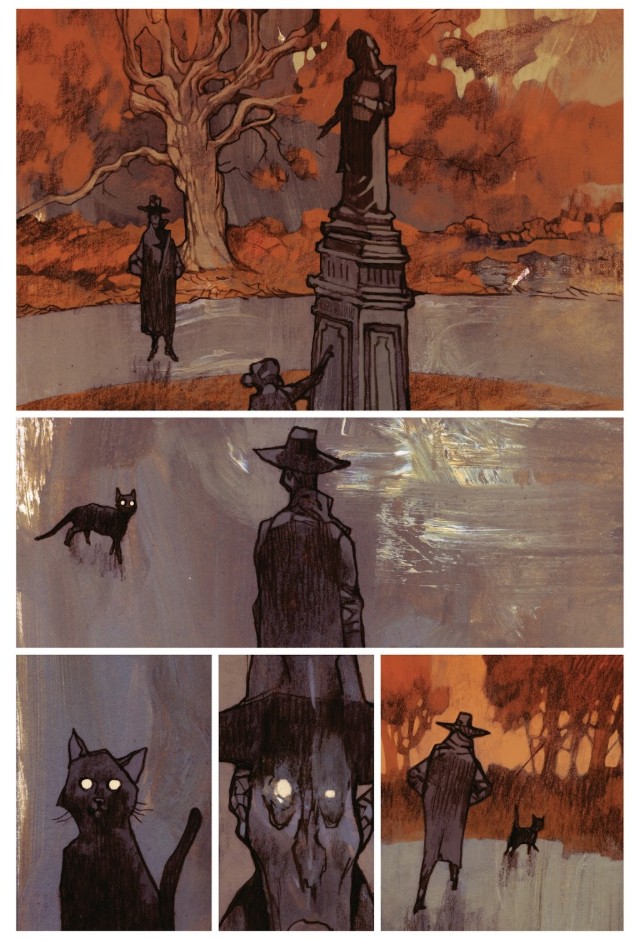
The primary strength of this work lies in Jakub Rebelka’s art. Rebelka possesses a style that is difficult to categorize but impossible to ignore. His figures appear as if they were sculpted from wet clay or ancient silt, possessing a fluidity that allows them to shift seamlessly between human and monstrous forms.
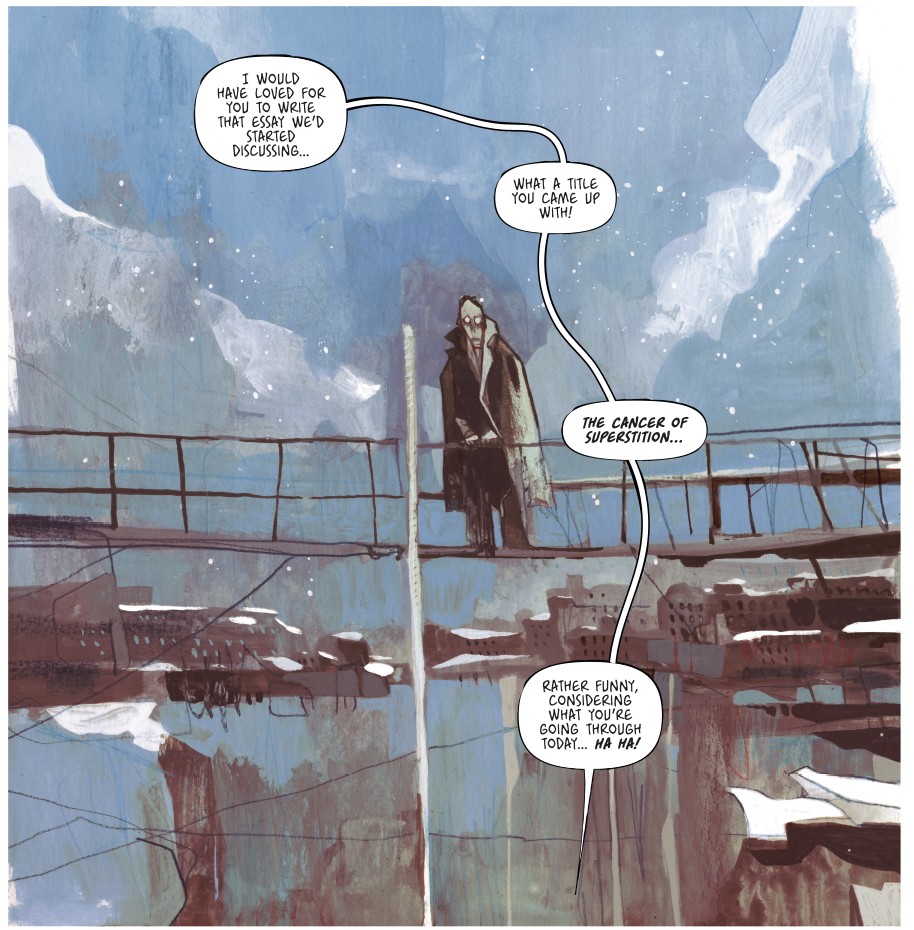
Critics have noted that Rebelka’s work evokes the "pathetic fallacy"—the literary device where the environment reflects the internal state of the characters. In The Last Day, the hospital room in Providence, Rhode Island, is not a static set; it is a living, breathing entity that dissolves into the red-hued abysses of Lovecraft’s imagination. His use of color—particularly the oppressive, bloody crimsons and the sickly, jaundiced yellows—creates an atmosphere of terminal decay that far exceeds the script’s depth.
The Cameo Culture
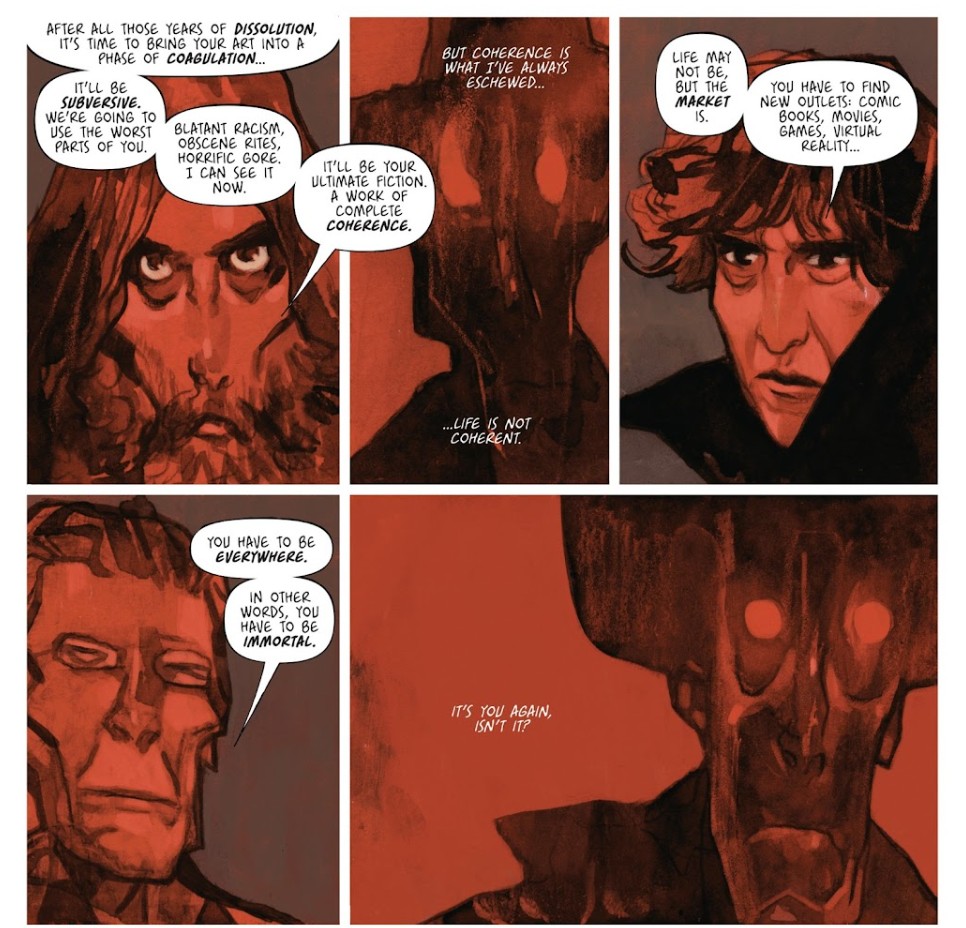
A significant portion of the narrative is dedicated to Lovecraft’s encounters with his "successors." In a move that has drawn mixed reactions, the book features nameless but unmistakable depictions of:
- Alan Moore: Representing the intellectual deconstruction of the mythos.
- Stephen King: Representing the commercialization and pop-culture saturation of horror.
- Neil Gaiman: Representing the "dark fantasy" evolution of Lovecraft’s themes.
While these appearances serve to illustrate Lovecraft’s massive posthumous influence, they also risk turning the graphic novel into a "meta-commentary" that distracts from the personal tragedy of the man dying in the bed.
The "Moore-craft" Comparison
Any modern Lovecraft comic must contend with the shadow of Alan Moore. Where Moore’s Providence was verbose, footnotes-heavy, and focused on the sociopolitical implications of Lovecraft’s xenophobia, Giulivo’s script is more poetic and ethereal. However, where Moore provided a definitive thesis on why Lovecraft matters, The Last Day struggles to move beyond the aesthetic of the "tortured artist."
Official Responses and Critical Reception
The reception of The Last Day of H.P. Lovecraft within the comics community highlights a growing divide between fans of "art for art’s sake" and those seeking narrative innovation.
The Artistic Commendation:
Most critics agree that Rebelka is a "man of few peers." His ability to render the unutterable—a core requirement of any Lovecraftian work—is unparalleled. The opening sequences, which depict nature as a terrifying, alien landscape, have been hailed as some of the most striking visuals in contemporary horror comics.
The Narrative Critique:
Conversely, the writing has been described by some, including The Comics Journal reviewer Tom Shapira, as an "essay trying to birth itself." The criticism suggests that the book thrashes in a "mad frenzy," gesturing at grand ideas—such as Lovecraft’s racism, his failed marriage to Sonia Greene, and his relationship with Harry Houdini—without ever settling on a cohesive argument. It explores the "what" of Lovecraft (his monsters and his history) but fails to penetrate the "why" of his enduring hold on the human psyche.
Implications: The Future of the Lovecraft Industry
The publication of The Last Day of H.P. Lovecraft signals a maturation—and perhaps a saturation—of the Lovecraftian subgenre. It suggests several key trends for the future of horror media:
1. The Canonization of the Biography
We have reached a point where Lovecraft’s life is treated with the same mythic reverence as his fiction. He is no longer just an author; he is a character in his own mythos. This "biographical horror" trend seeks to reconcile the man’s undeniable literary genius with his documented prejudices, but it often falls into the trap of romanticizing his isolation.
2. Visual Innovation over Narrative Depth
As Lovecraftian themes become "known" quantities, the "fear of the unknown" is replaced by the "appreciation of the aesthetic." Modern audiences already know what a Shoggoth looks like. Therefore, the value of new works lies increasingly in the style of the delivery rather than the content of the story. Rebelka’s success proves that there is still a massive appetite for cosmic horror, provided it is presented with a unique visual voice.
3. The Need for New Perspectives
The graphic novel’s failure to offer new insights highlights the necessity of diverse voices in this space. Works like Victor LaValle’s The Ballad of Black Tom or Matt Ruff’s Lovecraft Country succeeded because they challenged the Lovecraftian framework from the outside. The Last Day of H.P. Lovecraft, by staying firmly within the author’s own perspective, struggles to find a new angle on a story that has been told a thousand times.
Conclusion
The Last Day of H.P. Lovecraft is a hauntingly beautiful artifact. It is a testament to the power of the comic medium to visualize the abstract horrors of a dying mind. However, as a piece of scholarship or a narrative evolution, it remains a secondary work. For those seeking a visual feast, Rebelka’s pages are essential. For those seeking to understand the enigma of the man from Providence, the search continues. As the book itself suggests, we are all living in Lovecraft’s world now; the difficulty lies in finding a way to describe that world that he hasn’t already written.