The Evolution of a Visionary: Maggie Gyllenhaal on the Intersection of Jury Duty, AI Ethics, and the Legacy of Marilyn Monroe
VENICE, ITALY — As the sun sets over the Adriatic Sea, marking the final days of the 83rd Venice International Film Festival, the focus of the global cinematic community has converged on one individual: Maggie Gyllenhaal. Serving as the President of the 2026 International Jury, Gyllenhaal’s presence on the Lido represents more than just a ceremonial role; it marks the culmination of a meteoric rise from a celebrated character actress to one of the most formidable directorial voices in contemporary cinema.
In an extensive dialogue reflecting on her tenure at Venice and the premiere of her experimental short film Flesh Impact, Gyllenhaal reveals a creative philosophy rooted in empathy, a rigorous skepticism of emerging technologies, and a deep-seated loyalty to a "stable" of collaborators who have helped her redefine the boundaries of the psychological drama.
Main Facts: A Dual Presence on the Lido
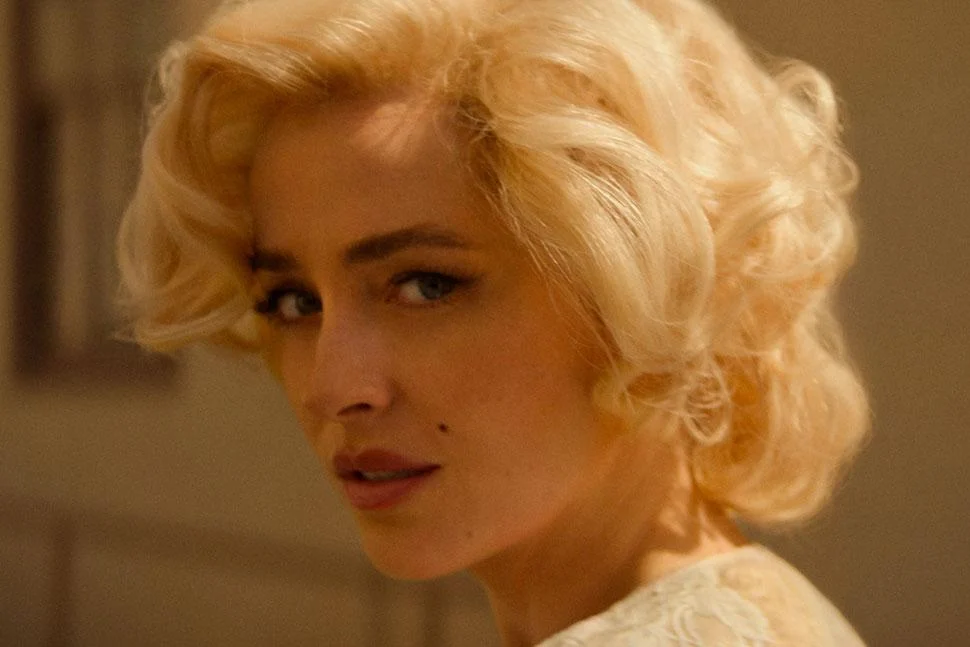
Maggie Gyllenhaal’s 2026 Venice residency is defined by two distinct but overlapping responsibilities. First is her leadership of the competition jury, a task she describes as an immersive educational experience that fuels her own creative engine. Second is the unveiling of Flesh Impact, a short film commissioned to commemorate what would have been the 100th birthday of Marilyn Monroe.
Flesh Impact is not a traditional biopic. Starring the legendary Ellen Burstyn—a recipient of this year’s Golden Lion for Lifetime Achievement—the film seeks to give Monroe a voice she was denied during her lifetime. The project, created in collaboration with the automotive and lifestyle brand Genesis, serves as a thematic bridge to Gyllenhaal’s highly anticipated upcoming feature, The Bride!.

Key highlights from Gyllenhaal’s Venice tenure include:
- The Jury Presidency: Overseeing the selection of the Golden Lion, Gyllenhaal viewed 23 films, citing the experience as a vital source of inspiration for her ongoing editorial work on The Bride!.
- Creative Reunion: Flesh Impact features a high-profile cast and crew, including Dakota Johnson, Peter Sarsgaard, and Sepideh Moafi, with cinematography by Lawrence Sher and editing by Affonso Gonçalves.
- Technological Critique: Gyllenhaal used the Venice platform to express significant reservations regarding the use of Artificial Intelligence in filmmaking, citing both artistic dilution and environmental degradation.
Chronology: From Directorial Debut to Jury President
Gyllenhaal’s relationship with the Venice Film Festival is storied and transformative. To understand her current role as Jury President, one must look back to the premiere of her directorial debut, The Lost Daughter (2021).
2021: The Birth of a Director
Gyllenhaal arrived at Venice with an adaptation of Elena Ferrante’s novel. The film was a critical sensation, winning the Best Screenplay award at the festival and eventually earning Gyllenhaal an Academy Award nomination. She recalls finishing the final mix of the film and immediately transitioning into jury duty at Cannes, a sequence of events that solidified her identity as a filmmaker. "I absolutely feel inspired being here now," Gyllenhaal remarked, noting that watching the work of 23 "really interesting filmmakers" is the best possible education for a director in post-production.
2024–2025: The Development of The Bride!
While Gyllenhaal continued to act, her primary focus shifted toward a massive reimagining of the Bride of Frankenstein mythos. Titled The Bride!, the film features Christian Bale and Penélope Cruz. It was during the rigorous editing phase of this project that Gyllenhaal was approached to create the Monroe-centric short, Flesh Impact.

June 2026: Commemorating an Icon
The deadline for Flesh Impact coincided with the centennial of Marilyn Monroe’s birth. Gyllenhaal, initially claiming she knew no more about Monroe than the "average Jane," dove into a "deep dive" of research. This research revealed a profound empathy for Monroe’s struggle against being consumed as an icon rather than being seen as a human being.
September 2026: The Venice Double-Header
Gyllenhaal returned to the Lido not just to judge the world’s best cinema but to present her own work. The premiere of Flesh Impact was strategically timed to honor Ellen Burstyn, creating a meta-narrative about survival in the film industry.
Supporting Data: The Collaborative "Stable" and the Method
Gyllenhaal’s directorial style is characterized by a reliance on a recurring "stable" of actors and craftspeople. This shorthand allows her to work with incredible speed—a necessity given that Flesh Impact was filmed in just three and a half days while she was simultaneously editing a major feature.
The Technical Team
Gyllenhaal’s "guys," as she affectionately calls them, include:

- Lawrence Sher (Cinematographer): Known for his work on Joker, Sher provides the visual language for The Bride! and Flesh Impact.
- Affonso Gonçalves (Editor): A veteran editor who worked on The Lost Daughter, "Fonz" provides the rhythmic continuity Gyllenhaal requires.
- Karen Murphy (Production Designer): Murphy’s ability to create immersive worlds allowed Gyllenhaal to pivot quickly between the 1930s aesthetic of The Bride! and the ethereal space of Flesh Impact.
The Acting Lineage
A significant portion of Gyllenhaal’s creative success stems from her deep understanding of "The Method." Although not formally trained, she spent decades working with teachers from the Lee Strasberg lineage. This created an immediate bond with Ellen Burstyn, a pillar of The Actors Studio.
In Flesh Impact, Gyllenhaal utilizes Burstyn as a living contrast to Monroe. While Monroe died at 36, unable to survive the "consumption" of her image by the public, Burstyn has survived and thrived into her 90s. This contrast is the emotional core of the film. Gyllenhaal also brought back Sepideh Moafi, her co-star from The Deuce, and Dakota Johnson, her lead from The Lost Daughter, to create a multi-generational exploration of the female experience in the spotlight.
Official Responses: The Ethical Bind of Artificial Intelligence
Perhaps the most provocative aspect of Gyllenhaal’s Venice residency was her public stance on Artificial Intelligence. During a panel titled "The Future of Creativity," Gyllenhaal revealed that she had experimented with licensable AI tools during the production of Flesh Impact. Her response was an unequivocal rejection of the technology.
"I found it was not a useful tool for this project in that I was after literally the opposite of what it was providing me with," Gyllenhaal stated. She explained that her goal was to find the "really, really deeply human" element in Monroe’s story. By applying a machine-generated layer over Dakota Johnson’s performance, Gyllenhaal felt the "opening to the human" was immediately extinguished.

Beyond the artistic limitations, Gyllenhaal voiced two major systemic concerns:
- Environmental Impact: She highlighted the massive energy consumption required to train and run generative AI models, calling it a "pretty fucking major" issue that cannot be ignored by the creative community.
- Cultural Dilution: She expressed a "cultural concern" regarding how AI flattens the nuances of human experience into recognizable but hollow icons.
While she admitted to being a "beginner" in the technical understanding of AI, her ethical stance was clear: if a tool erases the "brave and honest" truth of the world, it has no place in her toolkit.
Implications: A New Era for Gyllenhaal and Independent Cinema
Maggie Gyllenhaal’s trajectory suggests a significant shift in how "A-list" talent manages the transition to the director’s chair. Unlike many actors who direct as a secondary hobby, Gyllenhaal has integrated herself into the infrastructure of international cinema. Her role as Jury President at Venice 2026 signals that she is now viewed as a peer by the world’s elite filmmakers, rather than a newcomer.
The implications of her recent work are threefold:

1. The Reclaiming of the "Icon"
Through Flesh Impact and The Bride!, Gyllenhaal is establishing herself as a specialist in reclaiming misunderstood female icons. By focusing on the "human" behind the "monster" or the "sex symbol," she is challenging Hollywood’s historical tendency to objectify its most famous women.
2. The Defense of Human-Centric Craft
Gyllenhaal’s rejection of AI serves as a rallying cry for the "human-centric" school of filmmaking. In an industry increasingly pressured to cut costs through automation, her insistence on the "Method" and the "deeply human" provides a blueprint for maintaining artistic integrity. Her comments on the environmental cost of AI also suggest that "green filmmaking" in the future may involve a return to traditional, analog techniques.
3. The Power of the Creative Collective
By maintaining a consistent team of collaborators, Gyllenhaal is reviving the "studio system" model on an independent scale. This allows for a level of experimentation and speed that is rarely seen in high-budget productions. The recurring "SOS" line found in both Flesh Impact and The Bride! suggests a deeply personal, interconnected filmography where each project speaks to the next.
As Maggie Gyllenhaal prepares to hand out the Golden Lion this weekend, she does so not just as a judge of film, but as a vanguard of its future. Her message to the industry is clear: cinema must remain a tool for empathy, a mirror for the "brave and honest" truth, and above all, a human endeavor that no machine can replicate.