
The Female Gaze at the Forefront: Julianne Moore Honored with Kering Women in Motion Award at Cannes
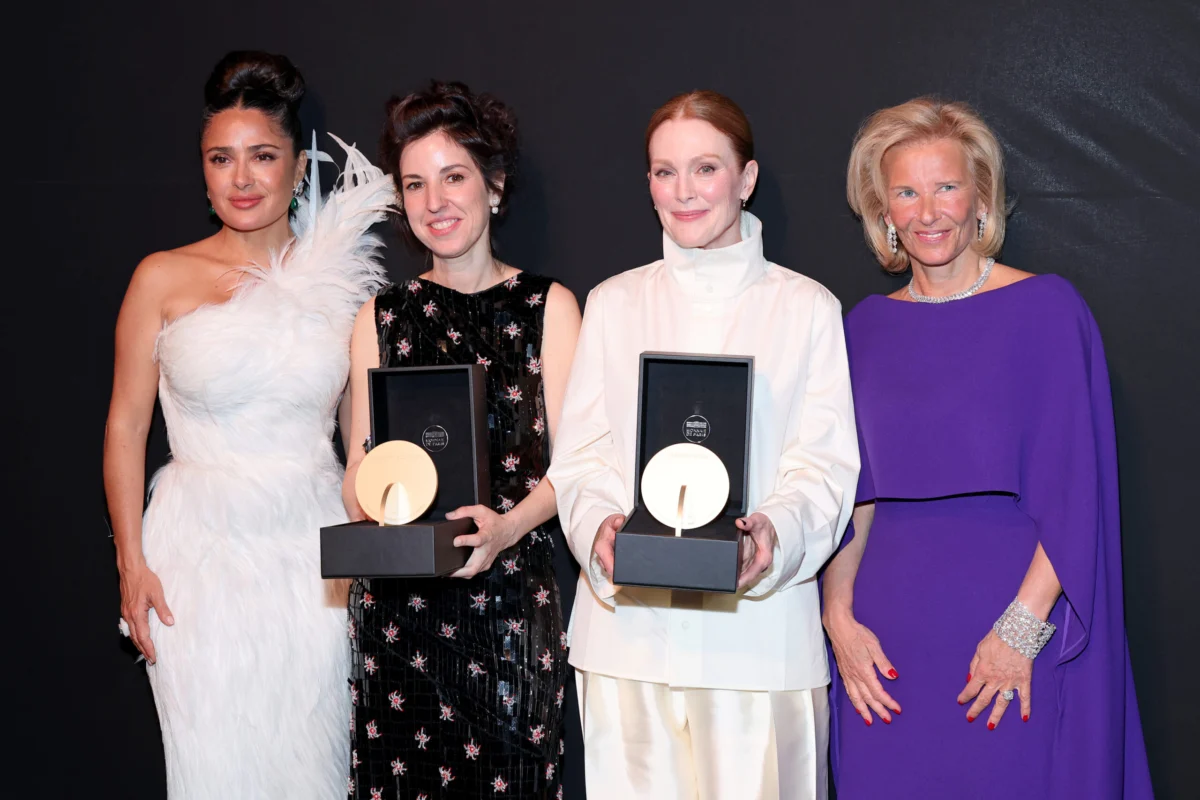
CANNES, FRANCE — In a career spanning four decades, Julianne Moore has navigated the heights of cinematic achievement, collecting an Academy Award, an Emmy, and top honors from the "Big Three" film festivals: Berlin, Venice, and Cannes. Yet, on a balmy Sunday evening at the Place de la Castre, Moore accepted an accolade she described as uniquely resonant. The 2026 Kering Women in Motion Award, a distinction launched in 2015 to celebrate the transformative power of women in front of and behind the camera, provided the stage for Moore to deliver a stirring manifesto on the necessity of the female perspective in global storytelling.

Surrounded by a "sorority" of industry titans and emerging voices, Moore used her platform not merely to reflect on a storied filmography, but to challenge the systemic "invisibility" that continues to plague women in the entertainment industry. Her address, punctuated by a viral moment of candid passion, underscored a central theme of the 79th Cannes Film Festival: the urgent need to move beyond "strong female leads" and toward authentic, specific, and multifaceted female narratives.

Main Facts: A Night of Recognition and Advocacy
The Kering Women in Motion Award has quickly become one of the most prestigious peripheral honors of the Cannes Film Festival. Established by the global luxury group Kering in partnership with the festival, the award recognizes individuals who have made significant contributions to the representation of women in cinema.

The Honorees
Julianne Moore was the evening’s primary honoree, joining a lineage of past winners that includes Jane Fonda, Michelle Yeoh, Viola Davis, and Nicole Kidman. Moore’s selection was a nod to her fearless career choices, often centering on complex, interior lives that defy traditional Hollywood tropes.

Alongside Moore, Italian filmmaker Margherita Spampinato was awarded the Emerging Talent Award for her debut feature, Gioia Mia. This honor includes a €50,000 grant, a tangible investment designed to bridge the notorious gap between a female director’s first and second feature films.

The Atmosphere
The gala dinner, held at the historic Place de la Castre overlooking the French Riviera, drew an eclectic and powerful crowd. Attendees ranged from veteran icons like Salma Hayek Pinault and Demi Moore to contemporary stars like Sebastian Stan, Colman Domingo, and Daisy Edgar-Jones. The event served as a microcosm of the industry’s current state—a blend of established prestige and a rising generation of talent vocal about social and structural change.

Chronology: From the Black Carpet to the Podium
The evening unfolded as a carefully choreographed tribute to the history and future of women’s contributions to the arts.

The Arrival
The "black carpet" arrivals began at sunset, with guests offering impromptu testimonials to Moore’s influence. Musician and actress Halsey confessed to being "shy" in Moore’s presence, praising her versatility. Charlotte Le Bon and Harry Melling highlighted specific performances—ranging from the clinical isolation of Todd Haynes’ Safe to the comedic brilliance of her cameo in The Big Lebowski—illustrating the breadth of Moore’s impact on fellow artists.

The Presentation
The formal proceedings were opened by Iris Knobloch, the President of the Cannes Film Festival, and Thierry Frémaux, the festival’s Director. Knobloch’s opening remarks set a pragmatic tone, emphasizing that visibility must be a precursor to "real opportunity." Frémaux followed by saluting Moore’s political activism and her commitment to social justice, framing her as an artist whose work is inseparable from her civic values.

A career-spanning montage followed, showcasing Moore’s evolution through films such as Boogie Nights, The Hours, Far From Heaven, and her Oscar-winning turn in Still Alice. Moore, watching the reel, remarked with a laugh that it felt like "watching your life flash before your eyes."

The Keynote Address
Moore’s acceptance speech began with a moment of raw enthusiasm—"I fucking love actresses," she declared—before transitioning into a sophisticated critique of the industry. She addressed the "cultural assumption" that women’s stories are inherently smaller or less interesting than those of their male counterparts. She specifically targeted the American market’s tendency to demand that female characters be "strong" or "accomplishing something great" to justify their place at the center of a narrative.

Supporting Data: The Persistent Gender Gap in Cinema
Moore’s rhetoric was supported by sobering statistics regarding the current state of gender parity in the film industry. Despite decades of advocacy, the data suggests that progress remains incremental and, in some areas, stagnant.

Roles and Representation
According to recent industry reports cited during the event, women occupied only 37.1% of speaking roles in major releases over the past year. This figure highlights a persistent imbalance where women are frequently relegated to supporting roles or used as foils for male protagonists, rather than being the architects of their own stories.

The Directorial Divide
The statistics for leadership roles are even more stark. In 2025, only nine out of the 111 directors of the top-grossing films in the United States were women. This "celluloid ceiling" remains one of the most significant barriers to changing the "gaze" of mainstream cinema. Without women in the director’s chair, the nuances of the female experience often remain filtered through a male perspective.

The Financial Incentive
The Emerging Talent Award’s €50,000 grant addresses a specific data point in the industry: the "one and done" phenomenon. Statistical evidence shows that female directors are significantly less likely than their male counterparts to receive funding for a second feature film, even if their debut is critically acclaimed.

Official Responses: Voices of the Evening
The night featured powerful statements from both the honorees and the organizers, reflecting a shared mission of institutional change.

Julianne Moore on the Female Perspective:
"I am more curious about what I observe, what I learn, and what I experience through my own lens," Moore stated. "And that’s the most important thing of all: what we as women see, and what we are here to celebrate tonight." She argued that her preference for female collaborators—including her agents, managers, and representatives—is not about exclusion, but about valuing a specific point of view that is often marginalized.

Margherita Spampinato on the Future:
Accepting the Emerging Talent Award, Spampinato highlighted the intersection of art and economics. "The mixture of talent, together with financial support, represents an important milestone that women are beginning to achieve today," she said. She dedicated the award to the women in her life who inspired her film Gioia Mia, noting that the world is "at last, beginning to change."

Iris Knobloch on Opportunity:
The Cannes President underscored the festival’s role in this evolution. She noted that while festivals provide a platform for visibility, the industry at large must ensure that this visibility translates into sustainable careers and equitable pay for women.

Implications: Moving Beyond the "Strong Female Lead"
The 2026 Women in Motion ceremony signals a shift in the discourse surrounding gender in Hollywood. Moore’s speech, in particular, suggests that the industry is moving past the era of the "Strong Female Character" trope—a concept often criticized for merely placing women in traditionally male, action-oriented roles without exploring the complexities of female identity.

Redefining the "Gaze"
Moore’s emphasis on the "female gaze" challenges the industry to value stories that are "small," domestic, or interior. By asserting that women’s everyday lives—the women in elevators, on subways, and in yoga groups—are worthy of cinematic exploration, she is advocating for a broadening of what is considered "marketable" content.

The Importance of Mentorship and Grants
The inclusion of the Emerging Talent Award alongside a veteran like Moore highlights the necessity of a pipeline. By providing financial support to directors like Spampinato, Kering and the Cannes Film Festival are attempting to solve the structural issues that prevent female-led stories from reaching global audiences.

A Call for Structural Change
Moore’s closing call to action—"We need more female voices in our industry, more writers, more directors, more actresses to carry that vision forward"—serves as a reminder that individual accolades are insufficient. The long-term implication of the Women in Motion initiative is the creation of a self-sustaining ecosystem where female perspectives are not a "niche" or a "special interest," but a fundamental pillar of the global cinematic landscape.

As the 79th Cannes Film Festival continues, the echoes of Moore’s impassioned speech remain. The event at Place de la Castre was more than a gala; it was a reaffirmation that for the film industry to truly reflect the world, it must first learn to see through the eyes of the women who inhabit it.


Leave a Comment