
The Digital Frontier: How Clint Eastwood’s ‘In the Line of Fire’ Pioneered the Online Movie Trailer
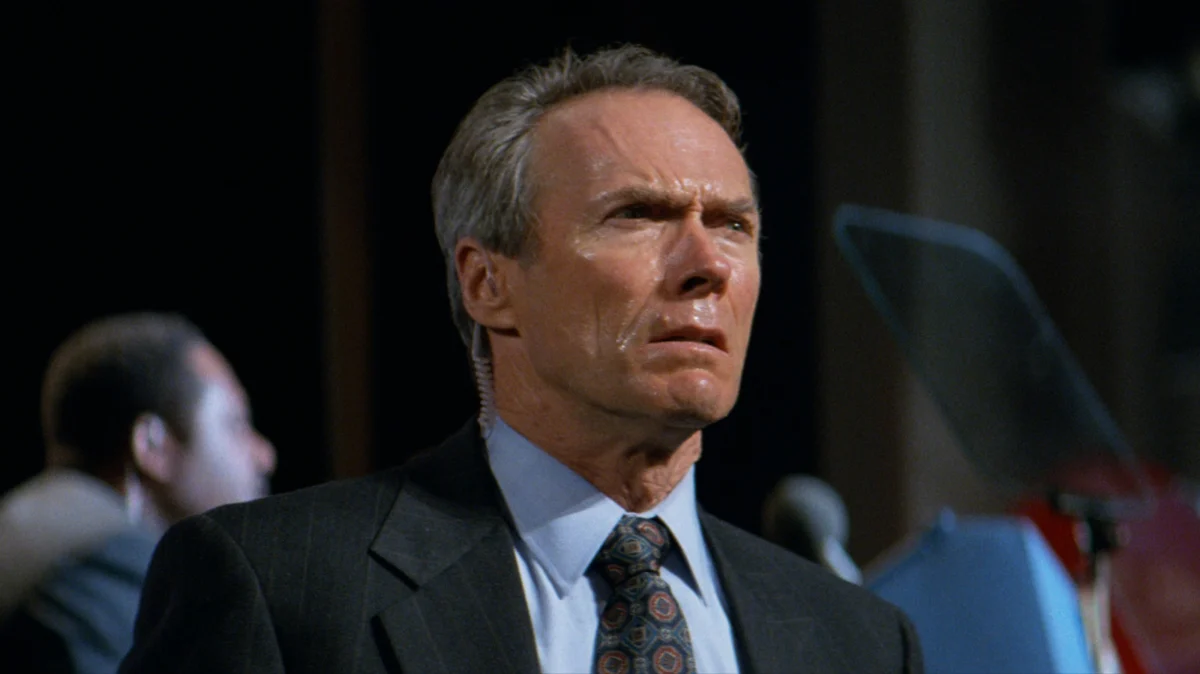
In the annals of cinema history, 1993 is often remembered as the year of Jurassic Park’s T-Rex and the emotional weight of Schindler’s List. However, beneath the surface of these box-office titans, a quieter revolution was taking place—one that would forever alter how audiences consume media. Clint Eastwood, an actor synonymous with the rugged, analog era of the Old West and the gritty streets of San Francisco, became the unlikely face of the digital future. His political thriller In the Line of Fire did more than just revitalize the veteran actor’s career; it served as a primary catalyst for the transition of movie marketing from the television screen to the computer monitor.
As the World Wide Web was being handed over to the public, Columbia Pictures took a calculated risk by releasing a trailer for the film online. It was a move that, at the time, seemed like a niche experiment for tech enthusiasts, but in retrospect, it was the "Big Bang" for the multi-billion-dollar digital marketing industry that dominates Hollywood today.
Main Facts: A Convergence of Legend and Innovation
In the Line of Fire, directed by Wolfgang Petersen, is a masterclass in the political thriller genre. It stars Clint Eastwood as Frank Horrigan, a Secret Service agent haunted by his failure to save John F. Kennedy in 1963. Opposite him is John Malkovich in an Academy Award-nominated performance as Mitch Leary, a rogue CIA assassin intent on killing the current president.
While the film’s narrative focuses on the ghosts of the past, its marketing was firmly planted in the future. On April 30, 1993, the European Organization for Nuclear Research (CERN) put the World Wide Web software in the public domain. Scarcely weeks later, Columbia Pictures utilized the burgeoning America Online (AOL) platform to distribute promotional material for In the Line of Fire. This included production notes, high-resolution (for the time) still images, and most notably, a digital trailer that users could download directly to their personal computers.
This was a radical departure from the status quo. In 1993, trailers—or "coming attractions"—were experienced almost exclusively in movie theaters or during commercial breaks on network television. By making the trailer a downloadable file, Columbia Pictures transformed the audience from passive viewers into active participants, marking the birth of "interactive marketing."
Chronology: From the Grassy Knoll to the World Wide Web
To understand the significance of this milestone, one must look at the timeline of both the film’s production and the technological landscape of the early 1990s.
The Late 1980s – Early 1990s: Development
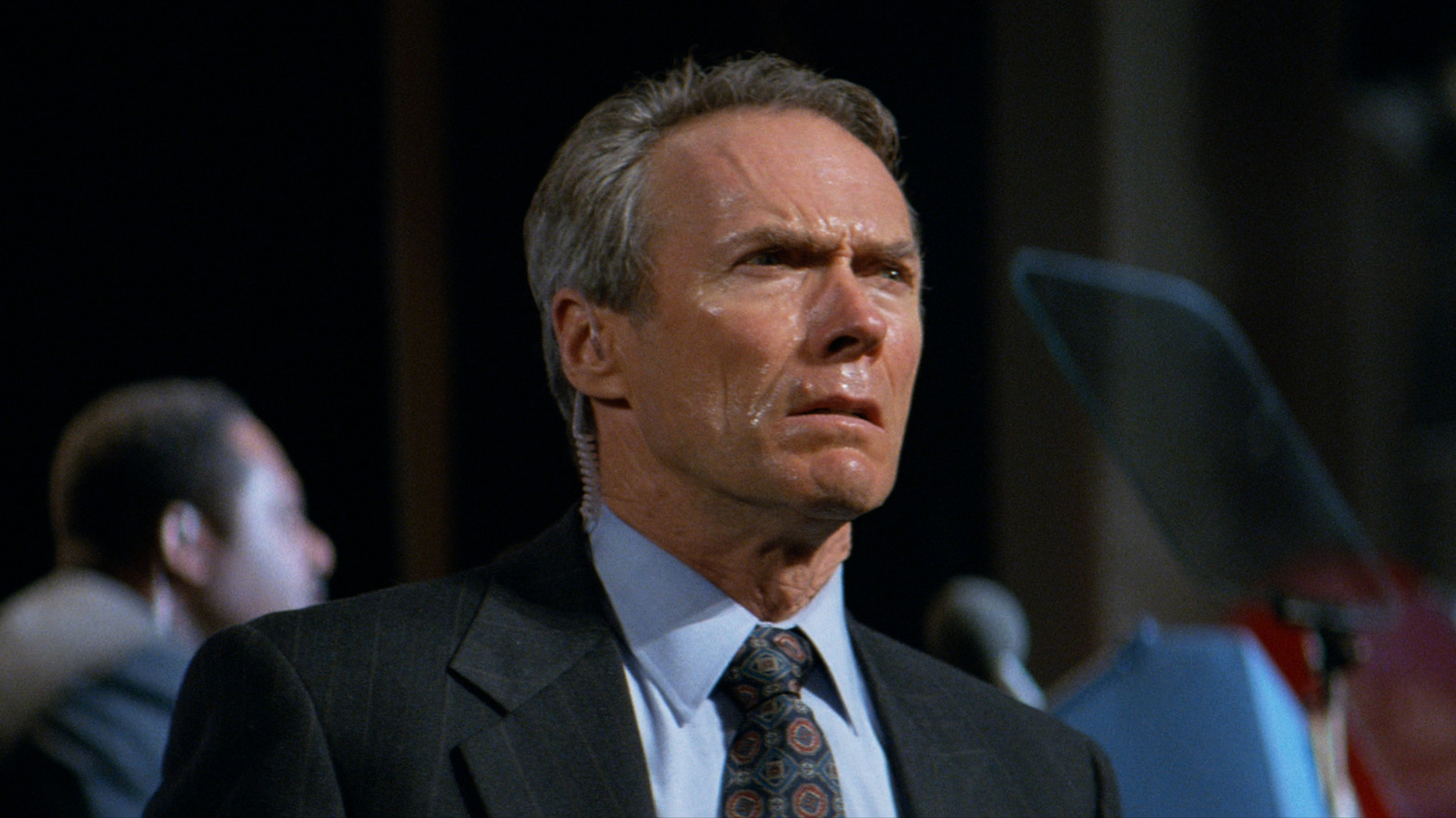
The script for In the Line of Fire, written by Jeff Maguire, had been circulating in Hollywood for years. Initially, the project was intended for Tom Selleck, but when the script reached Wolfgang Petersen—fresh off the success of the submarine masterpiece Das Boot—the director saw a different potential. He envisioned a lead who carried the weight of American cinematic history. Clint Eastwood, coming off the Oscar-winning success of 1992’s Unforgiven, was the perfect fit.
April 1993: The Web Goes Public
While Petersen was in post-production, the infrastructure of the modern world was changing. The public release of the World Wide Web meant that for the first time, the internet was not just for academics and the military. However, the "web" was largely text-based. Images were slow to load, and video was almost non-existent.
Summer 1993: The AOL Launch
In July 1993, as In the Line of Fire prepared for its theatrical debut, Columbia Pictures partnered with "Hollywood Online," a service accessible through AOL. This was the era of dial-up modems, where the screeching sound of a handshake protocol was the gatekeeper to the digital world. Subscribers "dialed in," navigated to the Hollywood Online forum, and were presented with the opportunity to download the In the Line of Fire trailer.
July 9, 1993: Theatrical Release
The film opened to critical acclaim and massive box-office success, eventually grossing over $176 million worldwide. While the vast majority of the audience saw the trailer on TV or in theaters, the 170 individuals who downloaded it in the first week represented a new demographic: the "online movie fan."
Supporting Data: The Magnitude of the Shift
The technical specifications of 1993 highlight just how ambitious this marketing move was. In an era where a 14.4k or 28.8k modem was standard, a video file—even one compressed to a tiny, pixelated window—was a massive undertaking.
- Download Statistics: According to reports from Variety at the time, approximately 170 people downloaded the In the Line of Fire trailer during its first week of availability. To modern ears, this number sounds infinitesimal. For comparison, the trailer for Spider-Man: No Way Home (2021) garnered 355.5 million views in its first 24 hours. However, in 1993, 170 downloads represented a significant portion of the "power users" who had the hardware capable of playing video.
- The Technical Hurdle: A standard trailer today is roughly 2.5 minutes and delivered in 4K resolution. In 1993, the "digital trailer" was likely a QuickTime file with a resolution of 160×120 pixels. Downloading such a file on a 14.4k modem could take upwards of 30 to 60 minutes, assuming the connection didn’t drop.
- Critical Reception: The film’s quality bolstered its marketing. In the Line of Fire currently holds a 96% "Certified Fresh" rating on Rotten Tomatoes. It was Eastwood’s highest-rated action film since Tightrope (1984) and remains one of the top-performing titles in his legendary filmography.
Official Responses and Industry Sentiment
The reaction from the industry in 1993 was a mix of curiosity and skepticism. Many executives viewed the internet as a "geeky" hobby that would never replace the reach of a 30-second Super Bowl ad. However, those on the front lines of the experiment saw it differently.
A Los Angeles-based consultant, quoted in a 1993 Variety article, expressed the wonder of the era: "I’d only participated in forums with text. To see graphics and full-motion images was nice. It’s a very good application of interactive marketing."
Columbia Pictures’ decision to allow users to "own" the file was also a point of discussion. Unlike today’s streaming environment, where content is licensed and can be removed at any time by platforms like Apple or Amazon, the 1993 model encouraged users to download the data to their hard drives or floppy disks. This created a sense of digital "souvenirs," a precursor to the digital collectibles and NFTs of the modern age.
Wolfgang Petersen himself noted that the film’s success was partly due to its ability to bridge the gap between old-school tension and modern sensibilities. By using the internet to reach audiences, the studio was signaling that even a story about a 60-year-old agent was relevant to the "Information Age."
Implications: From Dial-Up to Global Dominance
The legacy of In the Line of Fire extends far beyond its plot of assassination and redemption. It served as the blueprint for the next three decades of film promotion.
1. The Rise of the "Event" Trailer
Before In the Line of Fire, trailers were secondary to the film. After the success of online previews, trailers became events in their own right. This evolved into the "trailer for a trailer" culture we see today, where studios announce the date a trailer will drop weeks in advance.
2. Viral Marketing Foundations
By the late 1990s, films like The Blair Witch Project (1999) would take the "Hollywood Online" concept to the next level, using the internet to blur the lines between fiction and reality. This would eventually lead to the massive Alternate Reality Games (ARGs) used to promote Christopher Nolan’s The Dark Knight in 2008.

3. The Death of Ownership
Ironically, the 1993 experiment was more "open" than today’s digital landscape. In 1993, you downloaded a file and you owned it. Today, marketing is designed to drive users toward subscription services. We have moved from the "interactive marketing" of 1993 to "surveillance marketing," where every click on a trailer is tracked, analyzed, and sold to advertisers.
4. Eastwood’s Action Sunset
For Clint Eastwood, In the Line of Fire was a poetic conclusion to his career as a pure action star. It allowed him to play a character who was explicitly "too old for this," yet still capable of outthinking a younger, more tech-savvy antagonist. Much like the film’s marketing, Horrigan was a man from an older era forced to navigate a rapidly changing world.
In conclusion, while In the Line of Fire is rightfully celebrated as one of the greatest thrillers of the 1990s, its most enduring contribution to cinema may be the 170 people who sat patiently by their modems, waiting for a grainy video of Clint Eastwood to appear on their screens. They weren’t just watching a trailer; they were witnessing the birth of the digital age of Hollywood.



Leave a Comment