The Ghost in the Machine: Why 1.4 Billion Windows Users Couldn’t Generate a Single Sale for ‘Nowhere Prophet’
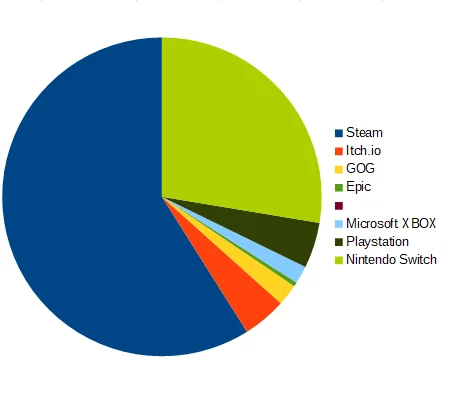
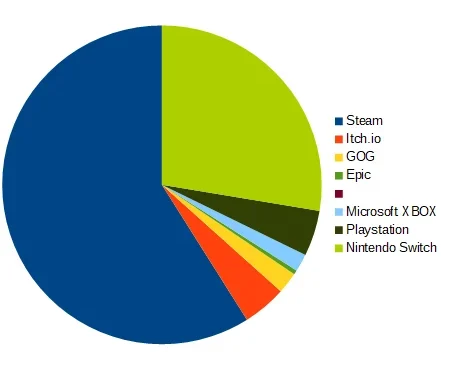
On August 5, 2022, a single tweet from an independent game developer sent ripples through the digital distribution industry. Martin Nerurkar, the founder of Sharkbomb Studios and the mind behind the critically acclaimed deck-building roguelike Nowhere Prophet, shared a routine revenue breakdown by platform. The data was standard for a successful indie title, showing healthy engagement across Steam, the Nintendo Switch, and various console ecosystems. However, it was a follow-up comment that exposed a staggering void in the PC gaming market: despite being available on the Microsoft Store for years, the game had not recorded a single purchase on that specific platform.
This revelation serves as a damning case study of the Microsoft Store’s ongoing struggle to find relevance. In an era where Microsoft boasts over 1.4 billion monthly active devices running Windows 10 and 11, the inability of its native storefront to convert a single sale for a proven, high-quality title highlights a systemic failure in user experience, brand identity, and marketplace strategy.
Main Facts: The Zero-Sale Anomaly
The controversy began when Nicholas Lovell, founder of Gamesbrief, highlighted Nerurkar’s sales chart. Nowhere Prophet, a game that blends tactical combat with a unique "dustpunk" aesthetic, had managed to move approximately 20,000 copies across all platforms at the time of the report. While these are modest numbers compared to AAA blockbusters, they represent a solid success for a niche indie title.
The revenue distribution showed the expected leaders:
- Steam: The dominant force for PC sales.
- Nintendo Switch: A popular home for portable indie experiences.
- PlayStation and Xbox Consoles: Steady contributors to the long-tail revenue.
However, the Microsoft Store (the native storefront built into every Windows installation) was conspicuously absent from the chart. When questioned by followers, Nerurkar confirmed the unthinkable: "And if you’re wondering why the Microsoft Store isn’t on this graph, that’s because we haven’t made a single sale there in this entire time."
The statistical probability of a game selling 20,000 units across various ecosystems while failing to attract even one buyer on a platform pre-installed on 1.4 billion devices is nearly zero. This suggests that the Microsoft Store is not merely underperforming; for a significant portion of the gaming public, it effectively does not exist.
Chronology: The Long Road to Irrelevance
To understand how Microsoft reached this point, one must look at the turbulent history of its attempts to colonize the PC gaming desktop.
2012–2015: The Windows 8 Era and UWP
The "Windows Store" was launched with Windows 8 in 2012. It was Microsoft’s attempt to replicate the success of the Apple App Store on mobile. However, it forced developers into the Universal Windows Platform (UWP) format. UWP apps were sandboxed, making them difficult to mod and often incompatible with third-party software like FRAPS or Discord overlays. Gamers, who prize the "open" nature of PC gaming, immediately rejected the store as a "walled garden."
2017–2019: Rebranding and the Xbox Integration
Microsoft rebranded the "Windows Store" to the "Microsoft Store" in 2017, attempting to unify its hardware, software, and gaming offerings. Around this time, they introduced "Xbox Play Anywhere," allowing users to buy a game once and play it on both PC and Xbox. Despite this value proposition, the PC client remained plagued by technical bugs, slow download speeds, and a confusing interface.
2019–Present: The Game Pass Pivot
In 2019, Microsoft launched Xbox Game Pass for PC. This shifted the focus from a "transactional" store (buying games individually) to a "subscription" model. While Game Pass has been a massive success, reaching over 25 million subscribers, it has effectively cannibalized the "Buy-to-Play" market on the Microsoft Store. Users now go to the store to download what they already "own" via subscription, but they rarely browse it to purchase individual indie titles like Nowhere Prophet.

Supporting Data: The 1.4 Billion vs. 0 Divide
The disparity between Microsoft’s reach and its conversion rate is perhaps the most significant "bottleneck" in digital retail history. To put the 1.4 billion Monthly Active Users (MAU) figure into perspective, we must compare it to the competitors:
- Steam (Valve): At the time of Lovell’s article, Steam had approximately 132 million monthly active users. Despite having less than 10% of the "footfall" of Windows devices, Steam accounts for the vast majority of PC game sales.
- The "Footfall" Fallacy: Microsoft’s 1.4 billion users include corporate workstations, government laptops, and casual home users who only use a browser. However, even if only 5% of those users are "gamers," that still represents 70 million potential customers—nearly half of Steam’s entire audience.
- Conversion Rates: For Nowhere Prophet to sell 20,000 copies elsewhere and zero on the Microsoft Store implies that the "discovery engine" of the Microsoft Store is non-functional. On Steam, algorithms suggest games based on user preference. On the Microsoft Store, users are often greeted with ads for TikTok, Netflix, or "hidden object" mobile ports, burying high-quality indie titles.
Official Responses and Strategic Shifts
While Microsoft did not issue a specific rebuttal to Nerurkar’s tweet, the company’s actions in the months surrounding this event suggest an internal acknowledgment of the store’s failure.
In late 2021 and throughout 2022, Microsoft began a massive overhaul of the store for Windows 11. Key changes included:
- Opening the Store to Win32 Apps: Microsoft finally abandoned the requirement for UWP, allowing developers to bring standard PC games (.exe files) to the store without restrictive sandboxing.
- Revenue Share Adjustments: Microsoft lowered its revenue cut for games to 12% (matching Epic Games Store) to lure developers away from Steam’s 30%.
- Third-Party Store Integration: In a desperate move to increase footfall, Microsoft allowed the Amazon Appstore and the Epic Games Store to be "listed" within the Microsoft Store.
Industry analysts, such as those at Gamesbrief, argue that these moves may be "too little, too late." The brand damage associated with the Microsoft Store—often characterized by users as "bloatware" or a "necessary evil" for updating system drivers—is deeply ingrained in the PC gaming subculture.
Implications: The Identity Crisis of the PC Marketplace
The "zero-sale" phenomenon of Nowhere Prophet points to three critical implications for the future of digital distribution.
1. The Death of the "Generalist" Store
The Microsoft Store suffers from a profound identity crisis. It attempts to be a retail outlet for $60 AAA games, a repository for free utility apps (like calculators or PDF readers), and a mobile-style app store for microtransaction-heavy casual games. By trying to be everything to everyone, it becomes nothing to the core gaming audience. In contrast, Steam is laser-focused on gaming culture, fostering communities, modding, and a robust trading economy.
2. The "Game Pass" Black Hole
For indie developers, the Microsoft Store has become a "subscription-or-nothing" ecosystem. If a game is not on Game Pass, it is invisible. While being on Game Pass provides an upfront fee that can save a studio, it does not build a long-term "purchasing" audience on that platform. If Microsoft ever pivots away from Game Pass, they may find they have no traditional retail customers left.
3. The Trust Deficit and Technical Friction
PC gamers are notoriously sensitive to technical friction. For years, the Microsoft Store was notorious for "locking" game files in folders that even administrators couldn’t access. This prevented the installation of mods—a cornerstone of PC gaming. Although Microsoft has recently eased these restrictions, the "trust deficit" remains. Gamers prefer Steam because they know their files are accessible, their saves are backed up reliably, and the software won’t break during a Windows update.
Conclusion: A Warning to Platform Holders
The story of Nowhere Prophet is a cautionary tale for any platform holder who believes that "pre-installed" equates to "market share." Having 1.4 billion users is a meaningless metric if the storefront built for them is so poorly optimized, curated, and respected that it cannot facilitate a single transaction for a quality product.
For Microsoft to fix this, it must do more than update the UI. It needs to separate the "Windows App Store" (for utilities) from the "Xbox Store" (for gaming) on PC, ensuring that the gaming environment feels like a premium, enthusiast-focused destination rather than a cluttered corner of an OS settings menu. Until then, the Microsoft Store will remain a "ghost town" in the heart of a metropolis—a massive marketplace where the lights are on, but nobody is buying.