The Invisible Vulnerability: How Professional Burnout Led a Cybersecurity Expert to a $3 Million Financial Catastrophe
By [Staff Writer/Journalist]
For Joe White, risk was never an abstract concept. With a career spanning over 25 years in the high-stakes sectors of information security, technology, and startups, White’s professional identity was built on a foundation of skepticism, vulnerability assessment, and rigorous decision-making. In the world of cybersecurity, a single oversight can lead to a catastrophic breach; White was the man hired to ensure those oversights never happened.
Yet, in a staggering irony that highlights the growing crisis of mental health in the tech industry, White recently revealed that his greatest professional failure was not a technical glitch or a hacked server. Instead, it was a failure of self-assessment. While suffering from chronic, high-functioning burnout, White made a series of decisions that resulted in the loss of approximately $3 million in retirement savings through an offshore cryptocurrency lending platform.
His story serves as a harrowing case study in how cognitive depletion can bypass the defenses of even the most analytical minds, turning a lifetime of competence into a "single point of failure."
I. Main Facts: The Intersection of Burnout and Financial Ruin
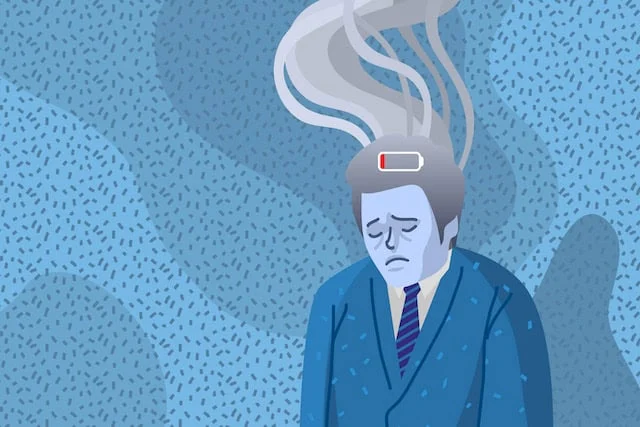
The crux of White’s experience lies in the deceptive nature of "high-functioning" burnout. Unlike the stereotypical image of a worker unable to leave their bed, White remained productive, solving complex technical problems and managing professional responsibilities. However, beneath the surface, his executive function—the mental processes that enable us to plan, focus attention, and juggle multiple tasks—was severely compromised.
The Loss: Approximately $3 million, representing decades of accumulated wealth and retirement security.
The Vehicle: An offshore cryptocurrency lending platform. These platforms, which gained massive popularity between 2020 and 2022, often promised high yields but lacked the regulatory safeguards of traditional banking.
The Cause: While legal and systemic failures in the crypto industry played a role, White identifies "cognitive depletion" as the primary reason he failed to perform the due diligence that had been the hallmark of his career.
The Warning: White’s experience suggests that "functional" burnout is more dangerous than "paralyzing" burnout because it allows the individual to continue making high-stakes decisions while their judgment is fundamentally impaired.
II. Chronology: The Slow Burn Toward a Crisis
The Foundation (1995–2018)
White spent over two decades climbing the ranks of the technology sector. His roles in information security required him to operate in a state of constant vigilance. In this environment, long hours and high pressure were not just expected; they were a badge of honor. Over time, the "push-through" mentality became his default operating system.
The Onset of "Functional" Burnout (2019–2021)
The transition from healthy stress to pathological burnout was not a sudden event but a "boiling frog" scenario. White reports that exhaustion became his baseline. He experienced "brain fog"—a cognitive impairment characterized by confusion, forgetfulness, and a lack of focus.
Crucially, because White could still perform complex tasks, he used his continued output as "proof" of his well-being. This created a dangerous feedback loop: the more he pushed through the fog, the more he believed he was capable of handling the pressure, even as his internal reserves were hitting zero.
The Decisive Error (Late 2021)
During this period of peak cognitive depletion, White moved his retirement savings into an offshore cryptocurrency lending platform. In a healthy state, a security expert of his caliber would likely have flagged the lack of transparency, the jurisdictional risks, and the unsustainable yield models. However, the "brain fog" led him to accept misrepresented risks as informed decisions. He treated a high-risk environment with the casualness of a low-risk one.
The Collapse and Aftermath (2022–Present)
When the crypto market experienced a systemic contagion in 2022—marked by the collapse of major players and the freezing of withdrawals on numerous lending platforms—White’s savings vanished.
For the past three years, White has been engaged in a dual battle: a legal fight for accountability against the entities involved and a psychological journey to understand how his own mind betrayed him. He has recently turned to public advocacy and fundraising to manage immediate expenses and continue his litigation.
III. Supporting Data: The Science of the "Burned-Out" Brain
White’s experience is backed by a growing body of neuropsychological research. Burnout is no longer viewed merely as "being tired"; it is recognized as a significant physiological change in the brain.
The Prefrontal Cortex and Executive Function
Research published in journals such as PLOS ONE and Biological Psychology indicates that chronic stress and burnout lead to a thinning of the prefrontal cortex (PFC). The PFC is the brain’s "CEO," responsible for complex decision-making, impulse control, and the assessment of risk. When the PFC is weakened, the brain relies more heavily on the amygdala, which governs emotional responses and "fight or flight" instincts.
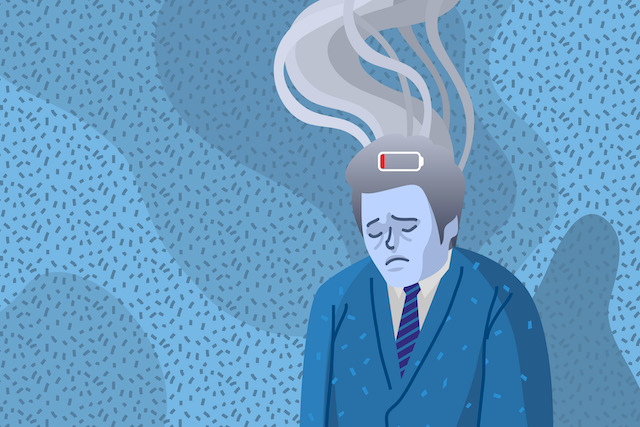
For a professional like White, this meant that while he could still "calculate," he could no longer "evaluate." He could process the mechanics of a transaction but lost the high-level perspective needed to see the "red flags" surrounding the platform’s stability.
The Prevalence of Burnout in Tech
A 2023 survey by Yerbo of over 30,000 IT professionals across 33 countries found that:
- 40% of tech workers are at high risk of burnout.
- 42% of those at high risk feel they have no "mental bandwidth" left for personal decisions.
- 62% feel physically and emotionally drained at the end of the workday.
White’s case illustrates the "Competence Trap": the more experienced a professional is, the more likely they are to rely on their intuition. However, intuition is the first thing to fail when cognitive depletion sets in.
IV. Official Responses and Industry Context
The financial tragedy Joe White experienced occurred against a backdrop of systemic instability in the digital asset market and a shift in how global health organizations view workplace stress.
Regulatory Warnings on Crypto Lending
The Securities and Exchange Commission (SEC) and the Consumer Financial Protection Bureau (CFPB) have issued numerous warnings regarding crypto interest-bearing accounts. In 2022, SEC Chair Gary Gensler noted that many of these platforms were "operating essentially like banks but without the protections of banks," such as FDIC insurance. White’s loss is part of a larger wave of retail and professional investors who were caught in the "yield-chasing" mania of the early 2020s, often exacerbated by a lack of clear international regulation for offshore platforms.
The WHO’s Reclassification of Burnout
In 2019, the World Health Organization (WHO) updated its International Classification of Diseases (ICD-11), redefining burnout as an "occupational phenomenon" resulting from "chronic workplace stress that has not been successfully managed." This shift moved the needle from viewing burnout as an individual "weakness" to a systemic failure.
White’s story aligns with the WHO’s three dimensions of burnout:
- Feelings of energy depletion or exhaustion.
- Increased mental distance from one’s job (or cynicism).
- Reduced professional efficacy (which White experienced as impaired judgment).
V. Implications: Risk Management of the Self
The most profound lesson from White’s $3 million loss is the necessity of applying professional risk management protocols to one’s personal and mental life.
The Fallacy of the Independent High-Performer
White notes that his independence became a vulnerability. In the cybersecurity world, "Red Teaming" (having an independent group challenge a system’s security) is standard. Yet, in his personal life, White acted as his own sole validator.
- Implication: High-stakes personal decisions—especially those involving life savings—should require a "second set of eyes," such as a spouse, a trusted friend, or a fiduciary financial advisor, particularly during periods of high stress.
Redefining Recovery
White’s experience suggests that the tech industry’s approach to "wellness" (e.g., meditation apps or a week of vacation) is insufficient for severe burnout. Recovery requires "changing the system that produced the burnout." This includes:
- Strict Digital Boundaries: Disconnecting from the "always-on" nature of tech.
- Physical Prioritization: Recognizing that sleep and nutrition are direct inputs into decision-making quality.
- External Checks: Implementing personal "controls" to slow down decision-making when signs of exhaustion appear.
A Warning to the "Functional"
"Being able to function is not the same as functioning normally," White warns. His story is a call to action for high-performers to monitor their "cognitive baseline." If concentration becomes harder or if the solution to poor performance is simply "working longer," the individual is already in the danger zone.
Joe White cannot recover the years spent in the "fog," nor can he easily replace the $3 million lost. However, by sharing his vulnerability, he provides a new kind of "security patch" for others: the realization that the most sophisticated system in the world—the human mind—is only as reliable as the rest it receives.
Joe White continues to advocate for mental health awareness in the tech sector while pursuing legal avenues for his financial recovery. He has established a GoFundMe to support his ongoing efforts.