The Rise of the Village Architect: Exploring the Creative Liberty of ‘Littlehaven’
The landscape of modern gaming is undergoing a quiet revolution. While high-octane shooters and grueling soulslikes continue to dominate the charts, a burgeoning sub-genre known as "cozy games" has carved out a significant and loyal demographic. At this year’s Gamescom, one title in particular—Littlehaven—captured the attention of enthusiasts and critics alike. Moving beyond the traditional farming simulators that have defined the genre for a decade, Littlehaven positions the player not as a laborer, but as a visionary village designer.
Main Facts: A New Paradigm in Community Simulation
Littlehaven is an upcoming village simulation and decoration game that prioritizes creative freedom, community interaction, and narrative discovery over traditional mechanical stress. Developed with an emphasis on "low-stakes, high-reward" gameplay, the title places players in the role of a newcomer to a small, fledgling town. Unlike its predecessors, which often gate progress behind stamina bars or strict financial deadlines, Littlehaven focuses on the aesthetic and social evolution of the environment.
The Role of the Village Designer
The core gameplay loop revolves around the concept of "village design." Players are tasked with transforming a modest settlement into a thriving, aesthetically pleasing community. This is achieved through the placement of various structures, community areas, and decorative elements. The game distinguishes itself by offering a "handy person" narrative, where the protagonist acts as the catalyst for the town’s physical and social growth.
Technical Innovation: Beyond the Grid
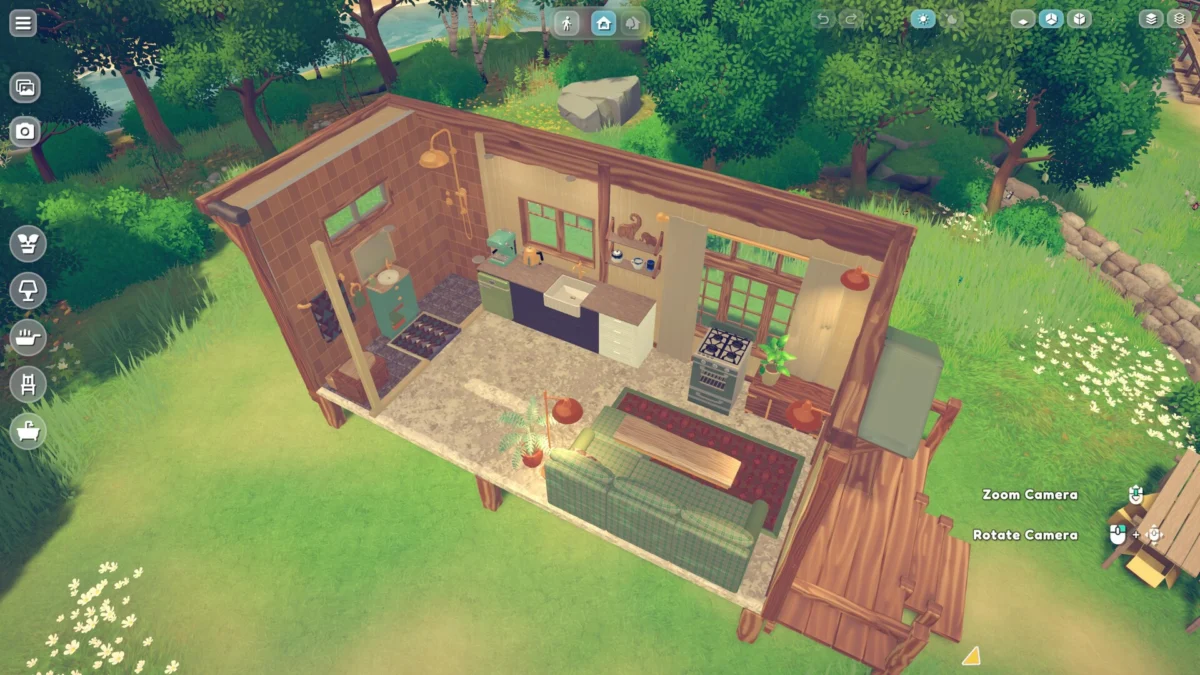
Perhaps the most significant technical feature of Littlehaven is its departure from the "grid-based" placement system common in titles like Animal Crossing or The Sims. In Littlehaven, players are granted unprecedented control over their environment:
- Rotation and Scaling: Objects can be turned to any angle and resized to fit specific spatial requirements.
- Recoloring and Tweaking: A robust customization suite allows players to modify the color palettes and minor details of furniture and infrastructure.
- Organic Placement: The lack of a restrictive grid allows for the creation of organic-looking pathways, cluttered "lived-in" interiors, and unique architectural layouts that feel natural rather than programmed.
Chronology: From Concept to Gamescom Showcase
The journey of Littlehaven reflects the broader trend of indie development cycles that prioritize community feedback and iterative design.
Early Development and Vision
The project began as an exploration of "creative autonomy" in gaming. The developers sought to answer a specific question: Can a game be engaging if the only objective is to make things better for others? This led to the development of the "Village Designer" role, moving away from the survival-based mechanics that often clutter the simulation genre.
The Gamescom Reveal
The game made a significant impact at Gamescom, where a playable demo allowed attendees to experience the intuitive building tools firsthand. The showcase highlighted the game’s "vibe-shifting" mechanic, where the overall atmosphere of the town—its lighting, music, and NPC behavior—dynamically changes based on the player’s design choices.
Current Status and Future Trajectory
As of late 2024, Littlehaven has transitioned into a highly anticipated title on the Steam platform. While the developers have opted not to announce a concrete release date to ensure the "stress-free" philosophy extends to the development team itself, the game is currently available for wishlisting. This phase is crucial for indie titles, as it dictates visibility and support upon the eventual launch.
Supporting Data: The Mechanics of Coziness
To understand why Littlehaven is resonating with audiences, one must look at the data regarding player psychology and genre trends.
The Shift in Player Motivation
Market research into the "cozy" genre suggests that players are increasingly looking for "digital third places"—virtual spaces where they can express themselves without the fear of failure. Littlehaven leverages this by removing "fail states." You cannot "lose" at designing the village; you can only iterate on it.
Demographic Engagement
According to recent industry reports, the "wholesome" gaming market has seen a 25% year-over-year growth in engagement. Titles that feature "non-grid" building mechanics are particularly popular among the "creator" demographic—players who spend more time in photo modes and building menus than in active combat. Littlehaven’s inclusion of scaling and recoloring tools directly addresses the demands of this high-engagement group.
Narrative Integration
The game features a layered narrative system. As the town grows, new residents arrive. Supporting data from the Gamescom demo indicates that these NPCs are not merely static quest-givers. They possess "historical triggers"—narrative threads that are unlocked only when certain environmental conditions are met. For example, building a library might reveal the history of the town’s founding families through the dialogue of a newly arrived scholar.
Official Responses: The Developer’s Philosophy
During the Gamescom showcase, representatives for Littlehaven emphasized that the game is a response to the "over-gamification" of hobbies.
"We wanted to create a space where the player’s intuition is the primary guide," a spokesperson noted during a press briefing. "In many sims, you are building for efficiency—optimizing layouts for the fastest walk-speed or the highest profit. In Littlehaven, we want you to build because you think a specific bench looks beautiful under a specific tree."
Balancing Freedom and Guidance
When questioned about the potential for "choice paralysis" in a game with so much freedom, the developers pointed to the "Resident Request" system.
"The villagers have thoughts. They aren’t demands, but they provide a nudge. If an NPC mentions they miss the sound of water, it might inspire the player to build a fountain or a pond. It’s a conversation between the player and the game world, rather than a checklist of chores."
The Importance of History
The development team also highlighted the "well-rounded" nature of the world. "It’s not just a blank canvas. Littlehaven has a past. By improving the present, players are essentially excavating the history of the village. The more care you put into the world, the more the world reveals its secrets to you."
Implications: The Future of Creative Simulations
The emergence of Littlehaven signifies a broader shift in the gaming industry’s approach to player agency and mental health.
The "Anti-Stress" Movement
As real-world stressors increase, the demand for "low-demand" gaming experiences is expected to rise. Littlehaven serves as a blueprint for how developers can create depth without difficulty. By focusing on "tweakable" environments, the game provides a sense of control that is often lacking in daily life.
Impact on the Genre
If Littlehaven succeeds, it could force established franchises to reconsider their reliance on grid-based systems. The technical hurdle of allowing free-form rotation and scaling is significant, but the level of player satisfaction it provides creates a new standard for the genre. We may see a future where "Village Designer" becomes a standard archetype in simulation games, moving away from the "Mayor" or "Farmer" tropes.
Community and Longevity
The "dream-like" quality of being in charge of community-focused areas has a strong social implication. It encourages players to think about urban planning and community well-being in a creative, idealized light. Furthermore, the "history to discover" ensures that the game has longevity beyond its building mechanics, providing a narrative hook that keeps players invested in their virtual neighbors.
In conclusion, Littlehaven is more than just a decoration sim; it is a testament to the power of gentle gameplay. By removing the barriers of grids and the pressure of deadlines, it offers a pure form of creative expression. As it moves toward its eventual release, it stands as a beacon for the next generation of cozy games—ones where the goal isn’t to win, but simply to belong.
Availability: Littlehaven is currently available for wishlisting on Steam. While a release date remains unannounced, the developers continue to showcase progress through community updates and teaser trailers, promising a well-rounded experience that balances artistic freedom with a rich, historical narrative.