The Invisible Vulnerability: How Professional Burnout Led to a $3 Million Financial Catastrophe
By Investigative Staff
In the high-stakes world of information technology and cybersecurity, risk assessment is the primary currency. For Joe White, a veteran with over 25 years of experience in startups and information security, identifying vulnerabilities was more than a career—it was a cognitive framework. However, after decades of navigating complex digital threats, White encountered a system failure he never anticipated: the total collapse of his own judgment.
The resulting fallout was catastrophic. White, a man who built his career on "questioning assumptions" and "identifying vulnerabilities," lost approximately $3 million in retirement savings through an offshore cryptocurrency lending platform. The cause, he now concludes, was not a lack of technical expertise, but a severe, insidious case of professional burnout that impaired his ability to function while allowing him to maintain the appearance of competence.
This report examines the intersection of cognitive depletion and financial risk, detailing how one of the tech industry’s most seasoned professionals fell victim to a "single point of failure"—himself.
Main Facts: The $3 Million Blind Spot
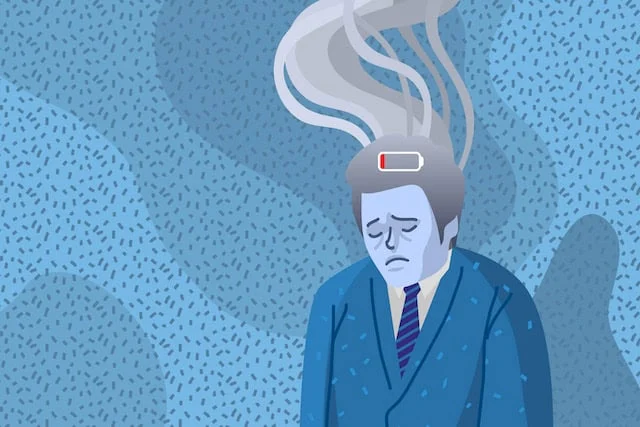
The crux of Joe White’s story lies in the deceptive nature of burnout. Unlike the stereotypical image of a professional who becomes catatonic or unable to work, White experienced "functional burnout." He remained capable of solving technical problems, conducting complex meetings, and managing daily operations. This "functional" status created a dangerous feedback loop: because he was still producing output, he assumed his cognitive faculties were intact.
The financial loss occurred when White moved his life savings—the culmination of decades of labor—into an offshore cryptocurrency lending platform. These platforms, which surged in popularity between 2020 and 2022, often promised high yields but carried opaque risk profiles. For a cybersecurity expert, the red flags should have been glaring. However, White’s "brain fog"—a documented symptom of chronic stress—prevented him from challenging the representations made by the platform.
Today, White is three years into a grueling pursuit of legal accountability and financial recovery. His case serves as a landmark example of how the "human element" remains the greatest vulnerability in any security system, even when that human is an expert in the field.
Chronology of a Cognitive Collapse
1. The Accumulation Phase (1990s – 2018)
White spent over two decades in the trenches of the tech industry. His career spanned the evolution of information security, characterized by long hours, high-pressure environments, and the "always-on" culture of tech startups. During this period, he conditioned himself to "push through" exhaustion, a trait celebrated in Silicon Valley but one that masks the early stages of physiological burnout.
2. The Onset of Functional Burnout (2019 – 2021)
By the late 2010s, the cumulative stress of constant deadlines and system maintenance began to take a toll. White describes a period where fatigue became his "baseline." Despite the exhaustion, his professional output remained high. He was still "the expert," a role that reinforced his belief that he was immune to the cognitive decline he might see in others.
3. The Critical Decision Point (The Crypto Investment)
During a period of peak cognitive depletion, White was presented with an investment opportunity in an offshore cryptocurrency lending platform. Under normal circumstances, his professional training in risk management would have demanded a rigorous audit of the platform’s liquidity, jurisdictional protections, and underlying assets. Instead, suffering from "brain fog" and impaired executive function, he accepted the platform’s representations at face value.
4. The Collapse and Realization (2021 – 2022)
As the cryptocurrency market faced a liquidity crisis in 2022, the offshore platform froze withdrawals, eventually leading to the total loss of White’s $3 million. It was only in the aftermath of this financial ruin that White began to connect his poor decision-making to his mental state. He realized that while he was "processing" information, he was no longer "evaluating" it.
5. The Aftermath and Advocacy (2022 – Present)
White has transitioned from a tech executive to a cautionary voice and legal advocate. He is currently pursuing legal channels for accountability while sharing his story to highlight the dangers of burnout-induced cognitive impairment.
Supporting Data: The Science of the "Burned-Out Brain"
White’s experience is backed by a growing body of psychological and neurological research. Burnout is no longer viewed merely as "stress," but as a significant physiological change in the brain.
The Prefrontal Cortex and Risk
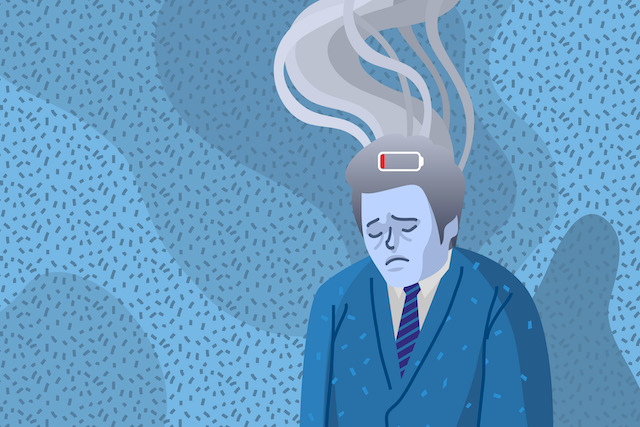
Research published in PLOS ONE and other neurological journals indicates that chronic stress and burnout lead to the thinning of the prefrontal cortex—the area of the brain responsible for executive function, impulse control, and complex decision-making. When the prefrontal cortex is compromised, individuals rely more heavily on the amygdala, which governs emotional responses and "fight or flight" instincts. This shift makes it nearly impossible to perform the nuanced risk-benefit analysis required for $3 million investments.
Decision Fatigue in Tech
A 2023 study by Yerbo found that 62% of IT professionals feel physically and emotionally drained at the end of the workday. "Decision fatigue" is a state where the quality of decisions made by an individual deteriorates after a long session of decision-making. For someone like White, who made high-stakes decisions for 25 years, the "well" of cognitive energy had simply run dry.
The Illusion of Competence
Psychologists refer to the "Dunning-Kruger effect" in a different light here: White was a high-competence individual whose very expertise blinded him to his impairment. Because he had a high "baseline" of intelligence, his "impaired" state still looked like "average" functioning to those around him, and even to himself.
Official Responses and Industry Context
The Legal Landscape of Crypto Lending
Regulators, including the U.S. Securities and Exchange Commission (SEC) and the Commodity Futures Trading Commission (CFTC), have repeatedly warned that offshore crypto platforms often operate in a "regulatory vacuum." In the wake of collapses like Celsius, Voyager, and FTX, officials have noted that these platforms frequently misrepresented the safety of "yield" products.
Legal experts specializing in financial recovery state that pursuing funds from offshore entities is an uphill battle. "Once the capital leaves domestic jurisdictions and enters the ecosystem of offshore lending, the protections of the SIPC or FDIC are non-existent," says Sarah Brennan, a financial litigator. White’s ongoing pursuit of accountability reflects a broader struggle for thousands of investors who were misled by "low-risk" marketing.
Mental Health Advocacy in Cybersecurity
The cybersecurity industry has begun to acknowledge its burnout crisis. Organizations like CyberMind and The Cyber Helpline have issued statements calling for "psychological safety" to be treated as a core component of "operational security."
"We have spent billions on firewalls and encryption, but we have spent almost nothing on the mental health of the people managing those systems," says a representative from a leading cybersecurity firm. "Joe White’s story is a wake-up call that a burned-out CISO (Chief Information Security Officer) is as much a security risk as an unpatched server."
Implications: Rethinking Risk Management
The case of Joe White suggests a paradigm shift is needed in how high-performance professionals manage their personal and professional lives.
1. Competence as a Vulnerability
The most profound implication of White’s loss is the idea that independence and competence can become liabilities. For professionals who are used to being the "smartest person in the room," the instinct to seek a second opinion is often suppressed. White now argues that major life decisions must be subject to the same "layered defenses" used in cybersecurity:
- Peer Review: Having a trusted, non-exhausted third party review major financial moves.
- Latency as a Control: Deliberately slowing down the decision-making process to allow for "cooling-off" periods.
- External Audits: Treating personal finances with the same skepticism one would apply to a corporate security audit.
2. The "Single Point of Failure" Myth
In engineering, a single point of failure is a part of a system that, if it fails, will stop the entire system from working. White realized that he had made himself the single point of failure for his family’s future. By not having "controls" or "redundancies" (such as a financial advisor or a spouse’s co-signature on large transfers), he allowed his temporary cognitive impairment to cause permanent financial damage.
3. Systemic Change in Tech Culture
White’s story challenges the "hustle culture" of the technology sector. If pushing through exhaustion leads to a $3 million error, then the "heroic" effort of working 80-hour weeks is actually a form of negligence. Companies may need to implement mandatory "disconnection" periods and cognitive health assessments for employees in high-risk roles.
4. Recovery is More Than Rest
White’s journey highlights that recovery from severe burnout is not a "long weekend" fix. It requires a systemic overhaul of lifestyle, including sleep hygiene, nutritional support, and, most importantly, the setting of rigid boundaries between work and self-worth.
Conclusion
Joe White’s $3 million loss is a tragedy of the modern era—a collision between the volatile world of digital assets and the fragile limits of the human brain. His story serves as a stark reminder that the mind is a biological system subject to wear, tear, and total failure.
"I spent a career looking for vulnerabilities in complicated systems," White reflects. "One of the most consequential vulnerabilities I ever encountered was one I couldn’t see while I was inside it."
As he continues his legal fight and his efforts to rebuild, his primary mission has shifted: to ensure that other high-performing professionals recognize that "functioning" is not the same as "functioning well," and that the most important asset they will ever manage is their own cognitive health.