The Law West of the Pecos: Rediscovering Paul Newman’s Eccentric Western Masterpiece
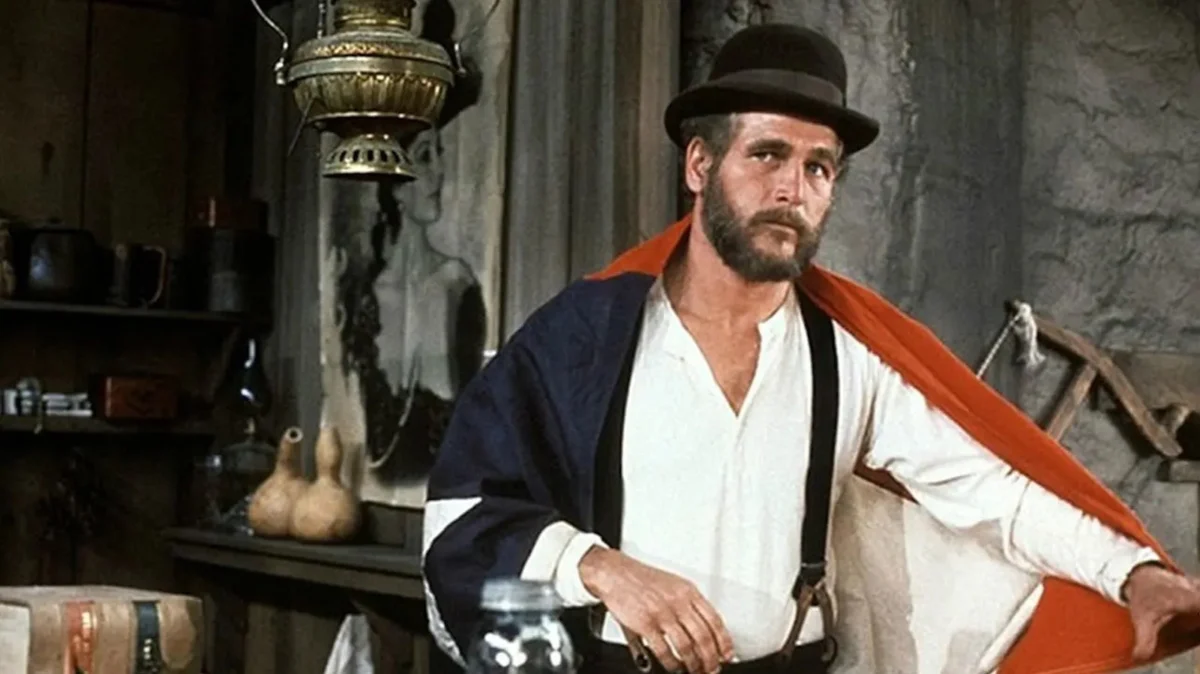
In the pantheon of 1970s cinema, a decade defined by the gritty realism of the "New Hollywood" movement, certain films have slipped through the cracks of collective memory despite their pedigree. One such anomaly is the 1972 Western comedy The Life and Times of Judge Roy Bean. Directed by the legendary John Huston and starring the incomparable Paul Newman, the film serves as a whimsical, often surreal exploration of frontier justice and the transition of the American West from lawless wilderness to structured civilization.
Recently made available for free streaming on platforms like YouTube, this overlooked treasure invites a modern reappraisal. It is a film caught between two worlds: the classical Hollywood tradition of its director and the rebellious, iconoclastic spirit of its screenwriter, John Milius.
Main Facts: A Tall Tale of Frontier Justice
The Life and Times of Judge Roy Bean is not a traditional biography, but rather a "tall tale" inspired by the historical figure of Roy Bean, a self-appointed justice of the peace in Val Verde County, Texas. The film opens with a cheeky disclaimer: "Maybe this isn’t the way it was… it’s the way it should have been."
The Plot and Premise
The narrative follows Roy Bean (Paul Newman), an outlaw who stumbles into a desolate settlement on the banks of the Pecos River. After surviving a brutal beating by the town’s degenerate inhabitants, Bean returns to exact bloody vengeance, declaring himself the "Law West of the Pecos." He establishes a courthouse-saloon named "The Jersey Lilly," in honor of the famous actress Lillie Langtry (played in a cameo by Ava Gardner), whom he worships from afar.
A Star-Studded Ensemble
While Newman is the gravitational center of the film, the supporting cast is a "who’s who" of 1970s character actors and legends:
- Anthony Perkins as a traveling Reverend.
- Stacy Keach as the terrifying, albino gunslinger "Bad Bob."
- Ned Beatty as Bean’s right-hand man.
- Victoria Principal in her film debut as Maria Elena.
- John Huston himself appearing as the mountain man Grizzly Adams.
- Jacqueline Bisset and Roddy McDowall in pivotal late-film roles.
Chronology: John Huston’s Prolific 1972
To understand the context of Judge Roy Bean, one must look at the career of John Huston in the early 1970s. By 1972, Huston was 66 years old and considered a veteran of the "Old Guard." However, he proved he could still compete with the young mavericks of the era.
The Contrast of ‘Fat City’
Earlier in 1972, Huston released Fat City, a bleak, naturalistic drama about down-and-out boxers (starring Stacy Keach and a young Jeff Bridges). Fat City was hailed as a masterpiece of the New Hollywood aesthetic—unflinching, minimalist, and deeply human. It remains one of the definitive films of the 70s.
The Shift to Prestige Comedy
Later that same year, Huston pivoted sharply toward the "prestige" Western. The Life and Times of Judge Roy Bean was envisioned as a sprawling, episodic epic. It sought to capitalize on the massive commercial success of 1969’s Butch Cassidy and the Sundance Kid, which had reinvented Paul Newman as a charismatic, humorous Western anti-hero.
Upon its release in December 1972, the film was a moderate commercial success and received generally positive reviews, even earning an Academy Award nomination for Best Original Song ("Marmalade, Molasses and Honey"). However, as the decade progressed and the Western genre began to wane in popularity, the film faded into the shadows of grittier revisionist Westerns like The Wild Bunch or Unforgiven.
Supporting Data: The Clash of Creative Visions
The primary reason The Life and Times of Judge Roy Bean feels so unique—and at times, disjointed—is the fundamental disagreement between its screenwriter, John Milius, and its director, John Huston.
The Milius Vision: The Obsessed Zealot
John Milius, known for his "macho" sensibilities and conservative leanings, wrote the script as a study of an obsessed man. Milius viewed Roy Bean as a figure akin to Lawrence of Arabia—a visionary who used violence to impose order on a chaotic world. To Milius, Bean was the embodiment of the American spirit: rugged, uncompromising, and lethal.
The Huston/Newman Revision: The Charming Rogue
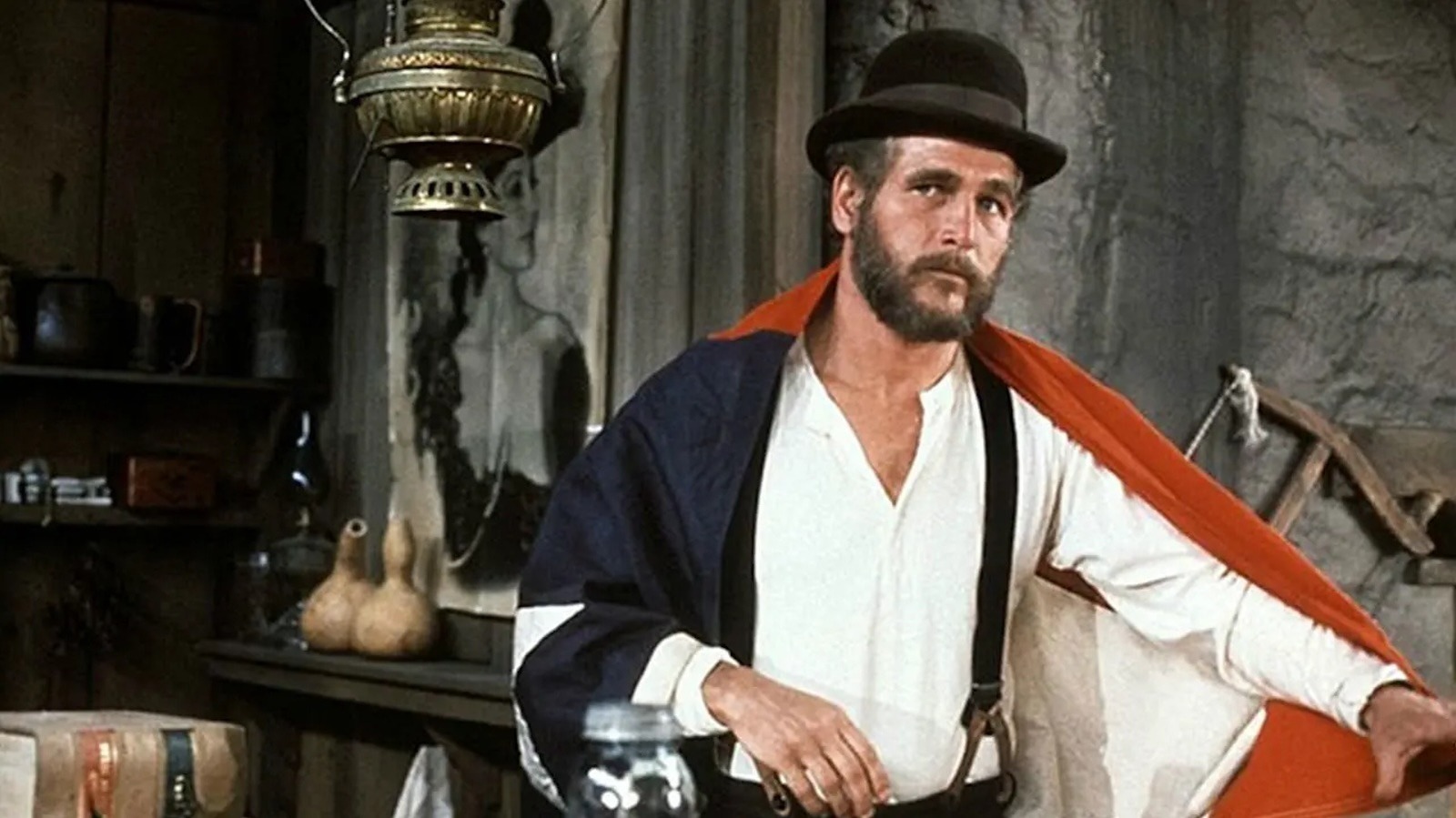
John Huston and Paul Newman had a different interpretation. They saw the potential for a "Beverly Hills Western"—a film that leaned into whimsy, romance, and eccentricity. They softened the harder edges of Milius’s script, transforming Bean into a more likable, albeit still dangerous, eccentric.
One of the most polarizing examples of this "softening" is the sequence involving a pet bear named Zachary Taylor. The bear, which drinks beer and accompanies Newman and Victoria Principal on a picnic, is set to the saccharine crooning of Andy Williams. While Milius found these elements "reprehensible" and "too cute," they contribute to the film’s strange, dreamlike quality that modern audiences may find either charming or bafflingly dated.
Production Design and Tone
The film’s aesthetic mirrors the transition of the West. It begins in a dusty, sun-bleached purgatory and ends in a world of oil derricks, paved streets, and modern corruption. This visual evolution serves as a backdrop for Bean’s own obsolescence, a recurring theme in Huston’s filmography.
Official Responses: Milius’s Lasting Discontent
The friction during production led to a vocal fallout. In a 1973 interview with The Los Angeles Times, Milius did not hold back his disdain for the final product.
"Roy Bean is an obsessed man," Milius stated. "He sits out there in the desert and he’s got this great vision of law and order and civilization and he kills people and does anything in the name of progress. I love those kind of people! … And they say, ‘What you’ve created is a reprehensible man. We’ve got to make him much more cute.’"
Milius felt that Huston had stripped the character of his mythological power. This sentiment was echoed by some critics who felt the film’s tonal shifts—from slapstick comedy to operatic violence to sentimental romance—were jarring.
However, Newman defended the film, enjoying the opportunity to play a character who aged significantly throughout the story. For Newman, the film was less about historical accuracy and more about the idea of a legend.
Implications: The Western at a Crossroads
The Life and Times of Judge Roy Bean represents a significant moment in the evolution of the Western genre. By 1972, the "Traditional Western" was dead, and the "Revisionist Western" was in its prime.
The Deconstruction of the Myth
The film participates in the deconstruction of the American mythos. It portrays the law not as a divine or moral imperative, but as the whim of a man with a gun and a book of statutes he barely understands. Yet, it does so with a sense of nostalgia that is absent from the more cynical Westerns of the era.
Paul Newman’s Career Trajectory
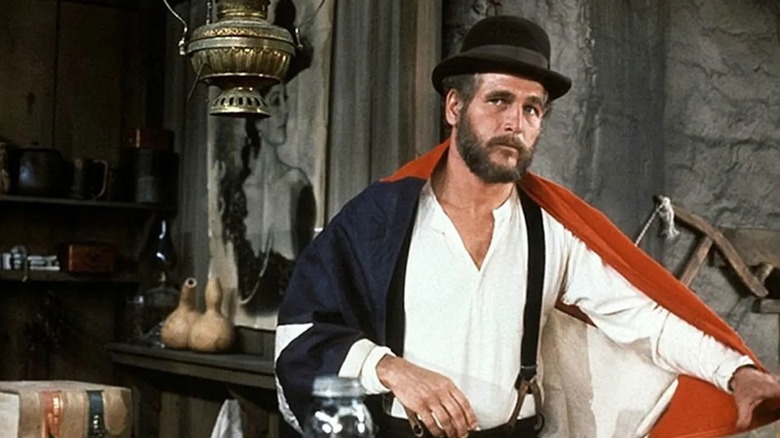
The film also marked a shift for Paul Newman. It allowed him to move away from the "cool" persona of the 1960s and embrace more idiosyncratic, character-driven roles. His performance as Bean is a masterclass in movie-star charisma, using his famous blue eyes and wry smile to make a murderous vigilante seem like a folk hero.
The Legacy of New Hollywood
The film’s current availability for free streaming is a boon for cinema historians. It serves as a reminder that "New Hollywood" wasn’t just about The Godfather or Taxi Driver; it was also about established masters like Huston experimenting with form and tone, and rising stars like Milius trying to redefine American masculinity on screen.
Conclusion: Why Watch It Today?
While The Life and Times of Judge Roy Bean may suffer from some dated 1970s tropes—most notably its musical interludes—it remains a fascinating, highly entertaining piece of cinema. Its episodic nature makes it feel modern, almost like a prestige limited series condensed into two hours.
The "Bad Bob" sequence alone, featuring Stacy Keach as a blue-eyed, horse-meat-eating specter of death, is worth the price of admission (which, in this case, is zero). The film is a sprawling, messy, beautiful, and deeply weird exploration of how legends are born and how they die. In an era of formulaic blockbusters, the sheer unpredictability of Huston’s "Beverly Hills Western" is a breath of fresh, albeit dusty, desert air.
For fans of Paul Newman or those interested in the eccentric corners of film history, this "overlooked treasure" is well worth the time to rediscover.