The "Primetime" of Robert Pattinson: Inside the Venice Premiere and the Pursuit of Oscar Gold

The Venice Film Festival has long served as the starting gun for the international awards season, a prestigious stage where cinematic transformations are scrutinized under the brightest of spotlights. This year, the Lido has found its most polarizing and talked-about subject in "Primetime," the narrative feature debut of director Lance Oppenheim. At the center of this whirlwind is Robert Pattinson, an actor whose metamorphosis from a teen idol into a formidable character actor has been one of the most compelling narratives in modern Hollywood.
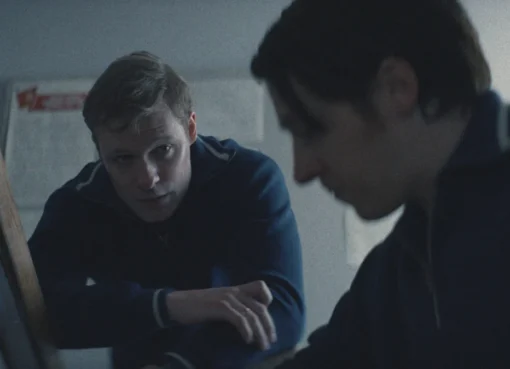
Following a summer defined by the critical and commercial success of The Drama and The Odyssey, Pattinson has arrived in Venice not just as a movie star, but as a genuine frontrunner for his first Academy Award nomination. In "Primetime," he takes on the role of Chris Hansen, the former Dateline NBC anchor who became a household name through the controversial and sensationalist reality series To Catch a Predator. The film, an A24 production, is far from a standard biopic; it is a surrealist exploration of fame, justice, and the artifice of television.
Main Facts: A Bold Transformation and a Viral Sensation
The buzz surrounding "Primetime" began long before its world premiere in Venice. When the first trailer dropped, a single line of dialogue—delivered with Pattinson’s uncanny, staccato recreation of Hansen’s vocal patterns—instantly went viral. "You see how this looks, right?" became a meme within hours, signaling that the film had already captured the cultural zeitgeist.
Produced by A24, a studio known for championing "big swings" and auteur-driven visions, "Primetime" is a departure from the traditional biographical drama. Rather than a linear account of Chris Hansen’s life, the film focuses on the peak of the To Catch a Predator era, examining the moral gray areas of investigative journalism turned into "infotainment."
Pattinson’s performance is described by early critics as "gonzo" and "magnetic." He captures the specific, almost theatrical authority of Hansen—a man who became a vigilante hero to some and a symbol of tabloid exploitation to others. Alongside Pattinson, the film features powerhouse supporting performances from two-time Emmy winner Merritt Wever and the versatile Skyler Gisondo, both of whom are now being discussed as serious contenders in the supporting acting categories.

Chronology: From Investigative Reporting to the Silver Screen
The journey of "Primetime" from a conceptual idea to a Venice premiere is a testament to the power of long-form journalism in Hollywood.
- The Source Material: The film’s foundation lies in an extensive Esquire investigative report that delved into the behind-the-scenes mechanics of To Catch a Predator. The report highlighted the collaboration between NBC, local law enforcement, and the volunteer group Perverted Justice, revealing the chaotic and often legally dubious reality of the stings.
- The Development: Screenwriter Ajon Singh took the Esquire report and began crafting a script that avoided the pitfalls of the "great man" biopic. Singh focused instead on the "fever dream" quality of the production—the lights, the hidden cameras, and the psychological toll on those involved.
- The Director’s Vision: Lance Oppenheim, primarily known for his stylized documentaries like Some Kind of Heaven, was brought on to direct. Oppenheim’s background in non-fiction filmmaking allowed him to approach the subject matter with a unique perspective on the "performance of reality."
- The Pattinson Factor: Robert Pattinson joined the project following a string of successes. His involvement immediately elevated the film’s profile, turning a mid-budget indie into one of the year’s most anticipated releases.
- The Summer of Success: Leading up to Venice, Pattinson dominated the summer box office and critical circles with The Drama (co-starring Zendaya) and Christopher Nolan’s The Odyssey. This momentum created a "perfect storm" for his Venice arrival.
- The Venice Premiere: "Primetime" premiered to a standing ovation, followed by a press conference where the cast and crew defended the film’s unconventional tone.
Supporting Data: The Technical Architecture of a Fever Dream
While Pattinson’s performance is the engine of "Primetime," the film’s success relies heavily on its technical and supporting elements.
The Supporting Cast:
- Merritt Wever: Playing the lead producer of the sting segments, Wever provides the film’s cynical backbone. Her character represents the cold, calculated side of television production—the need for ratings over ethical considerations.
- Skyler Gisondo: Gisondo plays a young actor hired to be a "decoy." His performance serves as the film’s moral compass, or "the trunk of the tree," as Wever described it. His character experiences the direct psychological fallout of being used as bait in a high-stakes media circus.
The Creative Team:
- Ajon Singh (Screenplay): Singh’s debut screenplay is being lauded for its "mystical" quality. By treating the Dateline set as a stage for a morality play, he elevates the material beyond its tabloid roots.
- Daniel Garber (Editor): Garber’s involvement is a stroke of meta-casting. Having served as an editorial consultant on the documentary Predators—which also explored Hansen’s legacy—Garber brings a deep understanding of the rhythm and visual language of the original stings. His editing in "Primetime" mirrors the frantic, high-anxiety energy of the television show.
Official Responses: Voices from the Venice Press Conference
At the Venice press conference, the team behind "Primetime" addressed the challenges of portraying a living figure and a show that remains a staple of internet culture.

Lance Oppenheim on the Blur of Reality:
"I think about Chris Hansen as a journalist, as an entertainer, but I also really think of him as an artist," Oppenheim stated. He cited Abbas Kiarostami’s Close Up as a primary influence, noting how that film blurred the lines between truth and fiction. "To me, To Catch a Predator was the first thing I ever saw on mainstream television that mashed those two forms—artifice and reality. Without it, I probably wouldn’t be making films the way I do today."
Robert Pattinson on the "Sticky" Nature of Fame:
Pattinson spoke about the "magnetic presence" of Hansen and the inevitability of the film becoming a meme. "The more attached people are to the movie, the more re-watchability it has and the more endurance," he said. He viewed the viral nature of the trailer not as a distraction, but as a reflection of the show’s own legacy of endless memes.
Merritt Wever on the Complexity of Humanity:
Wever discussed her attraction to playing a character who "willfully wants to deny her own humanity." After years of playing compassionate roles, Wever noted that "the water in the well needed to rise a little bit." Her portrayal of the producer is an exercise in emotional detachment, providing a stark contrast to the heightened reality of Hansen’s on-camera persona.
Implications: A24’s Oscar Strategy and the Future of the Biopic
The reception of "Primetime" carries significant implications for the upcoming awards season and the broader film industry.
The Academy’s Relationship with "Freshness"
A24 has a complicated history with the Academy. While they have seen massive success with films like Everything Everywhere All At Once and Moonlight, they have also seen "fresher," more experimental films like Uncut Gems or Aftersun (which earned Paul Mescal a nod but missed elsewhere) struggle to gain broad Academy support. "Primetime" is undeniably "fresh"—it is stylish, divisive, and deeply modern. The question remains: will the Academy’s older voting bloc embrace a "fever dream" about a reality TV host, or will they see it as too unconventional?

The "Meme-ification" of Marketing
"Primetime" represents a new era where "meme-ability" is a metric of success. Pattinson’s embrace of the viral nature of his performance suggests that actors and studios are no longer afraid of being "turned into a joke." Instead, they see it as a way to ensure "endurance" in an era of short attention spans. If "Primetime" succeeds at the Oscars, it may encourage more studios to take "gonzo" risks with biographical material.
Redefining the Biopic
For decades, the "Oscar-bait" biopic followed a strict formula: childhood trauma, a rise to fame, a fall from grace, and a triumphant return. "Primetime" rejects this. By focusing on the texture of a specific moment in time rather than the facts of a biography, it joins films like Spencer or Jackie in redefining what a biopic can be. It suggests that the "truth" of a person is found not in their timeline, but in the atmosphere they created.
As "Primetime" moves from the canals of Venice to the theaters of North America, all eyes will remain on Robert Pattinson. Whether he finally secures that elusive Oscar nomination or remains a champion of the indie circuit, one thing is certain: he has successfully captured the "magnetic" and "surreal" spirit of a man who once asked a nation, "You see how this looks, right?" And the world, it seems, is finally looking back.