The Lens as a Weapon: Gordon Parks and the Persistent Mirror of American Identity
Introduction: A Legacy of Visual Activism
In the history of American photography, few figures loom as large or as pivotally as Gordon Parks. A polymath who excelled as a novelist, composer, and filmmaker, Parks is perhaps most enduringly defined by the decade-spanning archive of images he produced as a photojournalist. This September, the Jack Shainman Gallery in New York City will play host to Voices in the Mirror, a comprehensive exhibition that honors Parks’ formidable legacy while marking the 20th anniversary of The Gordon Parks Foundation.

The exhibition arrives at a moment of renewed national discourse regarding civil rights, systemic inequality, and the power of the image to effect social change. By showcasing works ranging from his 1940s Harlem portraits to his seminal documentation of the 1963 March on Washington, Voices in the Mirror offers more than a retrospective; it provides a profound look at the "weaponry" Parks used to combat the social ills of his time. As the foundation celebrates two decades of preserving his work, the exhibition serves as a reminder that the reflections Parks captured in his mirror are as relevant today as they were when the shutter first clicked.
Main Facts: The Scope of "Voices in the Mirror"
The upcoming exhibition at Jack Shainman Gallery is a curated journey through the most significant chapters of Parks’ career. Spanning from September 18 through November 7, the show highlights his ability to navigate disparate worlds—from the high-fashion gloss of Life magazine to the gritty reality of the Jim Crow South.
Key elements of the exhibition include:

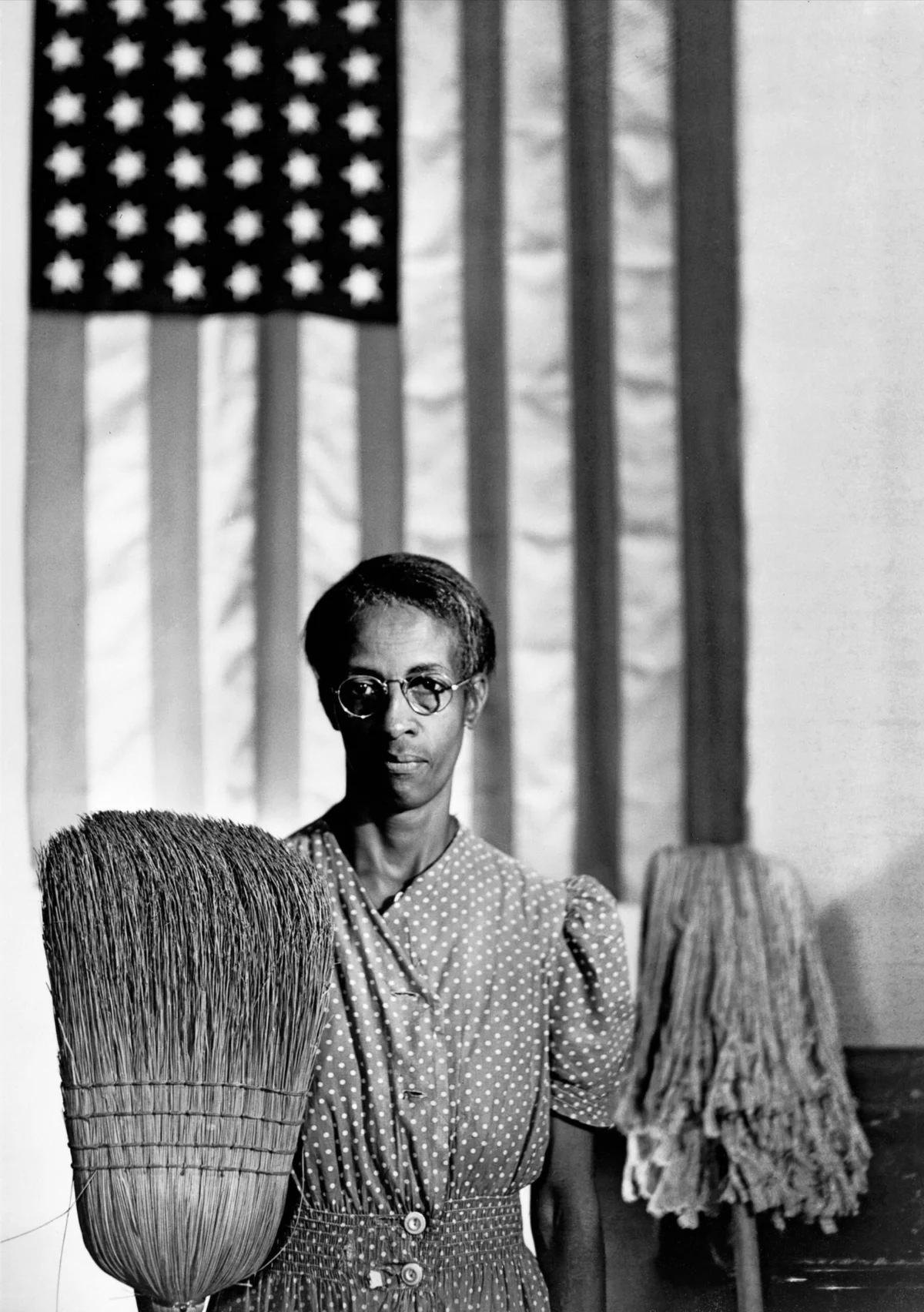
- The FSA Years: Early works from his time with the Farm Security Administration, including the iconic "American Gothic, Washington, D.C." (1942).
- The Civil Rights Movement: Candid and powerful depictions of leaders such as Malcolm X and Martin Luther King, Jr., alongside the everyday citizens who fueled the movement.
- The Segregated South: A selection of color and black-and-white photographs from the 1950s that humanized the struggle of Black families living under state-sanctioned discrimination.
- Celebrity and Artistry: Portraits of cultural icons like Ingrid Bergman and Helen Frankenthaler, demonstrating Parks’ versatility and his ability to find the "human" in the "famous."
A unique feature of this exhibition is the inclusion of contemporary reflections. The images are accompanied by anecdotes from those who lived through the moments captured, including Qubilah Shabazz (daughter of Malcolm X) and Cora Taylor, who appeared in the legendary 1956 "Segregation in the South" series.
Chronology: The Evolution of a Visionary
Gordon Parks’ journey from a self-taught photographer to a global icon is a testament to his resilience and singular vision.
1912–1937: The Formative Years
Born into poverty in Fort Scott, Kansas, Parks was the youngest of 15 children. His early life was shaped by the harsh realities of segregation. It wasn’t until 1937, while working as a railcar waiter, that he purchased a camera at a pawnshop in Seattle after being moved by the documentary photographs of the Farm Security Administration (FSA) published in a magazine.

1942: The FSA and Ella Watson
Parks’ career took a definitive turn when he became the first Black photographer for the FSA. Moving to Washington, D.C., he encountered a level of bigotry that shocked him. Under the mentorship of Roy Stryker, Parks began to use his camera to document the "internal" life of the capital. It was during this period that he met Ella Watson, a cleaning woman at the FSA offices. This encounter led to "American Gothic, Washington, D.C.," a photograph that would become one of the most famous images of the 20th century.
1948–1972: The Life Magazine Era
Parks became the first Black staff photographer and writer for Life magazine, a position he held for two decades. This platform allowed him to bring the struggles of Black Americans into the living rooms of millions. Whether he was covering the gangs of Harlem or the poverty of a Brazilian favela, Parks approached his subjects with a "humanist" lens that prioritized empathy over exploitation.
1960s: Documenting the Revolution
As the Civil Rights Movement intensified, Parks was there to document its soul. His relationship with the Nation of Islam and Malcolm X provided him with unparalleled access, resulting in intimate portraits that challenged the mainstream media’s often-skewed narrative of the movement.

2006–Present: The Foundation and Continued Influence
Following his death in 2006, The Gordon Parks Foundation was established to preserve his work and support artistic endeavors that advance social justice. The 20th-anniversary celebration this year underscores the foundation’s success in keeping Parks’ "weapon" sharp for future generations.
Supporting Data: The Impact of the Visual Archive
The significance of Parks’ work is often measured by its historical weight, but the technical and archival data of the Voices in the Mirror exhibition also tell a story of artistic mastery.
The exhibition features a mix of mediums:

- Gelatin Silver Prints: These classic black-and-white prints, such as "Woman and Dog in Window, Harlem" (1943), showcase Parks’ mastery of light and shadow, capturing the textures of urban life.
- Archival Pigment Prints: The use of high-quality color prints for his 1956 Alabama series is particularly notable. At a time when photojournalism was predominantly black and white, Parks’ use of color for Life magazine’s "The Restraints: Open and Hidden" gave the subjects a startling, modern presence that broke through the "distance" of history.
Statistically, Parks’ tenure at Life resulted in over 300 assignments. His ability to produce high-impact photo essays contributed to Life’s peak circulation of over 8 million copies per week in the 1960s, meaning Parks was arguably the most influential visual chronicler of the Black experience in American history.
Official Responses: Perspectives on the Anniversary
In marking the 20th anniversary of The Gordon Parks Foundation, leadership and art historians have emphasized the "living" nature of his archive.
Peter W. Kunhardt, Jr., Executive Director of The Gordon Parks Foundation, has frequently noted that Parks’ work was never intended to sit idly in a gallery. "Gordon viewed the camera as a tool for change," Kunhardt has stated in past retrospective discussions. "The foundation’s mission is to ensure that his voice continues to inspire those who are using their own ‘weapons’—be they cameras, pens, or brushes—to fight for a more just world."

Jack Shainman, whose gallery is hosting the exhibition, has long championed Parks as a cornerstone of American contemporary art. By pairing the photographs with personal anecdotes from descendants and subjects, the gallery aims to bridge the gap between the "iconic image" and the "lived reality." This approach responds to a growing demand in the art world for exhibitions that provide deeper biographical and social context rather than just aesthetic appreciation.
Implications: Parks in the Modern Era
The exhibition Voices in the Mirror carries profound implications for the contemporary social and political landscape. Parks’ philosophy—that the camera is a weapon—has found a new life in the digital age.
1. The Democratization of the "Weapon"
In 1942, Parks had to fight for the right to hold a camera in professional spaces. Today, the smartphone has turned every citizen into a potential documentarian of social injustice. The lineage of the "citizen journalist" can be traced directly back to Parks’ candid, ground-level approach to documenting the segregated South.

2. The Power of Humanization
Parks’ work remains a masterclass in how to photograph "the other" without stripping them of their dignity. In an era of increasing polarization, his ability to find the "American" in Ella Watson or the "father" in Malcolm X serves as a blueprint for modern journalists and artists seeking to foster empathy across divides.
3. Historical Continuity
By viewing Parks’ 1963 images of Washington alongside current movements like Black Lives Matter, viewers are forced to reckon with the slow pace of systemic change. The "mirror" Parks held up to America in the 1940s and 50s still reflects many of the same fractures today.
Conclusion

As Voices in the Mirror opens its doors this September, it does so not just as a tribute to a man, but as a challenge to the viewer. Gordon Parks did not merely take pictures; he demanded that America look at itself. Through the work of The Gordon Parks Foundation and the curation of Jack Shainman Gallery, that demand remains as urgent as ever. In the reflections of his subjects—the tired eyes of Ella Watson, the soaring oratory of Dr. King, and the quiet dignity of a family at a "colored" drinking fountain—we find a mirror that refuses to let us look away from the truth of the American experience.