The Living Canvas: How Infinidream.ai is Redefining the Digital Aesthetic
Main Facts: The Emergence of Ambient Generative Art
In an era where high-resolution displays dominate our living and working environments, a significant portion of these technological investments remains dormant for hours each day. This phenomenon, often referred to as the "black mirror" effect, represents a missed opportunity for aesthetic and atmospheric enrichment. Addressing this void is Infinidream.ai, a newly launched application for Mac and Windows that seeks to transform idle computer screens into "living" AI-generated paintings.
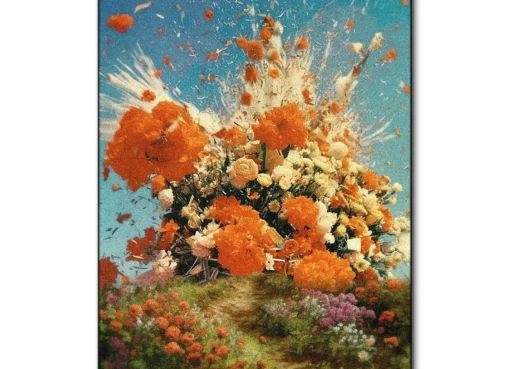
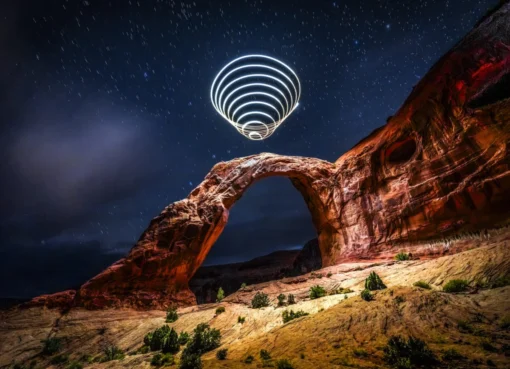
Unlike traditional screensavers that rely on static image slideshows or repetitive video loops, Infinidream.ai utilizes generative artificial intelligence to create art that breathes, shifts, and evolves in real-time. The application is the brainchild of Scott Draves, a pioneer in algorithmic art, and represents a significant leap in how we perceive the relationship between software, hardware, and interior design.
Key Features of Infinidream.ai:
- Platform Availability: Native support for both macOS and Windows.
- Technology: Real-time generative AI rendering rather than pre-recorded playback.
- Curation: Features a diverse portfolio from dozens of AI artists, ranging from abstract expressionism to surrealist landscapes.
- Customization: Users can manipulate the "tempo" and "mood" of the art, allowing the visuals to match the energy of the room.
- Accessibility: The application is free to download and try with a registered account.
The launch of Infinidream.ai marks a pivotal moment in the "Slow Art" movement, positioning technology not as a source of constant notification and distraction, but as a source of ambient tranquility.
Chronology: From Fractal Sheep to Latent Space
To understand the significance of Infinidream.ai, one must look back at the career of its creator, Scott Draves, and the evolution of digital screensavers over the last quarter-century.
1999: The Birth of Electric Sheep
Long before "AI" became a household term, Scott Draves launched Electric Sheep. This was a distributed computing project that turned thousands of idle computers into a collective supercomputer. Each machine rendered "fractal flames"—complex, mathematical animations—which were then shared across the network. Users could "vote" on their favorite sheep, influencing the genetic algorithm that dictated which patterns would "survive" and reproduce in future generations. At its peak, Electric Sheep linked over 450,000 computers, creating a global, evolving digital lifeform.
2000s–2010s: Artistic Recognition
Draves’ work bridged the gap between computer science and fine art. His algorithmic creations were exhibited at prestigious institutions, including the Museum of Modern Art (MoMA) in New York and the Los Angeles County Museum of Art (LACMA). During this period, the technology for digital displays improved rapidly, transitioning from bulky CRTs to thin LCDs and high-contrast OLEDs, yet the software for idle screens remained largely stagnant, stuck in the era of "flying toasters" or simple clock displays.
2023–2024: The AI Revolution
The explosion of Large Language Models (LLMs) and Diffusion Models (like Midjourney and Stable Diffusion) provided Draves with a new set of tools. The "latent space" of AI—the mathematical realm where an infinite number of images exist between two points—became the new frontier for his vision of "living art."
2024: The Launch of Infinidream.ai
Infinidream.ai was developed to harness this new AI power. It moves beyond the mathematical fractals of Electric Sheep into the realm of representational and abstract AI art. By partnering with a curated group of digital artists, Draves transitioned from a purely algorithmic approach to a collaborative, human-AI hybrid model, culminating in the public release of the desktop application.
Supporting Data: The Impact of Ambient Environments
The move toward ambient digital art is supported by emerging research into environmental psychology and the "attention economy."
The Psychology of Ambience
Studies in environmental psychology suggest that "Soft Fascination"—the state of being captured by non-threatening, aesthetically pleasing stimuli like moving clouds or rustling leaves—can help recover from directed attention fatigue. Infinidream.ai’s "mobile" art mimics these natural patterns. By providing a visual that changes too slowly to be a distraction but enough to remain "alive," the software functions as a digital version of a kinetic sculpture.
Hardware Utilization
Modern monitors are more capable than ever. A standard 4K monitor possesses over 8 million pixels, many capable of displaying over a billion colors. However, when a computer enters "sleep mode," this hardware potential is zeroed out. Infinidream.ai leverages the GPU (Graphics Processing Unit) of modern computers to perform real-time interpolation between AI states, ensuring that the art is rendered at the native resolution of the screen, providing a level of detail that traditional compressed video loops cannot match.
Market Trends
The "Digital Canvas" market is growing. Products like the Samsung Frame TV and Meural have proven that consumers are willing to pay a premium for hardware that doubles as art. Infinidream.ai brings this functionality to the billions of existing laptops and desktop monitors already in use, effectively "upcycling" a utilitarian tool into a piece of home decor without the need for additional hardware.
Official Responses and Expert Analysis
The debut of Infinidream.ai has drawn interest from both the tech community and the art world.

Scott Draves, Founder of Infinidream.ai, describes the philosophy behind the project:
"There is a wasted moment every few hours when your computer just sits there. The screen goes dark, or it shows the time in giant white numerals against a black void. It’s a quiet announcement that nothing interesting is happening. I’ve always believed that screens should be a window into something more. With Infinidream, we are using AI not to replace the artist, but to give the art a life of its own—allowing it to think, breathe, and evolve while you aren’t looking."
Digital Art Critics have noted the shift in how AI is being utilized. While much of the current discourse around AI focuses on "prompt engineering" and static image generation, Infinidream.ai is being praised for its focus on duration.
"Most AI art is treated like a photograph—a frozen moment in time," says one industry analyst. "What Draves is doing is treating the latent space of the AI as a physical territory that the viewer can drift through. It’s not a picture; it’s a journey that never arrives at a destination."
User Experience (UX) Designers have also commented on the "zero-interface" approach of the app. By removing notifications and menus once the art begins, the software provides a rare "analog" feeling in a digital product, aligning with the "Calm Tech" movement pioneered by researchers at Xerox PARC.
Implications: The Future of the Screen
The introduction of Infinidream.ai carries several long-term implications for the intersection of technology and lifestyle.
1. The Normalization of Generative Living Spaces
As AI becomes more integrated into our OS, we may see a shift away from "static" desktops. In the future, your wallpaper might not be a photo of a mountain, but a generative mountain that experiences seasons, weather changes, and time of day in sync with your actual location. Infinidream.ai is a precursor to this "context-aware" digital environment.
2. New Revenue Models for Digital Artists
Infinidream.ai’s curation of "dozens of artists" suggests a new model for art distribution. Rather than selling a single NFT or a print, artists can contribute their "style" or "vision" to a generative stream. This could lead to a subscription-based "Spotify for Art" model where creators are compensated based on the "display time" their work receives on users’ screens.
3. Mental Health and Remote Work
With the rise of remote work, the home office has become a place of high stress. The ability to flip a switch and turn a workstation into a "meditation portal" has significant implications for workplace wellness. By changing the "mood of the room" through slow-motion visual shifts, Infinidream.ai offers a passive form of stress reduction that requires no active participation from the user.
4. Sustainability and "Screen-On" Culture
One challenge the company faces is the trade-off between aesthetic beauty and energy consumption. While modern LED and OLED screens are efficient, running a GPU-intensive generative app consumes more power than a dark screen. The future of the app may involve "Eco-Modes" that reduce frame rates or complexity to balance environmental concerns with aesthetic desires.
Conclusion: A New Vision for Idle Time
Infinidream.ai is more than just a screensaver; it is a re-imagining of our relationship with the objects that populate our lives. By transforming the "dead screen" into a source of infinite, evolving beauty, Scott Draves and his team are challenging the notion that technology must always be "useful" to be valuable.
In a world increasingly cluttered with digital noise, Infinidream.ai offers a silent, beautiful alternative. As the app’s tagline suggests: your screen is on anyway—it might as well be beautiful. For users of Mac and Windows, the transition from a black void to a living gallery is now only a download away.