The Virtual Front Row: Analyzing Gucci’s Immersive Leap into Spatial Computing
By Digital Fashion Correspondent
In the neon-drenched heart of New York City, where the cacophony of Broadway meets the relentless pulse of global commerce, Gucci recently staged a spectacle that was as much a technological experiment as it was a fashion statement. The "GucciCore" fashion show, captured live in the center of Times Square this past May, has now transitioned from a physical event to a digital landmark. Available exclusively via the Gucci App on the Apple Vision Pro, the immersive video production promises to transport users into a high-octane world of luxury.
However, as the dust settles on this ambitious digital rollout, the experience serves as a fascinating case study in the challenges of translating heritage luxury into the "spatial computing" era. While the production values of the 180-degree 8K video are undeniably high, the execution reveals a tension between cutting-edge technology and the traditional hallmarks of high-end brand storytelling.
1. Main Facts: The Intersection of 8K Reality and High Fashion
The GucciCore immersive experience represents one of the first major forays by a Kering-owned house into the specialized "Apple Immersive Video" format. This proprietary format, designed for the Apple Vision Pro, utilizes a 180-degree field of view, 3D depth, and ultra-high-resolution imagery to create a sense of "presence" that traditional flat-screen video cannot replicate.
Key components of the release include:
- Platform Accessibility: The experience is a free update within the existing Gucci App on visionOS.
- Production Quality: The video utilizes a 180-degree frame, allowing viewers to turn their heads and observe the environment, from the textures of the garments to the iconic billboards of Times Square.
- Hybrid Content: The production notably incorporates high-altitude aerial footage of New York City borrowed from Apple TV’s Elevated series, blending documentary-style cinematography with runway coverage.
- Interactive Narrative: Before the runway begins, the user is placed on a "black carpet," interacting virtually with arriving celebrities and guests through direct eye contact and simulated social cues.
Despite these technical milestones, the release has been met with a nuanced critique regarding its marketing and its ability to maintain the "luxury aura" that defines the Gucci brand.
2. Chronology: From the Streets of Manhattan to the Vision Pro
The journey of GucciCore is a multi-stage narrative that began with a massive physical disruption in New York City and culminated in a quiet digital launch.
May 2024: The Physical Event
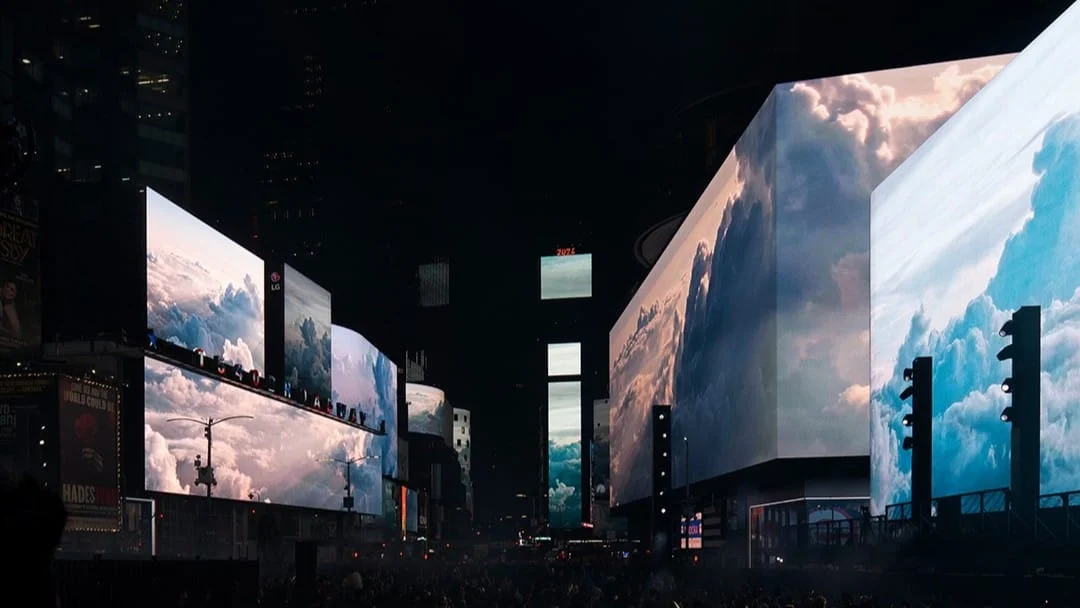
Gucci executed a total takeover of Times Square. Massive digital billboards were synchronized to display Gucci branding, effectively turning the world’s most famous intersection into a branded cathedral. The show was recorded using specialized stereoscopic camera rigs designed to capture the 180-degree immersive format.
June – July 2024: Post-Production and Integration
During this period, the footage was edited to integrate with Apple’s immersive ecosystem. This involved stitching high-resolution feeds and layering in the Elevated series footage to provide a sense of scale and "metropolitan grandeur."
Late Summer 2024: The Digital Launch
The experience was quietly rolled out on the Apple Vision Pro. Unlike the loud, vibrant takeover of Times Square in May, the digital launch was surprisingly understated. Industry observers noted a lack of social media "hype" and a single, somewhat lackluster promotional image that focused on the crowds rather than the fashion itself.
Present Day: Field Observations
Recent reports from flagship retail locations, such as the Toronto Gucci boutique, suggest a disconnect between the brand’s digital innovation and its physical retail staff. Many front-line employees remain unaware of the Apple Vision Pro experience, highlighting a gap in the brand’s "omnichannel" strategy.
3. Supporting Data: The Technical and Market Context
To understand why Gucci is investing in this space, one must look at the technical specifications of the Apple Vision Pro and the shifting landscape of luxury consumption.
The Power of Presence
The Apple Vision Pro utilizes two Micro-OLED displays with a combined 23 million pixels. For a brand like Gucci, this technology allows for the rendering of fabric textures—silk, leather, embroidery—with a level of detail that approaches physical reality. In the GucciCore experience, when a model walks past the camera, the 3D depth allows the viewer to perceive the weight and movement of the clothing, a critical factor in "building desire" for a luxury product.
The "Luxury Gap" in Digital Marketing
Data suggests that while 70% of luxury purchases are influenced by digital interactions, the "luxury feel" often gets lost in translation. The GucciCore experience highlights a specific data point in user experience: Presence vs. Disruption.
- The Soundscape Problem: The immersive video utilizes a consistent music track but omits spatial audio—the ability to hear sounds coming from specific directions (e.g., the murmur of the crowd to the left, a taxi honking to the right).
- Camera Transitions: The production features "jump cuts" between different viewing positions. In spatial computing, sudden shifts in perspective without a visual or narrative "anchor" can lead to cognitive dissonance or "sim sickness," detracting from the premium feel.
Market Positioning
Gucci’s move follows similar experiments by competitors. Balenciaga has experimented with VR-based runway shows, and Dior has utilized augmented reality for "try-on" experiences. However, by utilizing Apple’s specific "Immersive Video" format, Gucci is positioning itself as a leader in the next generation of high-fidelity digital storytelling.
4. Official Responses and Artistic Vision
At the heart of this project is a bold vision of urban dominance. The opening of the immersive experience features a quote from the creative leadership, setting the stage for the metropolitan theme.
Demna’s Metropolitan Ambition
Although the creative direction of the house is currently under the stewardship of Sabato De Sarno, the immersive experience cites the ambition of placing the brand at the "center of this metropolis." The opening narration speaks to "doing the impossible" by reclaiming Times Square—a space often associated with mass-market tourism—and reframing it as a theater for high fashion.
The "Center of the Universe" Philosophy
The artistic director’s goal was to create a sense of "metropolitan gravity." By using the Apple Vision Pro, the brand attempts to place the viewer at the literal center of this gravity. "I wanted to… place Gucci at the center of this metropolis," the opening credits declare. This sentiment is reinforced by the aerial footage of the New York skyline, which provides a "God’s eye view" before dropping the viewer into the gritty, neon reality of the street-level runway.
Retail Feedback
While official corporate statements praise the innovation, internal feedback from retail staff suggests a need for better internal communication. As one staff member noted, the "digital world and the boutique world still feel like two different planets."
5. Implications: The Future of the "Virtual Front Row"
The GucciCore experience on Apple Vision Pro is a harbinger of how luxury brands will engage with their highest-spending customers in the future. However, the experience offers several lessons for the industry.
The Requirement for "Total Immersion"
For a luxury experience to succeed in spatial computing, it must be "total." The omission of ambient city sounds in the GucciCore production was a missed opportunity. In the world of premium goods, luxury is found in the details—the "crunch" of gravel, the "hush" of a gallery, or the "hum" of New York. Future iterations will likely need to prioritize spatial audio to match the visual fidelity.
Redefining the "Front Row"
Traditionally, the front row of a fashion show is an exclusive enclave for editors, celebrities, and "VICs" (Very Important Clients). Spatial computing democratizes this access while maintaining a sense of exclusivity through the high entry price of the hardware (the Apple Vision Pro retails for $3,499). This creates a new tier of "Digital VICs" who can experience the show with a level of intimacy—such as receiving an "air kiss" from a celebrity guest—that was previously impossible.
The Marketing Challenge
The "lackluster" promotion of GucciCore suggests that brands are still figuring out how to market "experiences" as opposed to "products." A luxury brand cannot simply release a technical marvel; it must wrap that marvel in a narrative of scarcity and excitement. The disconnect between the high-quality production and the low-priority marketing suggests that the industry is still in a "beta testing" phase of spatial commerce.
Conclusion: A Bold, If Flawed, First Step
GucciCore is a significant achievement in digital cinematography. It proves that the Apple Vision Pro can convey the "spirit" of a brand and the "texture" of a collection. However, for Gucci to truly master this medium, it must bridge the gap between technical "presence" and the psychological "aura" of luxury. By refining camera transitions, embracing spatial audio, and aligning its marketing with the magnitude of the technology, Gucci has the potential to turn every living room into a front-row seat at the world’s most exclusive events.
For now, the GucciCore show remains a beautiful, albeit slightly disjointed, glimpse into the future—a reminder that in the digital age, the "impossible" is easy to capture, but the "feeling" of luxury is much harder to sustain.