Bipartisan Momentum Surges for Federal Film Tax Credit as President Trump Signals Imminent Passage
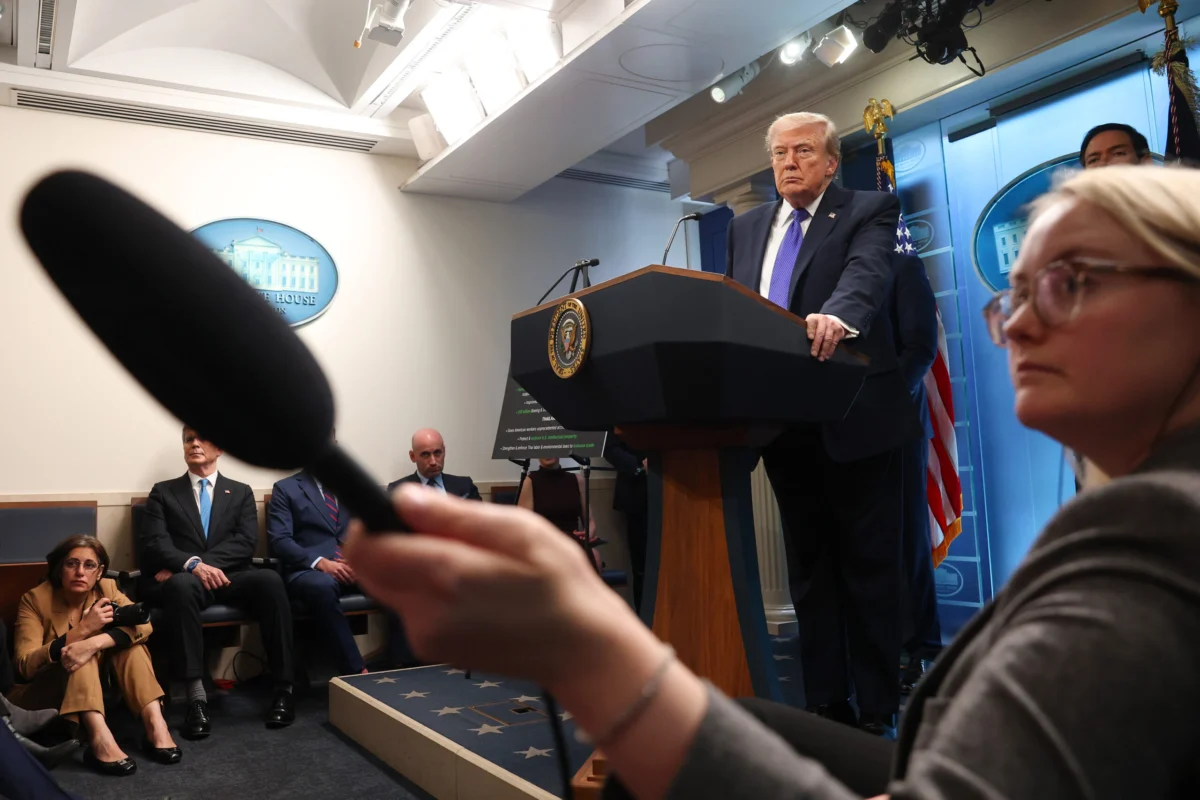
In a rare display of cross-aisle cooperation within a deeply polarized Washington, the push for a first-of-its-kind federal film and television tax credit has moved from a legislative longshot to a near-certainty. President Donald Trump, speaking at a recent White House press conference, signaled his administration’s full weight is behind the "Motion Picture, Television, and Entertainment Revitalization Act," predicting that the measure will pass before the conclusion of 2026.
The legislation, which aims to stem the tide of "runaway production" to international hubs like Canada and the United Kingdom, has become an unlikely bridge between the White House and high-ranking Democrats. The President’s public endorsement on Friday highlighted the bill’s broad appeal, specifically noting its potential to "reopen" Hollywood by offering a robust financial incentive for studios to keep their labor and production spend within U.S. borders.
The Core Mandate: Rescuing the American Production Hub
At its heart, the proposed federal credit is designed to level the global playing field. For decades, the American film industry has operated on a state-by-state incentive model. While states like Georgia, New Jersey, and New York have successfully attracted massive productions through localized tax breaks, they have often found themselves competing not just with each other, but with sovereign nations offering aggressive national subsidies.
The new federal initiative proposes a 20 percent tax credit on labor expenses for American workers. This credit is designed to be "stackable" with existing state incentives, potentially making the United States the most financially attractive place in the world for high-budget filmmaking. For productions that meet specific criteria—such as filming in underrepresented regions or utilizing specific domestic infrastructure—the credit could escalate to 30 percent.
President Trump emphasized that while state-level successes in Georgia and New Jersey are commendable, they are no longer sufficient to combat the aggressive poaching of American jobs by foreign governments. "Those incentives alone would not bring enough production work back from overseas," Trump stated. "With a federal credit, Hollywood would open again."
Chronology of a Bipartisan Breakthrough
The trajectory of the Motion Picture, Television, and Entertainment Revitalization Act began in earnest in early 2025, following a series of high-profile meetings between the President and industry figures. In August, after a meeting with actor Jon Voight—one of three "special ambassadors" appointed by the administration to oversee the recovery of the entertainment sector—Trump first publicly called for a national production incentive.
The legislative groundwork was laid in September 2026, when an unusual alliance formed between Senator Adam Schiff (D-CA) and Senator Tim Scott (R-SC). Schiff, a frequent critic of the administration, found common ground with Scott and the White House on the issue of domestic job protection.
The momentum accelerated significantly this week. On Thursday, the bill’s sponsors announced a massive influx of support, including more than 60 new House cosponsors and four key additions in the Senate: Republicans Katie Britt (AL) and Thom Tillis (NC), and Democrats Chris Coons (DE) and Dick Durbin (IL).

By Friday, the President was touting the bill’s progress at the White House, even sharing a rare moment of public alignment with Schiff. "It’s running its way through Congress, and it has unbelievable support," Trump said. "I tell you what, Adam Schiff said, ‘Wow, we love that bill.’ Adam Schiff said that."
Supporting Data: The Economic Toll of Runaway Production
The urgency behind the bill is fueled by sobering economic data regarding the U.S. film labor market. Since the conclusion of the dual Hollywood strikes in late 2023 and early 2024, the "production squeeze" has left thousands of below-the-line workers—the camera operators, grips, costumers, and editors—struggling to find consistent work.
According to industry analysts, "runaway production" now accounts for a significant portion of mid-to-high budget feature films. Countries like Canada offer the Canadian Film or Video Production Services Tax Credit (PSTC), while the United Kingdom recently enhanced its Audio-Visual Expenditure Credit (AVEC). These programs often provide a net benefit that exceeds the maximum possible savings in the U.S., even in "film-friendly" states.
The proposed 20-30 percent federal labor credit specifically targets the "human" element of production. By tying the incentive to labor expenses for American workers, the bill ensures that the financial relief directly translates into domestic payroll. Industry experts suggest that if the bill passes, it could stimulate an estimated $10 billion to $15 billion in additional domestic production spending over the first three years of its implementation.
Official Responses: A Unified Front of Labor and Management
The legislative push has achieved the rare feat of uniting major studios with the labor unions that represent their employees. The Motion Picture Association (MPA), which represents the interests of the major studios and streamers, has been a vocal advocate, but the endorsement of the AFL-CIO this week added significant political muscle to the movement.
"Members of both parties have watched jobs in their districts move overseas," said Representative Linda Sánchez (D-CA), a primary House sponsor. "Momentum is on our side, and we need to strike while the iron is hot by passing this bill before the end of the year."
The coalition of support now includes:
- Labor Unions: IATSE (International Alliance of Theatrical Stage Employees), SAG-AFTRA, and the Directors Guild of America (DGA).
- Industry Trade Groups: The Motion Picture Association (MPA) and the American Hotel & Lodging Association (AHLA).
- Bipartisan Lawmakers: A coalition spanning from progressive Democrats in California to staunch Republicans in the Southeast.
Senator Adam Schiff, reflecting on the broad coalition, expressed confidence in the bill’s final stretch. "Given the support from Republicans and Democrats in both chambers and the president, we can get this legislation across the finish line," he said.
The Theater Clause: A New Frontier in Negotiations
While the production credit is the cornerstone of the bill, a new and potentially controversial element has entered the negotiations: relief for movie theaters. During his press conference, President Trump revealed that his administration is actively discussing whether to extend the tax measures to benefit the exhibition sector.

Movie theaters have faced a grueling recovery period following the COVID-19 pandemic and the subsequent lack of content caused by the 2023 strikes. Trump noted that while the matter is currently "unsettled," there is a desire to ensure that the entire ecosystem of film—from the soundstage to the silver screen—is revitalized.
"We are negotiating whether to extend the measure to benefit movie theaters," Trump said, though he stopped short of a definitive commitment. Inclusion of theaters could broaden the bill’s impact but might also complicate the cost-benefit analysis for fiscal hawks in Congress.
Implications and the Path Forward
As the 2026 legislative calendar winds down, the "Revitalization Act" is expected to move with unusual speed. Multiple sources close to the negotiations told IndieWire that the measure is likely to be attached to a stopgap government funding bill. This tactical move would streamline its passage and bypass much of the procedural gridlock that often stalls standalone tax legislation.
If the bill passes before the end of the year, it would take effect on January 1, 2027. This timeline is critical; many major productions currently in pre-production for 2027 are weighing domestic locations against international options. A confirmed federal credit would likely trigger an immediate shift in production schedules, bringing thousands of jobs back to U.S. soil by the first quarter of the new year.
Beyond the immediate economic impact, the passage of this bill would represent a significant shift in U.S. industrial policy. For the first time, the federal government would be treating the entertainment industry not just as a cultural export, but as a critical domestic manufacturing sector worthy of national protection.
The implications for "Middle America" are also substantial. By making the credit stackable, the bill encourages studios to look beyond the traditional hubs of Los Angeles and New York toward states with emerging infrastructures, such as New Mexico, Louisiana, and Ohio.
As President Trump succinctly put it, the goal is simple: to ensure that the "magic of Hollywood" remains a uniquely American enterprise. With the President, the unions, and a bipartisan congressional coalition all pulling in the same direction, the American film industry appears poised for a historic homecoming.