Nat Meade’s "Franklin" Exhibition at HESSE FLATOW Explores Paternal Legacies and the Resilience of the Human Spirit
New York, NY – March 18, 2026 – HESSE FLATOW is currently hosting "Franklin," a captivating exhibition of new paintings and works on paper by acclaimed artist Nat Meade. This marks Meade’s third solo presentation with the prestigious gallery, offering viewers a profound exploration of universal human experiences through his distinctive figurative style. The exhibition, which opened its doors on [Insert Opening Date – the provided text implies it’s already open and runs until April 18, 2026, so a specific opening date would be needed for a true news article, but we’ll proceed with the existing timeframe], will be on view until April 18, 2026.
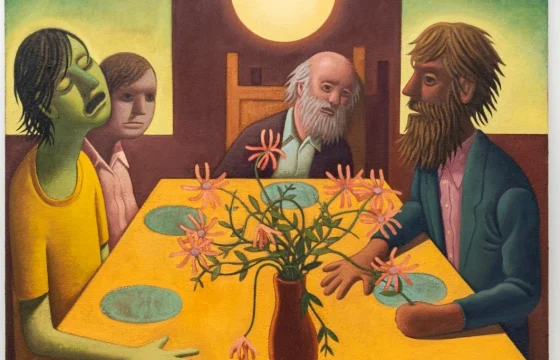
Meade’s latest body of work delves into the complex emotional landscape of life, navigating the inherent struggles and eventual triumphs that define the human journey. Through his allegorical figures, Meade draws directly from his lived experiences as a father, son, partner, and academic. These are not mere portraits of specific individuals but rather archetypes that resonate with timeless truths. The exhibition invites contemplation on the solitary search for existential meaning, the intricate dynamics of intergenerational relationships, and the universal quest for validation. By employing an allegorical distance, Meade creates a visual language that allows him to confront personal challenges with a potent blend of the absurd, the somber, and the humorous. This artistic approach, rich with the nuances of human nature, imbues his work with an unequivocal and enduring resonance.
The Weight of Legacy: Paternal Bonds and Personal Re-evaluation
A significant undercurrent that percolates throughout "Franklin" is Meade’s profound reflection on his relationship with his recently deceased father. This personal loss has catalyzed a deep re-evaluation of his own role as a parent, prompting an introspection into the cyclical nature of life, love, and legacy. The exhibition does not shy away from themes of vulnerability, pain, and mortality. However, Meade masterfully introduces younger male figures into this contemplative narrative, injecting a powerful sense of hope, acceptance, reconciliation, and renewal. These younger protagonists serve as beacons, illuminating the possibility of moving beyond inherited burdens and forging new paths.
The artwork titled Poise exemplifies this thematic duality. It presents a pair of dangling legs suspended from a cloud, leaving the viewer to ponder whether the figure is ascending towards or descending from the heavens. This ambiguity poignantly suggests the interchangeability of birth and death, both in a physical and spiritual sense. Elsewhere, ghostly specters are depicted hovering over certain individuals, serving as a potent metaphor for inherited trauma and the arduous process of release. Much like the ephemeral souls depicted peeling away from expiring bodies in classic animation, these spectral presences seem to observe their former selves with a complex mixture of what could be interpreted as happiness or regret.
The exhibition’s title, "Franklin," itself carries a subtle yet significant allusion. It serves as a nod to the iconic 1974 horror film The Texas Chainsaw Massacre, a cinematic work notorious for its disturbing portrayal of a dysfunctional and violent patriarchal family. Meade, however, subverts this dark association by embracing the inner turmoil of confronting one’s own potentially violent and antagonistic impulses. In his paintings, these darker urges are visibly sublimated or brought into a semblance of order. A striking image of a vulture meticulously picking at a corpse evokes the eternal punishment of Prometheus by Zeus, a timeless depiction of consequence and suffering. Similarly, a figure rendered on hands and knees, with a flowing beard, echoes William Blake’s powerful portrayal of Nebuchadnezzar, a king condemned for his insatiable lust for power. These potent allegories underscore Meade’s engagement with the darker aspects of human nature and the struggle for self-mastery.
Seeds of Hope: Youthful Resilience and the Promise of Renewal
In stark contrast to the weight and introspection associated with the adult figures, Meade’s younger protagonists emerge with a palpable sense of harmony and unburdened potential. A young boy, depicted steering a boat with a radiant torch held aloft, charts his own course, seemingly unclouded by the pressures of societal expectations or familial legacies. This image evokes a profound sense of youthful optimism and self-determination.
Another poignant work captures an adolescent standing ankle-deep in a secluded cove, their gaze fixed on the seabed. The scene is a vibrant tapestry of marine life – starfish, anemones, and mussels – all brilliantly illuminated, suggesting a world of wonder and discovery. In a related piece, the legs of a father and son are shown in the same shallow pool, with the father’s hand tenderly guiding the son. This intimate gesture speaks volumes about the transfer of knowledge, care, and the nurturing of future generations.
Meade’s artistic trajectory is further illuminated by this exhibition. In his past works, his figures were often depicted wrestling with or succumbing to the overwhelming forces of nature, such as turbulent winds and crashing waves. The shift in "Franklin" towards calmer seas and more serene environments signals a significant turning point in his artistic vision. He now emphasizes the necessity of acknowledging and confronting one’s past, however tumultuous, as a crucial step towards healing and liberating future generations from similar burdens. Despite the seemingly insurmountable weight of inherited histories and personal struggles, Meade’s exhibition ultimately serves as a powerful reminder of the stubborn, enduring resilience of the human spirit, underscoring the attainable nature of progress and renewal.
Chronology of Artistic Development and Exhibition History
Nat Meade’s artistic journey, as evidenced by his consistent engagement with profound thematic material, has been marked by a steady evolution of his visual language and conceptual depth. His presence at HESSE FLATOW with "Franklin" marks his third solo exhibition at the gallery, a testament to a strong and developing relationship.
- Early Career and Emerging Themes: While specific details of Meade’s earliest exhibitions are not provided, his artistic output has consistently explored themes of identity, familial relationships, and the human condition. His figurative style, characterized by a blend of realism and expressive abstraction, has allowed him to tackle complex emotional narratives.
- Previous Exhibitions at HESSE FLATOW: His prior solo presentations at HESSE FLATOW have laid the groundwork for the introspective and allegorical approach seen in "Franklin." These earlier shows likely established his reputation for creating emotionally resonant and intellectually stimulating works.
- "Franklin" (2026): This current exhibition represents a significant development in Meade’s oeuvre. The direct engagement with paternal legacies, mortality, and the subsequent embrace of hope and renewal mark a mature phase in his artistic exploration. The exhibition’s duration, running until April 18, 2026, allows ample time for the public to engage with its profound themes.
Supporting Data and Critical Reception
While specific critical reviews of "Franklin" are not yet available due to its recent opening, Nat Meade’s work has consistently garnered attention for its emotional depth and technical prowess. His ability to translate complex psychological states into compelling visual narratives has been a hallmark of his career.
- Figurative Exploration: Meade’s commitment to figurative painting, particularly in an era that often favors abstraction, positions him as an artist dedicated to exploring the human form as a vessel for profound emotional and psychological content.
- Allegorical Resonance: The use of archetypes and allegorical imagery allows Meade’s work to transcend personal experience and speak to universal human concerns, fostering a broad and lasting impact on viewers.
- Gallery Representation: HESSE FLATOW’s consistent representation of Meade for his solo exhibitions underscores the gallery’s belief in his artistic vision and his growing importance in the contemporary art landscape. Their platform provides a crucial space for artists to develop and present significant bodies of work.
Official Responses and Gallery Statement
HESSE FLATOW, in its announcement of the exhibition, articulated the significance of "Franklin" within Meade’s artistic trajectory and its relevance to contemporary discourse. The gallery’s statement emphasizes the universal appeal and introspective nature of the works.
"HESSE FLATOW is pleased to announce the opening of Franklin, an exhibition of paintings and works on paper by Nat Meade, marking his third solo presentation with the gallery," the gallery stated. "The emotional arc of life’s struggles and triumphs take shape within Meade’s figurative works, reflecting the artist’s everyday experiences as he navigates being a father, son, partner, and academic. Far from portraits of actual individuals, his protagonists mirror timeless archetypes. At times, we encounter a lone traveler searching for existential validation; at other times, we see through intergenerational dynamics. This allegorical distance via painting provides a realm for Meade to explore personal challenges through absurd, somber, and humorous tropes, while also furnishing a space rife with human nature that bears unequivocal resonance."
The gallery’s commitment to showcasing Meade’s latest explorations highlights their dedication to fostering dialogue around challenging and deeply human themes.
Implications for Contemporary Art and Personal Reflection
Nat Meade’s "Franklin" exhibition offers significant implications for both the contemporary art world and for individual viewers. In an age often characterized by rapid change and digital detachment, Meade’s work serves as a powerful reminder of the enduring relevance of introspective art that grapples with fundamental human experiences.
- The Power of Figurative Art: The exhibition reinforces the continued vitality and expressive potential of figurative painting. Meade demonstrates that the human form, when imbued with emotional depth and narrative complexity, can be a potent vehicle for exploring universal truths and fostering empathy.
- Navigating Intergenerational Dynamics: In a globalized and rapidly evolving world, understanding and navigating the complexities of familial relationships and inherited legacies is more critical than ever. "Franklin" provides a visual framework for contemplating these dynamics, encouraging viewers to examine their own connections and the patterns that shape their lives.
- Embracing Vulnerability and Resilience: Meade’s willingness to confront themes of vulnerability, pain, and mortality, while simultaneously highlighting hope and renewal, offers a compelling model for personal growth and acceptance. The exhibition suggests that acknowledging hardship is not an endpoint but a necessary precursor to healing and moving forward.
- The Role of Art in Personal Healing: By creating a space for exploring personal challenges through allegory and evocative imagery, Meade’s work invites viewers to engage in their own process of introspection and potential healing. The exhibition serves as a catalyst for personal reflection, prompting contemplation on themes of loss, love, and the enduring strength of the human spirit.
"Franklin" at HESSE FLATOW is more than just an exhibition; it is an invitation to engage with the profound complexities of life, to confront our own narratives, and to find solace and inspiration in the enduring power of human resilience. The exhibition runs until April 18, 2026, offering a timely and deeply resonant experience for all who encounter it.