
The Mau Mau Rebellion: A Brutal Struggle for Freedom in Colonial Kenya
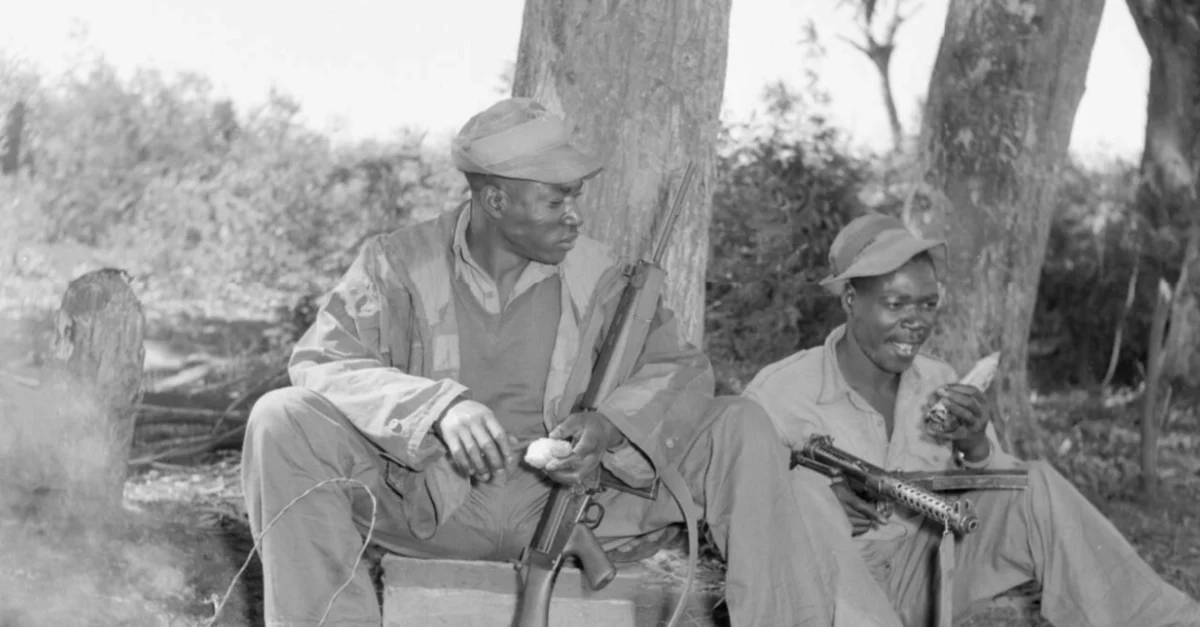
NAIROBI, Kenya – The Mau Mau rebellion, a ferocious anti-colonial uprising that gripped Kenya between 1952 and 1960, stands as a stark chapter in the annals of British imperial history. Rooted in generations of land dispossession, economic exploitation, and cultural suppression, this guerrilla war, primarily waged by the Kikuyu people, challenged the very foundations of British rule and left an indelible mark on Kenya’s journey to independence. Dubbed the "Kenyan Emergency" by British authorities, the conflict was characterized by extreme violence from both sides, leading to mass arrests, brutal detention camps, and widespread human rights abuses that continue to resonate today.
Main Facts: A Violent Challenge to Colonial Hegemony
The Mau Mau uprising (1952-1960) was a desperate and violent assertion of African agency against British colonial domination in Kenya. Led predominantly by members of the Kikuyu ethnic group, it was a guerrilla war fuelled by profound anger over the systematic confiscation of ancestral lands, particularly the fertile "White Highlands," and the perceived threat to indigenous belief systems and cultural practices.
The British colonial administration, taken aback by the intensity of the revolt, responded with overwhelming force. Their strategy involved declaring a state of emergency, classifying the Mau Mau as a terrorist organization, and implementing a policy of mass detention, collective punishment, and systematic repression. The consequences were devastating: thousands of Africans were killed, tens of thousands imprisoned in a network of brutal detention camps, and over a million forcibly displaced. While Mau Mau attacks on White settlers garnered significant international attention, the vast majority of their victims were African civilians suspected of collaborating with the colonial regime. The rebellion ultimately failed to achieve its immediate military objectives but played a pivotal role in accelerating the broader decolonization movement across the British Empire, forcing London to re-evaluate its hold on its African territories.
Chronology: From Colonial Imposition to Armed Resistance
The roots of the Mau Mau rebellion are deeply embedded in Kenya’s colonial past, tracing back to the late 19th century when Britain first asserted its influence over East Africa.
The Genesis of a Colony: British Encroachment and Exploitation
Britain’s presence in East Africa began in 1887, initially through a lease of a section of the Swahili Coast from the Sultan of Zanzibar. This foothold was quickly solidified with the granting of a royal charter to the Imperial British East Africa Company in 1888, which subsequently controlled a vast territory encompassing present-day Kenya and Uganda, then known as British East Africa. The early economy was largely driven by the ivory trade, but the region’s strategic location and agricultural potential soon became apparent. Nairobi, destined to become Kenya’s bustling capital, was founded in 1899, rapidly expanding with an influx of immigrants from Britain and British India, drawn by new opportunities within the burgeoning colonial administration and economy.
British East Africa transitioned from a protectorate in 1895 to a full colony in 1920, formally renamed Kenya. The colony was viewed as a prize, its mild climate proving ideal for diverse plantations, particularly in the fertile central highlands. Large game reserves, first established in 1898, further highlighted the perceived value of the territory. However, this "prosperity" was constructed upon a foundation of racial hierarchy and exploitation. Africans were systematically excluded from meaningful political representation, confined to local councils that held little real power, while European settlers enjoyed disproportionate influence and privilege.
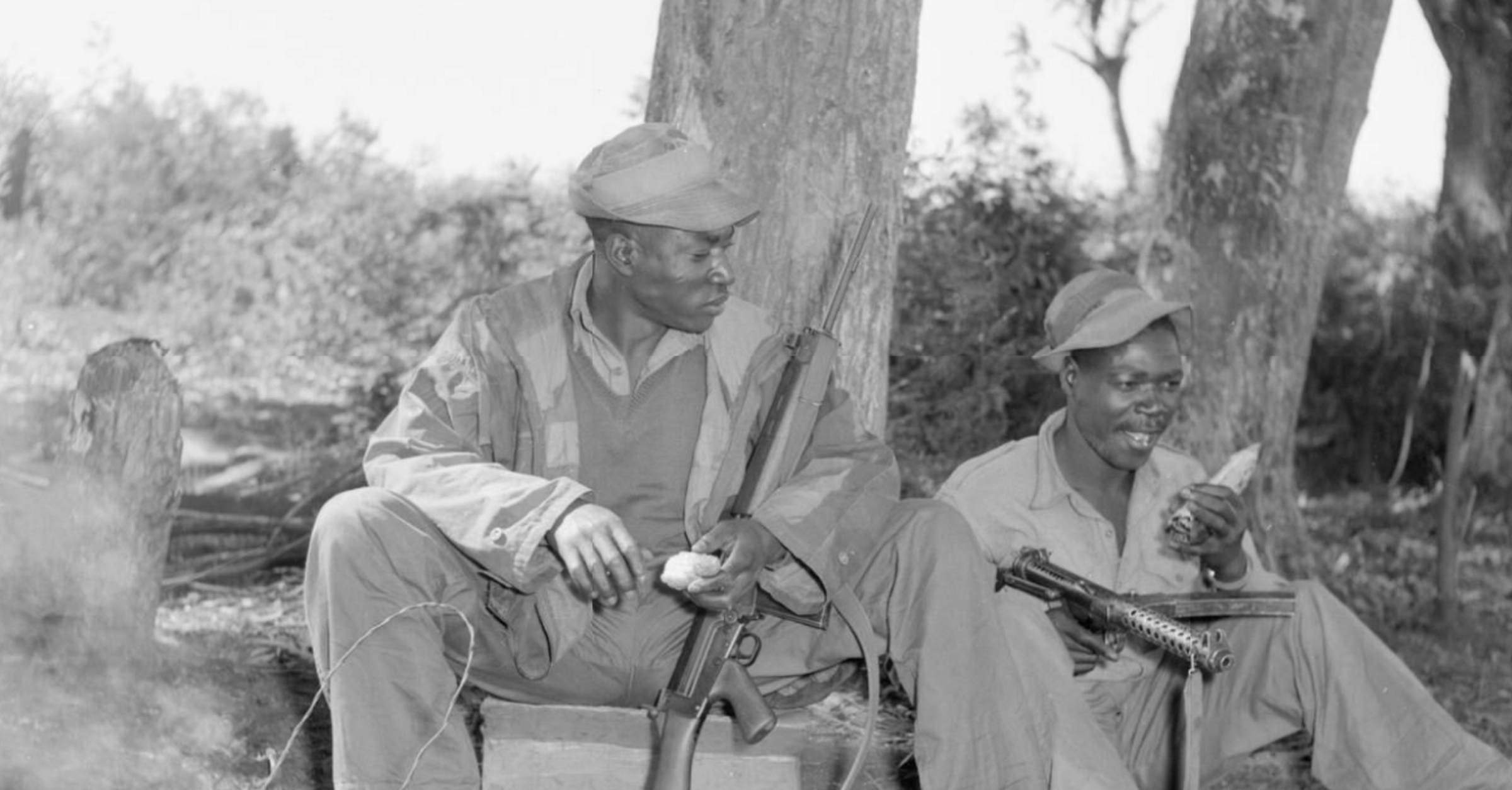
By 1948, Kenya’s demographic landscape revealed a stark imbalance: approximately 30,000 White settlers resided among an estimated overall population of 5 million people. As the 1950s dawned, the British government found itself increasingly confronted by insistent independence movements across its vast Empire. While committed to preserving British interests wherever possible, including in Kenya, a delicate balancing act was required to reconcile imperial objectives with rising nationalist aspirations and the diverse interests of minority groups. Key preconditions for any handover of power in more "advanced" colonies like Kenya included universal suffrage in free elections and a commitment to multiracial development, principles often at odds with the entrenched realities of colonial rule. A proposal to federate Kenya, Uganda, and Tanganyika into an East Africa Federation was ultimately rejected, largely because it was perceived as prioritizing White settler interests over those of the African populations, who increasingly demanded individual national sovereignty.
Seeds of Discontent: The Fuel for Rebellion
The Kikuyu people, who had inhabited Kenya since the 17th century and were the largest ethnic group, traditionally dominated the central highlands, a region blessed with a cool climate and fertile soil ideal for agriculture. Prior to colonial impact, their governance was loosely based on tribal elders, lacking a unified chieftainship. It was the imposition of British rule that, ironically, forged a stronger sense of shared identity and resistance amongst them. As historian P. Curtin observes, "Before the colonial impact, the Kikuyu of central Kenya had no deep consciousness of a common identity, probably because they lived on separate mountain ridges, had very local historical traditions, and lacked a unified political system" (518). This newfound unity was articulated by Waruhiu Itote, a Mau Mau general, who stated in 1967: "I had become conscious of myself as a Kenyan African, one among millions whose destinies were still in the hands of foreigners" (Dalziel, 128).
In colonial Kenya, the Kikuyu were united by a litany of grievances against the British authorities, foremost among them the issue of land. Vast tracts of ancestral Kikuyu land were systematically seized and allocated to White settlers, particularly in the highly coveted "White Highlands." These elevated regions offered superior growing conditions and a wider range of viable crops, making them exceedingly desirable. From the early 20th century, a deliberate program was enacted to encourage British settlement, offering new White settlers generous long leases on 1,000 acres (404 ha) of agricultural land or 5,000 acres (2023 ha) of pasture land. In total, at least 16,000 square miles (41,440 km²) of land were reserved exclusively for cultivation by White landowners. This drastic land alienation led to an acute shortage for the Kikuyu, many of whom were consequently forced into precarious labor tenancy on farms owned by White people. The pastoral Maasai people also suffered significantly from these restrictions, losing traditional grazing lands vital for their cattle.
Further exacerbating economic hardship, laws passed in the 1930s severely restricted African land ownership and prohibited them from cultivating certain lucrative cash crops. Coffee, for instance, was exclusively reserved for White landowners, reflecting a colonial policy designed to ensure Africans produced foodstuffs for the domestic market while Europeans monopolized high-value export crops. This discriminatory policy had its intended effect: by 1956, a staggering 95% of Kenya’s agricultural exports originated from European-owned farms, cementing African economic subservience.
Beyond economic grievances, the Kikuyu resented the rapid spread of urban centers and the stringent segregation policies imposed on Africans. In Nairobi, Africans were barred from entering the urban core without a mandatory pass, a daily reminder of their second-class status. The British promotion of primary schools and Christian missionary education, while offering some benefits, was also viewed as a direct assault on traditional religions and cultural practices, further fueling resentment. By 1960, 49% of Kenyan children were enrolled in primary schools, a significant increase from 1950, prompting the Kikuyu to establish their own alternative schools to preserve their heritage.
As historian R. J. Reid incisively notes, the nexus of the land crisis and the government’s deliberate creation of a cheap African labor force for European farms and urban businesses were the primary catalysts for the Mau Mau unrest:
"The landless poor — lacking in skills and access to them, working as labourers either on white farms or in the swelling urban centers — constituted a huge chunk of the populace, increasingly politicized, radicalized, and open to revolutionary political ideas; they were ripe for mobilization, and began to congregate around any cause that held out the promise of destruction of the extant political and social system. These were the underlying roots of the Mau Mau revolt." (207)
The Eruption of Violence: The Mau Mau Uprising
In 1952, the long-simmering resentment boiled over into a phase of intense violence that would define the struggle for Kenyan independence. Rebels, primarily based in the dense forests and hills of southern-central Kenya, initiated a campaign of sabotage and attacks targeting anything connected with European rule. Members of the Mau Mau movement, which also included a minority of Embu and Meru people, bound themselves together through solemn oath-taking ceremonies. These oaths not only reinforced a common identity and loyalty but also instilled rigorous discipline and, crucially, ensured absolute secrecy in their mission to dismantle White rule. The name "Mau Mau" itself was bestowed by the British, its precise meaning subject to much debate; historian R. J. Reid suggests it was a mispronunciation of the Kikuyu rebels’ slogan uma uma ("out, out") or derived from muma ("oath").
While the psychological impact of Mau Mau attacks on White settlers was immense, the vast majority of victims were not Europeans but other Kikuyu suspected of collaborating with the colonial authorities. Men, women, and children were subjected to torture, mutilation, and murder in a deliberate attempt to instill terror and deter allegiance to the colonial regime. Entire villages were sometimes targeted in these brutal reprisals, most infamously during the Lari massacre in March 1953, where 75 villagers were herded into their huts and burned alive. The relatively small number of White settlers attacked and murdered by the Mau Mau nonetheless sent shockwaves through the colony and resonated deeply within the British government in London. As historian L. James notes:
"Very few settlers were killed by the Mau Mau, but its psychological effect was enormous, reminding them of their smallness in numbers and isolation. Mau Mau was the ultimate white man’s nightmare whose ingredients were images of a dark, impenetrable Africa of witchcraft and fear of sudden attack by crazed tribesmen armed with pangas and spears." (611)
Official Responses: Repression, Detention, and Atrocity
The British colonial administration reacted swiftly and decisively to the outbreak of violence. A national emergency was declared in 1952, and the Mau Mau movement was officially classified as a terrorist organization. This designation granted the authorities sweeping powers: extending police capabilities, suspending fundamental personal freedoms, and implementing strict press censorship. To protect White settlers, trained African soldiers were deployed to guard isolated homesteads, alongside augmented Kenyan police services and army units. Villages were systematically searched, and indiscriminate arrests became commonplace. A significant number of Africans, estimated at 70,000 Kikuyu and other loyalists, volunteered to form a sort of home guard, with some even organized into "counter-gangs" to directly combat Mau Mau fighters and infiltrate their organization as spies.
The Arrest of Jomo Kenyatta and the Detention Camps
Jomo Kenyatta (1894-1978), the most prominent Kenyan nationalist leader, became a symbolic target. In 1952, Kenyatta, a Kikuyu, was arrested on suspicion of involvement in the Mau Mau rebellion. While his connection to the rebels was never direct – he advocated for peaceful political change through the Kenyan African Union (KAU), of which he was president from 1947 – he was nevertheless convicted in 1953 of organizing groups within the rebellion and sentenced to seven years’ hard labour. It was later revealed that the evidence used against him was perjured, underscoring the arbitrary nature of colonial justice during the Emergency.
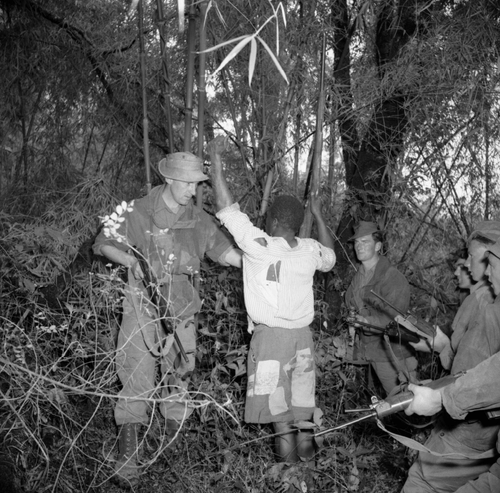
The sheer scale of arrests necessitated the construction of specialized detention centers. These camps became synonymous with systematic brutality. The most infamous was Hola Camp prison, where detainees were subjected to beatings, floggings, torture, and executions. Official reports often cited "attempted escapes" as the cause of death, but the numbers were chillingly suggestive. In just one six-month period, between November 1952 and April 1953, "430 prisoners had been shot dead while attempting to escape…" (James, 610). The conspicuous absence of wounded individuals strongly indicated that these were summary executions rather than genuine escape attempts.
A later inquiry exposed the horrific realities within camps like Hola. The British authorities had justified their methods by propagating the idea that Mau Mau membership was a form of mental illness, a violent "indoctrination" that required "reversal." As R. J. Reid details:
"…detainees were treated with marked brutality, including brainwashing and forced labour with the aim of cleansing body and mind of the ‘disease.’ Many detainees had refused to work and had been subjected to physical abuse, some of them being beaten to death." (277)
This policy of "rehabilitation" was, in practice, a systematic program of dehumanization and torture, designed to break the will of the detainees and force them to renounce their oaths and allegiances.
Supporting Data: The Human Cost and Economic Realities
The Mau Mau rebellion and the British response inflicted a profound human and social cost, while also revealing the deep economic inequalities underpinning colonial rule:
- Population Demographics (1948): Approximately 30,000 White settlers constituted a mere 0.6% of Kenya’s total population of around 5 million.
- Land Alienation: New White settlers received between 1,000 and 5,000 acres of land, with at least 16,000 square miles (41,440 km²) reserved exclusively for White landowners.
- Economic Disparity: By 1956, 95% of Kenya’s agricultural exports originated from European-owned farms, despite Africans comprising the overwhelming majority of the agricultural workforce.
- Education: African primary school enrollment doubled from 1950 to 1960, reaching 49% by the latter year, though missionary schools often came with cultural impositions.
- Casualties (Overall): An estimated 11,000 Mau Mau rebels were killed. At least 80,000 people were arrested and detained.
- Mau Mau Victims: 2,000 Africans and 32 White civilians were killed by Mau Mau rebels.
- Displacement: Over one million Africans were forcibly displaced and resettled into "guarded villages" by colonial authorities, ostensibly for their protection but effectively as a control mechanism.
- Compensation: In 2013, the British government acknowledged atrocities committed by both sides and allocated £20 million to compensate victims of police brutality during the Mau Mau rebellion.
Implications: The Legacy and Path to Independence
The Mau Mau movement ultimately failed to achieve a decisive military victory or widespread popular appeal across Kenya. The majority of Kikuyu people did not endorse its brutally violent methods, and the movement struggled with a lack of coherent ideology and a distinct, unified leadership structure. This fragmentation meant it largely failed to spread to other ethnic groups or regions of Kenya. While there was broad sympathy for the rebels’ calls for land reform and greater autonomy, many recognized that the superior military might of the colonial authorities would eventually crush the uprising.
Furthermore, a significant segment of the Kikuyu population, particularly those who had prospered in the domestic market due to colonial restrictions on export crops (finding ready customers in growing urban centers), or those working in white-collar professions and owning businesses, had a vested interest in the existing colonial system and saw little to gain from its violent overthrow.
Despite its military failure, the Mau Mau rebellion profoundly impacted the international perception of the British Empire, generating significant news coverage and inspiring other African nationalist movements. In Britain itself, the long-held myth of a "civilizing mission" in the colonies was severely questioned, further eroding public support for imperial ventures in the post-war 20th century.
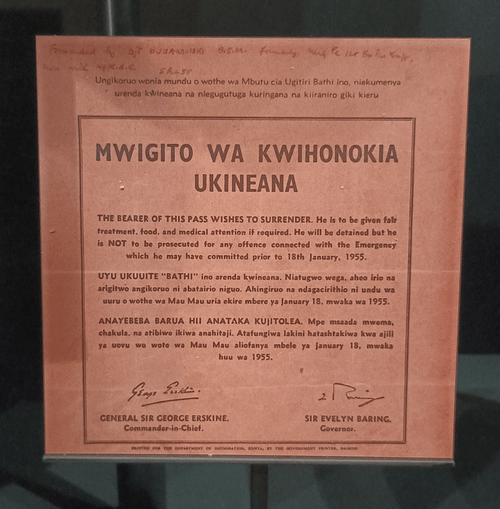
The colonial authorities understood they could not allow the rebellion to escalate or drag on indefinitely. Some 12,000 army troops, supported by the air force, the Kenyan police force, and a substantial army of local African recruits, were deployed. The rebels were relentlessly hunted down, and the movement was largely quashed by 1956, marked by the arrest, trial, and hanging of its most prominent leader, Dedan Kimathi. However, it took several more years to eliminate the remaining isolated Mau Mau rebel groups, and thousands of ordinary Kenyans remained imprisoned in detention camps. The state of emergency was only officially lifted in 1960.
Towards a New Kenya: Independence and Enduring Challenges
Kenya’s underlying problems, particularly for Africans, did not vanish with the end of the rebellion. While the White population remained a mere 1% in 1956, the British government was finally compelled to concede that change was inevitable. Land reforms were instigated, notably opening up the "White Highlands" to African settlers and providing subsidies for African agriculture. However, these reforms often benefited the wealthier Kenyans, rather than directly addressing the plight of the poorer farmers who had formed the core of the Mau Mau movement.
Ironically, the Mau Mau rebellion may have initially delayed political progress towards independence, as stability had to be re-established before any handover of power could be contemplated. Ghana, for example, had achieved independence in 1957, preceding Kenya.
British Prime Minister Harold Macmillan famously articulated the unstoppable momentum of decolonization as a "wind of change" in a 1960 speech in South Africa. Yet, colonial leaders on the ground, such as Patrick Renison, Governor of Kenya from 1959, remained resistant, famously denouncing Kenyatta as "a leader unto darkness and death" (Marshall, 177). Nevertheless, the tide of history was irreversible. Jomo Kenyatta was released from prison in 1961, and free elections soon followed, leading to the formation of the first African government. Another election in 1963, based on universal suffrage, saw Kenyatta and his party, now renamed the Kenya African National Union (KANU), form the government.
Kenya gained its independence on December 12, 1963. Kenyatta became its first prime minister and, upon Kenya’s transformation into a republic in 1964, its first president, a position he held until his death in 1978. While not without its challenges, Kenya has since enjoyed more political and economic stability than many other post-colonial African states. The legacy of the Mau Mau rebellion remains a complex and contested part of Kenyan national identity, a brutal reminder of the costs of colonialism and the enduring struggle for self-determination. The 2013 compensation by the British government for atrocities committed during the Emergency served as a belated, albeit partial, acknowledgement of the profound human rights violations perpetrated during this dark period of history.


Leave a Comment