The Neon Croisette: How Canva’s Pride Celebration Defined the Cultural Zeitgeist of Cannes Lions 2026
Main Facts: A Night of Unapologetic Inclusivity
In the high-stakes world of global advertising and creative excellence, the Cannes Lions International Festival of Creativity serves as the ultimate barometer for industry trends, corporate values, and the sheer power of brand storytelling. While the 2026 festival saw a litany of high-profile panels featuring global icons and tech-heavy activations, it was a Thursday night celebration on the Mediterranean shoreline that captured the collective imagination of the "Ad World."
Canva, the industry-leading all-in-one visual communication platform, solidified its status not just as a software giant, but as a cultural heavyweight by hosting what many have dubbed the "best party of the festival." Held at the Canva Creative Cabana on the iconic Promenade de la Croisette, the event was a dedicated Pride celebration, honoring LGBTQ+ rights and the spirit of inclusivity.
The evening was marked by a surreal and high-energy blend of drag artistry and nostalgic pop culture, culminating in a performance by the Teletubbies that went viral across social media platforms. Beyond the spectacle, however, the event served a deeper purpose: a public reaffirmation of Diversity, Equity, and Inclusion (DE&I) at a time when many multinational corporations are quietly scaling back their social advocacy programs. Partnering with Variety, Canva transformed a stretch of the French Riviera into a vibrant sanctuary of "unapologetic" pride, proving that for modern brands, authenticity remains the most valuable currency.
Chronology: From Oprah to "Toxic" Teletubbies
The road to Thursday night’s celebration was paved by a week of intellectual rigor and celebrity appearances at the Canva Creative Cabana. To understand the impact of the Pride party, one must view it as the crescendo of a meticulously planned week of programming.

The Prelude: A Week of High-Level Discourse
The festival began with a flurry of activity as the Canva Creative Cabana became a central hub for the world’s most influential C-suite executives. Throughout the week, the venue hosted a series of interviews and panels in partnership with Variety. Early in the festival, media mogul Oprah Winfrey took the stage, delivering a powerful discourse on the future of storytelling. She was followed by a diverse array of talent, including Saturday Night Live’s Colin Jost and NBA legend Carmelo Anthony. These sessions established the Cabana as a space where "creativity meets purpose," setting a sophisticated tone for the brand’s presence in Cannes.
The Main Event: Thursday Night on the Croisette
As the sun began to set over the Mediterranean on Thursday, the atmosphere shifted from professional networking to electric celebration. The transition was signaled by the arrival of a parade of elite European drag queens.
- The Opening Act: The evening kicked off with a high-octane drag showcase. Performers took to the stage under the neon lights of the Cabana, gyrating to a soundtrack of pop anthems by Katy Perry and Rihanna. The crowd, a mix of creative directors, marketing executives, and global influencers, was immersed in a festival atmosphere complete with face painting, glitter, and frozen Smirnoff drinks—a nostalgic touch that resonated with the millennial-heavy demographic.
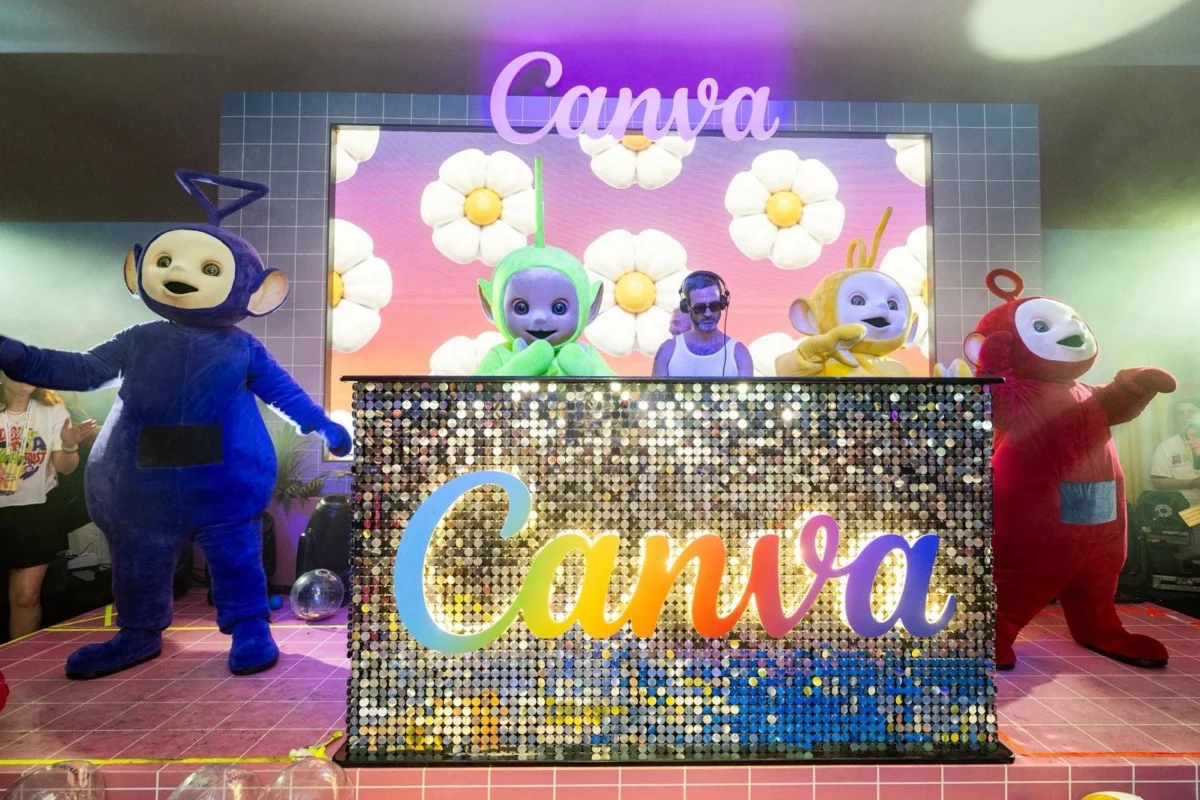
- The Surprise Finale: Just as the energy reached its peak, the music shifted. The legendary Teletubbies—Tinky Winky, Dipsy, Laa-Laa, and Po—emerged onstage. Far from their usual gentle hills of Teletubbyland, the characters embraced the "rock star" energy of the night.
- The "Toxic" Climax: The four characters led the crowd in a choreographed routine to Britney Spears’ "Toxic." The sight of Tinky Winky and company shimmying to a dance-pop classic prompted euphoric cheers. Proving their enduring status as icons, the characters eventually jumped off the stage to mingle with fans, sparking a frenzy of selfies and social media posts that dominated the festival’s digital footprint for the remainder of the week.
Supporting Data: The Business of Nostalgia and DE&I
The success of the Canva Pride party was not merely a result of good music and famous mascots; it was a strategic alignment of brand identity and market sentiment.
The Teletubbies’ 30th Anniversary Strategy
The appearance of the Teletubbies was facilitated by WildBrain Media Solutions, the global kids’ advertising and brand management company. The characters were at Cannes Lions to kick off the promotional cycle for their upcoming 30th anniversary. By placing these characters in a sophisticated, adult-oriented Pride setting, WildBrain and Canva tapped into "kidult" marketing—a burgeoning sector where brands leverage childhood nostalgia to connect with adult consumers.

The DE&I Landscape in 2026
Canva’s decision to "lean in" to Pride is statistically significant. According to industry reports from early 2026, there has been a noticeable 15% decline in corporate sponsorship for Pride-specific events among Fortune 500 companies compared to 2023, largely due to political pressures and "anti-woke" backlash in certain markets. By bucking this trend, Canva positioned itself as a leader for a younger, more socially conscious workforce and consumer base.
Canva’s Market Position
As an "all-in-one" visual communication platform, Canva’s user base has grown to over 180 million monthly active users. Their presence at Cannes—headlined by the Creative Cabana—reflects their transition from a simple design tool to a comprehensive enterprise solution that competes directly with legacy giants like Adobe. The Pride event served as a "brand-love" exercise, designed to build emotional equity with the creative community that uses their tools daily.
Official Responses: Voices from the Frontline
The rhetoric from the organizers emphasized a refusal to compromise on core values. The quotes gathered by Variety during the event highlight a unified front between the tech platform and the media entities involved.
Jimmy Knowles, Canva’s Global Head of Experiential:
Knowles addressed the current corporate climate directly, stating, "At a time when so many companies seem to be leaning out of DE&I, it means the world to be at a company that is leaning in—in such a proud, unapologetic way." His comments suggest that for Canva, inclusivity is not a seasonal marketing tactic but a fundamental pillar of their corporate identity.

Emma Witkowski, Vice President of Media Solutions at WildBrain:
Speaking from the dance floor with glitter on her cheeks, Witkowski emphasized the natural synergy between the Teletubbies and the Pride movement. "The Teletubbies’ DNA is about joy and inclusivity," she noted. "This was the perfect collaboration." She further explained that the characters’ message of "big hugs" and acceptance has remained unchanged for three decades, making them fitting ambassadors for a message of universal love.
The "Silent" Ambassadors:
In a humorous exchange, a representative for the Teletubbies told Variety that while the characters "don’t speak," the WildBrain team was on hand to "translate" their answers. This playful management of the brand’s IP allowed the characters to maintain their whimsical persona while participating in a high-profile adult industry event.
Implications: What This Means for the Future of Brand Advocacy
The "Canva Creative Cabana Pride on the Croisette" party is likely to be studied as a masterclass in experiential marketing for years to come. Its implications stretch across several facets of the industry:
1. The Death of "Quiet" DE&I
For the past several years, many brands have moved toward "quiet" advocacy—supporting causes through internal policies but avoiding loud, public-facing activations to avoid controversy. Canva’s approach suggests that the pendulum may be swinging back. By being "unapologetic," Canva has signaled to the market that there is a competitive advantage in taking a firm stand, particularly in attracting creative talent who prioritize corporate social responsibility.

2. The Power of "Absurdist" Marketing
The juxtaposition of drag queens and Teletubbies dancing to Britney Spears is a form of absurdist marketing that thrives in the age of TikTok and Reels. It creates "scroll-stopping" content that breaks through the noise of traditional B2B advertising. Other brands at Cannes may look to this as evidence that professional events do not have to be staid or overly serious to be effective.
3. The Teletubbies as an Inclusive Icon
The inclusion of Tinky Winky was particularly poignant. In 1999, the character was the subject of a bizarre controversy when American televangelist Jerry Falwell accused the character of being a "gay role model" due to his purple color and red handbag. By featuring Tinky Winky prominently at a Pride party 27 years later, WildBrain and Canva have effectively reclaimed the character’s legacy, turning a past "controversy" into a symbol of modern defiance and joy.
4. Cannes Lions as a Cultural Playground
Finally, the event reinforces the idea that Cannes Lions has evolved far beyond an awards ceremony for television commercials. It is now a global stage where technology companies, media houses, and legacy brands compete for cultural relevance. Canva’s partnership with Variety allowed them to bridge the gap between "Big Tech" and "Big Entertainment," ensuring that their brand message reached the most influential ears in the business.
As the 2026 festival drew to a close, the echoes of "Toxic" and the sight of rainbow-colored fans fluttering against the Mediterranean breeze remained the defining memory for many. In the race for the "Best Party at Cannes," Canva didn’t just win an imaginary award; they won the conversation.