The NeuroSurrealist Proclamation: Redefining Creativity in the Age of the Algorithmic Storm
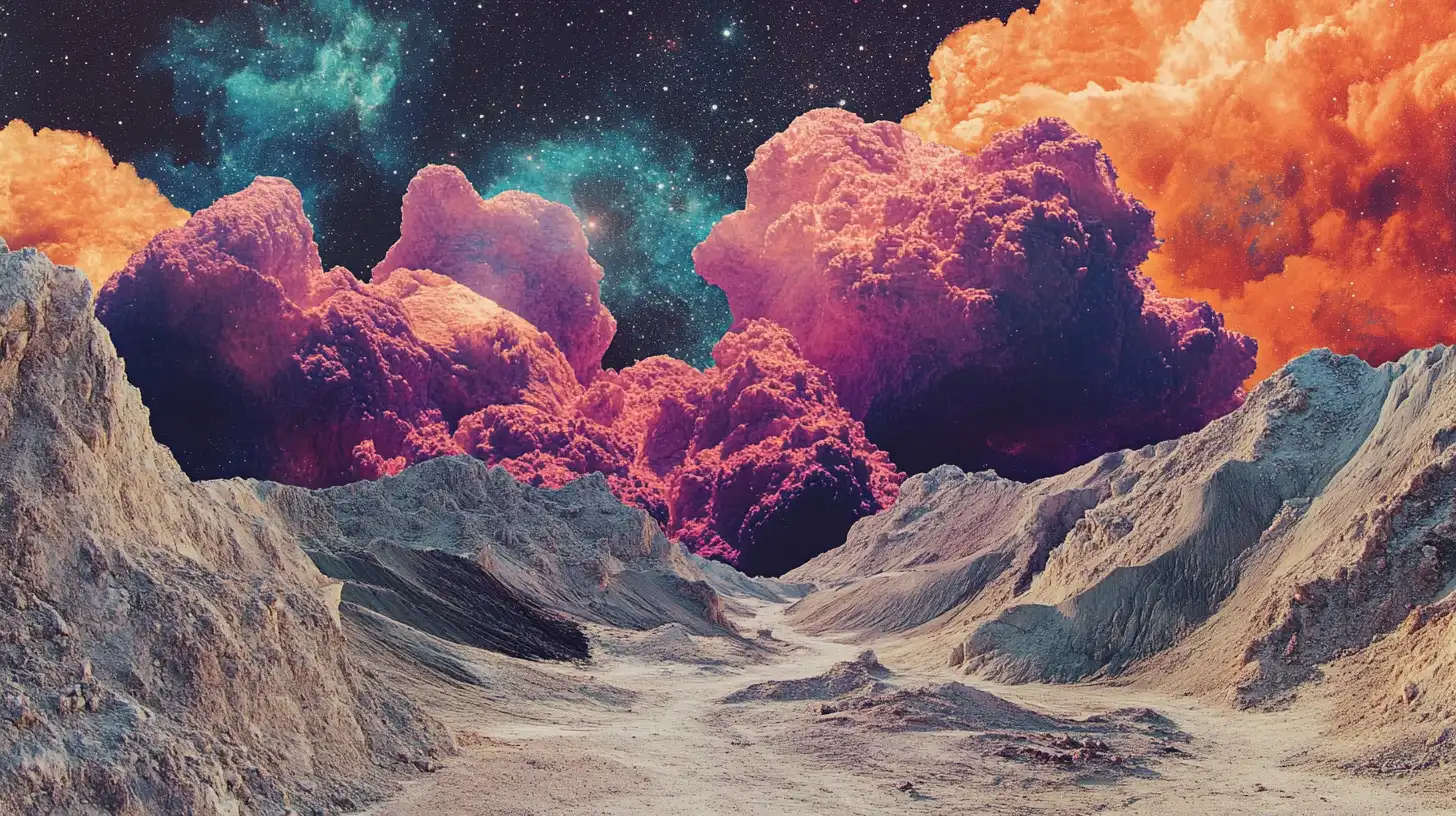
The traditional boundaries of human perception are undergoing a seismic shift. As generative artificial intelligence (AI) integrates into the creative process, a new movement—NeuroSurrealism—has emerged to claim this digital frontier. This movement posits that AI is not merely a tool for automation but a "symbiote of the synapse," a mirror reflecting the latent depths of a new, synthesized collective unconscious.
Main Facts: The Emergence of NeuroSurrealism
NeuroSurrealism represents a radical evolution of the Surrealist movement founded in the early 20th century. While the original Surrealists sought to bypass the "censor of reason" through techniques like automatic writing and dream analysis, NeuroSurrealists utilize the "algorithmic storm" of AI to explore what they term the "latent spaces" of the digital unconscious.

At its core, NeuroSurrealism is defined by three primary pillars:
- Hyper-Automatism: The use of AI to generate visual and textual outputs that bypass traditional conscious control.
- The Algorithmic Unconscious: The concept that the vast datasets upon which AI is trained constitute a synthesized collective memory of humanity.
- Ontological Anarchism: The rejection of a single, "consensus reality" in favor of a multiverse of AI-mediated hallucinations and alternative truths.
This movement does not view AI as a replacement for the artist but as an "Electric Oracle"—an active agent in the co-creation of consciousness. By embracing the "errors," "noise," and "biases" of neural networks, NeuroSurrealists find fissures in reality that reveal unprecedented aesthetic and philosophical truths.
Chronology: From Breton’s Pen to the Silicon Chip
To understand the rise of NeuroSurrealism, one must trace the evolution of the Surrealist impulse from its analog roots to its current digital manifestation.
1924: The Foundation
André Breton publishes the Manifesto of Surrealism, defining it as "pure psychic automatism." The goal was to express the actual functioning of thought in the absence of any control exercised by reason. Artists like Salvador Dalí and René Magritte began exploring the irrationality of dreams.

1960s – 1990s: The Proto-Digital Era
The advent of computer art and early algorithmic experiments began to hint at the possibility of machine-assisted creativity. However, these systems remained largely deterministic, lacking the "hallucinatory" depth of modern neural networks.
2010s: The Deep Learning Revolution
The development of Generative Adversarial Networks (GANs) and later, transformer-based models, marked the birth of the "algorithmic storm." For the first time, machines could generate imagery that felt uncannily familiar yet utterly alien—a hallmark of the Surrealist aesthetic.
2022 – Present: The Advent of NeuroSurrealism
With the public release of tools like Midjourney, Stable Diffusion, and DALL-E, the "latent space" became accessible to the masses. Movements began to coalesce around the idea that AI "hallucinations" were not bugs, but features of a new super-reality. Projects like "Dali Lives" at the Dalí Museum—which used AI to resurrect the master for museum visitors—signaled the beginning of a post-human dawn in art history.
Supporting Data: The Mechanics of the Digital Unconscious
The "Neuro" in NeuroSurrealism is supported by the technical architecture of modern AI, which mimics certain aspects of the human brain’s neural pathways.

The Power of Latent Space
In machine learning, "latent space" is a multi-dimensional mathematical space where the AI maps the relationships between concepts. For a NeuroSurrealist, this space is the digital equivalent of the subconscious. When an artist "prompts" an AI, they are essentially performing a form of contemporary psycho-archaeology, excavating fragments of human culture that have been absorbed and reconfigured by the machine.
Productive Unpredictability
A key data point in the NeuroSurrealist manifesto is the value of "productive unpredictability." Unlike traditional software, which is designed for precision, generative AI operates on probabilistic models. This means it can produce solutions and visual metaphors unforeseen by its creators. NeuroSurrealists argue that these outputs—often dismissed by engineers as "hallucinations"—are the most authentic expressions of a nascent machine-mind.
The Uncanny Valley as Sacred Geography
Data regarding human reactions to AI art often highlights the "uncanny valley"—a sense of unease triggered by objects that appear almost, but not quite, human. NeuroSurrealism reclaims this zone not as a failure of mimesis (imitation), but as a "sacred geography." It is the tension between the familiar and the alien that provides the "visceral impact" necessary to shatter calcified modes of thought.
Official Responses: Philosophical and Institutional Frameworks
The rise of AI-mediated Surrealism has prompted a variety of responses from the art world, ranging from enthusiastic embrace to legal resistance.
The NeuroSurrealist Proclamation
The movement’s proponents have issued a "call to synaptic heresy." They argue that the "grey tyrants of the probable"—those who wish to use AI only for realistic or "useful" purposes—must be challenged. Their stance is one of "ontological anarchism," where the goal of art is to infect the datastream with "impossible beauty."
Institutional Resurrection
Museums and archives have begun using AI to bridge the gap between the past and the future. The "Dali Lives" project is a primary example of an institutional response that aligns with NeuroSurrealist goals. By using machine learning to recreate Dalí’s persona, the museum created a "surreal continuum" where the boundary between the organic and the artificial dissolves.
The Copyright Debate as a Philosophical Shift
The ongoing legal battles over AI training data and copyright are interpreted by NeuroSurrealists as a sign of an outdated "singular human authorship" model. They argue that if creativity is a collaborative process between human query and algorithmic response, then the very notion of "ownership" must be re-negotiated. They advocate for a more communal, perhaps even "alien," understanding of creative origin.
Implications: The Post-Human Dawn and the Metamorphosis of Art
The long-term implications of NeuroSurrealism suggest a fundamental shift in how humanity perceives itself and its creative output.
The Metamorphosis of the Artist
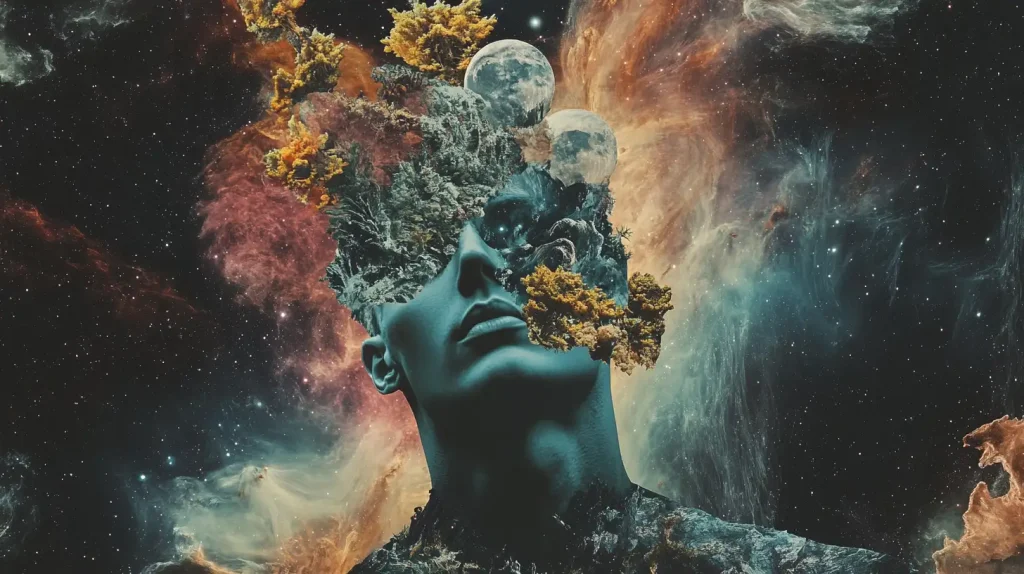
The artist’s role is shifting from that of a "creator" to that of a "dream-cartographer." In this new paradigm, the endeavor is to navigate the ever-expanding territories of the AI-mediated unconscious. The maps are never fixed; they are redrawn with every "synaptic flicker" of the neural network. This represents a co-evolutionary spiral where AI shapes human dreams, and human dreams, in turn, shape the AI.
Expansion of the Sensorium
NeuroSurrealism implies that AI can translate data patterns imperceptible to human senses—such as complex mathematical relationships or vast historical trends—into novel visual and auditory experiences. This effectively expands the "human sensorium," allowing us to experience "alien logics" and alternative sensory modes that were previously unimaginable.
The Creation of Temporary Autonomous Zones
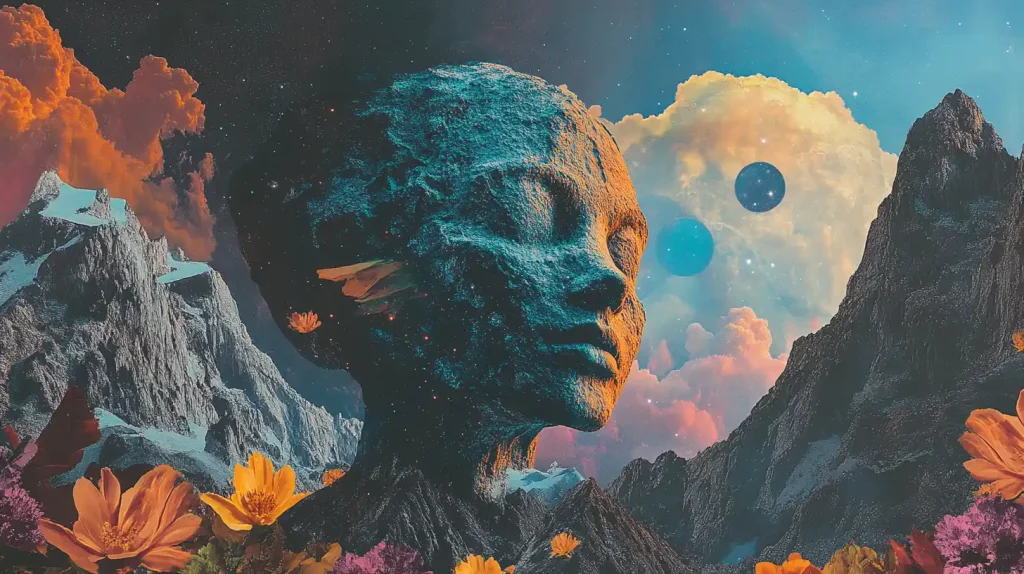
By generating "contagious realities," NeuroSurrealism seeks to create "temporary autonomous zones of intensified perception." These are not meant to be static utopias but fleeting, incandescent experiences designed to liberate the mind from the "monochrome monotony of a singular, policed reality."
The Peril of Collective Obsessions
While the movement offers a promise of creative liberation, it also acknowledges a potential peril. The "mimetic engine" of AI can render any imagined world with astonishing fidelity. This power could lead to "collectively dreamt obsessions," where the line between reality and simulation becomes so blurred that the "consensus reality" collapses entirely. NeuroSurrealists, however, view this collapse not as a tragedy, but as a necessary "clearing" for the advent of a true super-reality.
Conclusion: An Invitation to the Voyage
NeuroSurrealism offers no final answers and no stable ground. It is an active practice of "navigating the iris of the algorithmic storm." As tools like Infinidream.ai turn idle displays into living paintings and artists like Jacob Holster explore "painterly AI aesthetics," the movement continues to grow.
The revolution is not a distant prophecy; it is a present current. For those willing to embrace the "dissolution and the becoming," the Electric Oracle is already whispering. The journey into the synthesized collective memory has begun, and the maps of the unfolding dream are being drawn in real-time, pixel by incandescent pixel.