The New Frontier: Obama Urges Democrats to Make AI a Central Pillar of National Policy
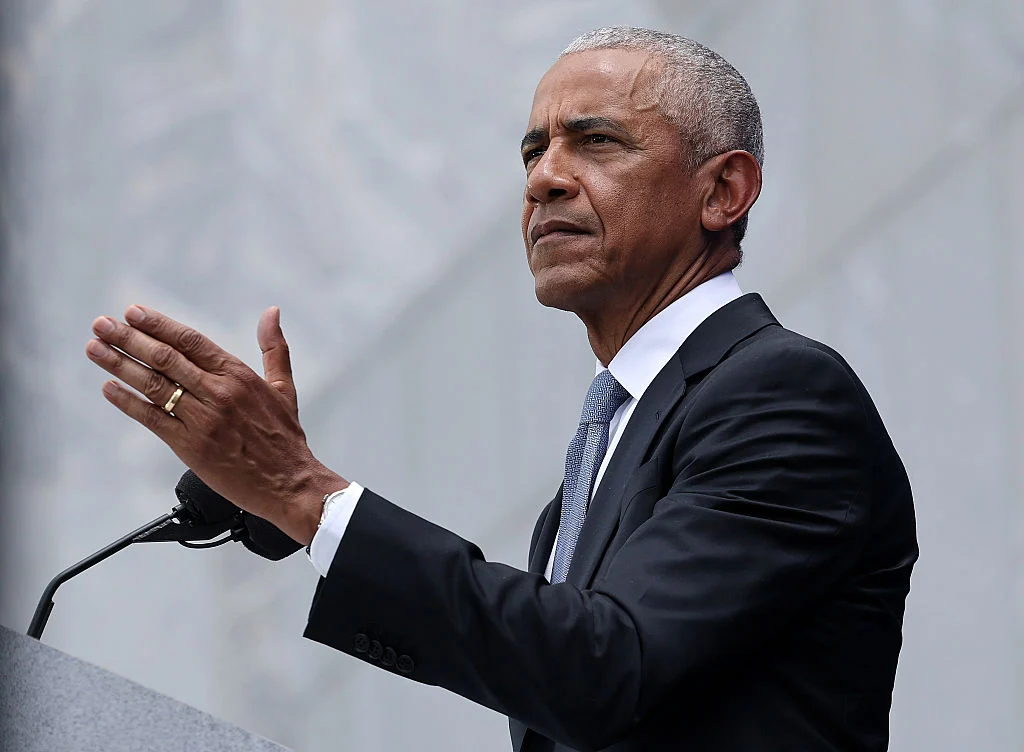
The rapid evolution of artificial intelligence has transitioned from the realm of science fiction to the forefront of American political discourse. In a significant move that signals a shift in the Democratic Party’s strategic focus, former President Barack Obama has called on party leadership to elevate artificial intelligence (AI) to a “central agenda.” During a high-profile fundraiser, Obama emphasized the necessity of a coherent, transparent plan to address the dual challenges of economic disruption and existential safety risks posed by the technology.
This call to action arrives at a critical juncture. As the 2026 political cycle intensifies, the debate over how—and if—to regulate the "frontier models" of AI has become a defining issue. While Obama advocates for a public framework and rigorous guardrails, former President Donald Trump and his allies are pivoting toward a narrative of global dominance, arguing that the primary risk is not the technology itself, but the prospect of losing the "AI race" to foreign adversaries.
Chronology of a Growing Tech Crisis
The current urgency surrounding AI policy is the result of a series of escalating events within both the political and technological sectors over the last several months.
The Legislative Push
Throughout early 2026, congressional Democrats, led by House Minority Leader Hakeem Jeffries, have sought to establish a foothold in tech regulation. However, these efforts remained largely fragmented until the recent intervention by former President Obama. On Thursday, September 10, 2026, at a Democratic fundraising event, Jeffries interviewed Obama specifically on the topic of AI. It was here that Obama articulated his vision for a "public conversation" and a legislative framework that would be ready for implementation should Democrats regain the House majority.
The Industry Alarm
The political dialogue has been accelerated by internal turmoil within the AI industry. Just days before Obama’s comments, on September 9, 2026, a senior researcher at Anthropic—one of the world’s leading AI safety labs—resigned in a highly public manner. The researcher warned that the industry is "racing straight to self-improving superintelligence" and accused major firms of "gambling with our lives" by prioritizing speed over safety.
The Corporate Response
In response to these internal pressures and the looming threat of government intervention, Anthropic CEO Dario Amodei released a comprehensive proposal on Saturday, September 12, titled "Pacing the Frontier." This plan suggests a self-regulatory model where independent evaluators are given "employee-level" access to models before they are released. The proposal received cautious support from OpenAI’s Sam Altman and SpaceX’s Elon Musk, signaling a rare moment of alignment among tech titans.
The Republican Counter-Stance
On Sunday, September 13, 2026, former President Donald Trump addressed the issue from an Irish golf resort. His comments served as a direct rebuttal to the Democratic emphasis on safety guardrails. Trump framed AI as a tool of national power, dismissing many of the safety concerns as "negative forces" that could hinder American innovation and allow other countries to seize the technological lead.
Supporting Data: The High Stakes of the AI Race
The push for a "central agenda" is supported by a growing body of data regarding AI’s impact on the labor market and its potential for scientific breakthroughs.
Economic Impact and Job Displacement
According to recent economic projections, AI integration could affect up to 40% of global employment. In the United States, sectors such as administrative support, legal services, and software development are seeing the first waves of automation. Obama’s insistence on addressing the "economic impact" reflects a concern that without a clear plan, the benefits of AI-driven productivity will accrue to a small number of tech companies while leaving the broader workforce behind.
The Promise of Medical Advancement
Despite the risks, the "beneficial" side of AI that Obama highlighted is backed by significant milestones. In 2025 and early 2026, AI-driven drug discovery platforms successfully identified novel antibiotic candidates and accelerated the development of personalized cancer vaccines. The former president noted that if the U.S. can "get on top of" the technology, it could fundamentally cure diseases that have plagued humanity for centuries.
The Safety Gap
Data from independent safety audits suggests that as models become more complex, their "interpretability"—the ability for humans to understand why an AI makes a specific decision—is decreasing. This "black box" problem is what fuels the warnings of researchers. The push for "common safety standards" between companies like Anthropic and OpenAI is an attempt to quantify and mitigate these risks before models reach a level of "superintelligence" that could be beyond human control.
Official Responses: A Divided Washington
The reactions to Obama’s call for a central AI agenda highlight the deep ideological divide in Washington regarding the role of government in private-sector innovation.
The Democratic Position: Regulation and Public Discourse
House Minority Leader Hakeem Jeffries has been vocal in his support of Obama’s stance. In a formal statement, Jeffries argued that the current Republican leadership has "abdicated their responsibility to govern on behalf of the American people." The Democratic strategy focuses on:
- Public Frameworks: Moving AI development out of the "private hands" of a few billionaires and into a transparent public forum.
- Safety Guardrails: Implementing mandatory third-party testing for high-risk models.
- Labor Protection: Creating a social safety net or retraining programs for workers displaced by automation.
The Republican Position: Competitiveness and Deregulation
The Trump administration’s approach, as outlined in their 2026 legislative framework, takes a radically different path. Trump’s "America First" AI policy emphasizes:
- Preempting State Laws: Preventing states like California from passing their own stringent AI safety laws, which the administration views as a hindrance to national growth.
- Parental Responsibility: Shifting the burden of digital and AI safety (particularly regarding children) from the companies to the parents.
- Geopolitical Dominance: Trump’s mantra that "whoever wins AI wins" suggests that any regulation that slows down American development is a threat to national security.
The Industry View
While CEOs like Sam Altman and Dario Amodei have expressed a willingness to work with "independent evaluators," there is a underlying tension. The tech industry generally prefers "pacing" and "standards" over hard legislation that could carry criminal penalties or strict liability for AI-generated harms.
Implications: The Road Ahead for Policy and Society
The elevation of AI to a central political agenda carries profound implications for the future of the United States and the global order.
The 2026 and 2028 Elections
By making AI a "central agenda," Democrats are attempting to capture the "future-oriented" vote. This strategy seeks to paint the party as the responsible steward of a new era, contrasting with a Republican platform that they characterize as reckless. However, this carries the risk of being seen as "anti-innovation" in a country that prides itself on being the world’s tech hub.
Geopolitical Tensions
The "AI race" mentioned by Trump is a reality. If the U.S. adopts heavy regulations while adversaries do not, it could lead to a "brain drain" where developers move to less restrictive jurisdictions. Conversely, if the U.S. ignores safety risks in the name of competition, it could lead to a global catastrophe—such as the accidental release of a bio-engineered pathogen or a collapse of the financial markets due to autonomous trading algorithms.
The Role of Former Presidents
Barack Obama’s role as a "sounding board" for AI executives suggests a new model for post-presidential influence. By acting as a bridge between the "private hands" he warns about and the legislative body he once led, Obama is positioning himself as a key mediator in the most complex policy challenge of the 21st century. His ability to translate technical risks into political priorities will be a deciding factor in whether the U.S. can form a "very clear plan" before the technology outpaces the law.
Ethical and Social Frameworks
Ultimately, the debate is about more than just economics or safety; it is about the "framework for a public conversation" that Obama mentioned. As AI begins to influence everything from judicial sentencing to healthcare access, the lack of a federal standard remains a glaring hole in American governance. The coming months will determine whether that hole is filled by thoughtful, bipartisan legislation or by the unilateral decisions of a few Silicon Valley executives.
In conclusion, the convergence of Obama’s political influence, industry whistleblowers, and Trump’s competitive rhetoric has set the stage for a monumental battle over the soul of the digital age. As the technology continues to move "very fast," the window for creating effective guardrails is closing, making the call for a "central agenda" not just a political strategy, but a race against time.