The Primal Terror Within: How the Hollow Warden Ranger Reshapes D&D 5.5E
Introduction: A New Dawn for the Ranger Class
For adventurers traversing the perilous landscapes of Dungeons & Dragons, the Ranger class has often been a subject of fervent discussion, a balancing act between iconic fantasy archetypes and perceived mechanical shortcomings. While strides have been made to bolster its standing, particularly in D&D 5th Edition, the enduring quest for a truly satisfying and robust Ranger experience continues. Now, with the impending release of Ravenloft: The Horrors Within, a new contender emerges from the shadows, promising to redefine expectations and solidify the Ranger’s place as a formidable force: the Hollow Warden.
This highly anticipated subclass, a standout among the new offerings in the Ravenloft expansion, is more than just another option; it represents a significant evolutionary leap for the Ranger. Eschewing traditional notions of pristine nature guardianship, the Hollow Warden taps into something far older, far darker—the ancient, unsettling terrors that lurk beneath the earth and within the oldest, most forgotten places. It’s a melee-centric archetype that not only addresses historical criticisms of the class but also injects a potent dose of folk horror and "soulslike" dread into its very core. This article delves into the origins, mechanics, and profound implications of the Hollow Warden Ranger, exploring how it stands poised to satisfy both the meticulous min/maxer and the thematic role-player, ultimately enriching the D&D 5.5E landscape.
The Ranger’s Journey: A Chronicle of Evolution
The history of the Ranger in Dungeons & Dragons is a storied one, marked by periods of both acclaim and contention. In the initial rollout of D&D 5th Edition, the class quickly garnered a reputation for feeling underwhelming compared to its martial counterparts. While offering unique flavor, many players found its core mechanics, particularly the reliance on Hunter’s Mark for damage and a sometimes-underpowered Favored Enemy feature, to be restrictive and less impactful than desired. The struggle to carve out a distinct, powerful identity beyond being a "fighter with some nature spells" became a persistent theme in community discussions.
The Turning Point: Tasha’s Cauldron of Everything

A significant turning point arrived with the release of Tasha’s Cauldron of Everything. This supplement was a game-changer for many classes, and the Ranger, in particular, received a much-needed overhaul. Tasha’s introduced Optional Class Features that allowed players to swap out less effective abilities for more versatile and impactful ones, such as the widely praised Deft Explorer and Primal Awareness features. Crucially, it also brought forth new subclasses like the Fey Wanderer and the Swarmkeeper, which offered fresh, mechanically engaging playstyles that moved beyond the conventional "bow-and-arrow" stereotype. These additions significantly improved the Ranger’s standing, providing more "toys to play with" that helped them keep pace with other classes.
Despite these vital improvements, a lingering perception persisted within the D&D community. Even in the evolving landscape of 5.5E, some players felt the Ranger still carried a burden of its past, struggling to achieve the same level of optimized power as certain other classes. The desire for a Ranger that could truly shine in melee combat, without feeling forced into specific builds or relying on incremental number increases, remained a prominent request. The class, with its inherent connection to the wild and its tracking abilities, often encouraged a more organic, "roll stats and see where the vibes take you" approach, which sometimes clashed with the meticulous mathematical optimization sought by some players. It was into this evolving context that Ravenloft: The Horrors Within stepped, promising to deliver not just new content, but a design philosophy that embraced the darker, more visceral aspects of fantasy.
Enter Ravenloft: The Horrors Within
The Ravenloft setting itself is synonymous with gothic horror, ancient evils, and psychological dread. It’s a place where the line between hero and monster often blurs, and where power frequently comes with a terrible price. It is therefore fitting that a subclass emerging from this domain would eschew the bright, idyllic imagery of traditional nature guardians in favor of something far more unsettling. The Hollow Warden Ranger, as presented in Ravenloft: The Horrors Within, is a deliberate and compelling answer to the community’s desire for a powerful, distinctive melee Ranger, while simultaneously weaving a rich tapestry of grim, folk-horror aesthetics that perfectly complements its namesake setting. It is a testament to the ongoing design efforts to make every class feel potent and unique, offering a subclass that satisfies both the craving for raw power and deeply immersive thematic role-playing.
Unveiling the Hollow Warden: Aesthetics and Core Philosophy
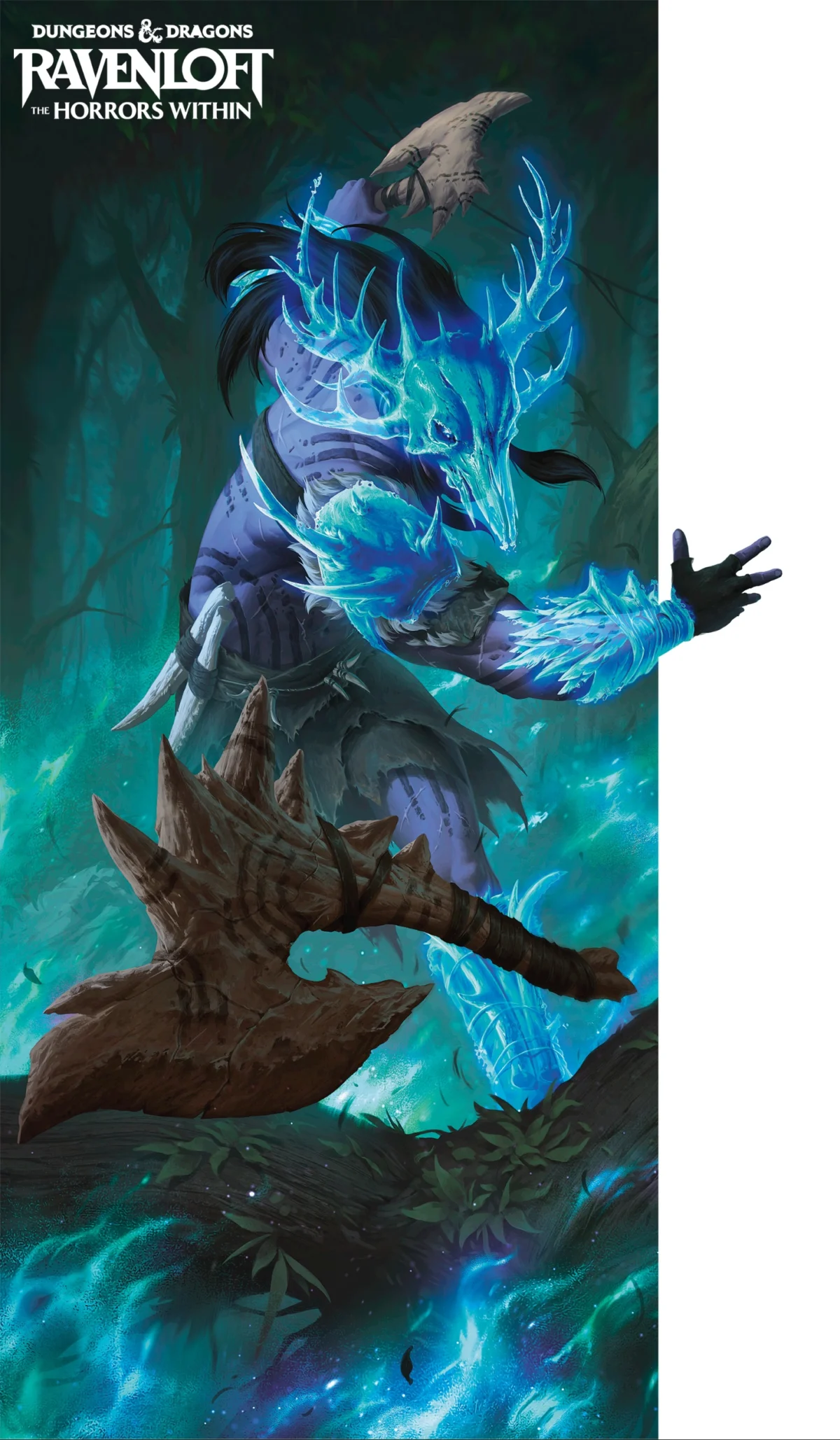
The very essence of the Hollow Warden Ranger is steeped in a captivating, unnerving aesthetic that immediately sets it apart. Forget the image of a verdant guardian clad in forest greens, wielding a longbow with serene precision. The Hollow Warden evokes something far more primal and unsettling – a guardian born of the ancient terrors that fester in the deep, forgotten places of the world. Its visual language speaks of antlers, bone, fur, fang, and claw, not as trophies of the hunt, but as grim adornments, almost a part of the Warden’s very being.

This isn’t the "warrior of nature" in the traditional sense; it’s more akin to a sentinel wrapped in a shroud of ritualistic animalistic parts, flickering in firelight, serving as a dire warning. The vibe is unmistakably folk horror, drawing inspiration from primal fears and the monstrous aspects of the wilderness itself. There’s a palpable darkness to its aesthetics, a "soulslike" grimness that suggests a pact with forces both ancient and formidable. While players are always free to imbue their characters with their own unique flavor, the default imagery of the Hollow Warden is powerfully evocative, positioning them as an unsettling, almost monstrous protector against encroaching evils, or perhaps, a terrifying embodiment of the wilderness’s own wrath.
This thematic richness is not merely cosmetic; it underpins the core design philosophy of the subclass. The Hollow Warden is engineered to be a melee masterclass, a Ranger that thrives in the thick of combat, engaging threats head-on. Crucially, it achieves this by fundamentally reimagining the Favored Enemy feature. For too long, Favored Enemy often felt like a minor situational bonus, frequently overshadowed by the more immediate utility of Hunter’s Mark. The Hollow Warden, however, repurposes this iconic Ranger ability, transforming it into the linchpin of its combat prowess, allowing players to activate a terrifying transformation rather than simply casting another spell. This deliberate design choice signals a clear intent: to provide a Ranger option that is not only mechanically robust but also thematically cohesive, appealing to players who seek both power and a compelling narrative.
Mechanical Manifestation: Abilities of the Hollow Warden
The true genius of the Hollow Warden Ranger lies in how its grim aesthetic and primal power translate into potent, actionable abilities within the game. Each feature builds upon the core concept, creating a synergistic whole that empowers the Ranger to become a terrifying force on the battlefield.
Level 3: Wrath of the Wild – The Primal Transformation
At the heart of the Hollow Warden’s identity is its signature 3rd-level feature, Wrath of the Wild. This ability allows the Ranger to tap into the strange and ancient horrors of the land, transforming into a formidable melee powerhouse. It’s a deliberate departure from the standard Ranger playbook, leveraging the Favored Enemy feature in a dynamic and impactful way.
- Activation: By expending a Bonus Action and one use of their Favored Enemy feature, the Ranger undergoes a temporary, unsettling transformation. This recontextualizes Favored Enemy from a passive bonus into an active, strategic resource for combat engagement.
- Key Benefits while Transformed:
- Enhanced AC: The Ranger gains a +1 bonus to their Armor Class, which further improves to a +2 bonus at level 11. This immediate increase in durability is crucial for a melee combatant, allowing the Hollow Warden to confidently wade into the fray and weather incoming blows.
- Fear Aura (10-foot radius): A chilling 10-foot fear aura emanates from the transformed Ranger. At the start of their turn, creatures of the Ranger’s choice within this aura must succeed on a Wisdom saving throw or become Frightened until the start of the Ranger’s next turn. This is a potent crowd control ability, capable of disrupting enemy formations, forcing disadvantage on attack rolls, and creating tactical opportunities for allies. The ability to choose targets ensures that allies are not inadvertently affected.
- Opportunity Attack on Damage: Perhaps the most impactful feature, this allows the Hollow Warden to make an Opportunity Attack against a creature that damages them or one of their allies. This transforms the Ranger into a proactive defender and a constant threat. Every incoming attack against the Warden or their comrades becomes a potential counter-attack, significantly increasing the Ranger’s damage output and making them a dangerous target to ignore. It embodies the "soulslike" philosophy of turning defensive actions into offensive ones, rewarding tactical positioning and drawing enemy fire.
Analysis: Wrath of the Wild immediately establishes the Hollow Warden as a frontline combatant. The combination of increased AC, crowd control, and retaliatory strikes makes them exceptionally sticky and dangerous in melee. This feature effectively solves the long-standing issue of Rangers feeling squishy or lacking a definitive role in close quarters, providing a unique and highly engaging combat loop. The focus on enhancing the transformation itself, rather than simply escalating numerical modifiers, is a testament to thoughtful design.

Hollow Warden Spells – A Thematic Arsenal
Beyond its core transformation, the Hollow Warden Ranger gains access to a curated list of bonus spells that perfectly complement its melee focus and dark, primal theme. This list is small but exceptionally mighty, each spell feeling integral to the subclass’s identity:
- Wrathful Smite: A classic paladin spell, Wrathful Smite allows the Ranger to imbue their weapon with divine (or, in this case, primal) fury, dealing extra damage and potentially Frightening the target. This synergizes perfectly with the Hollow Warden’s melee focus and fear aura, allowing for even more reliable Frightened conditions.
- Alter Self: This spell offers thematic utility, allowing the Ranger to change their appearance. It’s perfect for role-playing the eerie, shifting nature of the Warden, or for practical applications like infiltration, aligning with the "monster among us" vibe.
- Phantom Steed: A conjured, spectral mount provides excellent mobility and thematic flavor. It enhances the image of a mysterious, swift hunter from the dark wilds, able to pursue foes across treacherous terrain.
- Dominate Beast: This powerful control spell allows the Ranger to exert their will over beasts, bending them to their command. It reinforces the Warden’s connection to the untamed, monstrous aspects of nature, providing both combat utility and exploration potential.
- Steel Wind Strike: The capstone spell, Steel Wind Strike, is a devastating 5th-level spell that allows the Ranger to make multiple melee weapon attacks against different creatures within range. It’s an incredibly potent area-of-effect melee option, solidifying the Hollow Warden’s status as a formidable close-quarters combatant and offering a spectacular burst of damage.
Overall: This spell list is a masterclass in thematic integration and mechanical utility. It avoids the common trap of offering spells that feel tacked on, instead providing a cohesive suite of abilities that empower the Hollow Warden’s melee prowess, enhance its terrifying aesthetic, and offer valuable utility. "10/10 no notes" indeed.
Ascending the Dark Path: Higher-Level Powers
The Hollow Warden’s power doesn’t peak at level 3; it continues to deepen and evolve, ensuring the subclass remains compelling and effective throughout a campaign. Higher-level features enhance resilience, control, and overall combat effectiveness, making the Ranger an even more terrifying force to confront.
Level 7: Hungering Might – Resilience and Sustenance
At 7th level, the Hollow Warden gains Hungering Might, a feature that significantly boosts their durability and sustainability in prolonged engagements.
- Wisdom to Constitution Saving Throws: The Ranger adds their Wisdom modifier as a bonus to Constitution saving throws. This includes concentration checks, which is a massive boon for any spellcasting martial class. This dramatically increases the Warden’s ability to maintain important spells like Hunter’s Mark (if chosen) or other buffs, and makes them far more resistant to debilitating effects that target Constitution.
- HP Regain while Bloodied: Once per turn, whenever the Ranger hits a creature while both Bloodied (at half or less of their maximum hit points) and in their Wrath of the Wild form, they regain hit points. This "spicy" ability provides crucial in-combat healing, allowing the Hollow Warden to sustain their frontline presence and continue to absorb and dish out damage even when severely wounded. It reinforces the idea of the Warden drawing strength from the brink, much like the resilient horrors they emulate.
Analysis: Hungering Might solidifies the Hollow Warden’s role as a resilient, self-sustaining melee combatant. The boost to Constitution saves makes them incredibly hard to take down with status effects or spellcasters, while the unique healing mechanism rewards aggressive play and helps them survive the rigors of combat.

Level 11: Rot and Violence – Deepening the Terror
At 11th level, the Hollow Warden’s transformation becomes even more terrifying with Rot and Violence, adding significant debuff capabilities and melee versatility.
- Enhanced Fear Aura: When a creature fails its saving throw against the Warden’s fear aura, in addition to being Frightened, it also cannot regain hit points or take Reactions until the start of the Ranger’s next turn. This is a colossal debuff. Preventing healing shuts down many enemy strategies and can quickly turn the tide of battle, while denying Reactions prevents counter-spells, parries, or other defensive maneuvers, leaving enemies vulnerable. This makes the Hollow Warden a threat that enemies must deal with or suffer severe consequences.
- Weapon Mastery Bonus: The Ranger can, for free, use either the Sap or Slow Weapon Masteries in addition to whatever other weapon mastery property they are using with their wielded weapon. This piece of tech is invaluable for a melee-focused subclass, offering flexible and powerful control options on every hit. Sap can stun an enemy, while Slow can reduce their movement, making the Warden a master of battlefield control and further hindering foes already suffering from their fear aura.
Analysis: Rot and Violence elevates the Hollow Warden to a significant battlefield controller and damage dealer. The enhanced fear aura is a potent disruptor, and the free Weapon Masteries provide unparalleled versatility in melee, allowing the Warden to adapt to various combat situations and lock down priority targets.
Level 15: Ancient Might – Enduring Primal Power
The capstone abilities at level 15, collectively known as Ancient Might, cement the Hollow Warden’s status as an enduring force of primal terror, offering benefits both in and out of their transformed state.
- Ominous Strikes: Even when not in Wrath of the Wild form, the Ranger deals extra damage whenever they hit with an attack roll against a creature that is Frightened. This provides a consistent damage boost and rewards synergy with other fear-inducing effects, making the Ranger a consistent threat regardless of their transformation status.
- Persistent Wrath: While in Wrath of the Wild form, if the Ranger is reduced to 0 hit points, they can choose to not fall unconscious. Instead, they regain hit points equal to twice their Ranger level. This is an incredible resilience feature, offering a "second wind" that can turn the tide of a crucial battle, allowing the Warden to cling to life and continue fighting when others would fall.
- Timeless: The Ranger becomes immune to Exhaustion. This is a powerful utility feature for long adventuring days, exploration, and surviving arduous journeys, reinforcing the thematic link to ancient, enduring power that transcends mortal frailty.
Analysis: Ancient Might provides immense power, resilience, and utility, ensuring the Hollow Warden remains a formidable and versatile character in the endgame. The combination of consistent damage, a life-saving "death cheat," and immunity to exhaustion makes this subclass truly exceptional and, as the original article states, "easily my favorite Ranger subclass in 5.5E."
Implications and Impact: Shaping the Future of Rangers
The introduction of the Hollow Warden Ranger is far more than just adding another option to the D&D roster; it carries significant implications for the Ranger class, player choices, and the overall design philosophy of D&D 5.5E.
Redefining the Ranger Archetype: The Hollow Warden boldly challenges the traditional perception of a Ranger. It offers a powerful, aesthetically distinct melee archetype that doesn’t rely on bows or cunning traps, but on raw, primal, and terrifying power. This expansion of the Ranger’s identity is crucial for encouraging diverse character concepts and moving beyond the "one-size-fits-all" trap that sometimes plagued earlier iterations of the class.
Broad Player Appeal: This subclass is poised to appeal to a wide spectrum of players. Those who felt the Ranger lacked punch in melee will find a potent and engaging option. Players drawn to darker fantasy, folk horror, or "soulslike" aesthetics will find a character concept perfectly aligned with their preferences. Moreover, the clear mechanical progression and synergistic abilities make it attractive to players who enjoy optimizing their characters, proving that thematic depth and mechanical efficacy are not mutually exclusive.
Shifting the D&D Meta: By offering such a robust melee option, the Hollow Warden could significantly impact the Ranger’s position within party compositions. It provides a viable and exciting alternative to the traditional ranged Ranger, opening up new tactical possibilities and encouraging more diverse party builds. This could lead to a revitalization of melee-focused Ranger builds, showcasing the class’s versatility in a way that hasn’t always been prominent.
DM Perspective and Worldbuilding: For Dungeon Masters, the Hollow Warden offers rich veins for storytelling. Its connection to ancient terrors and folk horror vibes makes it a natural fit for Ravenloft campaigns, but also easily adaptable to any setting with forgotten ruins, primal wilds, or lurking eldritch threats. A Hollow Warden NPC could be a terrifying antagonist, a cryptic ally, or a grim guardian of sacred, forgotten places, adding layers of mystery and dread to any narrative.
Addressing the "Ranger Problem": Perhaps most importantly, the Hollow Warden feels like a direct and thoughtful response from the designers to long-standing player feedback regarding the Ranger class. It demonstrates a commitment to evolving the class, providing options that feel powerful, unique, and deeply satisfying. The subclass’s success in making Favored Enemy a central, impactful mechanic, and its ability to deliver a compelling melee experience, speaks volumes about the continuous effort to refine and enhance D&D 5.5E. This isn’t just a new subclass; it’s a statement that the Ranger’s journey toward mechanical excellence and thematic richness is far from over.
Conclusion: A Resounding Success for the Realm of Dread

The Hollow Warden Ranger from Ravenloft: The Horrors Within stands as a monumental achievement in Dungeons & Dragons subclass design. It is a testament to the power of blending evocative theme with robust mechanics, creating an experience that is both deeply immersive and immensely satisfying at the table. From its unsettling folk horror aesthetic to its meticulously crafted abilities that redefine the Ranger’s role in combat, every aspect of the Hollow Warden feels purposeful and impactful.
By offering a powerful melee option that recontextualizes core Ranger features and infuses the class with a unique, dark identity, the Hollow Warden not only addresses historical criticisms but also sets a new standard for Ranger subclasses. It proves that the Ranger can indeed be a terrifying, resilient, and utterly compelling force, whether facing down hordes of undead in Barovia or ancient evils in the deepest wilds. For players seeking a Ranger that embodies the raw, untamed, and genuinely fearsome aspects of nature’s wrath, the Hollow Warden is not just an option—it is the option. It is, without exaggeration, a triumph of design, earning its "10/10 no notes" commendation and cementing its place as a standout feature of Ravenloft: The Horrors Within.
Explore the Hollow Warden Ranger and six other spooky subclasses in Ravenloft: The Horrors Within, available soon!