
The Satire Paradox: India’s Supreme Court to Decide if Cartoons Belong in Classrooms
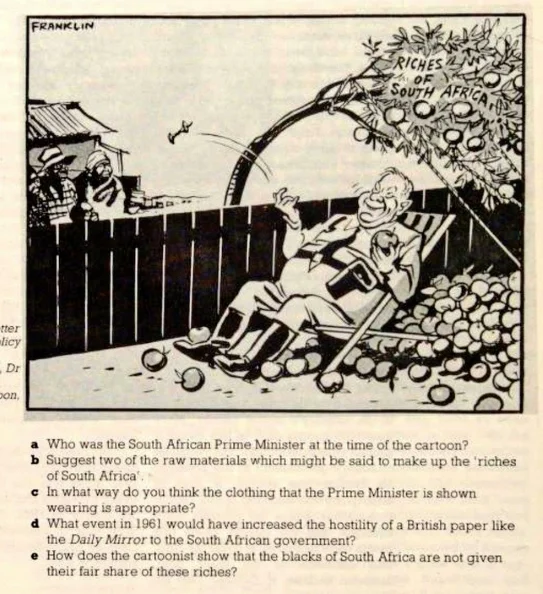
In a move that has reignited a nationwide debate over the intersection of pedagogy, politics, and satire, the Supreme Court of India has formally intervened in the long-standing controversy surrounding the use of political cartoons in National Council for Educational Research and Training (NCERT) textbooks. On May 22, 2026, a three-judge Bench, led by Chief Justice of India (CJI) Surya Kant, directed a committee headed by a retired Supreme Court judge to conduct a comprehensive review of the visual content within social science and political science manuals used by millions of students across the country.
The judicial intervention follows a stern objection raised by the Union Government, represented by Solicitor General Tushar Mehta, who argued that textbooks should be spaces of "solemn instruction" rather than platforms for lampooning or satire. The outcome of this review could fundamentally alter how history and civics are taught in the world’s largest democracy, potentially setting a global precedent for how governments balance critical thinking with the preservation of institutional dignity.
Chronology of a Decades-Long Disagreement
The presence of cartoons in Indian textbooks is not a new phenomenon, but the legal scrutiny it currently faces is the culmination of nearly two decades of friction between academic reformers and political establishments.
The 2006 Pedagogical Shift
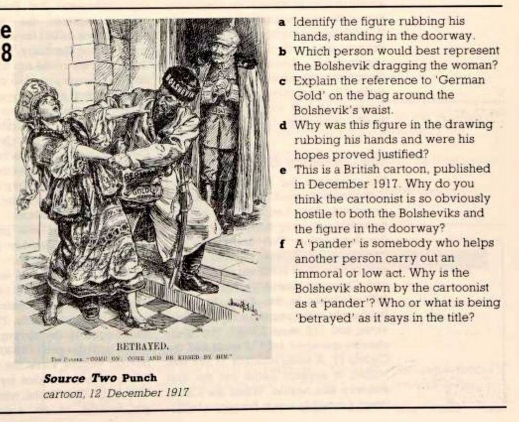
The current generation of NCERT textbooks was largely born out of the National Curriculum Framework (NCF) of 2005. Under the guidance of renowned scholars like Yogendra Yadav and Suhas Palshikar, the textbooks were redesigned to move away from rote learning. The goal was to encourage students to engage with the "messiness" of democracy. Cartoons by legendary artists like R.K. Laxman, Shankar, and Bernard Partridge were introduced to serve as prompts for critical analysis.
The 2012 Ambedkar Controversy
The first major flashpoint occurred in 2012 when a 1949 cartoon by K. Shankar Pillai was discovered in a Class IX textbook. The cartoon depicted Dr. B.R. Ambedkar, the architect of the Indian Constitution, sitting on a snail (representing the Constitution-making process) while Prime Minister Jawaharlal Nehru stood behind him with a whip. Despite the cartoon being a historical artifact from the era it described, it sparked an uproar in Parliament. Critics argued it was derogatory to Dr. Ambedkar. This led to the resignation of Palshikar and Yadav from their roles as NCERT advisors and a temporary removal of several cartoons.
The 2021-2024 "Rationalization" Phase
Following the COVID-19 pandemic, the NCERT underwent a "rationalization" process, officially intended to reduce the curriculum load on students. However, critics noted that many of the deleted portions involved sensitive historical events and political cartoons that were critical of various administrations.
The 2026 Supreme Court Hearing
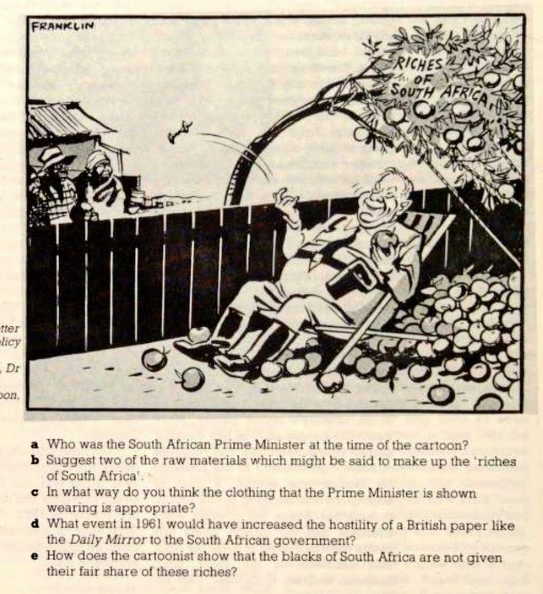
The issue reached its current zenith on May 22, 2026. Solicitor General Tushar Mehta, appearing before the Bench, presented several examples of cartoons he deemed "improper." He argued that "a textbook is not a space where you use cartoons," suggesting that children lack the nuance to distinguish between healthy satire and the erosion of respect for democratic institutions. The Court’s decision to form a retired judge-led committee marks the first time the judiciary has taken such a granular role in auditing educational aesthetics.
Supporting Data: The Role of Visual Literacy in Modern Education
The debate is not merely about whether a drawing is "funny" or "offensive," but about the educational philosophy of visual literacy. Proponents of the current NCERT model argue that cartoons are essential tools for a 21st-century education.

The "Unni and Munni" Framework
One of the most innovative features of the NCERT textbooks is the recurring presence of two child characters, "Unni" and "Munni." These characters appear in the margins of the text, asking questions that the main narrative might overlook. According to Aman Namra of Counter Currents, these characters represent the "bold questions" that students should feel empowered to ask. They function as a bridge between the abstract concepts of the state and the lived reality of the citizen.
Critical Thinking vs. Rote Memorization
Educational data suggests that students retain complex political concepts better when they are presented with a "problem-solving" approach. In the NCERT chapter Election and Representation, a cartoon depicting a chaotic election scene is used not to disparage the vote, but to ask students: "Is this good for democracy?"
By forcing the student to reconcile the "ideal" of the text with the "reality" of the cartoon, the curriculum fosters a higher level of cognitive engagement. According to textbook authors, removing these elements would revert Indian education to a "one-way street" where the state dictates a sanitized version of reality that students must memorize without question.
Official Responses: The Clash of Perspectives
The Supreme Court hearing has highlighted a stark divide between the Union Government’s view of "propriety" and the academic community’s view of "inquiry."
The Government’s Stance: Protecting the "Sanctity" of the Classroom
Solicitor General Tushar Mehta’s arguments center on the developmental psychology of the student. The government contends that:
- Saturation of Satire: Children are already exposed to vast amounts of unverified satire on social media; textbooks should be a "sanctuary" of facts.
- Institutional Respect: Lampooning political figures in a foundational text may lead to a cynical worldview before a student has understood the structural importance of those offices.
- Potential for Bias: The government argues that the selection of cartoons can be used to subtly push ideological agendas.
The Academic Defense: Education as a Mirror
In response, the original architects of the curriculum, including Suhas Palshikar and Yogendra Yadav, have maintained that questioning authority is a "declared educational philosophy." Their defense rests on three pillars:
- The Reality Principle: Students are not blind to the world around them. If a textbook ignores the flaws in a democratic system that a child sees on the news every day, the textbook loses its credibility.
- Pedagogical Tooling: Cartoons are used as "primary sources." Just as a historian uses a letter or a treaty, a political scientist uses a cartoon to understand the public sentiment of a specific era.
- Developing Agency: By engaging with satire, students learn the difference between "insult" and "critique"—a vital skill for a functioning democracy.
Implications for the Future of Global Education
The Supreme Court’s eventual ruling, based on the committee’s review, will have implications that ripple far beyond the borders of India.
The Risk of a "Sanitized" History
If the committee recommends the removal of cartoons, there is a significant risk of "historical sanitization." Political cartoons provide a unique window into the anxieties and controversies of the past. Removing them could result in a curriculum that presents history as a series of inevitable, harmonious events, rather than a hard-fought struggle between competing ideas.
The Chilling Effect on Content Creators
A judicial precedent that labels satire as "improper" for educational settings could lead to self-censorship among textbook publishers and writers. This "chilling effect" might discourage the inclusion of any content that could be perceived as controversial, leading to a bland, unengaging educational experience that fails to prepare students for the complexities of adult citizenship.
International Standards
Globally, educational systems are increasingly moving toward "multimodal" learning, where images, videos, and infographics are as important as text. India has been a leader in this regard with its 2005 curriculum. A reversal would see India moving in the opposite direction of global pedagogical trends, which emphasize the deconstruction of media and the recognition of bias.
Conclusion: The Court as an Arbiter of Taste?
As the retired judge-led committee begins its review, the fundamental question remains: Who decides what is "proper" for a child to see? Is it the role of the government to protect students from the sharp edges of political satire, or is it the role of the educator to sharpen the student’s mind against those very edges?
The Supreme Court of India now finds itself in the delicate position of being an arbiter of both educational taste and democratic philosophy. Its decision will determine whether the next generation of Indian citizens is taught to look at their institutions with a respectful, unblinking eye, or whether they are encouraged to look with the "slightly mischievous" and "boldly questioning" gaze of Unni and Munni. In the balance hangs not just the content of a textbook, but the very nature of critical inquiry in the Indian classroom.

Leave a Comment