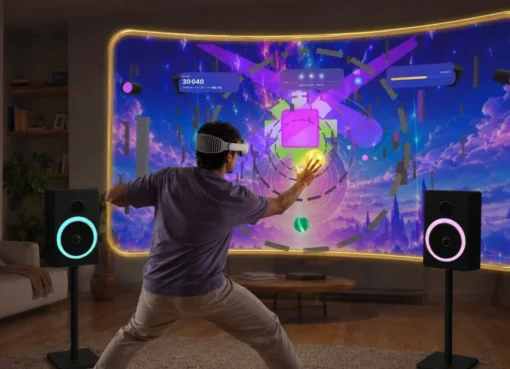
The Rise of the Gesture-Based ARPG: Vaelorys Launches into Early Access on Meta Quest
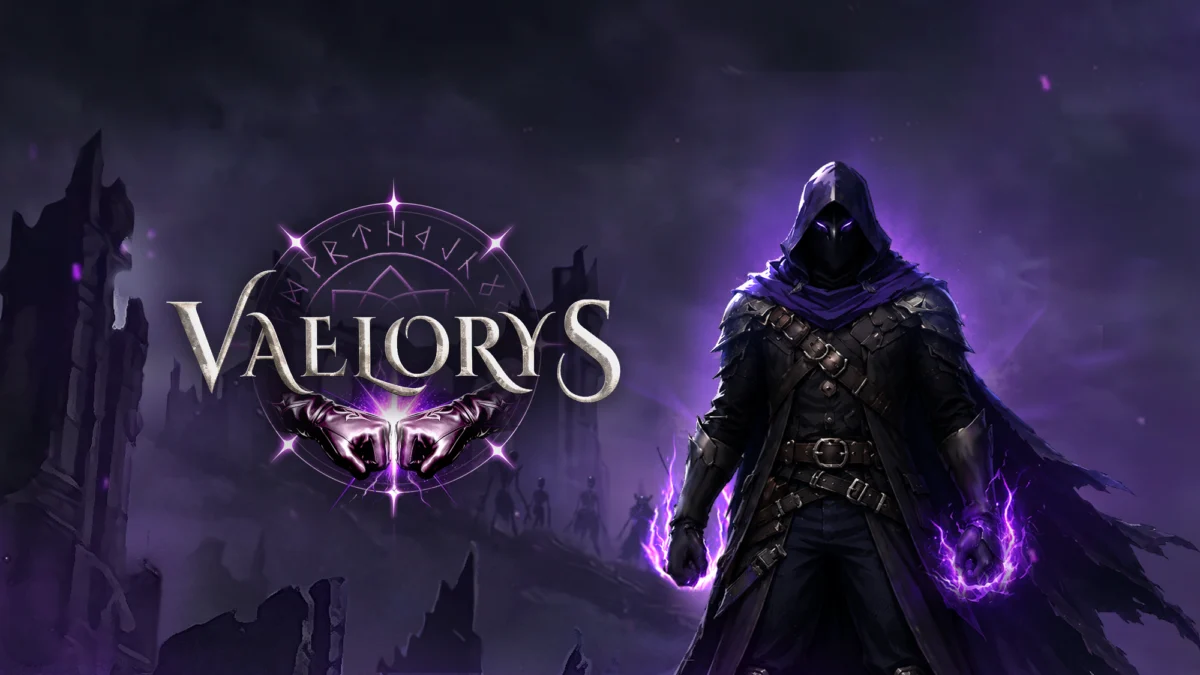
The landscape of virtual reality gaming is currently witnessing a pivotal shift. While the early years of the medium were dominated by tech demos and wave shooters, the contemporary era is defined by a craving for depth, longevity, and mechanical complexity. Into this environment steps Vaelorys, a gesture-based dark fantasy Action Role-Playing Game (ARPG) that aims to bridge the gap between the tactile immersion of VR and the addictive progression loops of classic "loot-and-level" titles like Diablo and Path of Exile.
Developed by Spellbound Studio, Vaelorys has officially entered Early Access on the Meta Quest platform. With an aggressive entry price of $4.99 and a focus on massive eight-player cooperative play, the title represents a significant attempt to capture a market segment that has remained surprisingly underserved in the VR space.
I. Main Facts: A New Frontier for VR Spellcasting
At its core, Vaelorys is designed to translate the frantic, strategic combat of isometric ARPGs into a first-person, kinesthetic experience. The game distinguishes itself through several key pillars that depart from traditional VR combat tropes.
Gesture-Based Combat Mechanics
Unlike many VR titles that rely on button presses or simple physical swings, Vaelorys utilizes a sophisticated gesture-based spellcasting system. Players must master over thirty unlockable spells, each requiring specific hand movements to activate. This system is designed to simulate the "muscle memory" required in high-level gaming, rewarding players who can remain calm under pressure to execute complex patterns while surrounded by hordes of enemies.
Scale of Cooperation
One of the most striking features of the title is its support for up to eight players in a single cooperative session. Most Quest-based titles cap multiplayer at four players due to hardware constraints and networking complexities. By doubling this limit, Vaelorys offers a "raid-like" atmosphere, allowing for diverse team compositions and large-scale tactical encounters in its dungeon-crawling modes.
Progression and Loot Systems
True to its Diablo roots, the game features a robust progression system. This includes:
- Multiple Character Classes: Players can specialize in different roles, tailoring their builds to suit specific playstyles.
- Loot Tiers: A randomized loot system ensures that every dungeon run offers the potential for gear upgrades, varying in rarity and power.
- Arena Mode: For those seeking immediate action, an Arena Mode pits players against escalating waves of enemies, serving as both a testing ground for new builds and a high-stakes survival challenge.
II. Chronology: From Concept to Early Access
The journey of Vaelorys reflects the broader evolution of the indie VR development scene, characterized by iterative testing and community-driven design.
The Inspiration Phase
The genesis of Vaelorys lies in the void left by traditional gaming giants. While Blizzard’s Diablo and Grinding Gear Games’ Path of Exile have dominated the "flat" gaming market for decades, they have shown little interest in porting their complex systems to VR. Spellbound Studio identified this niche, aiming to recreate the "power fantasy" of these games using the unique spatial capabilities of the Meta Quest.
The Playtesting Period
Prior to its Early Access launch, Spellbound Studio conducted extensive open playtests. These sessions were critical for refining the gesture recognition software—a notoriously difficult aspect of VR development. Developers sought to find the "sweet spot" between gestures that were too simple (losing the sense of mastery) and those that were too complex (leading to frustration during intense combat).
The 2024 Market Shift
The timing of the Vaelorys launch is significant. Earlier this year, the VR community saw the cancellation of Reave, a highly anticipated co-op dungeon crawler from Alta (the developers of A Township Tale). The cancellation of Reave left a vacuum in the dark fantasy genre. Vaelorys arrived on the scene just as the community was looking for a new title to fill that specific void, positioned alongside established but aging titles like Dungeons of Eternity.
III. Supporting Data: Technical Specifications and Market Context
To understand the potential impact of Vaelorys, one must look at the technical and competitive landscape of the Meta Quest ecosystem.
The "App Lab" Strategy and Pricing
The decision to launch at $4.99 is a calculated move. In the VR market, "free-to-play" titles often suffer from a lack of committed player bases, while $29.99 titles face high barriers to entry for unproven indie IPs. By choosing a "coffee-priced" entry point, Spellbound Studio is essentially lowering the risk for "early adopters" while ensuring that the players who do join are invested enough to provide the high-quality feedback necessary for Early Access development.
Competitive Analysis: The ARPG Landscape
The current VR ARPG market is relatively sparse:
- Dungeons of Eternity: Primarily focuses on physics-based melee and ranged combat with 3-player co-op.
- Legendary Tales: A more "hardcore" physics-driven RPG, often compared to Dark Souls, which recently added a sandbox mode.
- Vaelorys: Differentiates itself by focusing on spellcasting and large-scale co-op (8 players), leaning more toward the "power fantasy" and "mass slaughter" of Diablo rather than the slow, methodical combat of Souls-likes.
Hardware Considerations
Running an 8-player co-op game with thirty different spell effects on a mobile chipset (Qualcomm Snapdragon XR2/XR2 Gen 2) is a significant technical hurdle. Vaelorys utilizes a stylized "dark fantasy" aesthetic—reminiscent of older PC RPGs—which allows the hardware to prioritize frame rate and player count over photorealistic textures. This trade-off is essential for maintaining the 72Hz or 90Hz refresh rates required to prevent motion sickness in fast-paced VR games.
IV. Official Responses and Developer Vision
Spellbound Studio has been transparent about the "Early Access" label, emphasizing that the current version of the game is a foundation rather than a finished product.
The Philosophy of "Active Development"
In communications regarding the launch, the developers have stressed that player feedback is the primary currency of this release. They are actively seeking data on:
- Gesture Reliability: How well the Quest’s inside-out tracking handles the specific movements required for spells.
- Class Balance: Ensuring that no single "build" becomes the "meta," which would trivialize the game’s difficulty.
- Server Stability: Monitoring the performance of 8-player instances to ensure a lag-free experience.
The "Diablo-Style" Mandate
The studio has explicitly cited Diablo as its North Star. In public statements, the developers have noted that the goal isn’t just to make a VR game with swords and magic, but to replicate the rhythm of an ARPG: the cycle of entering a dungeon, clearing screens of enemies, defeating a boss, and analyzing loot. This focus on the "gameplay loop" over mere "immersion" is a hallmark of their development philosophy.
V. Implications: The Future of Gesture-Based Interaction
The launch of Vaelorys carries implications that extend beyond a single game; it serves as a test case for gesture-based interfaces in high-intensity gaming.
The Physicality of Gaming
If Vaelorys succeeds, it could signal a shift away from "waggle-based" combat (where players simply shake their controllers) toward "intentional" combat. Gesture-based systems require a level of physical discipline that could redefine the "skill ceiling" in VR. This has the potential to turn VR gaming into a more athletic and cognitively demanding hobby than traditional gaming.
The Quest 3 and Beyond
With the Meta Quest 3 featuring improved hand-tracking and "Upper Body Tracking" capabilities, Vaelorys is positioned to take advantage of upcoming software updates from Meta. While the game currently uses controllers for precision, the underlying gesture system is a natural fit for the future of controller-less VR, where players might one day cast spells with their bare hands.
Market Validation for Indie Studios
The success of a $4.99 "micro-budget" launch could provide a blueprint for other indie developers. If Vaelorys can build a sustainable community through low-cost entry and high-frequency updates, it may encourage more developers to take risks on niche genres like the ARPG, which have traditionally been seen as too "complex" for the current VR audience.
Conclusion: A High-Stakes Gamble in a Dark World
Vaelorys is more than just another dungeon crawler; it is a concentrated effort to bring the depth of the ARPG genre to a platform that is still defining its identity. By combining the social chaos of 8-player co-op with the technical challenge of gesture-based spellcasting, Spellbound Studio is betting that Quest users are ready for something more substantial than "bite-sized" experiences.
At $4.99, the barrier to entry is almost non-existent, but the expectations from the community remain high. As the game moves through its Early Access phase, its success will likely depend on how quickly the developers can iterate based on player feedback and whether they can truly capture the elusive "magic" of the loot-grind that has kept Diablo fans coming back for thirty years. For now, the gates of Vaelorys are open, inviting a new generation of VR adventurers to master the art of the gesture and claim their spoils.