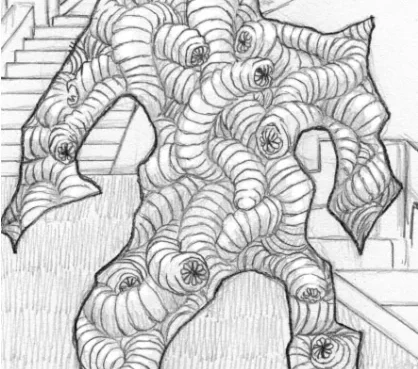
The Sanguine Harvest: A Necromantic Scourge Reshapes Arcane Warfare

ERIDAN, THE CELESTIAL REALM – A chilling new necromantic spell, provisionally dubbed "Sanguine Harvest," has emerged from the shadows of arcane research, sending ripples of alarm through magical academies, religious orders, and military strategists across the known realms. Documented most recently within "Blood & Sacrifice 2," a tome attributed to Varyag’s Forge and author Jakub Chlebowicz, this spell represents a significant escalation in the potential lethality and ethical complexity of battlefield magic. Its instantaneous, wide-ranging life-draining capabilities, coupled with the caster’s ability to convert stolen vitality into temporary resilience, position it as a truly formidable, and terrifying, force.
The spell’s core mechanic, rooted firmly in the forbidden school of necromancy, allows its practitioner to draw the very essence of life from living beings in a concentrated burst. This stolen life force not only inflicts grievous harm upon adversaries but also fortifies the caster, granting them temporary hit points that can dramatically alter the tide of engagements. The implications for both large-scale conflicts and clandestine operations are profound, raising urgent questions about magical ethics, public safety, and the future of combat.
Unveiling the Sanguine Harvest: Main Facts
At its most fundamental, the Sanguine Harvest is a direct assault on the vital energies of living creatures. Cast with a mere standard action, requiring only verbal and somatic components, it unleashes a devastating 20-foot-radius burst of necromantic energy centered on the caster. This instantaneous emanation causes immense pain and physical degradation, dealing 1d6 points of damage for every two caster levels to every living creature within its area, excluding the caster themselves. Victims are afforded a Fortitude saving throw to halve this damage, a small mercy in the face of such raw, destructive power. The spell’s effects are also subject to spell resistance, offering a potential, though often insufficient, layer of defense for magically protected individuals.
What truly sets the Sanguine Harvest apart, however, is its insidious regenerative component. As life force is wrenched from its victims, the caster simultaneously absorbs a portion of this energy, converting it into temporary hit points. The amount gained is directly proportional to the damage dealt, though capped per subject at their current hit points plus their Constitution score – a chilling detail implying the spell is designed to fully exploit and even extinguish a target’s life for maximum benefit. These temporary hit points are cumulative, stacking up to a maximum of 5 per caster level, and persist for a full hour, providing substantial, sustained protection. This unique synergy of offensive and defensive capabilities makes the Sanguine Harvest a self-sustaining engine of destruction, particularly potent in prolonged engagements or against multiple foes.
The widespread accessibility of the spell is another major concern. While firmly entrenched in the necromancy school, it is not confined to a single arcane tradition. Documentation indicates it can be mastered by Antipaladins (4th level), Arcanists (6th level), Magi (6th level), Mesmerists (6th level), Psychics (7th level), Sorcerers (6th level), Spiritualists (6th level), Witches (6th level), and Wizards (6th level). This broad spectrum of practitioners, ranging from divine-corrupted warriors to pure arcane scholars and psychic manipulators, suggests that the Sanguine Harvest could permeate diverse magical communities, making containment and counter-proliferation efforts significantly more challenging. Its varied level requirements also imply different schools of thought or adaptations have led to its integration into various magical curricula, hinting at a broader, perhaps older, theoretical basis now seeing practical application.
A Troubling Chronology: Tracing the Spell’s Emergence
While the Sanguine Harvest, or spells with similar effects, may have existed in fragmented forms within ancient necromantic texts, its formalized documentation and recent proliferation are a cause for considerable alarm. Reports from various magical intelligence networks suggest that the spell’s definitive structure, as detailed in "Blood & Sacrifice 2," has only come to prominence in the last decade.
Early Whispers (Pre-2020): Initial, unconfirmed reports of "life-draining bursts" began to surface from remote, conflict-ridden regions and cultist strongholds. These were often dismissed as exaggerated accounts of existing necromantic spells, or attributed to unique, localized magical phenomena. The efficiency and self-sustaining nature now associated with Sanguine Harvest were not yet fully recognized.
Formal Documentation and Spread (2020-2024): The turning point appears to have been around five years ago, with the alleged dissemination of "Blood & Sacrifice 2" or fragments thereof. This period saw a noticeable increase in incidents featuring the spell’s distinctive characteristics: simultaneous area-of-effect damage and immediate self-healing. Magical academies, initially skeptical, began correlating these reports with new insights into advanced necromantic theory. It is during this time that the spell’s potential for broader application beyond isolated skirmishes became evident.
Escalation and Mythic Adaptation (2025-Present): The most recent year has witnessed a disturbing trend: the emergence of "mythic" casters employing enhanced versions of the Sanguine Harvest. These exceptionally powerful individuals, often figures of great renown or infamy, have demonstrated capabilities far exceeding the standard spell. This development has transformed the Sanguine Harvest from a potent threat into a potential game-changer in high-level conflicts, prompting a re-evaluation of defensive strategies and magical countermeasures. The very recent documentation of the "Augmented (7th)" version, enabling fast healing upon multiple kills, signals an even more dire evolutionary path for this already dangerous magic. The spell, once a theoretical possibility or a niche tool, has rapidly evolved into a fully realized, multi-tiered threat, mirroring the rapid advancements in arcane warfare seen in recent years.
Supporting Data: An In-Depth Arcane Analysis
To fully grasp the magnitude of the Sanguine Harvest, one must delve into its intricate mechanics, which blend raw destructive power with unparalleled self-preservation.
Damage Profile and Area of Effect: The base damage of 1d6 points per two caster levels is significant, especially when applied to a 20-foot radius. At higher caster levels, this can translate into hundreds of points of damage, spread across numerous targets. For example, a 12th-level wizard casting Sanguine Harvest would deal 6d6 damage (average 21 points) to every living creature within the burst. Against a group of weaker adversaries, this can be instantly devastating. The instantaneous duration means its effects are immediate and cannot be dispelled after the fact, making reactive defenses difficult.
The Resilience Factor: Temporary Hit Points: The temporary hit points (THP) gained are a critical element. By converting a portion of the damage dealt into personal resilience, the caster becomes exceptionally difficult to subdue. Imagine a necromancer surrounded by a dozen foes. If each takes 20 damage, the caster could potentially absorb hundreds of temporary hit points. The cap on THP from each subject (current HP + Con score) cleverly ensures that the caster cannot gain infinite THP from a single, high-HP target, but also highlights the spell’s design to fully exhaust a target’s life force. The overall cap of 5 THP per caster level ensures balance, preventing a low-level caster from becoming overly resilient. For a 12th-level caster, this means a maximum of 60 temporary hit points – a substantial buffer. This mechanism transforms the caster from a vulnerable target into a durable anchor of destruction, particularly in close-quarters combat where necromancers traditionally excel.
Mythic Augmentation: Escalation of Power: The introduction of Mythic versions of the Sanguine Harvest elevates its threat profile considerably. For a mythic caster, the damage increases to a staggering 1d8 points per two caster levels. This translates to an average damage increase of approximately 33%, making the spell far more lethal. Concurrently, the maximum temporary hit points gained from the spell double to 10 per caster level. A 12th-level mythic caster could potentially gain up to 120 temporary hit points, an almost impenetrable shield of stolen vitality. This mythic iteration signals a new tier of threat, where individuals imbued with mythic power can wield this spell with truly catastrophic results, becoming nearly unstoppable in specific scenarios.
The Augmented (7th) Version: The Ultimate Necromantic Engine: The most terrifying development is the Augmented (7th) version, available to mythic casters who expend two uses of mythic power. If the Sanguine Harvest kills a creature, the caster gains fast healing 5 for a number of rounds equal to the target’s Hit Dice (HD). Crucially, if multiple targets are killed by a single casting, the duration of this fast healing stacks. Consider a powerful necromancer facing a horde of weaker creatures. A single cast of Augmented Sanguine Harvest could wipe out dozens, granting the caster fast healing 5 for potentially hundreds of rounds. This transforms the caster into an incredibly resilient, self-repairing entity, capable of shrugging off damage and continuing their onslaught. The implications for clearing battlefields, infiltrating fortified positions, or simply outlasting powerful adversaries are immense. This augmentation makes the caster a true ‘engine of death,’ regenerating rapidly as they continue to harvest life, creating a horrifying feedback loop of destruction and restoration.
Official Responses: Calls for Regulation and Countermeasures
The emergence and evolution of the Sanguine Harvest have provoked a strong reaction from authorities and organizations dedicated to maintaining order and ethical arcane practice.
The Grand Conclave of Arcane Arts: The leading body of magical scholarship has issued a formal condemnation of the Sanguine Harvest, categorizing it as "Grade V: Extreme Ethical Hazard." Archmage Elara Vancroft, head of the Conclave’s Necromantic Ethics Board, stated, "This spell represents a dangerous escalation in the direct exploitation of life force. While necromancy has its place in understanding the cycles of life and death, the Sanguine Harvest crosses a line into wanton destruction and parasitic self-preservation. We are actively researching countermeasures and advocating for its outright prohibition in civilized lands." The Conclave has also initiated an urgent study into the spell’s origins, hoping to identify and disrupt its proliferation pathways.
The Holy Orders of Light: Religious institutions, particularly those venerating deities of life, healing, and justice, have vehemently denounced the Sanguine Harvest. The High Inquisitor of the Church of Bahamut, Ser Kaelen Thorne, declared it "an abomination against all natural law and divine grace." He has called for a holy crusade against any individual or faction found employing the spell, mobilizing templars and divine casters to seek out and neutralize its practitioners. Thorne emphasized that "the temporary strength gained through such vile means is a stain upon the soul, and those who wield it will face divine retribution."
National Defense Ministries: Governments and military high commands are grappling with the tactical implications. While some factions within darker empires or morally flexible states might see potential for weaponization, the majority of established powers are deeply concerned. General Valerius of the Imperial Legion acknowledged, "A spell that can simultaneously decimate enemy ranks and bolster the caster’s resilience is a formidable weapon. We are exploring both magical and mundane defenses, including anti-magic zones, specialized units trained in disrupting spellcasters, and advanced magical wards. The risk of this spell falling into the wrong hands, or being used indiscriminately against civilian populations, is a top priority for our intelligence divisions." There are ongoing debates within military strategy councils about the ethics of even studying such a spell for defensive purposes, highlighting the moral quagmire it presents.
Implications: A Looming Shadow Over the Realms
The Sanguine Harvest is more than just a powerful new spell; it is a catalyst for significant shifts in magical warfare, ethical discourse, and societal fear.
Ethical Decay and the Allure of Power: The spell’s efficiency in combat and self-preservation could tempt even those with initially noble intentions to stray into darker practices. The line between ‘necessary evil’ and outright malevolence blurs when facing overwhelming odds, and the Sanguine Harvest offers a potent, albeit morally corrupting, solution. This could lead to a broader acceptance of necromancy, eroding traditional taboos and fostering a more ruthless approach to conflict. The very name "Blood & Sacrifice" hints at a philosophy that justifies such brutal means for power.
Shifting Battlefield Dynamics: In large-scale engagements, a single powerful caster wielding the Sanguine Harvest could turn the tide. Imagine a mythic necromancer wading into a phalanx of soldiers, decimating their ranks while becoming virtually immune to their counter-attacks thanks to fast healing. This could necessitate new military doctrines, focusing on rapid neutralization of high-threat casters, perhaps even through pre-emptive strikes. Traditional magical defenses and healing spells may struggle to keep pace with the sheer output of damage and the self-regenerating nature of the caster.
Public Fear and Distrust: The existence of a spell that directly drains life force from multiple individuals simultaneously, turning it into personal power, is deeply unsettling to the common populace. This could fuel widespread panic, reinforce negative stereotypes about magic-users, and lead to increased persecution of arcane practitioners, regardless of their specialization. Communities might demand stricter regulations on magic, potentially leading to witch hunts or the forced registration of all spellcasters.
The Arms Race of Arcane Innovation: The Sanguine Harvest will undoubtedly spur an arcane arms race. Magical researchers will be tasked with developing more potent anti-necromancy wards, protective spells, and counter-spells. This could lead to breakthroughs in defensive magic, but also to the creation of even more destructive offensive spells as factions seek to maintain parity or gain an advantage. The cycle of escalating magical power could have unpredictable and dangerous consequences for the stability of the realms.
The Future of Necromancy: This spell solidifies necromancy’s position as a school of magic capable of both profound horror and devastating effectiveness. It moves beyond mere animation of the dead to direct, vitalistic absorption, making it a more active and immediate threat. This could attract more ambitious, ruthless individuals to the path of necromancy, further empowering dark factions and cults who embrace such power without moral reservation.
As the realms brace for the full impact of the Sanguine Harvest, the urgency for a united front – across magical disciplines, religious convictions, and national borders – has never been greater. The very fabric of life and death, and the ethical boundaries of arcane power, are being challenged by this grim new addition to the lexicon of forbidden magic. The coming years will undoubtedly reveal whether civilization can adapt and counter this potent threat, or if the shadow of the Sanguine Harvest will extend its reach across the living world.