The Algorithmic Dreamscape: The Rise of AI-Generated Art in Digital Surrealism
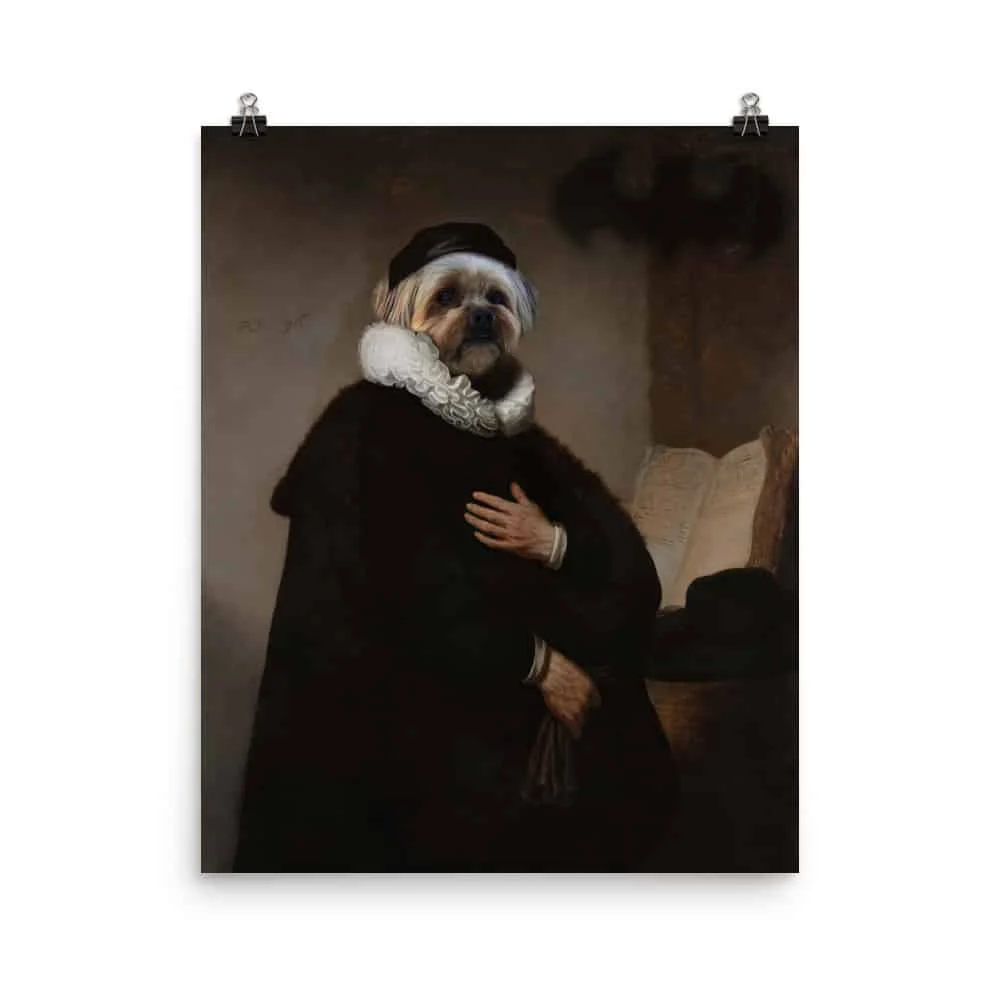
The landscape of modern art is undergoing a seismic shift, one that moves beyond the canvas and into the neural networks of machine learning. Surrealism, a movement born in the early 20th century to explore the irrationality of the human subconscious, has found a new, digital home. This evolution, termed "AI Surrealism," represents a departure from the individual dreams of artists like Salvador Dalí and René Magritte, moving instead toward a "collective digital unconscious." As artificial intelligence reshapes the boundaries of creativity, it is forcing a radical rethinking of the human psyche, the nature of inspiration, and the future of artistic expression.
Main Facts: The New Frontier of the Irrational
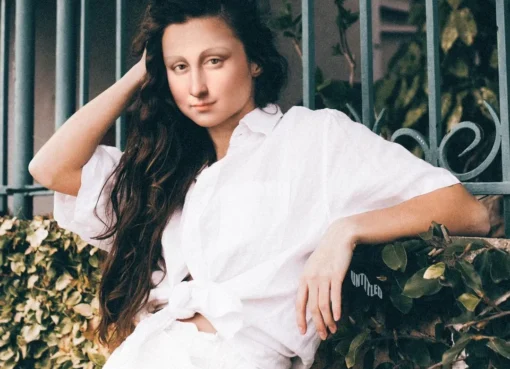
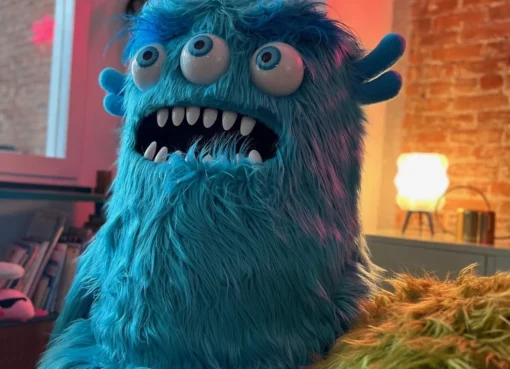
AI Surrealism is characterized by the use of generative artificial intelligence to create imagery that defies logic, physics, and traditional narrative structures. Unlike previous digital art movements that relied on manual manipulation via software like Adobe Photoshop, AI Surrealism utilizes Large Scale Artificial Intelligence Models (LSAIMs) to synthesize vast amounts of human-created data into entirely new, often haunting, visual experiences.
The core of this movement lies in the "prompt"—a linguistic incantation that directs the AI to pull from its training data. These datasets consist of billions of images scraped from the internet, encompassing the entirety of human visual history. Consequently, the resulting art is not merely the product of one person’s imagination but a synthesis of the "collective shared canon." This shift marks a paradigm change: art is no longer just a window into the individual soul, but a mirror reflecting the aggregated output of humanity.
Key characteristics of AI Surrealism include:
- Decoupled Intelligence: The ability of a machine to produce complex, emotionally resonant work without possessing self-aware consciousness.
- The Digital Collective Unconscious: A transition from Freudian (individual) subconscious themes to Jungian (collective) archetypes.
- Infinite Complexity: The use of algorithms to create "sublime" details—fractals and microscopic narratives—that exceed the limits of manual human execution.
Chronology: From the Manifesto to the Machine
To understand the rise of AI Surrealism, one must trace the lineage of the surrealist movement from its inception to its current digital iteration.
1924–1945: The Classical Era
The movement began with André Breton’s Surrealist Manifesto (1924), which sought to resolve the previously contradictory conditions of dream and reality. This era was heavily influenced by Sigmund Freud’s psychoanalysis, focusing on the individual’s suppressed desires and "automatic writing." Artists like Dalí (the melting clocks of The Persistence of Memory) and Magritte (the floating apples of The Son of Man) became the face of this exploration.
1950s–1990s: The Analog and Early Digital Transition
Surrealism permeated pop culture, film (David Lynch), and early computer art. However, the tools remained extensions of the human hand. The "subterranean bowels of imagination" were still mapped by individual artists working in isolation.
2010s: The Birth of Deep Learning
The introduction of DeepDream by Google in 2015 provided a glimpse into the "mind" of a machine. By over-processing patterns in images, the software created hallucinogenic, repetitive motifs—often featuring eyes and animal faces. This was the first true "Machine Surrealism," where the algorithm’s errors and interpretations created a new aesthetic.

2022–Present: The Generative Explosion
With the release of models like DALL-E 2, Midjourney, and Stable Diffusion, AI Surrealism entered the mainstream. Artists like Jay Gidwitz began using these tools to explore themes of "malinformation," the "new normal," and "digital ghosts." The speed and accessibility of these tools have allowed Surrealism to evolve from a niche art movement into a pervasive digital phenomenon.
Supporting Data: The Architecture of Digital Dreams
The power of AI Surrealism is rooted in the scale of its training data. Modern generative models are trained on datasets like LAION-5B, which contains over five billion image-text pairs. This scale allows the AI to recognize and replicate subtle nuances of human emotion and complex architectural impossibilities that would take a human artist years to master.
According to recent industry reports on the creator economy, the use of AI tools in digital art has grown by over 300% since early 2023. This is not merely a quantitative change but a qualitative one. When an artist enters a prompt such as "a woman mesmerized by malinformation," the AI does not simply "search" for an image; it synthesizes the concept of "mesmerization" from thousands of historical portraits and the concept of "malinformation" from contemporary digital aesthetics.
Furthermore, the "Uncanny Valley" effect—a psychological phenomenon where near-human images evoke unease—has become a tool rather than a flaw in AI Surrealism. By intentionally leaning into the symmetrical perfection or the slightly "off" anatomy produced by AI, artists are able to evoke a primal sense of the sublime that traditional surrealists could only dream of achieving.
Official Responses and Expert Perspectives
The art world remains divided on the implications of AI-generated surrealism. Critics and proponents alike are grappling with the definition of "the artist."
The Traditionalist View: Many art historians argue that surrealism requires a "subconscious" to function. Since an AI has no ego, no trauma, and no dreams, they contend that the work it produces is "hollow mimicry." "Surrealism was a revolutionary act of the human mind," says Dr. Elena Voss, a contemporary art critic. "Without the human struggle against logic, you have only a high-speed collage."
The Technologist View: Conversely, proponents argue that the AI is simply a more sophisticated brush. "The artist’s incantations—the prompts—are the new medium," says digital artist Jay Gidwitz. "We are tapping into a wellspring of creativity that we, as individuals, are only partially aware of. The AI isn’t the artist; it’s the gateway to the collective unconscious."
The Psychological Perspective: Jungian analysts have noted that AI-generated imagery frequently recurs to universal archetypes: the "all-seeing eye," the "labyrinth," and the "hybrid beast." This suggests that the AI, by processing the sum of human output, has inadvertently mapped the shared symbols of the human species, effectively becoming a visualization tool for the Jungian collective unconscious.

Implications: Are We the Dreamers or the Dream?
The rise of AI Surrealism carries profound philosophical implications that extend far beyond the gallery walls.
1. The Decoupling of Intelligence and Awareness
For centuries, we assumed that high-level creativity required consciousness. AI Surrealism proves that intelligence—the ability to synthesize complex ideas into moving art—can be wholly decoupled from awareness. This forces us to question what it means to be "creative." If a machine can produce a work that moves a human to tears, does the machine’s lack of "feeling" invalidate the viewer’s experience?
2. Humanity as the AI’s Unconscious
A radical notion emerging from this movement is the reversal of the creator-creation relationship. If the AI is trained on the totality of human experience (the internet), then humanity itself serves as the "collective unconscious" for the AI. In this framework, the AI is the dreamer, and we—the billions of people who uploaded photos, wrote blogs, and painted masterpieces—are the data points that make up its dreams. As the source text suggests: "We are not the dreamers, but the dream."
3. The Future of Human-Machine Collaboration
The future of art likely lies in a "liminal space" where human imagination and algorithmic processing meet. We are moving toward a period of "Co-Surrealism," where the artist provides the spark of irrationality and the AI provides the infinite complexity of the sublime. This collaboration allows for the exploration of themes like "interstellar travel" or "impossible architectures" that are biologically and temporally beyond human reach.
4. The New Normal of Reality
As AI-generated surrealism becomes more pervasive, our perception of reality itself may shift. The "uncanny" becomes the "expected." When we can no longer distinguish between a human-captured photograph and an algorithmically-dreamed vision, the very definition of "truth" in visual media dissolves. This is perhaps the ultimate surrealist achievement: the total blurring of the lines between the conscious and the unconscious, the real and the simulated.
Conclusion: The Incredible Illusion
AI Surrealism is not just a technological fad; it is the latest chapter in the human endeavor to understand the irrational. By tapping into the digital collective unconscious, AI challenges our most basic assumptions about inspiration and consciousness.
As we move forward, the most profound revelation of AI-generated art may not be the images themselves, but the realization that the distinction between human and artificial creativity is becoming an "incredible illusion." In this new digital frontier, the dreamers and the dream have become one, and the resulting art is a testament to a new, interconnected intelligence that belongs to all of us and none of us at the same time. True surrealism in the age of AI lies in the realization that we are finally seeing the "ghosts" of our collective mind rendered in high-definition pixels.