
The Satirical Mirror: How Modern Comic Strips Reflect the Economic and Social Fractures of 2026
Introduction: The Intersection of Ink and Reality
In the landscape of contemporary media, the comic strip has long served as a Trojan horse for social commentary. What appears to be a three-panel diversion between the crossword and the classifieds often carries the weight of a lead editorial. As of June 2024, the medium is undergoing a quiet revolution, pivoting from traditional political caricature toward a more nuanced exploration of "Humpday" anxieties: the encroaching reach of Artificial Intelligence, the aggressive expansion of the "tipping economy," and the widening chasm between generational perceptions of labor and lifestyle.
Mike Peterson, a veteran observer of the medium and author of the long-running "Comic Strip of the Day," recently highlighted a shift in the zeitgeist. While political satire remains a staple—evidenced by the ongoing scrutiny of high-profile political "slush funds"—the more profound insights are currently found in the domestic and workplace "ensemble" strips. These works are documenting a society grappling with the "rising cost of everything," from digital subscriptions to the basic human interaction of a coffee shop transaction.
Main Facts: The Changing Face of Sequential Art
The current state of the comic strip industry reflects three primary trends: the automation of intellect, the monetization of the "creator economy," and the breakdown of the American service model.
- AI as a Narrative Device: Cartoons like Brewster Rockit have moved beyond "doofus gags" to address the systemic failures of AI chatbots. This reflects a broader public skepticism regarding "hallucinations" in Large Language Models (LLMs) and the replacement of human nuance with algorithmic "dumbness."
- The Subscription Squeeze: The "creator economy," once hailed as a liberation for artists, has reached a saturation point. With creators on platforms like Substack and Patreon competing for limited disposable income, "subscription fatigue" is now a documented psychological and economic phenomenon.
- The Tipping Crisis: The American "tipped wage" system is under unprecedented scrutiny. As restaurants implement kiosks to avoid labor costs and prompt for 20% tips on "grab-and-go" services, the social contract between service workers and consumers is fraying.
Chronology: From Political Satire to Social Observation
The evolution of these themes can be traced through the early 2020s into the current mid-decade climate.
2020–2022: The Political Peak
During the height of the previous election cycles, comic strips—both editorial and syndicated—were dominated by "Dear Leader" narratives. Satire focused heavily on the legal entanglements of political figures and the mismanagement of campaign finances. Peterson notes that many of these cartoons have now become "moribund," as the news cycle moves faster than the ink can dry.
2023–2025: The Rise of the Kiosk and the App
As the post-pandemic labor shortage took hold, the service industry pivoted to automation. The introduction of the ordering app and the in-store kiosk changed the physical layout of American dining. Comic strips began to reflect the frustration of the "invisible worker," where customers are increasingly expected to perform the labor of ordering and customization themselves, yet are still prompted for gratuities that historically supported table service.
2026: The Year of Digital Fatigue
By June 2026, the primary focus has shifted to the "paywalling of culture." The juxtaposition of creators boasting 90,000 paying subscribers while simultaneously pleading for more donations has created a marketing paradox. Satirists are now focusing on the irony of the "free taste" model, where the cost of supporting one’s favorite artists has become a significant line item in the household budget.
Supporting Data: The Economics of the "Tipped Wage" and Digital Content
To understand the frustration reflected in current comic arcs, one must look at the underlying economic data. In the United States, the federal minimum wage for tipped employees remains at $2.13 per hour, provided that amount plus tips equals at least the federal minimum wage ($7.25).
However, as Peterson and various cartoonists suggest, the "tipping jar" has migrated from the diner counter to the digital interface. Data from 2025 indicates that "tip creep"—the phenomenon of being asked to tip for non-traditional services—has led to a 15% decrease in overall tipping sentiment among Gen Z and Millennial consumers, who feel the burden of subsidizing wages should fall on the employer, not the patron.
In the digital realm, the "Substack Effect" has created a top-heavy economy. While a small percentage of creators (the "90,000 subscriber" tier) earn millions, the average creator struggles to maintain a base of 500 paying supporters. This disparity is frequently satirized in strips that deal with the "modern hustle," highlighting the exhaustion of a public that is "subscribed to death."
Official Responses and Cultural Perspectives
The debate over labor and automation has reached the halls of corporate headquarters and academic institutions.
The Corporate Stance:
Industry leaders in the fast-food and "fast-casual" sectors defend the use of kiosks as a necessity driven by rising minimum wages. A spokesperson for a major national franchise recently stated, "Automation allows us to maintain price points for consumers while focusing our human labor on food preparation rather than data entry at the register."
The Social Critique:
Sociologists argue that the "app-based" economy is eroding "third spaces"—the social environments outside of home and work. When a customer orders coffee via an app, they lose the "weak tie" social interaction with the barista. This loss of community is a recurring theme in strips like Wallace the Brave, which often highlights the value of intergenerational bonding and traditional interviewing techniques as a remedy for digital isolation.
The Labor Perspective:
Labor advocates point out the hypocrisy of the "if you can’t afford to tip, don’t eat out" argument. Critics suggest that if a business model relies on customers paying 20% above the listed price to ensure staff can pay rent, the business model itself is fundamentally broken. This sentiment has become a "viral" talking point in both social media and sequential art.

Implications: The Generational Chasm and the Future of Memory
The implications of these shifts go beyond economics; they touch on the very way we process history and personal identity.
The Alumni Association Paradox:
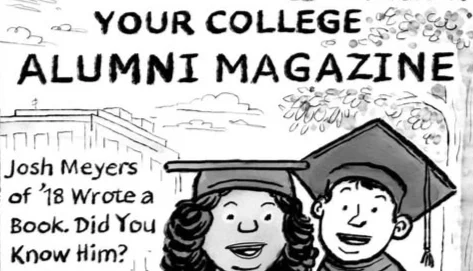
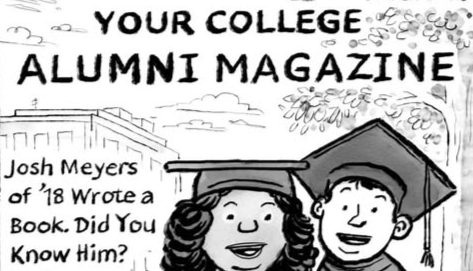
Peterson’s critique of the "Who’s Dead? Magazine" (the alumni publication) speaks to a broader sense of alienation among older generations. As institutions become more polarized—or "semi-MAGA," as Peterson describes his alma mater’s shift 30 years ago—the connection between the individual and their history is severed. The alumni magazine becomes a surveillance tool rather than a community builder, better at "keeping tabs" than fostering genuine connection.
The Disdain for Body Hair:
Even the smallest cultural shifts, such as the "repulsion" toward mustaches or body hair depicted in modern strips, signal a generational divide. The "odd disdain for body hair" among current youth, as noted in recent satirical works, stands in stark contrast to the "naturalism" of the 1970s. These changes in aesthetics are often the first indicators of deeper shifts in gender norms and social expectations.
The Loss of the "Personal Touch":
The anecdote of "Gert," the bartender who turned every drink into a "whiskey sour" foam with her beloved blender, serves as a metaphor for a disappearing world. In the drive for efficiency and "kiosk-level" precision, the "charming incompetence" or personal quirks of local business owners are being ironed out. We are moving toward a world that is perfectly mixed but lacks the "plastic mermaid" on the glass—a world where we pay more for less soul.
Conclusion: Why the "Funny Pages" Matter
As we navigate the complexities of 2026, the comic strip remains a vital, if understated, tool for social navigation. Whether it is Brewster Rockit mocking the limitations of AI or Bravo highlighting the absurdity of the "digital tip jar," these creators provide a necessary vent for public frustration.
The "Humpday" cartoons remind us that behind every "moribund slush fund" headline, there is a person just trying to order a sandwich without a kiosk, hoping their favorite artist doesn’t put their best work behind a fifteenth paywall, and wondering why the alumni magazine only writes about the same twelve people. In the end, the satire isn’t just about the laugh; it’s about the recognition that we are all, as the old song goes, "Everywhere, daddy, daddy"—searching for a bit of humanity in an increasingly automated world.



Leave a Comment