
The Silicon Frontier: GravityXR Unveils Ultra-Compact 4K Reference Designs to Challenge Industry Giants
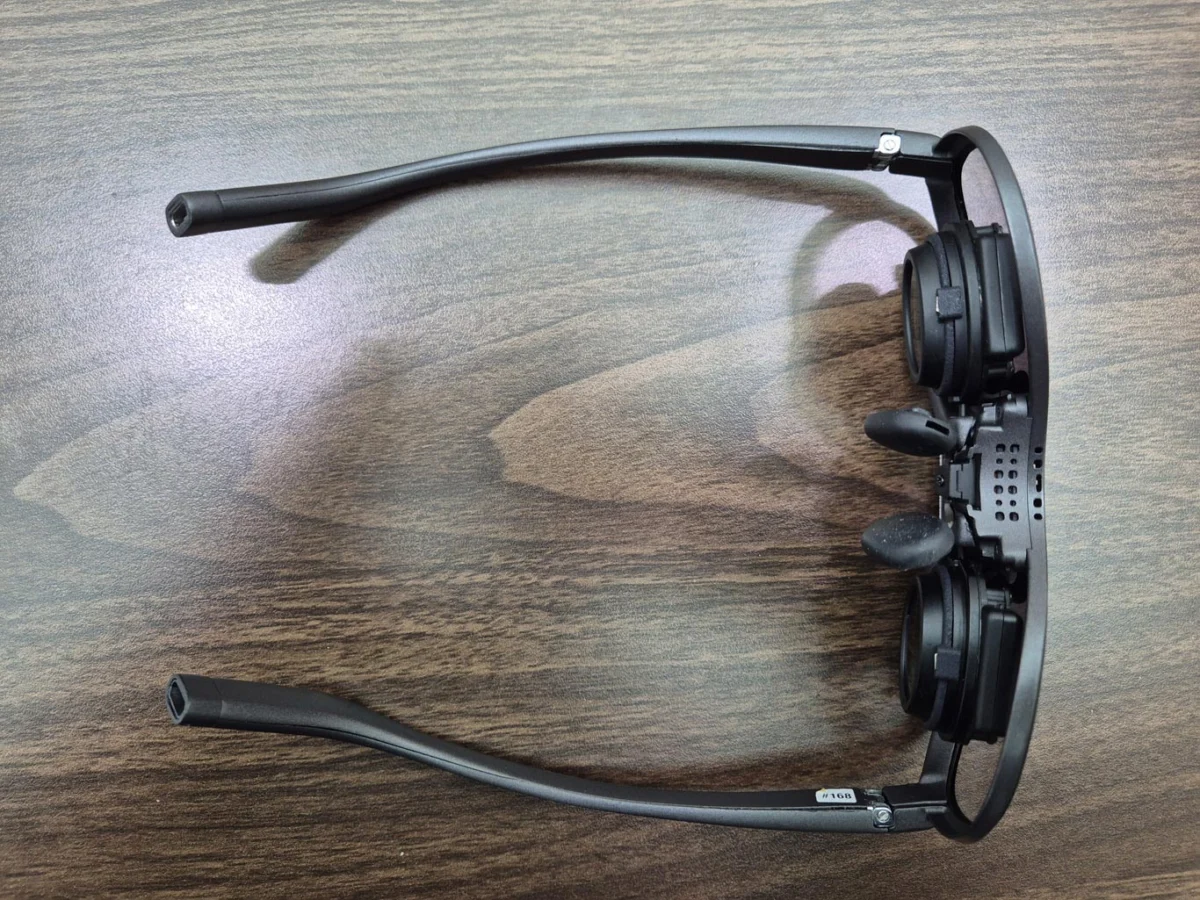
SHANGHAI — In the rapidly evolving landscape of extended reality (XR), the quest for the "holy grail" of hardware—a device that balances high-fidelity performance with the form factor of traditional eyewear—has found a new and formidable contender. GravityXR, a Shanghai-based semiconductor and design firm, has recently demonstrated a suite of reference designs that signal a shift in how virtual and mixed reality hardware may be produced and consumed in the coming years.
At the heart of this revelation is the G-X100-M1, an ultra-compact VR headset that weighs just 93.6 grams, potentially setting a new benchmark for wearable ergonomics in the professional and consumer sectors. By positioning itself as a "Chinese Qualcomm," GravityXR is not merely building headsets; it is providing the underlying silicon and architectural blueprints for the next generation of Original Equipment Manufacturers (OEMs).

Main Facts: A New Architecture for Portability
GravityXR’s strategy centers on the decoupling of the headset from the heavy processing units, utilizing a tethered approach to achieve unprecedented miniaturization. Unlike standalone devices like the Meta Quest 3 or the Apple Vision Pro, which house heavy batteries and processors within the facial interface, GravityXR’s reference designs are built to leverage external compute power from PCs, consoles, or smartphones.
The X100 Chipset Specifications
The cornerstone of these designs is the X100 chipset, which boasts several industry-leading metrics:

- Resolution Support: Up to 4K per eye, driving high-density Micro-OLED displays.
- Latency: A "motion-to-photon" latency of under 10 milliseconds, crucial for preventing motion sickness.
- Passthrough Technology: High-definition video see-through (VST) with real-time undistortion and alignment algorithms.
- Tracking: Integrated support for 6-Degrees-of-Freedom (6DOF) spatial tracking and hand-tracking interactions.
The G-X100-M1: Breaking the 100-Gram Barrier
The most significant reveal is the M1 unit. While most modern VR headsets range between 400 and 650 grams, the M1’s 93.6-gram profile allows for extended use without the typical neck strain associated with XR. This was achieved through a radical design choice: sacrificing Field of View (FOV) for density. The M1 features a 45-degree FOV, creating a "private cinema" or "floating monitor" experience rather than total immersion, but with a pixel-per-degree (PPD) count that rivals high-end professional monitors.
Chronology: The Rapid Rise of GravityXR
The trajectory of GravityXR reflects the broader acceleration of the Chinese semiconductor industry.

- 2021: Foundation. GravityXR was established in Shanghai with the specific goal of addressing the "bottleneck" in XR hardware: the lack of specialized, low-latency chips tailored for spatial computing rather than general mobile use.
- 2022–2023: R&D and Funding. The company secured multiple rounds of venture capital, allowing it to expand its portfolio into three distinct tiers: the X-series (high-performance VR/MR), the A-series (lightweight AR), and the G-series (cost-effective entry-level solutions).
- Early 2024: The Reference Design Debut. GravityXR began showcasing its "M" series (M0 and M1) to industry analysts and potential OEM partners. This marked the transition from a pure chip designer to a full-stack solution provider.
- Late 2024 (Projected): Market Entry. Several OEMs are expected to announce commercial products based on the G-X100-M1 architecture, targeting the productivity and media consumption markets.
Supporting Data: Technical Performance and User Experience
To understand the impact of these designs, one must look at the performance data gathered from initial hands-on evaluations of the M0 and M1 prototypes.
G-X100-M0: The "PC-Connected Vision Pro"
The M0 is the "pro" reference design, featuring a 100-degree FOV and full 4K Micro-OLED panels.

- Visual Fidelity: Testers noted "insane" resolution and crisp color reproduction, largely attributed to the Micro-OLED’s ability to produce true blacks and high contrast.
- Interaction: The device utilizes a gaze-and-pinch interface similar to Apple’s visionOS. During testing, eye tracking was reported as highly responsive, though hand tracking exhibited noticeable lag compared to market leaders.
- Passthrough: The VST quality is high enough to allow users to read fine text on physical documents or mobile screens while wearing the headset, a feat that many current-gen headsets struggle to achieve.
G-X100-M1: The Mobility Specialist
The M1 shifts the focus to the "mobile warrior."
- Weight Distribution: At 93.6g, the device rests on the nose like oversized sunglasses. While the current prototype is optimized for Eastern facial structures, its lightness largely mitigates traditional comfort issues.
- Connectivity: The M1 can tether via USB-C to a Windows PC or an Android smartphone. When connected to Android, it currently operates in 3DOF mode, though 6DOF support is reportedly in development.
- The FOV Trade-off: The 45-degree FOV is the M1’s most controversial metric. While it prevents the "total immersion" required for gaming, it provides a high-clarity window for 2D app multitasking and 360-degree video viewing.
Official Responses and Company Philosophy
GravityXR representatives emphasize that they are not looking to compete with consumer brands like Meta or HTC. Instead, they aim to empower a thousand smaller brands.

"We provide the engine and the chassis," a company spokesperson noted during the Shanghai demonstration. "The OEMs provide the bodywork and the brand. This allows for a much faster innovation cycle in the XR space."
The company acknowledges the current limitations of their prototypes, particularly regarding thermal management. In the M1 design, the X100 chipset is located behind the front faceplate. Due to the device’s small surface area, heat dissipation remains a challenge. Testers noted that the device became significantly warm to the touch after only a few minutes of operation. GravityXR has stated that they are working with material science partners to implement more efficient passive cooling solutions before the design is finalized for OEM mass production.

Furthermore, GravityXR is actively developing an "App-based" integration for Android. Currently, the glasses require a custom OS build to function at peak performance, but the goal is to allow any high-end smartphone user to simply "plug and play" via a standard application.
Implications: A Shift in the XR Power Balance
The emergence of GravityXR carries significant implications for the global XR ecosystem, particularly regarding the dominance of Western silicon.

1. Challenging the Qualcomm Hegemony
For years, the XR industry has been almost entirely dependent on Qualcomm’s Snapdragon XR2 platform. While the XR2 is a powerful System-on-Chip (SoC), its "all-in-one" nature dictates a specific type of headset design (standalone, bulky, battery-dependent). GravityXR’s modular approach—offering specialized chips for tethered, ultra-lightweight glasses—provides an alternative path for manufacturers who want to prioritize style and comfort over standalone compute.
2. The Rise of "Spatial Productivity"
The M1 design, with its low weight and high PPD, is perfectly positioned for the "portable monitor" market. As remote work becomes a permanent fixture of the global economy, the ability to carry a triple-monitor setup in a pocket-sized case is a compelling value proposition. GravityXR’s success could pivot the VR industry away from "gaming-first" to "productivity-first."

3. Democratization of High-End Optics
By providing a reference design that includes 4K Micro-OLED integration, GravityXR is lowering the barrier to entry for smaller electronics firms to enter the high-end MR market. We may soon see a flood of boutique XR glasses from regional brands, all powered by the same underlying Shanghai-designed silicon.
4. The Thermal and FOV Hurdles
Despite the promise, GravityXR faces a steep climb. The "persistence blur" and "spherical aberration" noted in early prototypes suggest that while the chips are powerful, the optical lens stacks still require refinement. Moreover, the industry must decide if a 45-degree FOV is acceptable for a "VR" device, or if such products will be relegated to a new category of "Smart Viewers."

Conclusion: A Vision in Miniature
GravityXR’s latest demonstration is a testament to the "less is more" philosophy. By stripping away the bulk of standalone VR and focusing on the core essentials—high-resolution optics, low-latency tracking, and extreme lightness—the company has produced a vision of the future that feels remarkably wearable.
While the X100-M1 and M0 are still "reference designs" with rough edges to be smoothed, they represent a critical milestone. If GravityXR can solve the thermal challenges and expand its FOV without doubling the weight, the "Chinese Qualcomm" may not just be an alternative to the status quo—it may become the new standard for the next generation of spatial computing.

For now, the industry watches as the first OEM products based on these designs prepare to hit the shelves later this year. The era of the 100-gram 4K headset has officially begun.




Leave a Comment