The Surrealist Evolution of Cristóbal León and Joaquín Cociña: A Deep Dive into ‘Donkey Princess’
The international film circuit has long looked toward Chile as a bastion of innovative storytelling, but few creators have disrupted the medium quite like Cristóbal León and Joaquín Cociña. Following their world-renowned stop-motion nightmare The Wolf House (2018) and the intellectually dense The Hyperboreans (2024), the duo has returned to the spotlight with their third feature, Donkey Princess. Premiering in the international competition at the Locarno Film Festival, the film represents a pivotal moment in the directors’ careers—a synthesis of their avant-garde roots and a more structured, though no less surreal, narrative approach.
Main Facts: A Hybrid Fairytale for the Modern Age
Donkey Princess is a bold reimagining of the 17th-century Charles Perrault tale Donkeyskin. While the original story is often sanitized or ignored by mainstream studios like Disney due to its taboo themes of paternal incest, León and Cociña embrace the discomfort, using it as a foundation to explore trauma, patriarchal oppression, and the fracturing of reality.
The film stars Antonia Giesen as Princess Diana, a woman suffocated by the demands of her father’s kingdom. Giesen, who previously collaborated with the directors on The Hyperboreans, delivers a performance that bridges the gap between a mythic archetype and a modern survivor. The supporting cast includes Francisco Melo as the King and Andrew Bargsted as Lalo, the commoner who offers Diana a glimpse of a life beyond royal confinement.
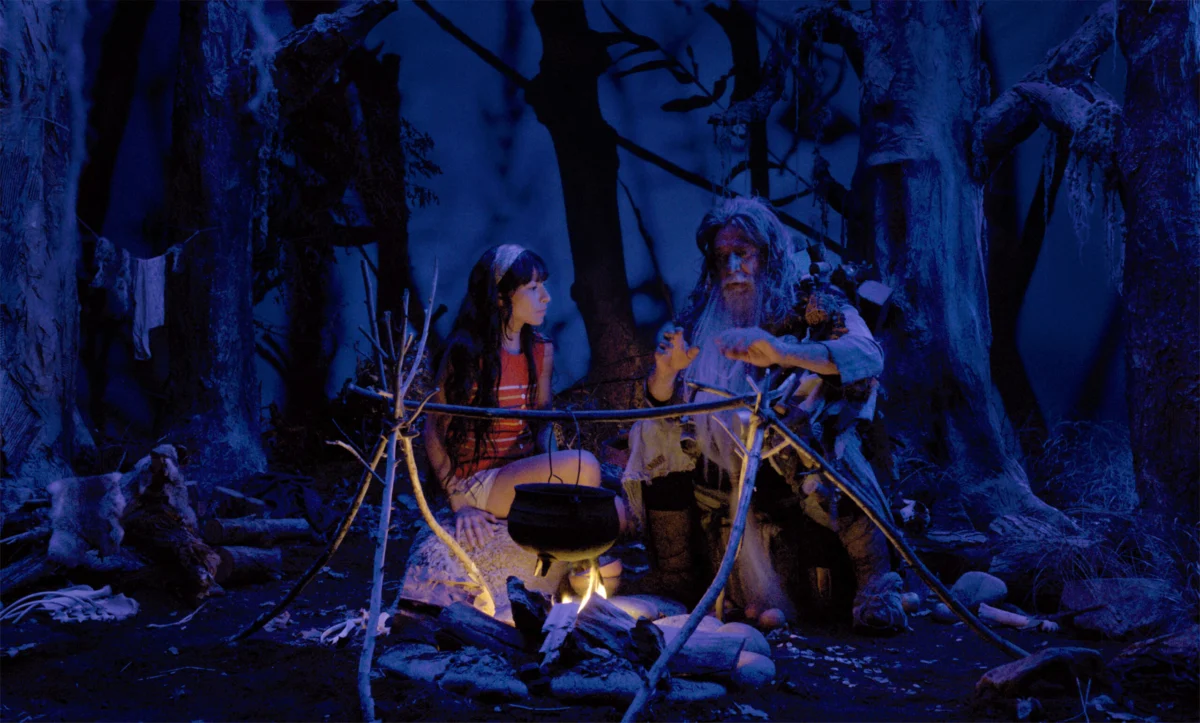
Visually, Donkey Princess continues the directors’ signature "hybrid" style. It blends live-action cinematography with stop-motion animation, puppetry, and papier-mâché. The production design, led by Natalia Geisse, creates a world that feels palpably handmade—where castle turrets look like they were piped from cake frosting and forests are constructed from brittle, scavenged branches. This "visual quiltwork" has become the hallmark of León and Cociña, establishing them as auteurs who prioritize the texture of the frame as much as the dialogue.
Chronology: The Artistic Trajectory of León and Cociña
To understand the significance of Donkey Princess, one must look at the rapid and radical evolution of its creators over the last six years.
2018: The Genesis of ‘The Wolf House’
The duo first shocked the industry with The Wolf House (La Casa Lobo). The film was a technical marvel, shot entirely in art galleries over several years where the public could watch the process. It utilized a "moving mural" style where the walls and furniture of a house constantly shifted and morphed. The story, loosely based on the horrors of Colonia Dignidad in Chile, used the aesthetic of a children’s fable to mask a deeply disturbing exploration of cult dynamics and psychological trauma.
2023: Collaboration with Ari Aster
Their unique aesthetic caught the eye of American director Ari Aster, who commissioned the duo to create a lengthy stop-motion sequence for his film Beau Is Afraid. This segment, featuring a protagonist wandering through a shifting, hand-painted landscape, introduced León and Cociña’s work to a much wider global audience and solidified their reputation as the premier surrealists of modern animation.
Early 2024: ‘The Hyperboreans’
The duo’s second feature, The Hyperboreans, was a more cerebral and narratively "abstruse" project. It mixed live-action with their established animation techniques but focused heavily on Chilean political history, esoteric theories, and psychology. While it was praised for its technical audacity, some critics felt the narrative density made it less emotionally resonant than their debut.
Late 2024: ‘Donkey Princess’
With Donkey Princess, the directors have arguably found a "middle ground." By returning to the structure of a fairytale—albeit a dark and twisted one—they have regained the narrative focus that made The Wolf House so gripping, while retaining the expanded visual toolkit (including more sophisticated live-action integration) developed during The Hyperboreans.
Supporting Data: Narrative Structure and Visual Composition
The script for Donkey Princess, co-written by the directors and novelist Alejandra Moffat, is a masterclass in subverting expectations. The film is divided into distinct tonal and dimensional phases.
The Mythic Kingdom
The first act is set in a realm of "queasy shades of turquoise and puce." This is the world of the King, who has outlawed love following the death of his Queen. The production design here is deliberately "ramshackle," emphasizing the fragility of the King’s delusion. The use of 2D cartoon butterflies and birds against 3D clay textures creates a sense of ontological instability—the world itself seems to be struggling to remain coherent.
The Dimensional Shift
The turning point occurs when Lalo gives Diana a magical bracelet. The film shifts from the handcrafted fairytale realm to the "urban bustle of contemporary Chile." Here, the film enters a gritty realism that contrasts sharply with the opening. Diana and Lalo become pest control workers, a choice that serves as a metaphor for the "vermin" of trauma they are trying to eradicate from their own lives.
Temporal Convergence
Drawing comparisons to Bertrand Bonello’s The Beast, the final act of Donkey Princess sees these different dimensions—the mythic and the modern—begin to converge. The King, now an "aging invalid" stripped of his magical powers but still emotionally burdensome, reappears in the modern world. This transition highlights the film’s core thesis: that the "monsters" of our past and the traumas of our childhood are not easily left behind in another dimension; they follow us, requiring a final, often tragic, confrontation.
Official Responses and Critical Reception
The reception at Locarno has been largely positive, with critics noting that the film consolidates the directors’ status as major figures in world cinema.
- Aesthetic Praise: Critics have lauded the "remarkable presentation," noting that even when the story becomes opaque, the visual invention never flags. The "orange-skied hellscape" created for Lalo’s banishment has been cited as a particular highlight of silhouette animation and tactile set construction.
- Narrative Comparison: Most reviews agree that while Donkey Princess may not reach the "gnawing emotional impact" of The Wolf House, it is a more "accessible" work than The Hyperboreans. It is described as a "beguiling" and "aesthetically rich" piece of filmmaking that is likely to find a life on the international festival circuit and in prestige streaming circles.
- The "Auteur" Label: Industry analysts suggest that this third feature proves León and Cociña are not merely experimental animators but versatile directors capable of handling complex live-action performances and intricate scripts.
Implications: The Future of Chilean Avant-Garde
The success of Donkey Princess has several implications for the film industry, particularly within Latin America and the field of animation.
1. The Normalization of Hybrid Cinema
León and Cociña are at the forefront of a movement that refuses to categorize "animation" and "live-action" as separate entities. By treating the camera, the actor, and the clay as equal tools in a single "visual quiltwork," they are expanding the language of cinema. This could encourage other filmmakers to move away from the hyper-clean CGI aesthetics of Hollywood toward more tactile, "handmade" visual effects.
2. Subverting the Fairytale Genre
Following the trend of films like Poor Things or the works of Guillermo del Toro, Donkey Princess demonstrates a continued appetite for "adult fairytales." By using Perrault’s disturbing source material, the directors tap into a primal form of storytelling that addresses modern issues of patriarchy and mental health through a mythic lens.
3. A New Chapter for Chilean Cinema
Chilean cinema has historically been dominated by social realism or political dramas dealing with the country’s dictatorial past. León and Cociña offer a different path—one that deals with history and trauma through the subconscious and the surreal. Donkey Princess suggests that Chilean filmmakers can successfully export highly experimental, auteur-driven content that still resonates with global audiences.
4. The Path Toward Realism
Perhaps the most surprising implication of Donkey Princess is its concluding shift toward "near-total realism." For filmmakers known for feverish world-building and constant visual metamorphosis, the decision to end in a grounded reality suggests a growing interest in the human element over the purely technical. It hints that their future work may continue to strip away the artifice to focus more directly on the emotional core of their characters.
In conclusion, Donkey Princess is more than just a retelling of an old story; it is a transitional milestone for Cristóbal León and Joaquín Cociña. It proves that their singular vision can adapt to different narrative scales and suggests that their journey into the "grownup recesses of horror and trauma" is far from over. Whether they continue in the realm of the surreal or move closer to the realism teased in this film’s finale, they remain two of the most vital and unpredictable voices in contemporary film.