
The Twilight of the Satirist: Analyzing the Perceived Decline of Intellectual Wit in American Late-Night Media
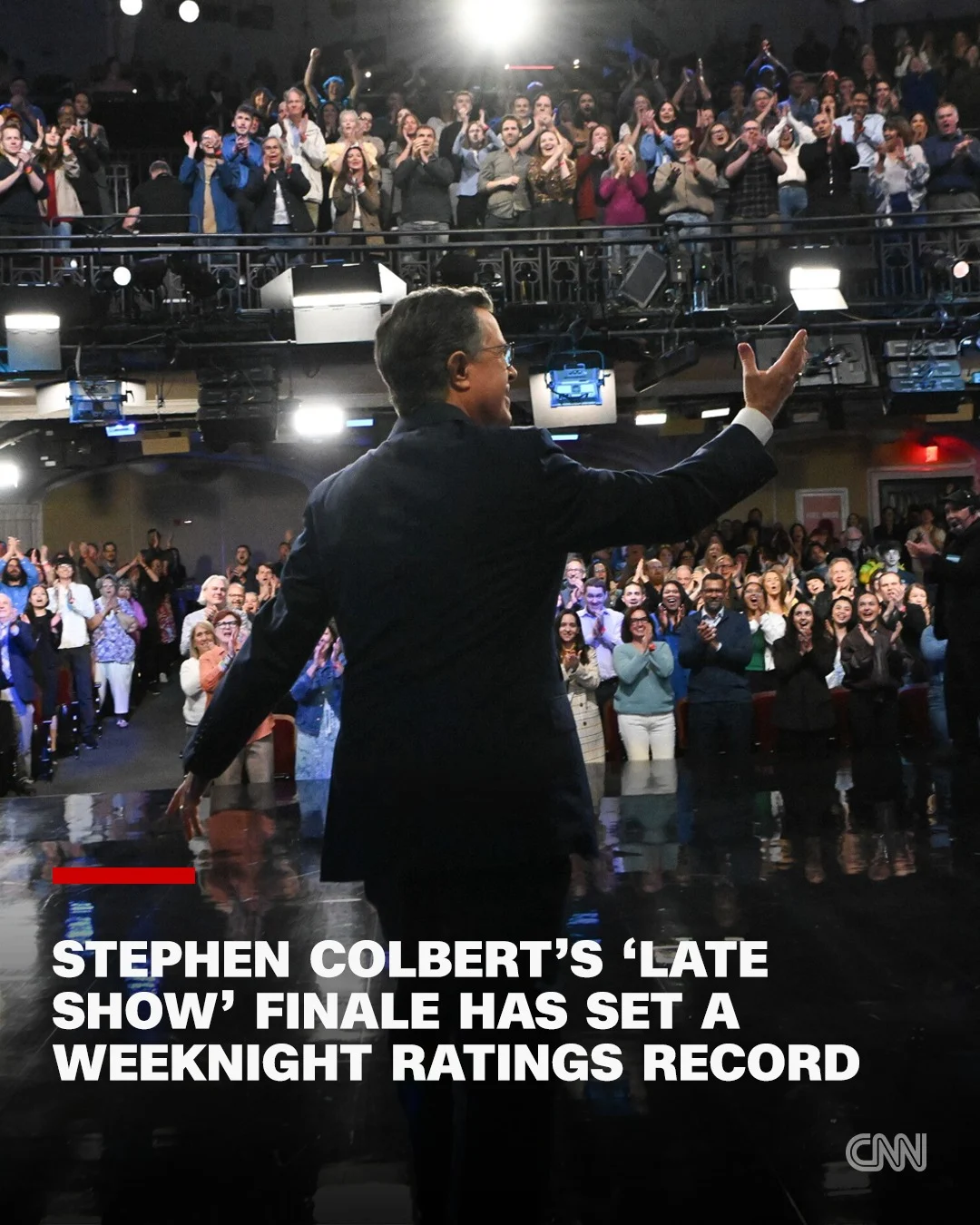
Introduction: A Cultural Lament for the Intellectual Voice
In an era characterized by hyper-polarization and the rapid-fire erosion of civil discourse, the role of the late-night satirist has shifted from mere entertainer to a critical guardian of the national conscience. However, a growing chorus of cultural critics and long-time observers are expressing a profound sense of loss regarding the "intellectual wit, compassion, eloquence, and dignity" that once defined the medium.
Writer and historian Steve Vertlieb recently articulated this sentiment, framing the current state of late-night television not as a lack of content, but as a crisis of spirit. Drawing on the haunting question from the 1936 cinematic masterpiece Things to Come—“Why should we surrender life to the brutes and fools?”—Vertlieb suggests that while figures like Stephen Colbert, Jon Stewart, and Jimmy Kimmel remain on the air, a "precious slice of Americana" is being systematically dismantled. This analysis explores the evolution of the late-night landscape, the data behind the shifting influence of satire, and the broader implications for a society struggling to find "charm and grace" amidst a sea of discord.
I. Main Facts: The State of Late-Night Satire in the 2020s
The current landscape of late-night television is dominated by a handful of veteran voices: Stephen Colbert (The Late Show), Jon Stewart (returning part-time to The Daily Show), Jimmy Kimmel (Jimmy Kimmel Live!), John Oliver (Last Week Tonight), and Bill Maher (Real Time). While these hosts continue to command significant digital audiences, the traditional broadcast model is facing an existential crisis.
The "loss" described by critics like Vertlieb is less about the absence of the hosts themselves and more about the perceived degradation of the environment in which they operate. The "seditious breaking apart" of individualism and personal integrity in the public square has forced these satirists into a defensive posture. Where satire was once a tool for puncturing pomposity, it has increasingly become a bunker for those seeking "truth, justice, and the American way" against a rising tide of what many perceive as bigotry and anti-intellectualism.
Stephen Colbert, in particular, represents a unique case study. Transitioning from the heightened irony of The Colbert Report to the more earnest, albeit politically charged, platform of The Late Show, Colbert has attempted to maintain a level of "intellectual wit" that bridges the gap between high culture and mass entertainment. Yet, as the cultural climate hardens, the space for "eloquence and dignity" appears to be shrinking, replaced by the necessity of constant vigilance against political upheaval.
II. Chronology: The Evolution of the Satirical Conscience
To understand the current sense of loss, one must examine the chronological trajectory of late-night television as a pillar of American culture.
1. The Era of General Consensus (1954–1992):
Beginning with Steve Allen and Jack Paar, and perfected by Johnny Carson, late-night television was a unifying force. Carson’s Tonight Show avoided overt partisanship, opting instead for a broad, gentle satire that appealed to a monolithic American audience. Dignity was maintained through a distance from the "thugs and bigots" of the political fringe.
2. The Rise of the Cynic and the Satirist (1993–2014):
The arrival of David Letterman introduced a sharper, more ironic edge to the medium. However, the true pivot occurred in the late 1990s with Jon Stewart’s takeover of The Daily Show. Stewart, and later his protégé Stephen Colbert, transformed satire into a vital news source. During the Bush and Obama administrations, these voices became the "conscience and echoes of humorous social commentary," providing a necessary check on power through intellectual rigor.
3. The Era of Resistance and Fragmentation (2015–Present):
The entry of Donald Trump into the political arena fundamentally altered the DNA of late-night TV. Hosts were no longer just satirists; they became leaders of the "resistance." Colbert’s Late Show surged in ratings by leaning into a nightly critique of the administration. However, this shift came at a cost: the "charm and grace" mentioned by Vertlieb—reminiscent of Rhett Butler’s lament in Gone With the Wind—was often sacrificed for the urgency of the political moment.

III. Supporting Data: The Impact and Decline of the "Late-Night Effect"
Data from the Pew Research Center and Nielsen ratings provide a complex picture of why some feel the "heart and soul" of this medium is being ripped away.
- Viewership Trends: In 2014, the combined viewership of the top late-night shows exceeded 10 million nightly. By 2023, that number had plummeted by nearly 50% in the traditional linear broadcast category. While YouTube views are in the billions, the shared cultural experience—the "Americana" that sired individualism—has fragmented into algorithmic echo chambers.
- Political Trust: A 2020 study found that 44% of Democrats relied on late-night comedy for political news, compared to only 12% of Republicans. This polarization supports Vertlieb’s assertion that "courage, honesty, and freedom of speech" are being broken apart; satire no longer speaks to the whole nation, but to specific segments, potentially silencing its "vibrant, vital and essential" impact on the broader public.
- The "Colbert Bump" and Intellectual Engagement: During the 2000s, the "Colbert Bump" was a documented phenomenon where guests on The Colbert Report saw a measurable increase in popularity or funding. Today, while Colbert still hosts authors and intellectuals, the viral nature of "clobbering" or "destroying" opponents in short clips has overshadowed the long-form intellectual inquiry that once defined his brand of wit.
IV. Official Responses and Industry Perspectives
The networks (CBS, NBC, ABC) have largely remained silent on the "loss of dignity" in the medium, focusing instead on the economic reality of dwindling ad revenue. However, the hosts themselves have occasionally addressed the toll of the current era.
In a 2023 interview, Stephen Colbert reflected on the difficulty of maintaining humor in an age of tragedy, stating that his role is often to "whistle past the graveyard" with his audience. Jon Stewart, upon his return to The Daily Show in 2024, acknowledged the exhaustion of the American public, noting that the "sounds of silence" are often preferable to the constant noise of modern outrage.
Critics of the current late-night model argue that the hosts have become too predictable. Conservative commentators frequently argue that the "freedom of speech" mentioned by Vertlieb has become one-sided, contributing to the very "seditious" breaking apart of the country that the satirists claim to oppose. Conversely, media scholars argue that the hosts are simply reflecting a broken reality, and that expecting "charm and grace" from a satirist in a time of perceived democratic backsliding is an impossible demand.
V. Implications: The Survival of Culture and Humanity
The implications of losing a sophisticated, intellectual satirical voice are profound. As Vertlieb notes, "as long as the spirit of satirical brilliance exists… a particle of humor, culture and humanity will ever survive and endure."
1. The Erosion of Shared Truth:
When satirists like Colbert and Stewart are viewed as partisan actors rather than "truth-tellers," the "vibrant and essential voices of truth, justice, and the American way" lose their ability to bridge divides. The loss of a common comedic language makes it harder to address the "thugs and bigots" that threaten the social fabric.
2. The Search for "Something Left in Life":
The reference to Rhett Butler’s desire for "charm and grace" highlights a growing nostalgia for a time when intellectualism was not a battleground. If late-night television becomes solely a venue for anger, the "humorous social commentary" that historically provided a safety valve for national tension may be permanently silenced.
3. The Legacy of Mark Twain:
By invoking Mark Twain, Vertlieb reminds us that American satire has always been a "conquering" force against hypocrisy. The survival of this tradition depends on the ability of current hosts to move beyond the "sounds of silence" and rediscover the "intellectual wit" that transcends the immediate political cycle.
Conclusion: Somewhere Over the Rainbow
The "mourning" of Stephen Colbert and the current state of the Late Show is, at its core, a mourning for a perceived loss of American idealism. While the "brutes and fools" may seem to have the upper hand in the modern digital coliseum, the historical resilience of satire suggests that the "conscience and echoes" of humanity cannot be entirely suppressed.
Whether the "land of hopes and dreams" can once again produce the individualism and personal integrity that Vertlieb fears is lost remains to be seen. Perhaps, as the article concludes, the answer lies "Somewhere Over the Rainbow"—in a future where satire once again finds its balance between the fire of political necessity and the grace of intellectual dignity. Until then, the voices of Colbert, Stewart, and their peers remains the only thin line of defense against a total surrender to the "sounds of silence."


Leave a Comment