The Profound Mystery of Existence: From Microscopic Ants to Cosmic Origins
Introduction: The Pervasive Question of "Being"
For many, the daily rhythm of life is punctuated by mundane routines and familiar preoccupations. Yet, for some, even the most ordinary activities can spark profound philosophical inquiry. This article delves into a contemplation of "being" – the very essence of existence – sparked by a series of seemingly insignificant observations. From the astonishing survival instincts of a minuscule ant to the vast complexities of the universe, the author explores the spectrum of life and our place within it, questioning whether modern society is adequately fostering a sense of wonder and awareness regarding this fundamental mystery.
The Spark of Contemplation: An Ant’s Remarkable Resilience
The author’s journey into the contemplation of existence began, as it often does, during a routine dog walk. Amidst the familiar rhythm of his steps and the playful tug of his canine companion, Gabriel, a line from Shakespeare’s Hamlet, "To be or not to be," echoed in his mind. This classic existential query, he realized, was a persistent undercurrent in his own thoughts, a testament to his ongoing preoccupation with the phenomenon of "being."
The immediate catalyst, however, was a far smaller, yet equally compelling, encounter. While tending to his kitchen, the author moved a jug of water across the tiled countertop. This simple action dislodged a tiny ant, no larger than the head of a pin. The creature, initially disoriented, moved a short distance before freezing. In a moment that could have ended the ant’s existence, the author’s hand was raised to extinguish it. Yet, with an almost instinctive agility, the ant darted beneath the rim of a nearby plate.
This near-fatal encounter became a microcosm of the author’s larger philosophical exploration. He recounts attempting to apprehend the ant multiple times, each attempt thwarted by the insect’s remarkable evasiveness. It would disappear beneath the plate, only to re-emerge and scurry towards the edge of the table, ultimately vanishing from sight. This persistent elusiveness, despite the ant’s infinitesimal size, ignited a profound sense of wonder in the author.
H2: Decoding Primitive Intelligence: The Ant’s Survival Mechanism
The ant’s ability to evade capture, despite its apparent fragility, led the author to ponder the nature of its intelligence. He questioned whether a sophisticated form of sensory perception was at play, enabling the ant to perceive the threat and react with such speed and efficiency. Could its tiny, "indiscernible" eyes and legs possess a primitive visual or tactile awareness that allowed for such rapid processing and action?
Alternatively, the author considered a more mechanistic explanation. He wondered if the ant was simply responding automatically to environmental cues. Changes in air pressure or subtle shifts in the terrain as the author’s hand loomed could have triggered an innate survival response, an almost programmed reaction to perceived danger. This mechanical interpretation suggests that the ant’s actions might not be driven by conscious thought but by deeply ingrained biological imperatives, a testament to evolutionary adaptation.
This exploration into the ant’s survival mechanisms underscores a fundamental aspect of "being" – the capacity to persist and adapt in the face of adversity, regardless of the complexity of the organism. Even at this elemental level, the ant demonstrates a profound engagement with its environment, a testament to the diverse manifestations of existence.
H3: The Spectrum of Being: From Ant to Elephant
The author uses the ant as a starting point to illustrate the vast spectrum of "being" in the natural world. He contrasts this minuscule creature with the elephant, a being of immense physical stature and, arguably, a far greater range of cognitive abilities. The elephant, often hailed as one of the wisest creatures, represents a complex interplay of senses and intelligence, allowing for sophisticated comprehension and action.
This juxtaposition highlights the diverse forms existence can take. The ant, in its simple, instinctual survival, embodies an elemental state of being. The elephant, with its advanced cognitive capacities, represents a more complex and nuanced form of existence. Both, however, are equally valid expressions of "being," each occupying its unique niche in the grand tapestry of life.
H2: Humanity’s Position: The Great Chain of Being and its Limitations
Where, then, does humanity fit into this spectrum? The author invokes the concept of "The Great Chain of Being," a historical philosophical framework that posits a hierarchical order of all living things, with humans occupying a high position. This elevated status, according to the author, is attributed to our individuality, our physical adaptability, our mental imagination, and our creative awareness and responsiveness to the world.
However, this notion of human superiority is immediately qualified with a humbling realization of our limitations. Despite our perceived intellectual prowess, we cannot fly like birds or swim for extended periods without external aid. Our "natural state of being," in these specific contexts, cannot compete with that of other species. This paradox suggests that while humans may occupy a unique position in terms of consciousness and creativity, we are still deeply intertwined with and, in some ways, surpassed by the specialized adaptations of other life forms.
H3: The Erosion of Wonder: A Generational Concern
The author expresses a concern that the younger generation, in particular, may be losing touch with the profound mystery of existence. He laments a potential decline in the appreciation for the wonder inherent in "being" in all its forms throughout the universe. This observation is rooted in a personal recollection from his own youth.
He recalls a formative experience in an English secondary school where his physics master, on the first day of class, quoted Albert Einstein: "The most beautiful thing we can experience is the mysterious. It is the fundamental emotion that stands at the cradle of true art and true science. He who does not know it and can no longer wonder, no longer feel amazement, is as good as dead, a snuffed out candle." This powerful statement, delivered over fifty years ago, resonates with a contemporary urgency.
The author suggests that in an era increasingly focused on dissecting and quantifying existence, from the sub-atomic to the cosmic, the capacity for pure wonder might be diminishing. The pursuit of knowledge, while invaluable, can sometimes overshadow the awe that arises from simply contemplating the unknown.
H2: The Deepening Significance of "Being" in the Modern Era
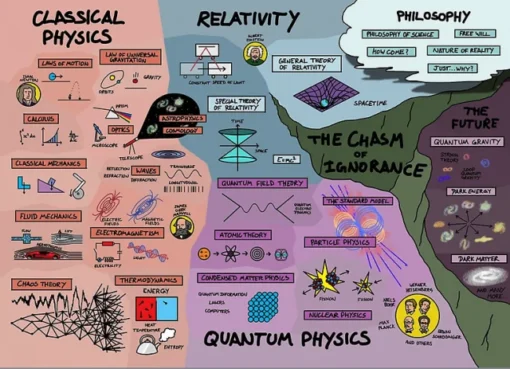
Paradoxically, the author notes that contemporary scientific advancements are, in fact, adding profound new layers of significance to our understanding of "being." We are now delving into realms far smaller than previously identifiable physical cells, exploring atomic and sub-atomic particle levels. This reductionist approach, while seemingly breaking things down, is paradoxically revealing an even greater complexity and interconnectedness within the fabric of existence.
The very act of probing these fundamental building blocks of reality raises even more profound questions about origins and purpose. How did the cosmos, the planets, all biological life, and particularly our own species, come into being? The author suggests that the sheer magnitude and intricacy of these questions are inherently wondrous, capable of inspiring the same sense of awe that prevented him from squishing the tiny ant.
H3: The Unanswered Questions: A Call for Enduring Curiosity
The article concludes by emphasizing the enduring power of unanswered questions. The origin of the universe, the genesis of life, and the nature of consciousness remain vast frontiers of human inquiry. These fundamental mysteries, rather than being sources of frustration, should be embraced as the very wellsprings of our intellectual and creative endeavors.
The author’s contemplation, sparked by a tiny ant, serves as a powerful reminder that profound philosophical insights can emerge from the most unexpected moments. He implicitly urges readers to cultivate a sense of wonder, to embrace the mysterious, and to recognize that the ongoing exploration of "being," in all its myriad forms, is not merely an academic pursuit but a fundamental aspect of a life fully lived. The ability to marvel at the ant’s resilience, to ponder the elephant’s wisdom, and to grapple with the universe’s immensity is, in itself, a testament to the extraordinary phenomenon of existence. This persistent curiosity, this embrace of the unknown, is what truly distinguishes a vibrant, engaged consciousness from a "snuffed out candle."