Uncanny Magazine Celebrates Triple Theodore A. Sturgeon Memorial Award Finalist Nods
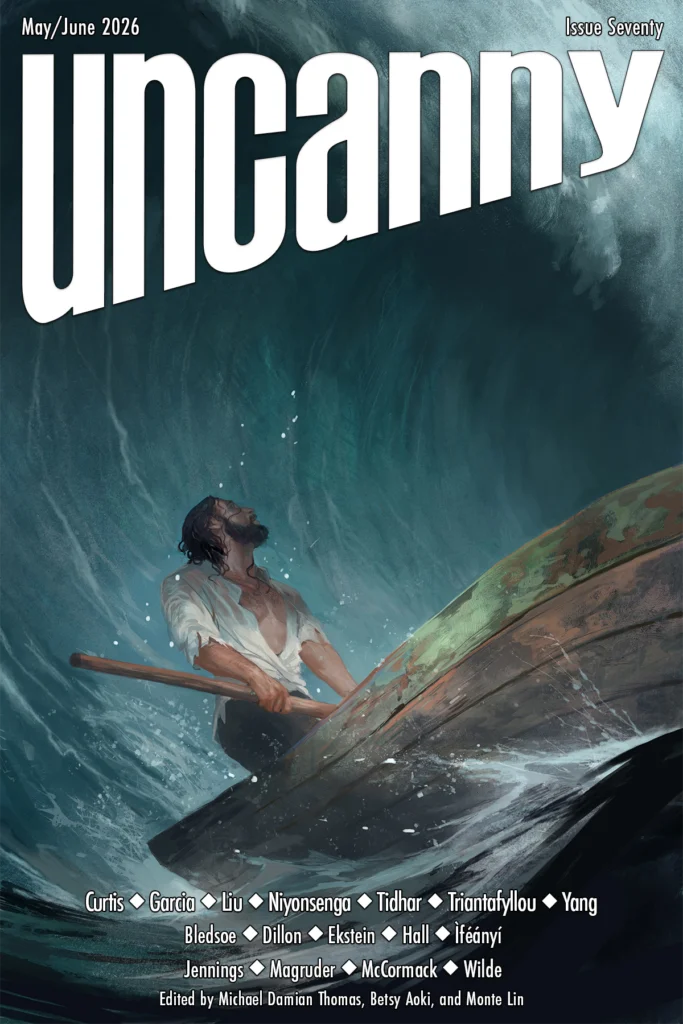
LAWRENCE, KS – The speculative fiction community is abuzz with the announcement of the 2026 Theodore A. Sturgeon Memorial Award finalists, with Uncanny Magazine and its affiliated talents securing an impressive three nominations. The prestigious award, celebrating excellence in short science fiction, has recognized two works published directly by Uncanny Magazine and a third by its Managing Editor, Monte Lin, from a separate publication. This significant achievement underscores the magazine’s consistent commitment to groundbreaking storytelling and its pivotal role in shaping the contemporary science fiction landscape.
The nominated works from Uncanny Magazine are "Six People to Revise You" by J.R. Dawson and "The Shadow on the Nest" by the celebrated Alaya Dawn Johnson. Adding to this remarkable showing, Monte Lin, Uncanny Magazine‘s Managing Editor, has also earned a finalist spot for his story "his love’s ashes on his tongue," published in The Deadlands. These nominations highlight a vibrant period for Uncanny Magazine, solidifying its reputation as a premier destination for award-worthy speculative fiction.
The Theodore A. Sturgeon Memorial Award is one of the most respected accolades in science fiction, honoring authors whose short fiction demonstrates exceptional literary merit and imaginative depth. Being named a finalist is a considerable achievement in itself, placing these authors among the genre’s most innovative voices. The winners, eagerly anticipated by the science fiction world, will be revealed later this summer and formally recognized at the annual Sturgeon Symposium in October, where they will receive their award and a cash prize.
The Heart of the Matter: Finalists and Their Works
The 2026 Theodore A. Sturgeon Memorial Award finalists represent a diverse array of narrative styles and thematic explorations, a testament to the rich tapestry of contemporary science fiction. Uncanny Magazine‘s strong presence among these finalists is particularly noteworthy, reflecting its editorial vision and the caliber of writers it attracts.
J.R. Dawson’s "Six People to Revise You" is a piece that likely delves into themes of identity, transformation, and perhaps the very nature of self-authorship, given its intriguing title. Dawson is known for crafting narratives that are both intellectually stimulating and deeply resonant, often exploring the complexities of human experience through speculative lenses. This story’s nomination suggests a profound engagement with the boundaries of personal change and societal perception, potentially offering a commentary on the iterative process of self-creation, much like the revision process in writing itself.
Alaya Dawn Johnson’s "The Shadow on the Nest" brings another layer of depth to the nominations. Johnson is an acclaimed author with a history of receiving significant awards, including the Nebula Award and the World Fantasy Award. Her work is celebrated for its lyrical prose, intricate character development, and unflinching exploration of social and political themes, often interwoven with elements of fantasy, horror, and science fiction. "The Shadow on the Nest" hints at a narrative that could explore domestic anxieties, hidden threats within familiar spaces, or perhaps a more metaphorical examination of looming societal or personal crises, all rendered with Johnson’s signature elegance and insight.
Rounding out the Uncanny connection is Monte Lin’s "his love’s ashes on his tongue," published in The Deadlands. As Uncanny Magazine‘s Managing Editor, Lin’s own literary recognition speaks volumes about the editorial team’s intrinsic understanding of quality fiction. This title evokes powerful imagery of grief, memory, and perhaps a ritualistic engagement with loss. The Deadlands itself is a publication dedicated to stories of death, dying, and the undead, suggesting Lin’s story likely navigates the darker, more contemplative corners of speculative fiction, blending elements of horror, dark fantasy, and poignant emotional exploration. His nomination underscores not only his talent as an author but also the deep literary expertise he brings to his editorial role at Uncanny Magazine.
The collective recognition of these works by the Sturgeon Award committee signifies their profound impact and contribution to the genre, offering readers and critics alike new narratives that challenge, provoke, and inspire.
A Legacy Unfolding: The Sturgeon Award’s Chronology
The Theodore A. Sturgeon Memorial Award boasts a history as distinguished as the author it honors. Its establishment and evolution are integral to understanding its prestige within the science fiction community.
The Award’s Genesis
The Theodore A. Sturgeon Memorial Award was inaugurated in 1987, a collaborative effort spearheaded by James Gunn, the Founding Director of the esteemed Gunn Center for the Study of Science Fiction at the University of Kansas, and the heirs of Theodore Sturgeon. This initiative was born from a desire to perpetuate Sturgeon’s legacy and to foster the literary excellence he epitomized. Theodore Sturgeon (1918-1985) was a seminal figure in science fiction, celebrated for his innovative storytelling, psychological depth, and elegant prose. He was a master of the short story, known for pushing the boundaries of the genre with works like "More Than Human" and "A Touch of Sturgeon." The award was specifically created to recognize the best science fiction short fiction, a format in which Sturgeon excelled, thus ensuring that his influence on the genre would continue to inspire future generations of writers. The Gunn Center, a bastion of science fiction scholarship, provided the ideal institutional home for an award dedicated to literary merit and genre advancement.
The Path to Finalist
The selection process for an award of this caliber is rigorous and multi-layered, reflecting a deep commitment to identifying truly exceptional works. While the specific mechanics can vary slightly year to year or award to award, the general trajectory for a story to become a Sturgeon finalist typically involves several stages. Initially, stories are published in various magazines, anthologies, or online platforms, where they are read and appreciated by a broad audience, including critics, editors, and fellow writers. A nominations committee, often composed of respected figures within the science fiction community, then sifts through a vast number of eligible works published throughout the preceding year. This initial vetting process narrows down the field to a longlist or shortlist. Finally, a dedicated jury, comprising accomplished authors, academics, and critics, undertakes a thorough review of these selected works. Their task is to evaluate each story against the award’s criteria – in Sturgeon’s case, a strong emphasis on literary quality, originality, and imaginative vision in short science fiction. The stories that emerge as finalists are those that have captivated this discerning panel through their exceptional craft and impact.
Anticipation and Presentation
The announcement of the winner is one of the most anticipated moments in the science fiction calendar. This year, the laureate will be unveiled later in the summer, building excitement within the genre. The formal presentation of the award is scheduled to take place in October, during the annual Theodore A. Sturgeon Memorial Award Symposium. This event, hosted by the Gunn Center for the Study of Science Fiction at the University of Kansas, is more than just an awards ceremony; it is a gathering of minds dedicated to the exploration and celebration of science fiction. The winner is invited as a guest of honor, providing them with an opportunity to share insights into their work, engage with fellow authors and scholars, and receive their award alongside a significant cash prize. This symposium not only honors the winning author but also serves as a vital forum for critical discourse and community building within the science fiction field.
Supporting Data: Pillars of Speculative Fiction
The significance of these nominations extends beyond the individual works and authors, highlighting the enduring impact of Theodore Sturgeon, the vital role of the Gunn Center, and the consistent excellence of Uncanny Magazine.
Theodore Sturgeon’s Enduring Legacy
Theodore Sturgeon’s influence on science fiction is profound and multifaceted. He was a writer’s writer, admired for his precise language, psychological depth, and willingness to tackle complex human emotions and societal issues within speculative frameworks. His stories often explored themes of identity, otherness, love, and the potential for both beauty and horror in human nature. He is credited with popularizing the phrase "Sturgeon’s Law" ("ninety percent of everything is crap"), often misquoted, but actually meant to highlight that even within a genre perceived as niche, there is a substantial amount of quality work. Sturgeon’s impact can be seen in countless authors who followed him, learning from his masterful prose, his character-driven narratives, and his ability to infuse even the most outlandish premises with genuine humanity. An award bearing his name is not merely a tribute; it is a continued affirmation of the literary aspirations and artistic potential inherent in science fiction short stories.
The Gunn Center for the Study of Science Fiction
The Gunn Center for the Study of Science Fiction, based at the University of Kansas, is a cornerstone institution for the preservation, study, and promotion of the science fiction genre. Founded by the legendary author and scholar James Gunn, the center serves as an invaluable resource for academics, students, and enthusiasts alike. It houses extensive archives of science fiction literature, critical essays, and related materials, making it a crucial hub for research. Beyond its archival function, the center actively promotes the genre through various initiatives, including workshops, conferences, and, critically, the administration of the Theodore A. Sturgeon Memorial Award and the John W. Campbell Memorial Award for Best Science Fiction Novel. Its mission is to illuminate the cultural significance of science fiction, exploring its past, present, and future, and ensuring its continued recognition as a legitimate and powerful form of literature.
Uncanny Magazine’s Track Record of Excellence
Uncanny Magazine has, in a relatively short span since its founding, established itself as a titan in the speculative fiction publishing world. Launched with a vision to publish "genre-bending, diverse, and inclusive" science fiction and fantasy, the magazine has consistently delivered on its promise. It has garnered numerous accolades, including multiple Hugo Awards for Best Semiprozine, solidifying its status as a critical and fan favorite. Its editorial philosophy emphasizes not only high-quality storytelling but also a commitment to showcasing a wide array of voices and perspectives, pushing the boundaries of what speculative fiction can achieve. This dedication to excellence and inclusivity has attracted a stellar roster of contributors and a loyal readership. The triple Sturgeon nomination this year is a powerful affirmation of Uncanny Magazine‘s unwavering commitment to publishing innovative, thought-provoking, and award-worthy short fiction, reinforcing its position as a vital platform for the genre’s most exciting talents.
The Importance of Short Fiction Awards
Awards like the Theodore A. Sturgeon Memorial Award play a crucial role in the ecosystem of speculative fiction. They provide vital recognition for authors, particularly those working in the short fiction format, which often receives less mainstream attention than novels. For emerging writers, a nomination or win can be a career-changing event, offering increased visibility, critical acclaim, and new opportunities for publication and readership. For established authors, it reaffirms their artistic contributions and continues to build their legacy. Moreover, these awards serve as a valuable guide for readers, directing them to the finest stories and authors the genre has to offer. They also act as a barometer for the health and direction of science fiction, highlighting current trends, innovative themes, and the evolving literary standards of the field. By celebrating excellence, short fiction awards foster a competitive yet supportive environment that continually elevates the quality of writing across the genre.
Official Responses: Pride and Anticipation
The news of the Sturgeon Award finalists has naturally elicited responses reflecting pride, gratitude, and anticipation from the involved parties.
Uncanny Magazine’s Official Statement
The original announcement from Uncanny Magazine itself, while brief, is suffused with palpable excitement and pride. "Spectacular news, Space Unicorns!" it exclaims, addressing its loyal readership with a characteristic blend of enthusiasm and community spirit. The tone is one of genuine celebration, not only for the individual authors but also for the collective achievement that reflects brightly on the magazine’s editorial vision and its commitment to publishing exceptional speculative fiction. This statement serves as an official confirmation of the nominations and an outward expression of congratulations, reinforcing the magazine’s role as a supportive platform for its contributors. It implicitly communicates the high standards maintained by the Uncanny team and their delight in seeing their published works recognized by such a prestigious award.
Anticipated Authorial Gratitude
While direct quotes from J.R. Dawson, Alaya Dawn Johnson, and Monte Lin are not yet available, it is customary for authors to express profound gratitude upon receiving such significant recognition. Being named a finalist for the Sturgeon Award is a powerful validation of their artistic endeavors and countless hours dedicated to their craft. One can anticipate sentiments of humility, excitement, and appreciation for the award committee, the readers, and the publications that brought their stories to light. For authors, these moments are not just about personal achievement but also about the shared experience of storytelling and the community that supports it. Their responses, when made public, will likely highlight the honor of being associated with Theodore Sturgeon’s legacy and the joy of seeing their work resonate with such an esteemed jury.
The Gunn Center’s Perspective
From the perspective of the Gunn Center for the Study of Science Fiction, the selection of this year’s finalists would undoubtedly be viewed as another successful iteration in the award’s long history. The Center, as the custodian of the Sturgeon Award, would likely emphasize the continued high quality of submissions and the vibrancy of contemporary short science fiction. Their statements often underscore the award’s mission to identify and celebrate works that embody Sturgeon’s spirit of innovation, literary craftsmanship, and imaginative depth. They would express confidence in the jury’s selections and reiterate their commitment to fostering excellence within the genre, ensuring that the award remains a benchmark for quality in speculative short fiction. The Center’s role is not just to administer the award but to champion the genre, and each year’s finalists serve as a testament to the ongoing health and creativity of science fiction.
Implications: Shaping the Future of Speculative Fiction
The implications of these nominations ripple outwards, affecting the authors, the publications, and the broader landscape of speculative fiction.
Impact on the Authors
For J.R. Dawson, Alaya Dawn Johnson, and Monte Lin, being named a Sturgeon finalist carries significant weight. For Dawson, it further elevates their profile within the genre, potentially leading to increased readership, new publishing opportunities, and greater critical attention for future works. For Johnson, an already established and highly decorated author, it reinforces her position as a leading voice in speculative fiction, adding another prestigious accolade to her impressive career and drawing renewed attention to her exceptional storytelling. For Lin, it highlights his dual talent as both a gifted author and a discerning editor, validating his creative voice alongside his crucial editorial contributions to Uncanny Magazine. For all three, the nomination provides invaluable validation, boosting their confidence and providing a powerful incentive to continue pushing the boundaries of their craft.
Impact on Uncanny Magazine and The Deadlands
The triple nomination is a resounding endorsement of Uncanny Magazine‘s editorial excellence and its role as a tastemaker in speculative fiction. Such recognition enhances its reputation, potentially attracting even more high-caliber submissions from both established and emerging authors. It also serves as a strong signal to readers, critics, and award committees that Uncanny is a consistent source of top-tier, award-worthy fiction. This increased visibility and prestige can translate into greater subscriber numbers and broader influence within the industry. Similarly, for The Deadlands, Monte Lin’s nomination brings significant attention to the publication, highlighting its quality and unique thematic focus, thereby expanding its reach and encouraging new readers to explore its offerings. These nominations collectively reinforce the crucial role that independent and online literary magazines play in nurturing and showcasing the best of speculative fiction.
Broader Genre Impact and The Future of Speculative Fiction
Awards like the Theodore A. Sturgeon Memorial Award are instrumental in shaping the direction and perception of science fiction. By recognizing works that excel in literary merit and imaginative scope, they encourage authors to pursue greater artistic ambition and push the thematic and stylistic boundaries of the genre. The diversity of the nominated works—from potentially introspective narratives to genre-blending explorations of grief and domestic unease—reflects the expansive and inclusive nature of contemporary speculative fiction. This broad appeal helps to attract new readers and writers, ensuring the genre remains dynamic and relevant. The continued celebration of short fiction, in particular, underscores the enduring power of concise, impactful storytelling in an age often dominated by longer forms. These nominations are not just about individual stories or authors; they are a celebration of the vibrant health, innovative spirit, and enduring literary power of science fiction, promising an exciting future for the genre.