Weird Tales: Unearthing the Genesis of "The Unique Magazine" – A Deep Dive into Volume 1, Number 1
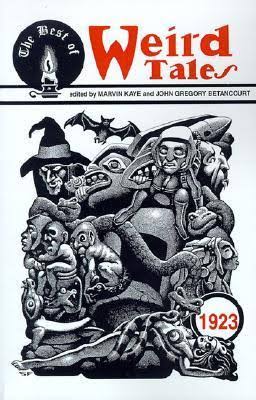
Chicago, IL – March 1923 – A century ago, a new publication burst onto the American literary scene, promising a radical departure from the ordinary. Weird Tales, subtitled "The Unique Magazine," launched its inaugural issue in March 1923, an ambitious anthology boasting 26 pieces of fiction and over 100,000 words. Far from the polished, genre-defining masterpiece it would later become, this first volume offered a fascinating, if uneven, glimpse into the nascent world of pulp horror, mystery, and proto-science fiction, laying an unexpected foundation for a legendary publication.
The Editorial Vision: A Promise of the Bizarre
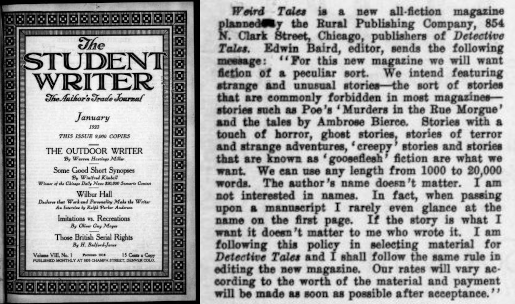
From its inception, Weird Tales aimed to be different. Editor William Baird, promoting the magazine in publications like The Student Writer, heralded a new era of storytelling. His editorial vision promised "fantastic stories, extraordinary stories, grotesque stories, stories of strange and bizarre adventure – the sort of stories, in brief, that will startle and amaze you." He spoke of tackling "forbidden" subjects like insanity, the supernatural, and "material things of horror."
While the magazine’s first issue certainly embraced the bizarre, its "uniqueness" was, at times, more a matter of intent than execution. The initial offerings were heavily influenced by the Gothic tradition, particularly the works of Edgar Allan Poe, whose presence permeated the issue, even extending to a direct sequel to "The Cask of Amontillado." This early reliance on established horror tropes suggests a magazine still finding its distinctive voice, rather than a fully formed revolutionary force.
A Literary Expedition: Navigating the Inaugural Fiction
The sheer volume of content in Weird Tales Volume 1, Number 1 meant a wide spectrum of quality and thematic exploration. From chilling ghost stories to gritty crime thrillers, the issue was a melting pot of early 20th-century pulp fiction.
Opening with the Occult: "The Dead Man’s Tale" and the Spiritualist Undercurrent
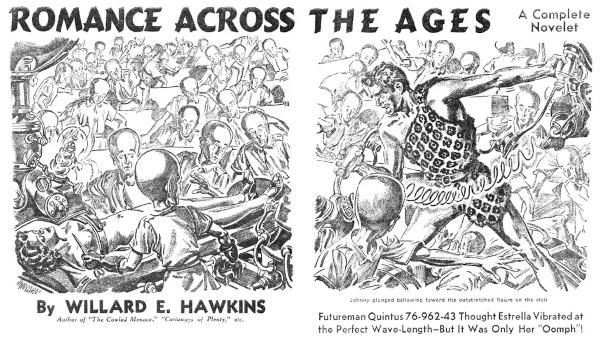
The magazine opened with Willard E. Hawkins’ "The Dead Man’s Tale," a fittingly titled piece signaling the issue’s supernatural leanings. Hawkins, already an experienced pulp writer at 26, contributed his first and only story to Weird Tales, though it would be reprinted a decade later. The tale’s framing device—a manuscript "found among the papers of the late Dr. John Pedrie, psychical investigator," received through automatic writing—immediately immerses the reader in a world of occult inquiry.
The story itself, narrated by the spirit of a World War I soldier named Dick Devaney, delves into spiritualist themes. Dick, killed on the battlefield, finds himself bound to the mortal plane, capable of partially possessing his friend Louis. Driven by a possessive love for Velma, the woman both he and Louis adored, Dick schemes to reunite with her, even at the cost of Louis’s sanity and Velma’s life. While the narrative occasionally veers into pulpy melodrama, its exploration of a spirit’s evolving consciousness and the nature of haunting offers a unique perspective. The story, despite its stylistic flourishes and occasional aridity, effectively captures the essence of an old-fashioned ghost story, infused with the then-popular interest in spiritualism.
The Cover Feature: Anthony M. Rud’s "Ooze" – A Proto-Lovecraftian Vision
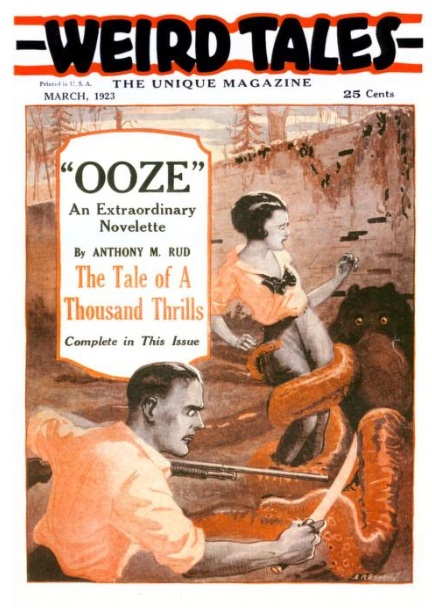
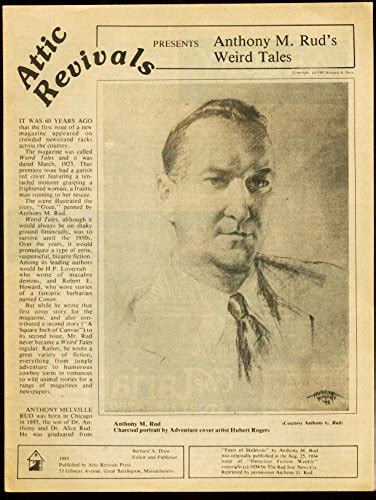
Anthony M. Rud’s "Ooze" graced the cover as a "Novelette of a Thousand Thrills," a title that perhaps oversold its chilling atmosphere. Rud, a veteran writer, delivered a story that, despite its flaws, holds significant historical interest, particularly in its echoes of H.P. Lovecraft’s later work. The narrative follows an unnamed investigator probing the mysterious deaths of a young couple, Lee and Peggy Cranmer, at the isolated laboratory of Lee’s scientist father, John Corliss Cranmer.
Rud’s use of a fractured chronology, piecing together events from the narrator’s investigation and Cranmer’s found notes, creates an initial sense of mystery. The explanation—a monstrous, multi-ton amoeba unleashed by scientific hubris—showcases a clear proto-science fiction sensibility. Rud even explicitly defines "pseudo-scientific story" within the text, citing Verne and Wells as predecessors, establishing a lineage of "weird" writing based on scientific speculation. However, the story struggles to maintain a genuinely horrific atmosphere, often relying on overwrought prose and excessive punctuation.
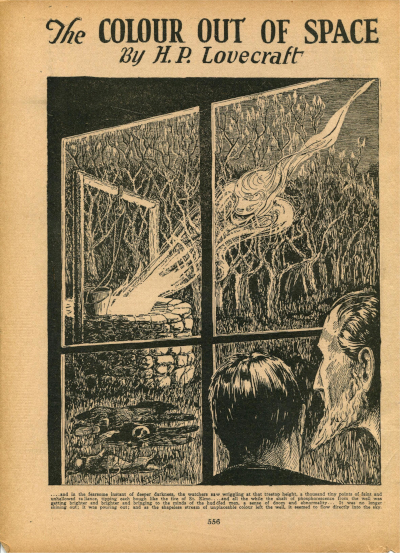
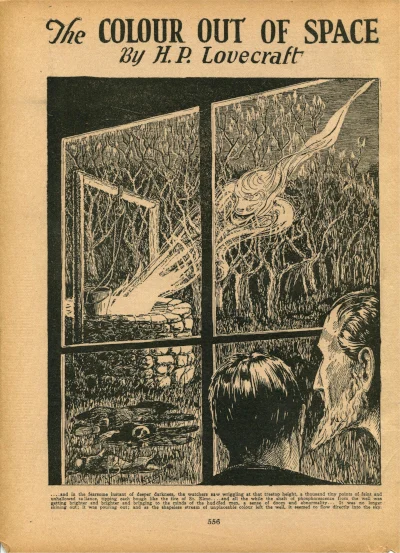
More notably, "Ooze" eerily foreshadows Lovecraft’s cosmic horror, particularly "The Color Out of Space" and "The Whisperer in Darkness," in its narrative structure and even vocabulary (e.g., "squamous"). While Rud’s scope is narrower, the story demonstrates the fertile ground Weird Tales provided for blending science and horror. Unfortunately, it is also marred by casual racism and a disturbing implication regarding the narrator’s affection for his foster daughter, aspects that reflect problematic attitudes prevalent in some pulp fiction of the era.

Serial Thrills and Shifting Tones: Otis Adelbert Kline’s "The Thing of a Thousand Shapes"
Otis Adelbert Kline, then an assistant editor and later a prolific author and literary agent (famously for Robert E. Howard), contributed the first part of his serial, "The Thing of a Thousand Shapes." The story begins promisingly, with a slightly florid but effective style building suspense around uncanny incidents following a man’s death and strange instructions for his corpse. Kline’s early depiction of the supernatural, balanced with a quasi-scientific approach, successfully creates a distinctive horrific tone.
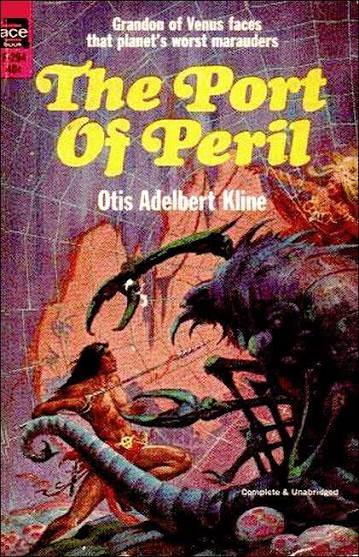
However, the serial’s second half, to be concluded in the next issue, unravels. The introduction of new characters for exposition and a tacked-on romance detract from the central mystery. The plot shifts clumsily from supernatural horror to a more mundane fear, culminating in a climax where the narrator becomes a passive observer. While the first part showcases Kline’s potential for atmospheric horror, the overall narrative falls short of its initial promise.

Horror Beyond the Supernatural: Kilman, Emerson, and Rogers
Not all "weird" tales in the first issue relied on overt supernatural elements. Julian Kilman’s "The Mystery of Black Jean" offers a grim, human-centric story of infidelity and murder in the rural Canadian wilderness, flavored by its first-person child’s-eye perspective and a surprisingly nasty female antagonist.
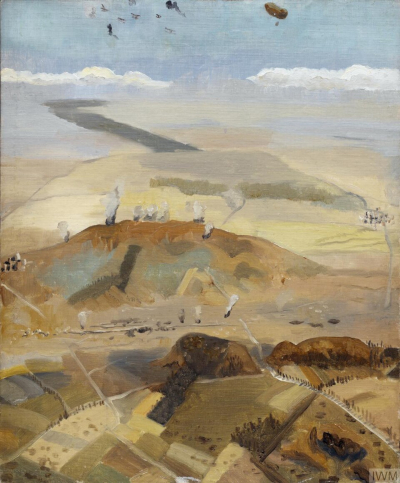
Orville R. Emerson’s "The Grave" stands out as one of the most effective horror stories, despite being entirely non-supernatural. Drawing on Emerson’s own World War I service, the tale presents a claustrophobic narrative of a German soldier trapped underground after an artillery attack on Kemmelberg. The slow, credible degradation of his situation and the unnerving silence following the barrage create a powerful sense of dread, making it a haunting and memorable piece.

Joel Townsley Rogers’ "Hark! The Rattle!" brings stylistic distinction. A feverishly written tale of a killer in a New York club, it weaves between past and present, sketching complex characters quickly and effectively. Its tense energy, built through fragmented sentences and heated prose, culminates in a strong payoff with a definite supernatural element. The story’s psychological depth and potential for a queer reading of its central relationship mark it as a standout.

Crime, Madness, and Ambiguity: Craigie, Taylor, Wright, and Mangham
The issue also featured proto-hardboiled detective stories like Hamilton Craigie’s "The Chain," which, despite its clumsy plotting, attempts to blend a locked-room mystery with hints of the uncanny. Merlin Moore Taylor’s "The Place of Madness" explores the psychological toll of solitary confinement, with a doctor’s descent into madness serving as the story’s overwrought but compelling centerpiece. Farnsworth Wright, who would later become Weird Tales‘ long-standing editor, contributed "The Closing Hand," an unsubtle ghost story that nonetheless established backstory effectively.
Perhaps the most subtle and effective piece in the entire issue was Herbert J. Mangham’s "The Basket." This brief, sparely written tale of a reclusive boarder in San Francisco, whose unvarying routine hints at a strange past, is a quiet triumph. Its ambiguity allows for both realist and supernatural interpretations, making it truly uncanny and a testament to understated storytelling amidst a sea of more overt thrills.
The Unfortunate and the Uninspired: A Mixed Bag
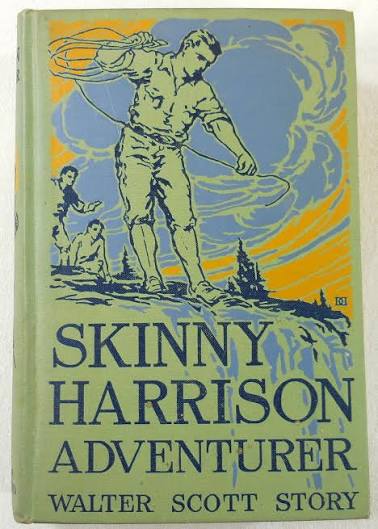
Among the stronger entries were stories that, for various reasons, fell short. Howard Ellis Davis’ "The Unknown Beast" is widely considered the issue’s weakest, a poorly plotted and racist tale set in a Mississippi swamp. Walter Scott Story’s "The Sequel," a continuation of Poe’s "The Cask of Amontillado," proved an unnecessary and uninspired extension of a classic. W.H. Holmes’ "The Weaving Shadows" offered intriguing ideas and atmospheric moments but ultimately suffered from a collapsing plot.
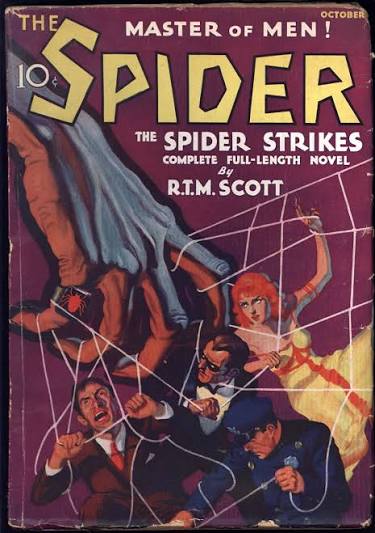
R.T.M. Scott’s "Nimba, the Cave Girl," set in a distant prehistoric past, offered a "secondary-world" experience but presented a problematic parable of female independence being abandoned for male dominance. The anonymous "The Young Man Who Wanted to Die" explored hallucinatory visions of the afterlife but lacked a cohesive narrative or meaningful revelation. William Sanford’s "The Scarlet Night" delivered a passable, if brief, tale of madness and violence, relying on an unreliable narrator.
Collaborators Joseph Faus and James Bennett Wooding’s "The Extraordinary Experiment of Dr. Calgroni" struggled with plot coherence and featured a problematic depiction of an intellectually disabled man, despite some atmospheric passages. Captain George Warburton Lewis’ "The Return of Paul Slavsky," a politically simplistic thriller, notably employed the term "vampire" with multiple resonances, reflecting its evolving meaning in popular culture.
Dark Realism and Social Commentary: F. Georgia Stroup’s "The House of Death"
One of the issue’s true gems, F. Georgia Stroup’s "The House of Death," stood out for its powerful realism and social commentary, despite being neither weird nor supernatural. Set in rural Kansas, the story follows three women cleaning a farmhouse after its owner, Mamie Judy, is arrested for infanticide. Through remarkably convincing dialogue and superb descriptions of mundane details, Stroup evokes the harsh realities of a farmer’s wife’s life, the isolation, and the emotional textures of women’s lives. The discovery of a piece of evidence and the women’s collective decision about its fate make this a concise, resonant, and deeply impactful tale that invites extensive discussion on gender, class, and community.
Ida W. Donnally Peters’ "The Gallows," another story by a woman author, presented a man on death row who desires to die, but its characterizations and motivations remained largely underdeveloped. Harold Ward’s "The Skull" offered a supernatural revenge tale set in the South Pacific, but was marred by racial insensitivity and an underdeveloped plot. Finally, J.B.M. Clarke, Jr.’s "The Ape-Man," while more competent than "Calgroni," suffered from a stock villain and an unmotivated conflict.
The Collective Impression: A Blueprint for the Future
Reviewing Weird Tales Volume 1, Number 1 a century later reveals a publication in its formative stages. While it contained some truly poor stories, a significant number were decent, good, or even excellent, particularly "The Grave," "Hark! The Rattle!", "The Basket," and "The House of Death." However, few, if any, reached the iconic heights of the fiction that would define the magazine’s golden age.
Strengths and Emerging Themes
The issue exhibited an "openness to violence," with over two-thirds of the stories featuring fight scenes or on-page depictions of brutality, fulfilling the pulp expectation for thrills. A recurring thematic interest in imprisonment and escape was evident, both literally (prisons, solitary confinement) and metaphorically (psychological entrapment, societal constraints).
Notably, the magazine embraced unreliable narrators and morally ambiguous protagonists more frequently than one might expect from straightforward pulp, hinting at an ambition to explore subjectivity and the "weird" from various perspectives. There was a clear interest in extreme mental states and the psychological impact of horrifying events.
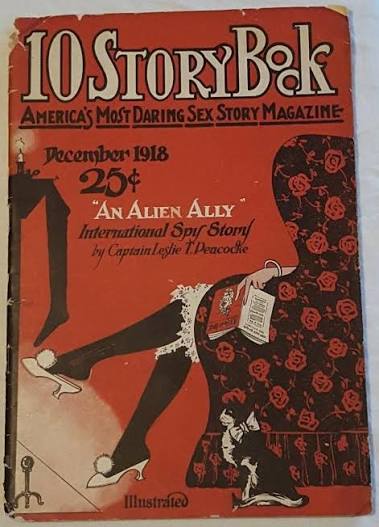
A Magazine in Evolution
Crucially, the first issue’s definition of "weird" was broader and less genre-specific than it would later become. While supernatural horror was present, it coexisted with non-supernatural crime, psychological thrillers, and proto-science fiction. High fantasy, cosmic horror, and sword-and-sorcery, which would later make Weird Tales legendary through the works of Robert E. Howard, H.P. Lovecraft, and Clark Ashton Smith, were largely absent.

A comparison to the Weird Tales issue from March 1933, just ten years later, starkly illustrates this evolution. That issue, featuring a iconic Margaret Brundage cover, included Clark Ashton Smith’s "The Isle of the Torturers" (dying-earth fantasy), Robert E. Howard’s classic "The Tower of the Elephant" (Conan the Barbarian), and Otis Adelbert Kline’s "Buccaneers of Venus" (sword-and-planet science fiction). This shift demonstrates a magazine that had found its niche, focusing more intently on the fantastical and cosmic elements that would define its enduring legacy.
Conclusion: A Fascinating Historical Document
Weird Tales Volume 1, Number 1 stands as a compelling historical document. It was less shocking or revolutionary than its "Unique Magazine" subtitle proclaimed, but it was far from a failure. It delivered a diverse array of stories, many of which aimed to "startle and amaze." While the plotting was often rough and the craftsmanship uneven, the issue laid the groundwork for a cultural phenomenon. It promised a blend of horror, crime, and the fantastic, influenced heavily by the Gothic and Edgar Allan Poe, and offered early glimpses into themes of psychological extremity and human darkness. The magazine would indeed evolve, finding its true "weirdness" in the years to come, but its inaugural issue remains an essential starting point for understanding the birth of a legend.