
The Week in Culture and Cosmos: From Tolkien Reappraisals to the Shifting Sands of the Universe
This week brings a diverse collection of insights from the worlds of literature, media, science, and the creative process. From profound literary analyses and innovative writing techniques to reflections on memory, the evolving landscape of publishing, and the very fabric of our universe, the discussions highlight the dynamic interplay between human creativity, scientific inquiry, and the enduring power of storytelling.
Unpacking Literary Legacies and Narrative Depths
Tolkien’s Enduring Influence: Frodo’s Heroic Burden and Bilbo’s Shadow
Main Facts: Abigail Nussbaum continues her acclaimed "The Great Tolkien Reread" series on Asking the Wrong Questions with an entry titled "Many Meetings." Her latest analysis delves into Frodo’s unexpected reaction to finding Bilbo at Rivendell, highlighting a nuanced perspective on heroism, mentorship, and the weight of legacy within J.R.R. Tolkien’s The Lord of the Rings.
Supporting Data & Analysis: Nussbaum’s piece challenges conventional reader expectations, positing that Frodo, despite embarking on his own monumental quest, still perceives Bilbo as the archetypal hero. This observation offers a deeply psychological reading of Frodo’s character, moving beyond the simple "parent figure" trope. Bilbo, the original adventurer, remains a towering figure in the hobbits’ collective consciousness, a benchmark against which their own experiences are measured.
The essay eloquently articulates how Bilbo’s journey to Dale and back, though seemingly minor in the grand scheme of Middle-earth, solidifies his status as the primary model for adventure for Frodo and his companions. Even after witnessing unimaginable horrors and performing acts of incredible bravery, the younger hobbits find themselves referencing Bilbo, comparing their own trials and triumphs to his. This creates a compelling narrative layer where the current hero operates under the implicit, yet powerful, shadow of his predecessor, constantly wondering about his own place in the larger story that Bilbo inadvertently initiated and symbolically continues to "write."
Implications: This kind of literary re-evaluation underscores the timeless depth of Tolkien’s work, revealing how even well-trodden narratives can yield fresh psychological and thematic insights upon closer inspection. It invites readers to consider the subtle dynamics of heroism and the long-lasting impact of figures who pave the the way, even when the subsequent journey far surpasses the original. Nussbaum’s series serves as a testament to the ongoing academic and personal engagement with foundational fantasy texts, demonstrating their continued relevance for understanding complex human emotions and motivations.
Speculative Fiction: Mirroring Reality’s Horrors
Main Facts: Bestselling author Vaishnavi Patel, known for her mythological retellings, recommends a curated list of speculative fiction works by authors such as N.K. Jemisin and Olivie Blake in "Speculative Fiction Books Full of Real Horrors" for The New York Times. Patel argues that these fantastical narratives uniquely illuminate contemporary societal issues.
Supporting Data & Analysis: Patel’s argument centers on the genre’s potent ability to act as a funhouse mirror to our world. By taking everyday anxieties, social ills, and even metaphorical expressions literally, speculative fiction can strip away the familiar and expose underlying truths with startling clarity. She cites "Buffy the Vampire Slayer" as a prime example, where the literalization of high school as "hell" or coming out as a "Slayer" provides sharp commentary on adolescent angst and identity struggles. The transformation of a lover into a monster post-intimacy, a narrative beat from "Buffy," becomes a visceral metaphor for relationship disillusionment.
Patel extends this to common linguistic metaphors: "magic pills" for untested drugs, a "devil himself" for a horrible boss, or a "Jezebel spirit" for a female politician. Speculative fiction, by embodying these metaphors, provides a framework to dissect real-world problems like corporate greed, worker exploitation, and misogyny. The genre allows authors to explore the logical — and often horrifying — conclusions of present-day trends and societal biases without being constrained by strict realism.
Implications: This perspective reinforces the growing recognition of speculative fiction not merely as escapism, but as a vital tool for social commentary and critical engagement. As the world faces increasingly complex challenges, authors like Jemisin and Blake, championed by Patel, are demonstrating that fantastical settings and concepts can offer unparalleled avenues for understanding and critiquing the human condition, fostering empathy, and inspiring thought on real-world horrors. The New York Times feature itself signifies a mainstream acknowledgment of the genre’s intellectual heft and cultural significance.
The Craft of Creation: New Routines and Ephemeral Art
"Hoofing It": Walking and Dictating for Enhanced Creativity
Main Facts: Liz J. Bradley, writing for SFWA’s Planetside, shares her transformative experience with "Walking and Dictating: A New Strategy to Mix Up Your Writing Routine." Initially a last-ditch effort to overcome writer’s block, this unconventional method has become a core component of her creative process, significantly impacting her writing craft and productivity.
Supporting Data & Analysis: Bradley’s journey began after hitting a wall with a novel, despite a meticulously optimized desk setup and routine. Frustrated, she abandoned her traditional approach and began dictating her manuscript while walking on a treadmill. This shift proved remarkably effective. She now finds that walking is where her best brainstorming happens and where narrative problems often resolve themselves.
Her anecdotal evidence is supported by scientific research. Bradley references a 2014 Stanford University study published in the Journal of Experimental Psychology: Learning, Memory, and Cognition, titled "Give Your Ideas Some Legs: The Positive Effect of Walking on Creative Thinking." Researchers Opezzo and Schwartz found that participants who engaged in walking (on treadmills or outdoors) or were pushed in wheelchairs scored higher on Guilford’s Alternate Uses Test, a measure of creative and divergent thinking. While not specifically focused on writing, these findings strongly suggest a link between physical movement and enhanced cognitive flexibility, which can directly aid in overcoming creative blocks and generating new ideas for narrative development. The physical act of walking, Bradley implies, may free the mind from the static constraints of a desk, allowing for a more fluid and expansive thought process.
Implications: Bradley’s experience, backed by scientific data, offers a compelling argument for writers and creatives to explore non-traditional methods to boost their output and overcome obstacles. It highlights the importance of physical well-being in creative endeavors and challenges the notion that intense mental work must always occur in a stationary, isolated environment. For many, integrating movement into their daily routine could unlock untapped creative potential, providing a refreshing alternative to conventional writing practices.
"Make Temporary Disposable Art!": Embracing Impermanence in a Digital Age
Main Facts: Charlie Jane Anders explores the multifaceted nature of impermanence in her Happy Dancing newsletter, "Make Temporary Disposable Art! It’s Fun!" Her essay delves into how both our perception of art and the digital landscape itself contribute to a shifting understanding of what endures and what fades.
Supporting Data & Analysis: Anders begins with a deeply personal observation: rereading a favorite novel years later can feel like encountering an entirely different book. This subjective experience underscores the inherent impermanence of interpretation, arguing that the "software" (the book) runs differently each time due to changes in the "hardware" (the reader’s brain and life experience). This challenges the idea of a fixed, immutable artistic experience.

Moving to the digital realm, Anders dissects the paradox of the internet: once touted as never forgetting, it now frequently demonstrates a profound capacity for erasure. She describes the frustration of Googling for content that has vanished and the surprising, almost therapeutic, experience of past online controversies being forgotten. This digital amnesia, she notes, can be a form of healing, allowing individuals to move past past mistakes or regrettable online presences, likening outdated, harmful content to "nuclear waste" that is best buried.
Anders then contrasts this with the crucial work of the Internet Archive, an organization dedicated to preserving internet culture. She recently attended a launch event for Vanishing Culture, a book addressing "the erosion of our collective memory." The event highlighted the fallacy of "the internet never forgets" and emphasized the vital role of institutions like the Internet Archive in safeguarding digital history, citing her own early website, "God Hates Figs," as an example of content only preserved through their efforts.
Implications: Anders’s meditation offers a timely reflection on the tension between creation and preservation, especially in the digital age. It suggests that while some art and online interactions are best left ephemeral or allowed to fade, the deliberate act of cultural preservation is more critical than ever. The piece encourages creatives to embrace the temporary nature of some work, while simultaneously appreciating and supporting the efforts to maintain a collective digital memory, recognizing that both forgetting and remembering play crucial roles in individual and societal evolution.
Updates from the World of Genre Media
Simultaneous Times Nears its Conclusion
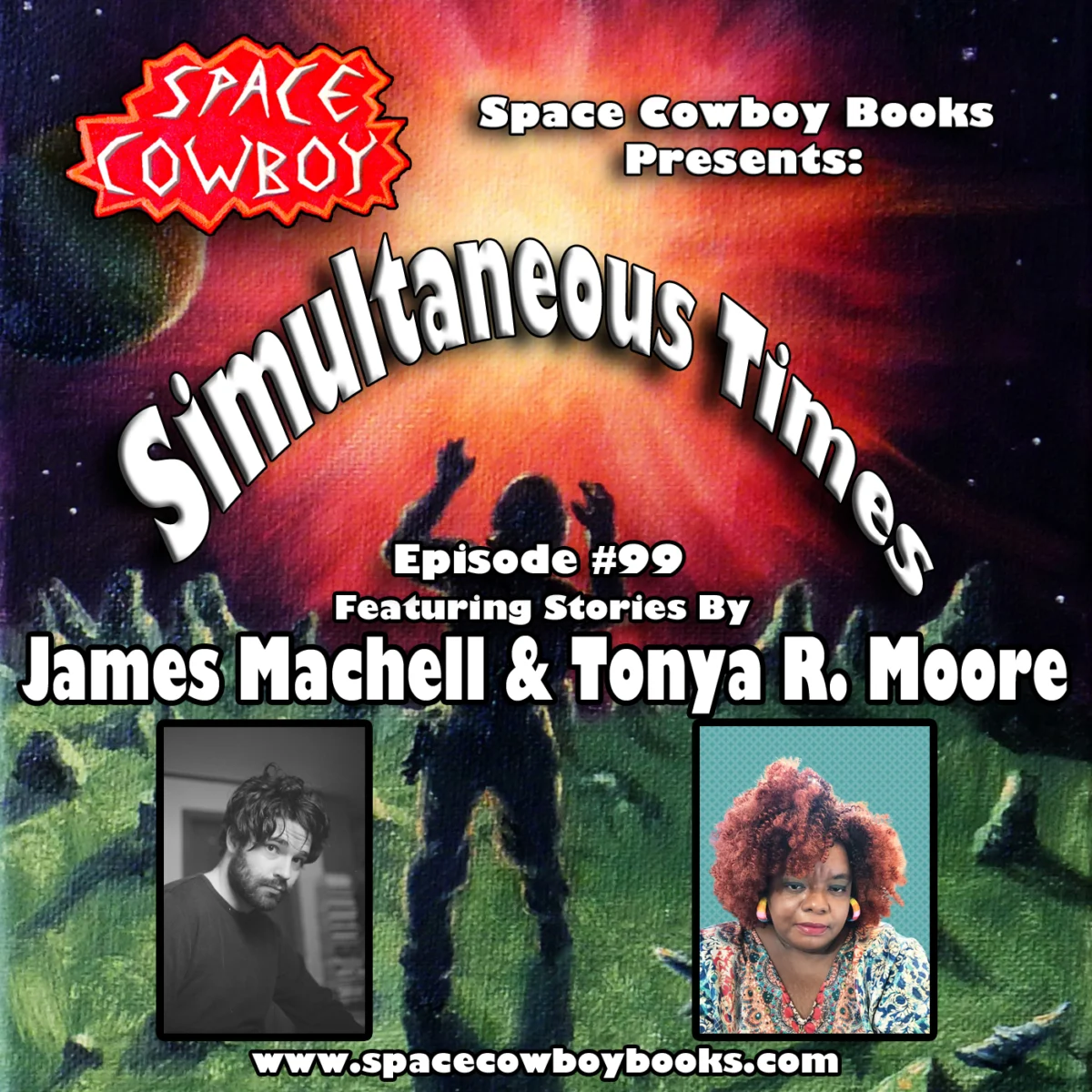
Main Facts: Space Cowboy Books has released Simultaneous Times Episode #99 on Bandcamp, marking the penultimate episode of their monthly audio series.
Supporting Data & Analysis: Space Cowboy Books, an independent publisher and bookstore specializing in speculative fiction, has cultivated a unique platform with Simultaneous Times. This audio series has consistently delivered short, engaging speculative fiction stories to its audience, often featuring emerging voices alongside established authors. The decision to conclude the monthly schedule with Episode #100 signifies a significant milestone for the project, reflecting a long run of consistent output. While specific stories for Episode #99 are not detailed in the original snippet, the consistent quality and curated selection have been a hallmark of the series. The theme music by Dain Luscombe has also been an integral part of its distinct identity.
Implications: The impending conclusion of Simultaneous Times‘ monthly run will undoubtedly be felt by its dedicated listeners. It prompts reflection on the evolving landscape of audio fiction and independent publishing. While one chapter closes, it also raises questions about future projects from Space Cowboy Books and the continued avenues for short speculative fiction in audio format. The series leaves behind a rich archive of stories that contribute to the broader speculative fiction community.
The Orwell Prizes 2026: Recognizing Political Fiction
Main Facts: The finalists for the 2026 Orwell Prizes have been announced, with the ceremony scheduled for June 25. Among the eight books shortlisted in the Political Fiction category is I.O. Echeruo’s "The Comfort of Distant Stars," a work of genre interest.
Supporting Data & Analysis: The Orwell Prizes, established in honor of George Orwell, are renowned for recognizing outstanding works that contribute to political understanding and engagement through journalism, books, and fiction. The inclusion of a genre work like "The Comfort of Distant Stars" in the Political Fiction category is a significant development. It underscores the increasing recognition of speculative fiction’s capacity to address complex political themes, societal structures, and human rights issues with depth and nuance. Historically, "political fiction" might have been perceived as confined to realist narratives, but this shortlist demonstrates a broader, more inclusive understanding of how stories can illuminate political realities. I.O. Echeruo’s work, by its very inclusion, is implicitly acknowledged for its ability to provoke thought, offer critique, or explore political ideas through its speculative lens.
Implications: This nomination highlights the blurring lines between literary categories and the growing influence of genre fiction in mainstream literary awards. It affirms that science fiction, fantasy, and other speculative genres are not merely for entertainment but can serve as powerful vehicles for exploring profound political questions, offering unique perspectives on power, society, and the future. The Orwell Prizes’ endorsement of such a work signals a progressive shift in how politically relevant literature is defined and celebrated.
Tributes and Historical Footnotes
Remembering David Burke: A Beloved Dr. Watson
Main Facts: The Jeremy Brett Sherlock Holmes Podcast has released a public tribute on Patreon to David Burke, the acclaimed actor who portrayed Dr. Watson in the early seasons of the Granada Television series, following his passing. Burke was 1934-2026.
Chronology & Supporting Data: David Burke’s portrayal of Dr. Watson in The Adventures of Sherlock Holmes and The Return of Sherlock Holmes (1984-1985) alongside Jeremy Brett’s iconic Sherlock Holmes, left an indelible mark on fans. The podcast’s tribute emphasizes his "subtly comic portrayal" and his ability to transform Watson from a "bumbling fool" – a common misinterpretation in earlier adaptations – into an "humble and intelligent man of action, loyal to the end and the best friend anyone could ask for." This re-evaluation of Watson was crucial to the series’ success and fidelity to Arthur Conan Doyle’s original vision, where Watson is far more than a mere sidekick. The tribute specifically recalls his "mischievous glint" and "little things he would do when Holmes wasn’t looking," such as secretly reading Holmes’ monographs, which endeared him to audiences.
The podcast hosts recount their personal honor of having spent time with Burke, emphasizing his renowned sense of humor and devotion to his family, his wife Annie and son Tom.
Implications: Burke’s passing marks the end of an era for many fans of the Granada series, which is widely considered one of the definitive adaptations of Conan Doyle’s stories. His performance as Watson was integral to establishing the series’ tone and character dynamics, complementing Brett’s intense portrayal of Holmes. The tribute underscores the lasting impact of actors on beloved characters and the emotional connection audiences form with these portrayals, solidifying his legacy as "our Watson."
Memory Lane: Mark Tatulli’s Lio Turns 20
Main Facts: On May 15, 2006, Mark Tatulli’s unique comic strip, Lio, debuted. Now celebrating its 20th anniversary, the strip is renowned for its global appeal, largely silent narrative, and frequent parodies of other popular comics.
Chronology & Supporting Data: Lio stands out in the world of syndicated comic strips for its nearly dialogue-free format. This ingenious choice makes it easily marketable and understandable across diverse linguistic and cultural backgrounds. The strip follows the titular character, Liō, a young boy living with his father and an assortment of highly unusual "pets" and companions: Ishmael (a giant squid), Fido (a spider), Cybil (a very pushy white cat), aliens, lab creations, a hunchbacked assistant, and Archie, a psychopathic ventriloquist’s dummy. The absence of Liō’s deceased mother adds a subtle layer of pathos to this eccentric "nuclear family."

A defining characteristic of Lio is its meta-textual engagement with other comic strips. Tatulli frequently parodies classics like Blondie, Bloom County, Calvin and Hobbes, Garfield, Peanuts, and even Pearls Before Swine. It is in these parodies that the only dialogue typically appears, spoken by the characters being spoofed. Tatulli himself explained in a Mr. Media podcast interview (circa 2007) that he set "no parameters" for the strip to allow for maximum creative freedom, recognizing that a lack of dialogue necessitates visual and situational humor. He cited Gahan Wilson and Charles Addams as major contemporary influences on his distinctive style.
Implications: Two decades on, Lio continues to run daily in over 250 papers globally and is available in numerous collections. Its longevity and widespread appeal are a testament to Tatulli’s inventive genius and the universal power of visual storytelling. The strip’s unique blend of dark humor, whimsy, and intertextual play has carved out a distinct niche in the comic landscape, proving that innovation can thrive even within traditional media formats.
Trivial Trivia: Porky Pig’s Full Moniker
Main Facts: John King Tarpinian shares a piece of animation trivia: Porky Pig’s full name, "Porky Cornelius Washington Otis Lincoln Abner Aloysuis Casper Jefferson Philbert Horatius Narcissus Pig," was revealed in the 1936 cartoon Plane Dippy.
Supporting Data & Analysis: This verbose and comically elaborate name is a delightful example of early animation’s penchant for absurd humor and character embellishment. In the golden age of animation, particularly with Warner Bros.’ Looney Tunes and Merrie Melodies, characters often had exaggerated traits or surprising details revealed in one-off gags. Plane Dippy, released in 1936, was an early entry in the Porky Pig filmography, showcasing him as a pioneering figure in the Looney Tunes pantheon. The revelation of such a grand and ridiculous name for a character known for his stutter and generally unassuming nature adds a layer of unexpected irony and charm. It reflects a period when animators and writers had immense freedom to experiment with character development and comedic timing.
Implications: While largely forgotten by casual fans, this trivia highlights the rich history and often overlooked details within classic animation. It speaks to the creative exuberance of early cartoon production and how even seemingly minor gags contributed to the enduring personalities of iconic characters like Porky Pig, who, despite his humble demeanor, carried a name worthy of a historical epic.
Scientific Frontiers: Unsettled Questions of the Cosmos
"If Cosmology Was a Democracy": Physicists Divided on the Universe’s Nature
Main Facts: A recent survey by the American Physical Society, highlighted by Futurism in "Someone Asked Physicists What They Really Believe About the Universe and… Yikes," reveals significant disagreements among experts regarding fundamental aspects of the standard model of cosmology.
Supporting Data & Analysis: The survey, which polled over 1,600 experts from various physics disciplines alongside "science enthusiasts," exposed a considerable gap between public perception of scientific consensus and the nuanced, often divided, opinions within the scientific community. Niayesh Afshordi, a co-author of the survey from the University of Waterloo and the Perimeter Institute, noted that "Ideas often presented as the standard view, such as inflation, string theory, particle dark matter, or a constant dark energy, did not command overwhelming support." This directly challenges the popular notion of a unified scientific front on these complex topics.
The closest to a consensus was found regarding the nature of the Big Bang, with 68 percent defining it as a "hot dense state – which may or may not correspond to a beginning of time." However, a mere 20 percent believed it represented an "absolute beginning of time with a singularity at its start," indicating a nuanced and less definitive view than often portrayed.
Disagreement escalated when it came to dark matter, a hypothetical substance believed to constitute 80 percent of the universe’s mass but remains undetectable. Only 10 percent of physicists subscribed to the traditional view of dark matter being composed of WIMPs (Weakly Interacting Massive Particles), while 21 percent favored a hybrid of ideas, including primordial black holes. Similarly, for dark energy, the traditional "constant" view garnered only 24 percent support, surpassed by the 26 percent who believe it changes over time, influenced by recent observations from the DESI survey suggesting it might be weakening.
Implications: These findings are profoundly significant for both the scientific community and the public’s understanding of science. They demonstrate that even on foundational cosmological questions, the "standard model" is not a monolithic, universally accepted dogma but rather a dynamic framework subject to ongoing debate, refinement, and challenge. The lack of overwhelming consensus on concepts like inflation, dark matter, and dark energy underscores the active and exploratory nature of scientific research. It highlights that science is a process of continuous inquiry, where established theories are constantly tested and new hypotheses are explored. This survey serves as a crucial reminder that scientific understanding is rarely static, especially at the cutting edge of cosmic exploration, and that healthy disagreement is a vital engine of progress.
Film Festivals and Creative Challenges
Sci-Fi London 48 Hour Challenge Crowns Its Winner
Main Facts: The Sci-Fi London film festival recently hosted the screening of its 48 Hour Challenge finalists, culminating in the announcement of the top three winners. The event celebrated the creativity and ingenuity of filmmakers working under tight constraints.
Supporting Data & Analysis: The Sci-Fi London 48 Hour Challenge is an annual highlight of the festival, known for pushing filmmakers to their creative limits. Teams are given a specific line of dialogue and a mandatory prop, then tasked with writing, shooting, and editing a complete short film within a single weekend. This year’s event showcased 10 finalist films, all lauded for their "solid" execution and several for their "laugh-out-loud moments." The presence of many filmmakers at the screening underscored the community spirit and collaborative nature of the challenge. SF Concatenation, an organization dedicated to science fiction, notably sponsored the prizes, providing bags of SF books to the winners. The winner’s film is made available online, demonstrating the accessibility and public engagement fostered by the festival.
Implications: Events like the Sci-Fi London 48 Hour Challenge are invaluable for fostering emerging talent and celebrating the innovative spirit within genre filmmaking. The strict time and creative constraints often lead to inventive storytelling and efficient production techniques, proving that compelling narratives can be crafted even under pressure. Such challenges not only provide a platform for new voices but also reinforce the vibrant and dynamic nature of the science fiction film community, showcasing its ability to adapt and thrive.



Leave a Comment