To Boldly Go Everywhere: A Comprehensive Review and Analysis of Star Trek: Strange New Worlds Season 4

The fourth season of Star Trek: Strange New Worlds arrives at a pivotal moment for the venerable science fiction franchise. As the flagship of the "modern era" of Trek, the series has shouldered the burden of reconciling the disparate tastes of a global, multi-generational fanbase. With the first six episodes of the upcoming season now screened for critics, the consensus points toward a series that has not only found its footing but has embraced its own inherent volatility as its greatest asset.
Main Facts: The Return of the Enterprise and the "Grab Bag" Philosophy
Star Trek: Strange New Worlds Season 4 is scheduled to premiere on July 23, 2026, on Paramount+. Following a third season that concluded with a polarizing finale, the fourth installment marks a definitive "rebound" for the series. Critics have awarded the initial block of episodes a high rating of 8.5 out of 10, citing the show’s relentless commitment to genre-bending and its "standalone" episodic structure.
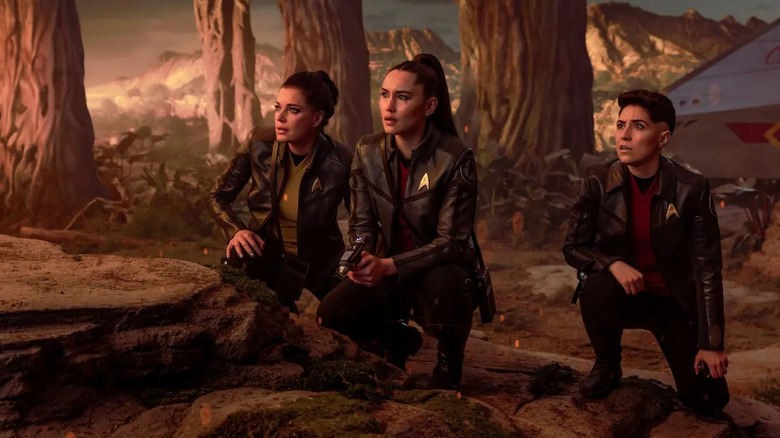
Led by Anson Mount as Captain Christopher Pike and Ethan Peck as Spock, the series continues to distance itself from the heavy serialization seen in Star Trek: Discovery and the early seasons of Star Trek: Picard. Instead, Season 4 doubles down on the "Planet of the Week" format, utilizing the USS Enterprise as a vessel for a wide array of storytelling styles—ranging from grim psychological horror to absurdist comedy.
The season is characterized by what critics call a "grab bag of sci-fi delights." By refusing to settle into a single tone, the show aims to provide "something for everyone," though this ambitious scope comes with the caveat that not every "swing" will connect with every viewer. However, the sheer audacity of the production—which includes puppet-based episodes and noir-inspired political thrillers—suggests a creative team operating at the height of their confidence.
Chronology: The Evolution of Strange New Worlds
To understand the significance of Season 4, one must look at the trajectory of the series since its inception. Strange New Worlds was born from the fan-favorite appearances of Pike and Spock in the second season of Star Trek: Discovery. Since its 2022 debut, the show has been on a journey to reclaim the optimistic, episodic spirit of The Original Series (TOS).

- Season 1 (2022): Established the "Old School" feel, reintroducing the crew and setting the tone for episodic adventures.
- Season 2 (2023): Pushed boundaries with a musical episode and a crossover with the animated series Lower Decks, proving the show could handle high-concept experimentation.
- Season 3 (2025): Faced a more difficult road. While the season featured high-quality episodes, the finale was criticized for a perceived creative lull and a narrative cliffhanger that didn’t land with all segments of the audience.
- Season 4 (2026): Represents a "re-finding of footing." The production was delayed slightly due to industry-wide strikes in 2023, leading to a longer gap between seasons. This time allowed the writers to refine the "whiplash" pacing that has become the show’s trademark.
The premiere in July 2026 marks nearly a decade since the "New Trek" era began, positioning Strange New Worlds as the central pillar of the franchise as other series like Discovery and Lower Decks have concluded their runs.
Supporting Data: Analyzing the Genre-Bending Episodes
The strength of Season 4 lies in its refusal to be categorized. Based on the initial reviews, the season is divided into several distinct "flavors" of science fiction.
The Return of High-Concept Comedy
One of the most discussed episodes of the new season is a "stoner comedy" featuring Spock. Portrayed by Ethan Peck, this iteration of Spock has always been more emotionally accessible than Leonard Nimoy’s, but Season 4 takes this to a new extreme. The episode reportedly features the Vulcan under a specific alien influence that mirrors human intoxication, leading to a performance that has been described as "howlingly funny." While potentially controversial among "purists," it serves as a testament to the show’s willingness to humanize its icons.
Noir Thriller and Political Commentary
In a sharp pivot from comedy, the season includes a black-and-white episode styled as a noir thriller. This episode deals with themes of fascism and resistance, utilizing the aesthetic of the 1940s to ground its political messaging. This follows the long-standing tradition of Star Trek using sci-fi metaphors to comment on contemporary societal issues, proving that the show hasn’t lost its "heady" intellectual edge.
Sci-Fi Horror: The "Event Horizon" Influence
Perhaps the most surprising entry in the first half of the season is an episode that leans into "gnarly" sci-fi horror. Comparisons have been drawn to the 1997 cult classic Event Horizon and the infamous Next Generation episode "Conspiracy." This episode reportedly features some of the most visceral and unsettling imagery in the history of the franchise, pushing the boundaries of what a TV-14 rating allows.

The Puppet Episode
Continuing the trend of Season 2’s musical, Season 4 features an episode where the crew is transformed into literal puppets. This "wild swing" exemplifies the show’s "Badge of Honor" approach to the more ridiculous elements of the Star Trek mythos. It highlights the chemistry of the ensemble cast, who must convey character depth through voice acting and puppetry.
Official Responses: The Creative Philosophy
While Paramount has been tight-lipped regarding specific plot spoilers, showrunners Akiva Goldsman and Henry Alonso Myers have frequently spoken about their "Big Tent" philosophy for Strange New Worlds. In previous interviews and press releases, the production team has emphasized that Star Trek is at its best when it is an anthology of human (and alien) experiences.
The official stance from the studio is that Strange New Worlds is intended to be the "entry point" for new fans while remaining a "love letter" to veterans. By utilizing a standalone format, they argue that the show avoids the "fatigue" associated with long-form serialized dramas.
Director Jonathan Frakes, a veteran of the franchise who has directed episodes for Season 4, noted in recent press junkets that the cast of the Enterprise has become a "family" in the vein of the Next Generation crew. This familiarity allows the writers to put the characters into "bonkers" situations—like the puppet or stoner episodes—without losing the emotional core of the show. The actors, particularly Anson Mount, have expressed that the creative freedom of Season 4 has been the most rewarding aspect of their tenure thus far.
Implications: The 10-Episode Dilemma and the Future of Trek
Despite the overwhelmingly positive reception to the content of Season 4, a significant critique has emerged regarding the structure of modern television. The review highlights a "weakness" that is actually a byproduct of the show’s success: the 10-episode season limit.
The Struggle for Breath
With only 10 episodes per season, Strange New Worlds is forced to compress its vast array of tones. When a show attempts to be a comedy, a horror, a thriller, and a hard-sci-fi drama all at once, there is very little room for "breather" episodes. In the era of 26-episode seasons (like The Next Generation or Deep Space Nine), the writers could afford to have several episodes of each "flavor." In the streaming era, fans are often left "hungry for more," feeling that specific genres are underserved.
The "Inconsistency" Defense
The review posits an interesting philosophical argument: is it truly Star Trek if it isn’t "gorgeously inconsistent?" The franchise has a 60-year history of fluctuating between masterpiece and camp. Season 4 embraces this inconsistency as a feature, not a bug. By leaning into the chaos, Strange New Worlds avoids the sterile perfection that often plagues modern high-budget reboots.
The Future of the Franchise
The success of Season 4’s "grab bag" approach suggests that Paramount+ will continue to lean into episodic storytelling for its future Star Trek projects, such as the upcoming Starfleet Academy series. If Strange New Worlds can maintain its 8.5/10 trajectory through the back half of the season, it will solidify its place as the definitive version of Star Trek for the 21st century.
In conclusion, Star Trek: Strange New Worlds Season 4 appears to be a triumphant return to the adventurous, experimental, and occasionally absurd roots of the franchise. While the short season length remains a point of contention for those who want more time with Captain Pike and his crew, the quality of the "wild swings" ensures that Star Trek remains as relevant and unpredictable as it was in 1966. As the series heads toward its July 2026 premiere, the message to fans is clear: expect the unexpected, and prepare for a version of the final frontier that refuses to stay in one lane.