
The Optical Frontier: LetinAR Secures $18.5 Million to Accelerate the Era of AI Smart Glasses

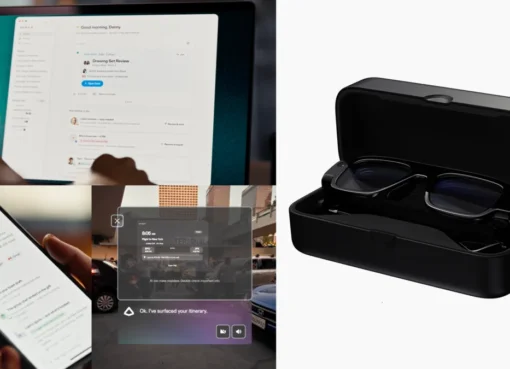
The global race to miniaturize augmented reality (AR) hardware has reached a new milestone as South Korean startup LetinAR announced a successful $18.5 million funding round. This capital infusion, intended to scale production and refine its proprietary optical technology, marks a critical step toward the company’s planned public listing and the broader commercialization of "AI glasses." As the industry shifts away from bulky headsets toward sleek, everyday eyewear, LetinAR’s "PinTILT" technology is positioning itself as the essential architecture for the next generation of wearable computing.
Main Facts: A Strategic Infusion for Scalable Optics
LetinAR, a Seoul-based pioneer in AR optical solutions, recently finalized an $18.5 million (approx. 25 billion KRW) Series C extension. This latest round was led by the Korea Development Bank (KDB), a state-owned enterprise known for backing high-growth technology sectors vital to South Korea’s industrial future. Joining the round were Lotte Ventures, the investment arm of the multinational retail giant Lotte Group, along with several undisclosed institutional investors.
This funding brings LetinAR’s cumulative capital raised to approximately $41.7 million. Previous investors include heavyweights such as LG Electronics, suggesting a deep-rooted interest from South Korea’s largest hardware manufacturers in LetinAR’s intellectual property.
The primary objective of this capital injection is twofold: first, to transition from research and development into mass-scale manufacturing; and second, to solidify the company’s supply chain ahead of a projected Initial Public Offering (IPO) on the South Korean market, currently targeted for 2027. Unlike many competitors that attempt to build entire AR ecosystems, LetinAR operates as a specialized component provider, focusing exclusively on the "optical engine"—the most complex and energy-intensive part of smart glasses.
Chronology: From Academic Vision to Industrial Scale
The journey of LetinAR began in 2016, founded by CEO Jaehyeok Kim and CTO Jeonghun Ha. At the time, the AR industry was grappling with the "Screen-Door Effect" and the sheer bulk of existing optical systems like "Birdbath" prisms or heavy refractive lenses.
- 2016–2018: The R&D Phase: LetinAR was established with the goal of overcoming the limitations of waveguides. While waveguides (used by Microsoft HoloLens and Magic Leap) were the industry standard, they suffered from low light efficiency and high manufacturing costs.
- 2019–2021: Prototype Validation: The company gained international attention at trade shows like CES and MWC by demonstrating its "PinTILT" technology. During this period, it secured early-stage funding from LG Electronics and various venture capital firms, allowing it to miniaturize its modules to fit within standard eyeglass frames.
- 2022–2023: Strategic Partnerships: LetinAR began shifting from lab prototypes to real-world applications. It entered into collaborations with NTT QONOQ Devices (a subsidiary of Japan’s NTT Docomo) and Dynabook (formerly Toshiba Client Solutions). These partnerships focused on enterprise-grade AR glasses for remote assistance and industrial maintenance.
- 2024: The AI Pivot: With the explosion of Large Language Models (LLMs), the company realigned its marketing and development toward "AI glasses"—devices that prioritize lightweight forms and clear displays for AI-driven data overlays rather than fully immersive 3D gaming.
- 2025–2027: The Road to IPO: The current $18.5 million round serves as the bridge to the public markets. The company plans to spend the next 24 months scaling its production lines to meet the anticipated demand from global tech giants.
Supporting Data: The PinTILT Advantage
To understand LetinAR’s market value, one must examine the technical bottlenecks of current AR hardware. Most contemporary smart glasses use one of two systems:
- Birdbath Optics: Affordable but bulky, creating a "thick" look that prevents glasses from looking like fashion accessories.
- Waveguides: Thin and sleek but incredibly inefficient. They often lose up to 90% of the light generated by the micro-display, leading to poor battery life and dim images in sunlight.
The PinTILT Innovation
LetinAR’s proprietary PinTILT technology utilizes the "pinhole effect" but applies it through an array of microscopic mirrors (tilts) embedded within a plastic or glass lens.
- Brightness and Efficiency: PinTILT lenses are reportedly much more light-efficient than waveguides. Because they reflect light directly into the pupil rather than bouncing it through a complex internal path, they require less power to achieve high brightness. This is crucial for outdoor use.
- Form Factor: The modules are thin enough to be integrated into frames that are indistinguishable from high-end prescription glasses.
- Depth of Field: One of the most significant data points regarding PinTILT is its ability to provide a deep focus. Because it uses the pinhole principle, the virtual image remains sharp regardless of where the user’s eye is focusing, reducing the "vergence-accommodation conflict" that causes nausea in other headsets.
According to company data, their modules can be manufactured using injection molding processes, which are significantly cheaper and more scalable than the nano-imprinting or etching required for high-end waveguides. This cost-efficiency is a primary driver for the recent interest from Korea Development Bank.
Official Responses: The Vision for "Next-Gen" Computing
In an interview following the funding announcement, CEO Jaehyeok Kim emphasized that the hardware industry is currently at a tipping point, driven by the maturity of Artificial Intelligence.
“We see AI glasses as that next platform,” Kim stated. “And the optical module is the hardest part to get right as AI glasses makers will need a lens that is thinner, lighter, and more power-efficient than what exists today.”
Kim’s perspective reflects a broader industry sentiment: while the "Metaverse" (focused on VR) has seen a cooling of interest, "AI Wearables" are surging. The success of the Ray-Ban Meta smart glasses—which lack a display entirely—has proven there is a massive appetite for smart eyewear. The logical next step is adding a discreet, high-quality display, which is where LetinAR intends to dominate.
The Korea Development Bank also issued a statement regarding their lead investment, noting that LetinAR represents a "critical link" in the global technology supply chain. By securing domestic production of AR optics, South Korea positions itself as a primary exporter of core components for the anticipated "post-smartphone" era.
Implications: The Global AR Arms Race
The $18.5 million raise does more than just fund a single company; it signals a shift in the competitive landscape of wearable tech. Several implications arise from LetinAR’s current trajectory:
1. The B2B "Intel Inside" Model
LetinAR is not trying to be the next Apple or Meta. Instead, it is positioning itself as the "Intel" of AR optics. By providing modules to companies like Dynabook and Aegis Rider (a spinout from ETH Zurich developing AR motorcycle helmets), LetinAR avoids the massive marketing costs of consumer electronics while becoming an indispensable supplier to those who do.
2. The Pressure on Big Tech
The funding comes as Meta, Google, Samsung, and Apple are all reportedly working on their own lightweight AR glasses.
- Meta is currently teasing "Project Orion," their first true AR glasses.
- Samsung has recently filed patents for "Galaxy Glasses" and is working closely with Google and Qualcomm.
- Apple is rumored to be exploring a lighter-weight successor to the Vision Pro.
If LetinAR can prove that its PinTILT technology is easier to mass-produce than the proprietary systems being developed in-house by these giants, it could become a primary acquisition target or a key partner for companies struggling with the physics of light.
3. The Convergence of AI and AR
The "AI glasses" mentioned by Kim represent a paradigm shift. Instead of 3D gaming, these devices focus on "Information Snacking"—real-time translation, AI-driven facial recognition (for context), and navigation. These use cases require a display that can be worn for 12 hours a day. LetinAR’s focus on power efficiency is the specific solution to this requirement. If a lens can produce a bright image using 50% less battery, the weight of the battery in the stems can be halved, finally making "all-day wear" a reality.
4. Specialized Safety and Industrial Applications
The mention of Aegis Rider is particularly telling. Augmented reality in high-stakes environments—like motorcycling or industrial surgery—requires zero latency and perfect clarity. LetinAR’s ability to function in these niche, high-performance sectors serves as a "stress test" for the technology before it hits the mass consumer market.
Conclusion: Toward a 2027 Public Debut
As LetinAR moves toward its 2027 IPO, the company faces the challenge of moving from high-precision prototyping to millions of units in annual output. The $18.5 million round provides the runway to achieve this, but the true measure of success will be the upcoming product launches from its partners.
If the next generation of NTT QONOQ or Dynabook devices gains significant enterprise traction, LetinAR will have proven that the PinTILT system is not just a clever optical trick, but a foundational technology for the future of human-computer interaction. For now, the South Korean startup stands at the center of a global shift, holding the keys to the visual interface that may eventually replace the screens in our pockets.



Leave a Comment