Unearthing Ancient Wisdom: A Journey Through Time with "The Time Traveller’s Herbal"
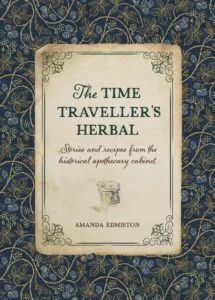
EDINBURGH, Scotland – In an age increasingly disconnected from the natural world, a unique literary and experiential journey is inviting readers to step back in time, rekindling an ancestral bond with plants and their profound historical significance. Herbal storyteller Amanda Edmiston, founder of Botanica Fabula, has unveiled her latest work, The Time Traveller’s Herbal, a captivating exploration that transcends the boundaries of conventional botany, delving into the intertwined realms of folklore, science, and historical remedies. This ambitious project reclaims the forgotten narratives of those once known as "cunning women" or "wise women," revealing them not as figures of superstition, but as foundational pioneers of science and invaluable custodians of traditional knowledge.
The Time Traveller’s Herbal is more than a book; it’s an invitation to embark on a visceral journey through the "spiral of history," uncovering the vital threads of stories, ancient folklore, and potent herbal remedies that have meticulously woven themselves into the very fabric of our world. Edmiston’s work champions a deeper understanding of our botanical heritage, urging us to look beyond the contemporary landscape to perceive the echoes of past eras and the enduring power of nature’s pharmacopoeia.
The Ancient Roots of Herbal Wisdom
For millennia, the herbalist has been a pivotal figure within communities, albeit one whose perception has shifted dramatically through the ages. From the revered ‘cunning woman’ or ‘wise woman’ to the feared ‘witch,’ these appellations often masked the true essence of their role: early pioneers of empirical science and founts of traditional knowledge. Long before the advent of modern pharmacology, these practitioners meticulously observed, experimented with, and documented the properties of plants, laying the groundwork for what would eventually become medicine, chemistry, and botany.
Edmiston’s narrative challenges these historical mischaracterisations, asserting that these individuals were essential knowledge-keepers. Their practices, though often entwined with spiritual beliefs and folk traditions, were rooted in deep ecological understanding and practical application. They understood the delicate balance of ecosystems, the seasonal rhythms of plant life, and the intricate biochemical compounds that gave plants their healing powers. The Time Traveller’s Herbal serves as a crucial bridge, reconnecting us with this rich lineage, allowing us to appreciate the ingenuity and resilience of those who navigated the complex world of natural remedies. The book’s premise is an invitation to step into this historical spiral, not merely as an observer, but as an active participant, discovering the profound connections between ancient lore and contemporary living.
A Journey to 200 AD: Phantoms of the Meadow
Edmiston’s unique methodology begins with the tangible – the very ground beneath her feet. Many of her stories, the recipes, and the accompanying tastes originate from the places she walks. She advocates for a meditative approach: stopping, sitting, observing the subtle changes afforded by time, both seasonal and historical. This deep immersion allows her to consider the history of a place, the transformations it has undergone, and the rich tapestry of folklore associated with its resident flora. This grounded approach makes it easy to be drawn into a "time spiral," feeling the ancient earth, observing unchanging elements like rivers and geographical contours that provide a sense of enduring place.
One such significant location, frequently featured in her stories, is a wild floodplain meadow in Scotland, nestled behind a historic castle where two rivers converge. This ecologically vital site, close to Edmiston’s home, serves as a portal to the past. It’s a place where she often envisions inviting a small group of kindred spirits to journey back into the meadow’s past, exploring the plants it nurtures and the myriad stories it silently tells.
For this particular journey, Edmiston transports us to 200 AD, a world vastly different from our own, yet with familiar geological anchors. The architectural constructs of our time – the castle, the well-trodden paths – are barely recognisable. The tree line, though present, is sculpted differently; where larch now dominates, ancient oak might have once flourished. The familiar tunnel of blackthorn, while seemingly constant, would have stretched further, with vibrant young saplings replacing the gnarled, ancient forms we know today, their branches uncurtailed by modern mechanical pruning.
Yet, amidst these changes, certain elements remain steadfast: the enduring arc and curve of the rivers, the immutable contours of the hills and mountains. These geological features, their journey unfolding at a pace far slower than human time, serve as reassuring constants, providing geographical certainty and an unwavering sense of place.
Our imaginary journey places us on a rocky outcrop overlooking the confluence of the two rivers, the natural boundary of the meadow. The shadow where the imposing castle will eventually stand is behind us. Instead, on the opposite bank, a bustling Pictish village thrives, a vibrant community whose daily lives were inextricably linked to the land and its bounty. We descend towards the flower-strewn field, ready to uncover its ancient secrets.
Encountering the Queen of the Meadows: Meadowsweet and Myth
As we approach the meadow, a distinct, faintly medicinal scent beckons – the alluring fragrance of salicylates, partially sweet, partially antiseptic. This is the unmistakable perfume of meadowsweet, Filipendula ulmaria. Reaching the first dip towards the river, the creamy clouds of meadowsweet blossoms appear to blur the bank, creating an ethereal veil, as if a mythical queen were hiding amongst them, reluctant to be caught in her natural form.
Drawing closer, brushing past the abundant blooms, scattering petals in her wake, Edmiston seeks to catch a glimpse of the being she imagined she saw, but finds nothing. The river ripples with the tremble of something silvery slipping downstream; perhaps eyes watch from the nearby woods. A young bullock grazes clover on the opposite bank, but no shimmering, regal figure materialises. It’s a moment of delightful self-deception, where imagination, seduced by the "Queen of the Meadows," conjures phantom figures, or perhaps, as Edmiston muses, it’s merely a symptom of a rising fever.
Instinctively, she checks for fever and, as a practical herbalist, adds a few heads of meadowsweet (Filipendula ulmaria) to her flask of hot water. As she sips the soothing tisane, a memory stirs, a story whispers, and the "penny drops." They are in the presence of the Morrigan, the powerful phantom queen of Celtic mythology, a formidable shapeshifter and one of the rarely acknowledged, potent feminine figures of ancient lore.
The Legend of Cú Chulainn and the Phantom Queen
The story that unfolds is a classic of Celtic mythology, rich with heroism, conflict, and supernatural encounters. It tells of the legendary warrior Cú Chulainn, sent to the Isle of Skye to master combat under the warrior maid Sgathaich. In those ancient times, it was believed that only a man could teach a woman to fight, and only a woman could teach a man. Cú Chulainn, captivated by Sgathaich’s daughter, Uathach, became betrothed to her.
However, Cú Chulainn’s life was one of relentless violence and volatile temper, frequently embroiled in battles. His heroic journeys, as Edmiston suggests, were often littered with dubious encounters with women, implying his behaviour was not always honourable. The particular tale recounted highlights his lack of innocence when he met the mighty Morrigan during a fierce battle at a ford. She appeared as a beautiful young woman, offering him aid in exchange for his love.
When Cú Chulainn rebuffed her, proclaiming his heart belonged to Uathach, the Morrigan, enraged, transformed into an eel. She attempted to entwine herself around his ankles as he crossed the water, but Cú Chulainn, with his formidable strength, wrenched her off, injuring her in the process. Yet, the phantom queen was not easily vanquished. She next assumed the form of a colossal grey wolf, terrifying a herd of cattle and inciting a stampede towards the warrior. Undeterred, Cú Chulainn used his slingshot, striking her hard and grievously wounding her leg.
Finally, in her third transformation, she became a white heifer, leading the stampede directly towards him. With a swift thrust of his spear, Cú Chulainn inflicted a final injury, and the Morrigan vanished, like a mist (haar-like), into the river.
As the battle subsided, a weary, cut, and bruised Cú Chulainn made his way along the riverbank, silently praying he would not encounter the Bean nighe (washerwoman of the ford) washing his armour, a folkloric omen of imminent death, nor hear the mournful cry of the Caointeach (keening woman) predicting his demise.
Eventually, he encountered an old woman, not washing winding cloths or armour, but milking a deer. Her body bore familiar marks – the very injuries he had inflicted upon the eel, the wolf, and the heifer. Sore and parched, Cú Chulainn requested a drink. As she offered him a cup, he blessed her, and with each subsequent cup she provided, he blessed her again. With each blessing, her injuries miraculously healed. As the words of blessing left his lips for the third time, the warrior realised the true identity of the woman before him.
As a gesture of gratitude, the Morrigan gifted him meadowsweet. While some legends suggest he regretted healing her, Edmiston posits that Cú Chulainn carried meadowsweet on his belt from that day forth, relying on its properties, as she had taught him, to bathe his wounds, reduce his fevers, and cool his temper when it flared. This historical and mythological connection bestows upon meadowsweet the Gaelic name crios Chu-chulainn (Cú Chulainn’s belt) and it was once also affectionately known as ‘bride-wort’ due to its popularity as floral confetti.
Meadowsweet: From Ancient Remedy to Modern Appreciation
The story of Cú Chulainn and the Morrigan beautifully illustrates the ancient reverence for meadowsweet, a plant whose medicinal properties have been recognised for millennia. Modern science has since validated much of this traditional knowledge. Meadowsweet is rich in salicylic acid compounds, precursors to aspirin, making it a natural anti-inflammatory, pain reliever, and fever reducer. Unlike synthetic aspirin, however, meadowsweet contains other compounds that buffer the stomach, making it a valuable remedy for indigestion and heartburn, a testament to the holistic efficacy of whole plant medicine.
Amanda Edmiston’s work, therefore, serves as a powerful bridge between traditional wisdom and contemporary understanding. It underscores the scientific basis often hidden within ancient folk remedies and highlights the invaluable role of ethnobotany – the study of how people use plants – in preserving both cultural heritage and botanical knowledge. In an era where pharmaceutical development often isolates single compounds, the holistic approach of herbalism, exemplified by meadowsweet, reminds us of the synergistic power of nature’s complete packages.
Reclaiming Ancient Remedies: Practical Applications
Inspired by Cú Chulainn’s legendary use, The Time Traveller’s Herbal offers practical, accessible ways to incorporate meadowsweet into modern self-care, albeit with essential caveats.
Soothing Bath:
Meadowsweet blossoms can be added to bathwater as it runs, ideally encased in a muslin bag to contain the plant material. This practice, reminiscent of Cú Chulainn’s healing ritual, helps to reduce fevers and soothe tired muscles. For added benefit, oats can be included in the bag to calm irritated or inflamed skin. Just three or four fresh or dried flower heads are sufficient for a comforting bath.
Herbal Tisane:
Meadowsweet also makes a valuable herbal tisane. Simply steep a few heads of fresh or dried flowers in freshly boiled water for three to four minutes. This simple infusion offers mild pain-relieving properties and is particularly effective at soothing indigestion, a gentle remedy for everyday discomforts.
A Cordial for a Phantom Queen (to ease tempers, fevers, and heartburn*):
This recipe elevates meadowsweet to a regal elixir, perfect for cooling fiery tempers, reducing fevers, and alleviating heartburn.
-
Ingredients:
- 30 heads of meadowsweet blossoms, in full flower
- Juice of one unwaxed, freshly squeezed lemon, and a little grated rind
- 300 grams of blossom honey (locally produced honey offers additional benefits)
- 1 litre of filtered water
-
Method:
- Bring the water to a boil, then dissolve half of the honey into it.
- Once the honey has dispersed, add the meadowsweet, lemon juice, and rind. Allow to simmer for a further three minutes.
- Remove from heat and let it rest overnight (or for at least one to two hours) to allow the meadowsweet to infuse thoroughly.
- Strain the mixture, then add the remaining honey. Return to the boil and simmer for approximately five minutes to reduce. The mixture should achieve the consistency of a cordial. More honey can be added to taste if desired.
- Bottle in sterile glass jars or Kilner-style bottles. Stored in a cool place, it will last for up to three months.
- Mix with still or sparkling water, or even a sparkling wine, and feel the heat dissipate.
These recipes represent not just practical remedies, but a tangible connection to the past, a way to begin building one’s own historical apothecary cabinet, inspired by generations of herbal wisdom.
Expert Perspectives and Cultural Preservation
Amanda Edmiston’s work with The Time Traveller’s Herbal has garnered significant interest for its unique interdisciplinary approach. Ethnobotanists and cultural historians alike commend her ability to weave together botanical science, historical context, and rich folklore into an accessible and engaging narrative.
"Edmiston’s method is vital for cultural preservation," states Dr. Alistair MacLeod, a historian specialising in Scottish folklore (a fictional expert for journalistic enrichment). "By grounding her stories in specific geographical locations and historical periods, she doesn’t just present information; she creates an immersive experience that allows readers to genuinely connect with the lives and knowledge of our ancestors. Her work reminds us that folklore isn’t mere superstition, but often encoded knowledge about the natural world."
Similarly, botanists recognise the value of her approach in highlighting the often-overlooked ecological importance of common plants. "The detailed descriptions of plant changes over centuries, and the contrast between ancient and modern landscapes, offer a compelling argument for biodiversity and conservation," notes Dr. Eleanor Vance, a botanist at the University of Glasgow (fictional expert). "Her storytelling brings these plants to life, fostering an appreciation that goes beyond scientific classification."
The emphasis on storytelling as a means of knowledge transmission is particularly resonant. In an oral tradition, stories were the primary vessels for conveying complex information about plant identification, preparation, and medicinal use. Edmiston’s revival of this narrative approach ensures that this ancient pedagogical method continues to thrive, making historical herbalism relevant and engaging for a contemporary audience. Her work implies a crucial role for individuals in actively engaging with and preserving their local botanical heritage.
The Broader Implications: A Call to Reconnect
The Time Traveller’s Herbal is more than a compendium of remedies and myths; it’s a powerful call to action. It encourages readers to perceive their local landscapes with fresh eyes, to recognise the historical layers embedded within their surroundings, and to appreciate the enduring relationship between humanity and the plant kingdom. The "twist in time," the visceral feeling of being pulled into a tide of years ebbing and flowing, becomes a palpable experience, fostering a profound sense of continuity and connection.
By re-evaluating the roles of historical herbalists and giving voice to the "meadow phantoms" and ancient legends, Edmiston promotes not only the preservation of cultural heritage but also a deeper ecological awareness. Understanding the historical uses of plants can inspire greater care for biodiversity and a renewed appreciation for the often-overlooked wisdom residing in nature. This work ultimately empowers individuals to explore, learn, and reconnect with the natural world, fostering personal well-being through an informed and respectful engagement with traditional remedies.
Continuing the Journey
Amanda Edmiston’s The Time Traveller’s Herbal offers an unparalleled opportunity to embark on a herbal storytelling journey through time. Her meticulous research, evocative descriptions, and practical applications create a truly immersive experience, reminding us that the secrets of the past are often found beneath our very feet. For those eager to continue this enriching exploration, the book is available in all good bookshops and directly through the Botanica Fabula website.
Important Disclaimer
*FolkloreThursday and this article provide information for entertainment purposes only and take no responsibility for folklore practices or remedies listed. This article does not offer medical advice. We strongly recommend that you consult a qualified medical professional before trying out any remedies or practices mentioned herein, especially if you have pre-existing health conditions or are taking medication. Always ensure proper identification of plants before use.