Unearthing the Mycelial Network of Lore: Zoe Gilbert on Herne the Hunter and the Living Web of Folklore

LONDON, UK – Folklore, far from being a collection of static, isolated tales, forms a vast, intricate, and living web that underpins human culture and society. This is the profound insight explored by author Zoe Gilbert, who likens this phenomenon to the subterranean mycelial networks that nourish a forest. In her acclaimed novel, Mischief Acts, Gilbert delves into this rich tapestry, tracing the enduring figure of Herne the Hunter and revealing the astonishing interconnectedness of ancient myths and modern narratives.
Gilbert’s metaphor offers a compelling framework for understanding how stories, songs, and traditions evolve, spread, and inform our collective consciousness. Just as the mycorrhizal fungi beneath the forest floor facilitate communication and nutrient exchange between trees, folklore acts as a hidden, intricate system that feeds the diverse cultural expressions sprouting above ground. While we readily observe individual tales—much like spotting an English oak or a sessile oak—the true thrill, Gilbert suggests, lies in digging beneath the surface, into the "busy earth," to uncover the sprawling, interconnected threads of folkloric mycelium.
The Mycelial Web of Lore: A Foundation for Culture
The scientific understanding of mycorrhizal networks provides a powerful analogue for the transmission of cultural knowledge. These symbiotic relationships between fungi and plant roots are essential for ecosystem health, allowing plants to access water and nutrients, while the fungi receive carbohydrates. This hidden "wood-wide web" facilitates communication and resource sharing, demonstrating a profound, unseen unity within the forest.
In a strikingly similar fashion, folklore operates as a dynamic, subterranean current within human societies. It is a vast, intricate system of connection that feeds and informs the diverse "trees and plants"—the individual stories, songs, customs, and beliefs—that sprout above the surface. These cultural expressions, though seemingly distinct, are profoundly interconnected, drawing sustenance from a shared, ancient wellspring of human experience and imagination. This invisible network allows themes, archetypes, and narrative structures to spread, adapt, and resonate across different cultures and eras, quietly evolving and thriving beneath the conscious awareness of everyday life. The stories we tell, the heroes we admire, and the fears we articulate are all, in a sense, emergent forms sustained by this deeper, underlying network of shared human understanding.
Herne the Hunter: A Figure at the Forest’s Edge
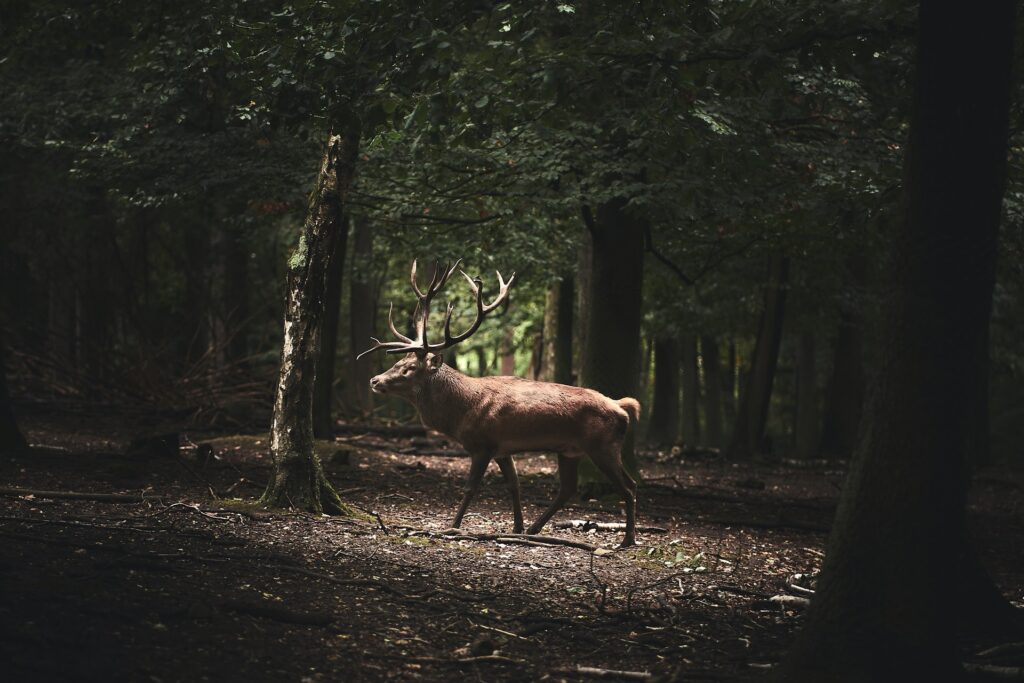
At the heart of Gilbert’s exploration for Mischief Acts lies Herne the Hunter, a figure she describes as "mushroomy" – present if one looks, yet rarely dominating the cultural landscape. Herne typically lurks at the periphery of folklore, a potent yet often understated presence. His most famous early appearance solidifies his place in English literature: William Shakespeare’s The Merry Wives of Windsor. Here, Herne is a spectral, horned hunter haunting Windsor Forest, a ghost of a keeper who "doth all the winter-time, at still midnight, Walk round about an oak, with great ragg’d horns." This brief, atmospheric mention cemented his legend, associating him irrevocably with a specific place and a sense of ancient, wild power.
Over two centuries later, William Harrison Ainsworth’s 1842 novel, Windsor Castle, provided Herne with a "glorious origin story." Ainsworth expanded Herne’s character, transforming him into a tragic figure, a royal huntsman unjustly disgraced, who hangs himself from an oak and returns as a vengeful spirit. This popular romantic novel dramatically enriched Herne’s lore, adding layers of pathos and a more defined narrative arc that captivated Victorian readers and further cemented his connection to the ancient royal hunting grounds.
Herne’s elusive nature is further evidenced by his recurring, yet often secondary, roles in subsequent literary works. In John Masefield’s classic children’s novel, The Box of Delights (1935), Herne appears as a wise, ancient mentor to the protagonist Kay Harker, guiding him through magical adventures and embodying a deep connection to the English landscape and its mystical undercurrents. This portrayal casts Herne not as a menacing ghost, but as a benevolent, albeit powerful, guardian of ancient secrets.
Conversely, in Susan Cooper’s seminal fantasy series The Dark is Rising, Herne emerges with a more menacing aura. In The Dark is Rising (1973) itself, he threatens Will Stanton with his unsettling "owl eyes," embodying the ancient, untamed forces of the natural world, a figure both primal and dangerous, capable of aligning with either light or darkness depending on the balance of cosmic powers. His appearance here reinforces his role as a powerful, ancient entity deeply entwined with the land’s magic.
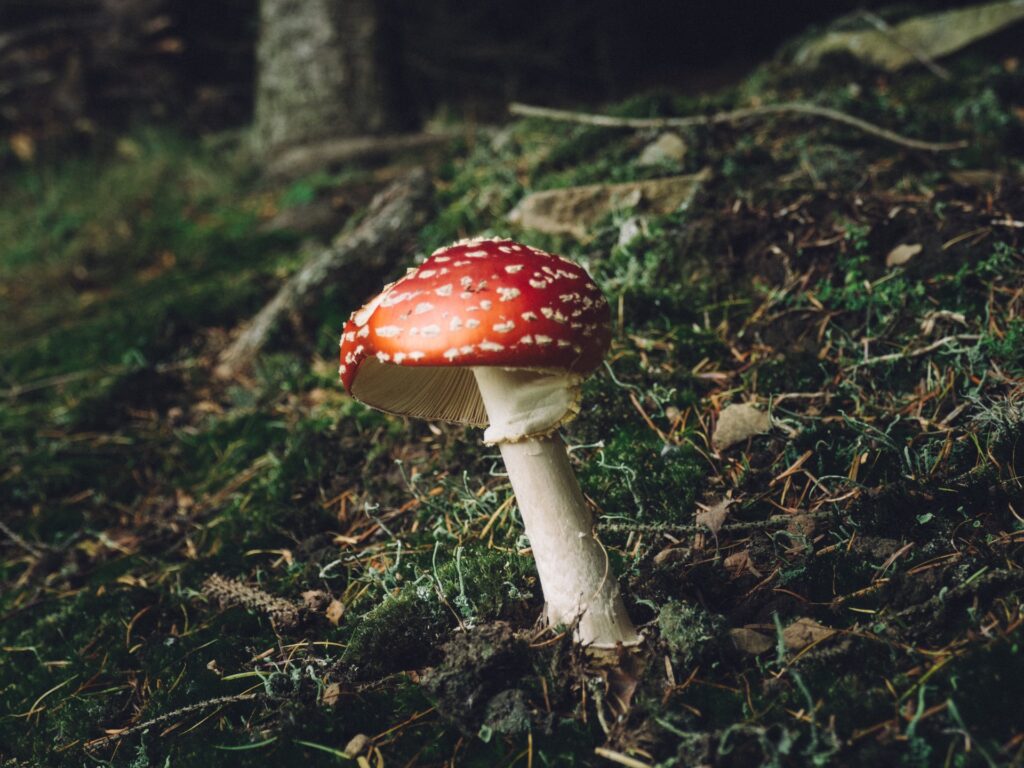
More recently, Herne has resonated in contemporary non-fiction, notably in Nick Hayes’s The Book of Trespass (2020). Hayes contemplates the very act of breaking the law to touch Herne’s Oak, a powerful symbol of connection to ancestral land and the ongoing struggle for access to the countryside. This modern engagement demonstrates Herne’s continued relevance as a symbol of wildness, ancient rights, and resistance against enclosure. Gilbert’s analogy of Herne as a fly agaric mushroom – "arresting when spotted, gorgeous and dangerous, courting the human footways but rarely sought to fill a whole foraging basket" – perfectly encapsulates his powerful yet often peripheral presence in the vast folkloric forest. He is a potent symbol, readily recognizable, but not easily contained or fully cataloged, a testament to his enduring mystique.
Tracing the Threads: Herne’s Kin and the Wild Hunt
Gilbert’s research for Mischief Acts quickly revealed that Herne the Hunter is far from an isolated entity. Digging beneath the surface of his lore, she found herself tracing a complex web of connections, many leading to figures of similar archetypal resonance. The most immediate and expected link was to Odin, the Norse Allfather, a mythic force known for hanging himself from the sacred world tree Yggdrasil in pursuit of wisdom, and a notorious leader of the Wild Hunt. This shared motif of self-sacrifice on a sacred tree and leadership of a spectral chase immediately establishes a deep, ancient kinship.
However, the "mycelial network" rapidly proliferated beyond this initial connection. Gilbert discovered not merely dozens of Wild Hunt leaders across European folklore, but an array of characters who had carved out their own intricate ecosystems of lore, all interweaving with or through Herne’s threads. The Wild Hunt itself is a pervasive motif across Northern, Western, and Central European folklore, typically depicting a ghostly group of huntsmen with their horses and hounds, sweeping through the night sky, often a harbinger of war, plague, or death. Its leaders vary widely by region, including figures like the Welsh Gwynn ap Nudd, a psychopomp and ruler of the Otherworld, and the legendary King Herla, a British monarch cursed to ride eternally. These figures, while distinct, share Herne’s liminality, his connection to the wild, and his association with a powerful, often unsettling, nocturnal procession.
Beyond the immediate Wild Hunt, Gilbert encountered an unruly family of "mischief-makers, spirits of the wood and of bacchanal." Harlequin, in his iconic diamond-patterned finery, emerged from the Commedia dell’arte tradition as Arlecchino in Italy, a trickster, jester, and servant whose anarchic energy and magical abilities resonate with Herne’s transgressive spirit. The Erl-king, a malevolent figure from German folklore, popularized by Goethe’s chilling ballad, loomed from the shadows, a supernatural being who preys on children, embodying a darker, more predatory aspect of the wild. The Green Man, an ancient pagan motif of a face surrounded by or made from leaves, offered a leafy grin, representing rebirth, vegetation, and the eternal cycle of nature, a clear ancestral link to Herne’s woodland domain.
Further excavations unearthed other archetypes: Oberon, the king of the fairies from medieval romance and Shakespeare; Robin Goodfellow, or Puck, the mischievous sprite of English folklore; the Woodwose, or wildman, a hairy, solitary figure inhabiting forests; and the Lord of Misrule, a figure appointed during medieval and Tudor festivities to preside over Saturnalian revelry and inversion of social order. Each of these figures, though originating in different cultural contexts—from Fairyland to Tudor history to Roman mythology—shared thematic elements of wildness, freedom, mischief, and a challenge to established order. Gilbert observed that the familia herlechini, while widespread, was fundamentally unruly, resisting neat categorization or a singular, dominant ancestor.
Cernunnos and the Horned God Archetype
In the search for a central, unifying figure within this sprawling "wood-wide web," the ultimate horned god, Cernunnos, naturally presents himself. Cernunnos, a prominent deity in Celtic polytheism, is often depicted with antlers, associated with fertility, animals (especially stags), wealth, and the underworld. He holds a special, revered place in much contemporary pagan and Wiccan practice as a symbol of the masculine divine, the wild hunt, and the untamed aspects of nature. It would be tempting to posit Cernunnos as the primordial source, the ultimate mycelial knot from which all Herne-like figures branch.
However, Gilbert found that such a simple, singular solution felt incompatible with the diverse and often unruly nature of Herne and his expansive family of "rascally, woodsy hunters and seducers." While Cernunnos embodies many of the profound symbols present—life, death, freedom, lust, wildness, and mischief—the sheer range of form, territory, and narrative evolution among Herne’s counterparts suggested a more complex, decentralized origin. The network wasn’t a hierarchical tree with Cernunnos at its root, but rather a dynamic, rhizomatic system where influences flowed in multiple directions, constantly adapting and intertwining.
The geographical and temporal spread of these figures further underscored this point. King Herla’s spectral ride through the Herefordshire sky is distinct from Harlequin’s theatrical escapades as Arlecchino in Italy, yet both evoke a sense of liminality and wild abandon. This global proliferation suggests that the "wildness and mischief seemed to erupt wherever and whenever people needed it," fulfilling a universal human yearning for transgression, untamed nature, and the disruption of order. The lack of a single, definitive "origin" for Herne and his kin speaks to the organic, decentralized nature of folklore itself—a constant reinterpretation and reinvention of archetypes to suit specific cultural needs and historical moments.
Transplanting Lore: Herne in the Great North Wood
Inspired by this understanding of folklore as a sprawling, adaptive network, Gilbert embarked on a daring act of "transplanting" Herne. She took her literary trowel and moved him from his traditional haunt of Windsor to the Great North Wood, specifically to fragments scattering South London, such as Sydenham & Dulwich Woods. This act was not merely a whimsical narrative choice but a profound exploration of folklore’s adaptability and its enduring relevance to contemporary landscapes.
The Great North Wood was once a vast, ancient forest covering much of what is now South London. While significantly diminished by urban sprawl, remaining fragments still hold echoes of its wild past. Gilbert, living across from one such "slender, seductive strip of woodland" while writing Mischief Acts, recognized that these urban woods, despite their reduced size, retained a powerful genius loci, a protective spirit of place. Historical accounts reveal a continuous human connection to these woods, from ancient charcoal burners and famous Romani communities to eccentric hermits and, more recently, a man named Solomon who ingeniously received mail by hanging an old house number from a tree. These stories underscore the enduring human need for wild spaces, even within the encroaching city.
Gilbert grappled with a core tension: folklore is often deeply rooted in specific places, and she strongly believes that local lore can reconnect and re-enchant individuals with their landscapes. Yet, she also believes that the fundamental human need for mischief, transgression, and wildness—both in the external landscape and within the human soul—is universal. Herne the Hunter, along with his many counterparts, embodies this universal spirit. Thus, "borrowing" Herne and asking him to defend a beloved urban wood felt not only permissible but necessary. He is the archetypal wildman, the spirit of the forest, the hooligan, and the trickster—a figure who emerges "wherever civilisation lapses, as it does where the town gives way to the wood." This transplantation illustrates folklore’s capacity to adapt, to find new resonance in unexpected places, and to serve new communities.
Folklore and Fiction: A Symbiotic Relationship
The relationship between folklore and fiction is a dynamic and symbiotic one, a continuous feedback loop that ensures the perpetuation and evolution of narratives. Fiction has always played a crucial role in extending and morphing folklore, drawing from its deep wellspring of archetypes and motifs, while simultaneously feeding new interpretations and adaptations back into the collective consciousness. This interplay is fundamental to the "mycelial network" model, demonstrating how traditional tales are not static relics but living, breathing entities constantly being reshaped by contemporary imagination.
Literary scholars and folklorists often highlight this crucial dynamic. Dr. Eleanor Vance, a prominent folklorist at the University of London, notes, "Authors like Zoe Gilbert are not simply appropriating old stories; they are actively participating in the ongoing life of folklore. By recontextualizing figures like Herne, they ensure these ancient archetypes remain relevant, speaking to new generations and new environments. This process is vital for cultural preservation, allowing folklore to adapt and thrive rather than becoming stagnant." Vance argues that such literary endeavors are acts of profound cultural significance, demonstrating how the past continues to inform and inspire the present, shaping our understanding of ourselves and our world.
This continuous process of reimagining and re-telling ensures that the "forest of stories forever renews itself," existing in a beautiful symbiosis with the underlying web of folklore. Just as the fly agaric shares its ecosystem with velvet shank and amethyst deceivers, and as beech mast sprouts into new saplings while wood anemones expand their territory, so too do new narratives emerge and old ones find new life within the rich soil of tradition. Gilbert’s work, particularly Mischief Acts, exemplifies this symbiotic relationship, showcasing how a deep engagement with folkloric traditions can lead to fresh, compelling narratives that resonate with both ancient echoes and contemporary concerns.
The Enduring Wildness of Narrative
Zoe Gilbert’s exploration of Herne the Hunter and the mycelial network of folklore offers a profound lens through which to understand the enduring power and adaptability of human storytelling. It reveals that our cultural narratives are not isolated entities but are intricately woven into a vast, interconnected system, constantly exchanging energy and meaning beneath the surface of our collective awareness.
Herne the Hunter, in his multifaceted forms, stands as a potent symbol of this dynamic. He embodies the wildness, transgression, and mischief that seem to erupt whenever and wherever people need them, a testament to universal human urges that transcend time and place. His ability to adapt, to be "transplanted" to new landscapes and still resonate, underscores the inherent flexibility and resilience of folkloric archetypes.

Ultimately, Gilbert’s work reminds us that we will never truly discover the edges of this folkloric web. It is a living, breathing entity, perpetually renewing itself, much like the forest floor beneath our feet. Through authors like Gilbert, who dare to dig into the busy earth of tradition and reimagine its ancient figures, the spirit of Herne and his kin will continue to haunt, inspire, and enrich our world, ensuring that the wildness of narrative endures for generations to come.
About the Author’s Work:
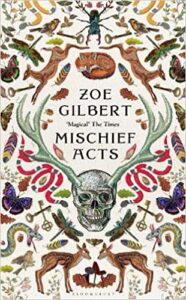
Mischief Acts by Zoe Gilbert
Herne the hunter, mischief-maker, spirit of the forest, leader of the wild hunt, hurtles through the centuries pursued by his creator. A shapeshifter, Herne dons many guises as he slips and ripples through time — at candlelit Twelfth Night revels, at the spectacular burning of the Crystal Palace, at an acid-laced Sixties party. Wherever he goes, transgression, debauch and enchantment always follow in his wake. But as the forest is increasingly encroached upon by urban sprawl and gentrification, and the world slides into crisis, Herne must find a way to survive — or exact his revenge. With its intoxicating, chameleonic voice and boundless imagination, Mischief Acts is British folklore as you’ve never read it before: dangerous, sexy, troubling, daring, savage, an exhilarating race through time and space, weaving together the ancient and the contemporary.
Mischief Acts, by Zoe Gilbert, is available from Bloomsbury books. The book can be purchased here.
Folk by Zoe Gilbert
The remote island village of Neverness is a world far from our time and place. The air hangs rich with the coconut-scent of gorse and the salty bite of the sea. Harsh winds scour the rocky coastline. The villagers’ lives are inseparable from nature and its enchantments. Verlyn Webbe, born with a wing for an arm, unfurls his feathers in defiance of past shame; Plum is snatched by a water bull and dragged to his lair; little Crab Skerry takes his first run through the gorse-maze; Madden sleepwalks through violent storms, haunted by horses and her father’s wishes. As the tales of this island community interweave over the course of a generation, their earthy desires, resentments, idle gossip and painful losses create a staggeringly original world. Crackling with echoes of ancient folklore, but entirely, wonderfully, her own, Zoe Gilbert’s Folk is a dark, beautiful and intoxicating debut.
Folk, by Zoe Gilbert, is available from Bloomsbury books, or as a special edition with sprayed edges from Goldsboro books. The book can be purchased here.