Unearthing Europe’s Shamanic Past: Emma Wilby’s Groundbreaking Reinterpretation of British Witchcraft
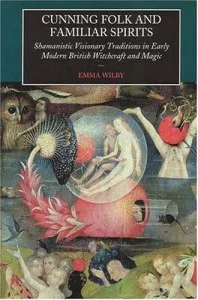
London, UK – A profound re-evaluation of early modern European history, specifically the enigmatic era of the Witch Trials, is underway, spearheaded by the meticulously researched work of scholar Emma Wilby. Her seminal book, Cunning Folk and Familiar Spirits: Shamanistic Visionary Traditions in Early Modern British Witchcraft and Magic, challenges long-held academic assumptions and offers a radically new perspective on the nature of witchcraft in sixteenth and seventeenth-century Britain. Wilby’s work not only argues for the pervasive presence of shamanistic practices across Europe just a few centuries ago but also reframes the infamous Witch Trials as a clash between enduring folk traditions and the interpretive frameworks of elite ecclesiastical and secular authorities.
Main Facts: A Paradigm Shift in Understanding Witchcraft
Emma Wilby’s Cunning Folk and Familiar Spirits stands as a pivotal text for anyone interested in the intersection of history, folklore, and religious studies. At its core, the book posits that early modern British witchcraft, far from being a fabrication of mass hysteria or purely a theological construct, possessed a deep-seated experiential and folkloric foundation rooted in ancient shamanistic traditions. This audacious claim directly confronts two entrenched historical narratives.
Firstly, Wilby meticulously dismantles the notion that "European shamanism" is an oxymoron. For too long, the academic and popular imagination has confined shamanism to remote, non-European cultures – a practice of isolated bands in Siberia, the Americas, or parts of Africa. Wilby presents compelling evidence that shamanistic visionary traditions were not only present but remarkably pervasive throughout Europe, including Britain, right up until the early modern period. She argues that these practices, often veiled beneath layers of Christian interpretation or dismissed as mere superstition, represented a continuous spiritual current that shaped the lives and beliefs of ordinary people.
Secondly, the book boldly challenges the prevailing view that the sixteenth and seventeenth-century Witch Trials were entirely baseless, driven by mass hysteria, or orchestrated solely by cynical authorities. While acknowledging the horrific injustices and the often-fabricated nature of specific accusations under duress, Wilby asserts that there was a genuine undercurrent of magical practice and spiritual experience that formed the bedrock of these accusations. This is not to validate the accusations themselves, but rather to understand the practices from the perspective of the accused, revealing a coherent system of belief and ritual activity that was then tragically misinterpreted and demonized by the era’s dominant powers.
Wilby’s methodology is rigorous, drawing extensively on primary source materials such as court documents, confessions, and testimonies from the Witch Trials. She re-reads these historical records through an anthropological lens, applying cross-cultural parallels with well-documented shamanistic traditions from Native North America and Siberia. By doing so, she reveals striking similarities between the descriptions of British witchcraft and classic shamanic practices, including ecstatic trance states, spirit journeying, and interaction with non-human entities. Perhaps one of her most compelling arguments lies in her reinterpretation of the "demons" with whom witches were accused of working. Wilby makes a powerful case that these entities, demonized by the Church and state, were in fact understood by the accused themselves as "fairy familiars" – spirit allies deeply embedded in the ancient folkloric landscape of Britain. This re-contextualization not only humanizes the accused but also provides a more nuanced understanding of the spiritual worldview that underpinned their practices.
Chronology: Re-evaluating the Early Modern Landscape
The early modern period in Britain, spanning roughly the 16th to 18th centuries, was a crucible of profound societal transformation. It was an era marked by the seismic shifts of the Protestant Reformation, the burgeoning Scientific Revolution, and the consolidation of centralized state power. Yet, beneath this veneer of emerging modernity, a rich tapestry of ancient folk beliefs and practices continued to thrive, particularly among the rural peasantry. It is precisely within this complex historical chronology that Emma Wilby situates her reinterpretation of witchcraft.
Historically, the narrative of the Witch Trials often begins with the religious anxieties of the Reformation, which fostered a heightened fear of the Devil and his agents. This period saw a significant increase in prosecutions for witchcraft, reaching a peak in various regions during the late 16th and mid-17th centuries, before gradually declining towards the end of the 17th century. The prevailing academic view has largely attributed these trials to a combination of socio-economic anxieties, misogyny, and the manipulative tactics of ecclesiastical and secular authorities who sought to impose conformity and eliminate dissent. In this traditional chronology, the "witches" were often seen as innocent victims of paranoia, their confessions extracted under torture and their practices entirely imagined.
Wilby, however, offers a crucial re-interpretation of this chronology. She argues that the early modern period was not merely a time when witchcraft beliefs suddenly emerged or were fabricated wholesale. Instead, it was a period when deeply ingrained, pre-Christian folk practices – which she identifies as shamanistic – continued to be practiced, but were increasingly brought into direct conflict with the official doctrines of the state and the Church. What changed was not necessarily the existence of these practices, but rather their interpretation and persecution by the elite.
Before the fervent witch hunts, the "cunning folk" – healers, diviners, and charmers – often occupied a respected, albeit sometimes feared, place within their communities. They provided essential services, from finding lost objects and curing ailments to foretelling the future. Wilby suggests that these individuals were the inheritors of ancient shamanic traditions, their rituals and interactions with spirits being a continuation of a long-standing European spiritual heritage. The shift occurred as the Christian authorities, particularly post-Reformation, began to systematically demonize these practices. What was once seen as the work of benevolent or ambiguous "fairies" or "spirits" became unequivocally associated with the Devil.
Thus, Wilby’s chronological contribution is to demonstrate a continuity of practice where others have seen discontinuity or fabrication. The early modern witch trials, in her view, represent a violent collision between two distinct worldviews: the enduring, experiential, and localized cosmology of the peasantry, and the increasingly systematized, theological, and demonology-driven cosmology of the educated elite. The chronology of the trials, therefore, becomes less about the rise and fall of "mass hysteria" and more about the historical trajectory of suppression and misinterpretation of an ancient, pervasive spiritual tradition.
Supporting Data: Shamanic Hallmarks and Fairy Familiars
Wilby’s central arguments are bolstered by a rich array of supporting data, primarily derived from a meticulous re-examination of primary historical sources and illuminated by cross-cultural anthropological parallels. She presents a compelling case for the shamanistic nature of early modern British witchcraft by identifying specific hallmarks common to global shamanic traditions within the historical records.
One key hallmark is the ecstatic trance state or altered states of consciousness, which are central to shamanic practice across cultures. Shamans typically enter these states to commune with spirits, journey to other realms, or gain knowledge. Wilby points to numerous accounts in witch trial records where the accused described experiences that strongly resemble such trances: out-of-body experiences, flights through the air (often to meet with others or attend Sabbats), and vivid visions of non-human entities. While the authorities interpreted these as literal encounters with the Devil or demonic illusions, Wilby argues they were more akin to visionary experiences facilitated by trance, possibly induced by ritual, dance, or even hallucinogenic plants.
Another crucial element is the concept of spirit helpers or familiars. In shamanic traditions worldwide, the shaman typically acquires spirit allies – often in animal form – who assist them in their work, whether healing, divination, or causing harm. Wilby finds striking parallels in the British witch trial narratives, where the accused frequently spoke of "familiars" – small animals like cats, dogs, toads, or even insects – that conversed with them, carried out their bidding, and sometimes sucked blood from a "witch’s mark." While the elite saw these as demonic entities given by the Devil, Wilby posits that these were the British equivalent of shamanic animal helpers, reinterpreted through a Christianized lens.
Furthermore, Wilby draws attention to descriptions of spirit journeying to other realms. Many accused witches described being transported to various places, sometimes mundane, sometimes fantastical, to engage in activities with other witches or spirits. This resonates with the shamanic journey, where the shaman travels to upper, middle, or lower worlds to retrieve souls, gather information, or engage in spiritual battles. The "Sabbat" – often depicted as a gathering where witches feasted, danced, and copulated with the Devil – is re-envisioned by Wilby as a potential visionary experience, a collective spiritual journey rather than a literal physical gathering.
Perhaps the most fascinating and thoroughly developed aspect of Wilby’s supporting data concerns the nature of the "demons" themselves. She undertakes a detailed comparative analysis between the descriptions of these "demons" in court documents and the rich folkloric traditions surrounding fairies in Britain. British folklore, predating Christianity, is replete with tales of the "fair folk" – powerful, often capricious, sometimes benevolent, sometimes malevolent entities who inhabit a parallel world. They could bestow gifts or curses, steal children, or seduce mortals. Wilby argues persuasively that the "demons" described by the accused witches were, in their own understanding, these very fairy beings. The physical descriptions of these "demons" – sometimes small, sometimes animal-like, sometimes human-like but with odd features – often align more closely with traditional fairy lore than with established Christian demonology. The relationship between the witch and the "demon" also mirrors the relationship between humans and fairies in folklore: a pact, an exchange of services, a sense of familiarity rather than outright fear and subservience to a cosmic evil. This re-contextualization profoundly alters our understanding of the witches’ worldview, suggesting they were not necessarily consciously aligning with Christian evil, but rather engaging with ancient, powerful beings from their native spiritual landscape.
Finally, Wilby’s "Experiential Dimension" section provides critical supporting data by reconstructing the lived reality of the British peasantry. She details the harsh socio-economic conditions, the deep reliance on agricultural cycles, the omnipresent threats of disease and death, and the intimate connection to the natural world. In such a world, where explanations for misfortune were scarce and scientific understanding limited, the belief in spirits, magic, and the efficacy of folk practices was not absurd but profoundly rational and necessary. This context makes the described interactions with spirits and the practice of magic far more understandable, painting a picture of a world where the veil between the mundane and the magical was thin, and spiritual experiences were an integral part of daily life.
Official Responses: Elite Interpretations vs. Folk Understandings
Wilby’s work implicitly and explicitly dissects the "official responses" to witchcraft during the early modern period, revealing a stark chasm between the interpretive frameworks of the elite – the Church and the secular legal system – and the experiential reality of the accused. This disjuncture is central to understanding the tragic trajectory of the Witch Trials.
The dominant official response was one of demonization and Christianization. Prior to the intense period of witch hunts, folk practitioners were often tolerated, if not entirely embraced, as "cunning folk" or "wise women." However, with the rise of a more systematized demonology, particularly influenced by Continental European theories and fueled by the Reformation’s emphasis on the Devil’s active presence, the official view shifted dramatically. The Church and legal authorities began to interpret all forms of folk magic and interaction with non-human entities through a singular, sinister lens: the Devil.
Wilby demonstrates how practices that, from the perspective of the peasantry, were simply attempts to heal, divine, or influence their immediate world, were systematically re-categorized as acts of heresy and rebellion against God. The "fairy familiars" of folk tradition became "demons" explicitly granted by Satan. The visionary experiences and spirit journeys became "pacts with the Devil" and attendance at blasphemous Sabbats. The very language used in court documents reflects this imposed official narrative, often forcing the accused into confessions that fit the theological framework of the persecutors, rather than reflecting their own understanding. For example, a peasant describing a helpful spirit in animal form might have their testimony recorded as "admitting to a compact with the Devil through a familiar spirit."
This official response was not merely an act of interpretation but also one of power and social control. The Witch Trials served to enforce religious orthodoxy, suppress perceived deviance, and consolidate the authority of both Church and state over the spiritual lives of their subjects. By demonizing traditional folk practices, the authorities aimed to dismantle a parallel system of belief and healing that often operated outside their direct control and sometimes challenged their spiritual monopoly. The trials, therefore, were a brutal instrument for the imposition of a singular, elite-sanctioned cosmology, stamping out the remnants of a more ancient, pluralistic spiritual landscape.
Wilby’s analysis of these "official responses" is crucial because it highlights the fundamental misunderstanding that fueled the persecution. The authorities genuinely believed they were battling agents of cosmic evil, whereas the accused were often simply continuing practices that had been passed down through generations, drawing on a worldview where spirits were a natural part of existence. The tragedy of the Witch Trials, in Wilby’s telling, is therefore not just the injustice of false accusations, but the violent suppression and misrepresentation of a coherent, albeit marginalized, spiritual tradition by a dominant, ideologically driven power structure.
Implications: Re-humanizing History and Broadening Shamanism’s Scope
The implications of Emma Wilby’s Cunning Folk and Familiar Spirits are far-reaching, impacting multiple academic disciplines and fundamentally altering our understanding of a pivotal historical period.
Firstly, and perhaps most importantly, Wilby’s work serves to re-humanize the accused witches. By demonstrating that their confessions and testimonies, however coerced or framed, often contained echoes of genuine, coherent spiritual practices, she transforms them from passive victims of delusion or malevolence into active participants in a specific cultural and religious tradition. This approach fosters empathy and moves beyond simplistic explanations of mass hysteria, allowing us to see these individuals as people who lived within a rich, complex spiritual landscape, even if that landscape was tragically misunderstood and persecuted by the authorities. It challenges us to look beyond the sensationalism of the trials and appreciate the worldview of those caught within them.
Secondly, Wilby’s research profoundly broadens the historical and geographical scope of shamanism. By providing compelling evidence of shamanistic traditions in early modern Britain, she directly challenges the Eurocentric bias that has long confined shamanism to non-Western, "primitive" cultures. Her work asserts that shamanism is a universal human phenomenon, a primal mode of spiritual engagement that transcends cultural and temporal boundaries. This encourages a re-examination of other European folk traditions, suggesting that shamanic elements might be found in various guises across the continent, buried beneath layers of Christianization and scholarly neglect. This re-definition has significant implications for anthropology, religious studies, and folklore, urging a more inclusive and nuanced understanding of global spiritual practices.
Thirdly, the book has substantial interdisciplinary impact. Historians are compelled to re-evaluate primary sources with a new interpretive lens, moving beyond the literal and theological interpretations of the past. Anthropologists gain new data points for comparative studies of shamanism and ecstatic religions. Folklorists find a powerful validation of the enduring significance of pre-Christian beliefs and the resilience of oral traditions. Scholars of religious studies are challenged to reconsider the complex interplay between dominant religions and indigenous spiritualities, particularly in the context of syncretism and suppression.
Finally, Wilby’s work carries a profound legacy for understanding the continuity of folk beliefs. It illuminates how ancient spiritual practices, deeply embedded in the natural world and the community’s needs, persisted despite centuries of Christianization. The "demons" of the witch trials, reinterpreted as "fairy familiars," become a powerful symbol of this resilience – a testament to how older worldviews continued to shape human experience even as new paradigms sought to eradicate them. This encourages a more critical examination of how dominant narratives are constructed and how marginalized voices and traditions are often silenced or distorted.
In conclusion, Cunning Folk and Familiar Spirits is not merely a historical account; it is an intellectual journey that forces readers to question deeply ingrained assumptions about history, religion, and the human spiritual experience. Emma Wilby has crafted an indispensable scholarly work that is also remarkably accessible and engaging, offering a sensitive, sympathetic, and ultimately transformative understanding of early modern British witchcraft. It is a vital contribution to our understanding of Europe’s hidden spiritual past and a powerful reminder of the complex tapestry of human belief.