Unearthing the Everyday Magic: Why Folklore is More Relevant Than Ever
Folklore, often relegated to the quaint corners of history or the exotic practices of distant cultures, is experiencing a quiet resurgence. Many perceive it as little more than whimsical tales for children, a plot device for fiction, or a marketing tool for niche fandoms. Images of the antler-wearing men of Abbotts Bromley or the seemingly archaic practice of wart charming spring to mind, reinforcing a perception of folklore as something "other" or a mere curiosity from the past. Yet, as one contemporary folklorist argues, it permeates our daily existence, subtly shaping our rituals, traditions, and customs—from the way we celebrate holidays to the simple act of preparing a cup of tea.
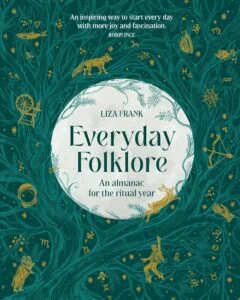
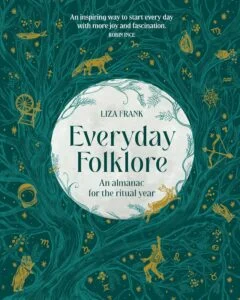
This profound insight forms the bedrock of Liza Frank’s latest work, "Everyday Folklore: An Almanac for the Ritual Year." Born from a deeply personal, year-long immersive project, Frank’s book serves as a practical guide, challenging the notion that folklore is a spectator sport. It invites individuals to actively engage with the rich tapestry of traditions that define our lives, proposing that conscious interaction with folklore can enrich our modern existence in unexpected and meaningful ways. For those who may only dabble in festive customs or dismiss folklore as mere "flim-flam," Frank presents a compelling call to action, outlining five transformative reasons why everyone should consciously weave a little more folklore into their daily fabric.
The Immersive Journey: A Year of Living Folklorishly
From St Distaff’s Day to Twelfth Night: A Personal Experiment
The genesis of "Everyday Folklore" lies in an extraordinary personal undertaking. Between St Distaff’s Day in January 2020 and Twelfth Night in January 2021, Liza Frank committed to practicing ritual year folklore every single day. This wasn’t a casual dalliance but a rigorous, daily engagement with the calendrical customs and traditions that mark the passage of time. St Distaff’s Day, observed on January 7th, traditionally marked the return to spinning after the Christmas festivities, symbolizing a transition from celebration back to industriousness. Conversely, Twelfth Night, typically January 5th or 6th, signifies the culmination of the Christmas season, a final flourish of revelry before the ordinary rhythms of life resume.
By immersing herself in the rituals, observances, and lore associated with each day of this annual cycle, Frank sought to move beyond theoretical understanding. Her project was an experiential exploration, a living ethnography of the ritual year. She didn’t merely read about customs; she performed them, adapted them, and observed their subtle impacts on her perception of time, community, and self. This chronological commitment allowed her to uncover the latent power of folklore to ground individuals in the present and connect them to deeper cultural currents, transforming abstract concepts into tangible, personal experiences.
Documenting the Unseen Rhythms: Crafting a Practical Guide
The daily experiences and insights gleaned from Frank’s year-long immersion were meticulously documented, forming the backbone of "Everyday Folklore: An Almanac for the Ritual Year." The book, therefore, is not merely a collection of tales or historical accounts but a pragmatic handbook designed to empower readers to embark on their own folkloric journeys. Frank’s approach demystifies folklore, making it accessible and relevant to contemporary life. She argues that the value of folklore lies not just in its preservation, but in its active practice, its ability to offer tools for navigating the modern world.
By sharing her methods and reflections, Frank aims to dismantle the barrier between academic folklore studies and everyday life. Her work posits that engaging with folklore can be as simple as acknowledging the turning of the seasons through a small, personal ritual, or as communal as participating in a local tradition. The book’s very existence is an "official response" to the perceived distance between individuals and their cultural heritage, providing a tangible pathway for reconnection and demonstrating that the "ritual year" is not an archaic concept but a vibrant, living framework for understanding and celebrating our existence.
The Quintessential Call to Action: Five Compelling Reasons to Embrace Folklore
1. Reclaiming Time: Folklore as an Antidote to Modern Haste
In an age characterized by relentless acceleration, where days blur into weeks and months vanish in a blink, folklore offers a powerful counter-narrative: the intentional slowing down of life. While folklore may not possess the magic to halt time itself, engaging with the ritual year demonstrably fosters a heightened sense of presence and an enriched appreciation for the cyclical nature of existence. It’s all too easy to lament the rapid passage of time, to find oneself tutting at the swift succession of seasons—daffodils blooming and fading, nights drawing in—without truly savouring their nuances.
By participating in practices intrinsically linked to specific dates, months, or seasonal shifts, individuals gain a vested interest in the rhythm of the year. Consider the ancient practice of wassailing in January, where one visits orchards to sing to the apple trees and ward off evil spirits, ensuring a bountiful harvest. This isn’t just a quaint custom; it’s an act of participation that creates a tangible stake in the agricultural cycle, connecting individuals directly to the source of their food and the bounty of the land. Similarly, the playful tradition of counting fogs in August to predict the number of winter snowfalls transforms a meteorological observation into a shared, seasonal game. Beyond these specific examples, lunar planting, observing the solstices and equinoxes, or simply taking the time to witness the hedgerows transition from barren to budding, full, and finally sparse again, anchors one to the natural world. This conscious observation of surrounding phenomena slows one’s internal pace, opening the door to greater possibility, wonder, and a deeper engagement with the unfolding narrative of the year. This sentiment echoes academic perspectives on folklore’s role in grounding communities, as explored by scholars like G. E. Warshaver in their discussions on postmodern folklore, highlighting its enduring relevance in contemporary society [1].
2. A Calendar Brimming with Joy: Expanding Our Celebratory Horizons
Beyond the standard roster of birthdays, anniversaries, religious festivals, and secular holidays, the ritual year offers an almost endless array of opportunities for celebration, transforming the mundane into the meaningful. Imagine a life punctuated by more moments of collective joy and personal observance. The world of folklore provides a pretext for revelry on nearly any given day.
Do you have a particular affection for trees? There are multiple days dedicated to their honour, from Arbor Day celebrations to local tree-planting ceremonies, inviting a deeper connection to nature and environmental stewardship. For something truly unique, delve into the various festivals dedicated to "innies and outies"—belly buttons—observed in different cultures throughout June and July, highlighting the human body in unexpectedly playful ways. Connoisseurs of fine spirits will find ample reason to raise a glass, with dedicated days for wine (August 19th), gin (the second Saturday of June), and rum (July 31st).
The celebratory scope extends even to popular culture, with dedicated days for beloved franchises like "Back to the Future," "Star Trek," and the ever-popular "Star Wars" Day ("May the Fourth be with you"). Folklore also celebrates the absence of events, such as the hopeful observance of St. Swithin’s Day, where a rain-free day portends 40 days of sunshine. Perhaps most charming are the celebrations tied to the successful completion of a folkloric task, like the ancient belief that counting seven stars on seven consecutive nights grants a wish, turning personal endeavour into a mini-triumph. The ritual year, in essence, provides an infinite capacity for marking time with an abundance of excuses for joy, fostering community and individual well-being through shared or personal celebratory acts.
3. Banishing Boredom: Folklore as a Wellspring of Engagement and Creativity
For those moments when boredom or ennui threaten to settle in, folklore offers a vibrant, hands-on antidote, transforming idle time into opportunities for unique engagement and creative expression. What to do with that leftover Christmas cake in January? One could emulate the residents of Manitou Springs, Colorado, and stage a personal "Great Fruitcake Toss," a hilariously destructive yet community-building event that injects humour into the post-holiday lull.
The culinary realm of folklore provides endless challenges. Experiment with recreating traditional ritual year recipes like "Heg Peg Dumps" (a rustic dumpling dish), "Harvest shot" (a celebratory drink), or "knotting-sowins" (a regional delicacy). Or, for a more universally appealing endeavour, bake a generous batch of scones for National Cream Tea Day, inviting friends and family to partake in a delightful British tradition. (A word of personal caution from Frank: "I’d avoid plum duffs, especially if tempted to use vegetarian suet and your favourite tea towel," illustrating the sometimes-unpredictable outcomes of culinary folklore).
For the sartorially adventurous, folklore provides ample excuses for dressing up. Imagine becoming "King for a weekend" at the Porthcawl Elvis Festival in September, or donning a badger costume to celebrate St. Piran’s Day in March, honouring the patron saint of Cornwall. And for the truly daring, the world of folklore offers adrenaline-pumping challenges: the infamous Cooper’s Hill Cheese-Rolling in May, where participants chase a wheel of cheese down a perilously steep incline, or the Dorking Wife Carrying Race in March, an obstacle course requiring impressive teamwork (and strength). As Frank discovered during her "year of living folklorishly," there is always an activity to be found, no matter how unconventional. From crafting seasonal decorations to, yes, even "conducting an exorcism at midnight by spitting black beans and walking backwards" (a Lemuralia ritual for warding off spirits), folklore provides an endless wellspring of active, often quirky, engagement that banishes the grey monotony of the everyday.
4. The Unconventional Intellect: Boosting Your Trivia Prowess
Delving into the world of folklore is akin to opening a Pandora’s Box of the weird, wonderful, and utterly fascinating—a treasure trove for any pub quiz enthusiast or conversationalist. The sheer breadth of obscure yet captivating facts is astonishing. For instance, did you know that certain orb-weaving spiders have a discernible preference for classical music over techno? Research by H. and M. Frings in the 1960s demonstrated how these arachnids react to airborne sounds, offering a curious intersection between entomology and acoustics [3]. So, if you observe an increased spider presence in your home around March, perhaps a change in your playlist is in order (and keep an umbrella handy, as indoor spiders in March are said to augur rain).
Beyond the insect world, human rituals offer equally intriguing insights. Since the early 1970s, Baikonur cosmonauts have adhered to a unique pre-mission tradition: watching "The White Sun of the Desert," a 1970 Russian Civil War comedy, for good luck [4]. This seemingly arbitrary custom highlights the profound human need for ritual in high-stakes environments. Furthermore, folklore reveals unexpected connections in the natural world. Bats, often shrouded in myths linking them to the Devil, are in fact crucial pollinators of agave plants [5]. This ecological role means that without these winged wonders, your beloved Margaritas would likely be replaced by Manhattans, underscoring the vital, often unseen, interdependence within ecosystems and the surprising origins of our culinary delights. Once one embarks down the folklore rabbit hole, the sheer volume of "pub quiz nuggets" one unearths is boundless, enriching not just one’s general knowledge but also one’s appreciation for the intricate and often peculiar ways humans and nature interact.
5. Crafting Personal Narratives: Tales from the Folkloric Frontier
Ultimately, one of the most enriching outcomes of engaging with folklore is the acquisition of truly unique stories—tales that are distinctly your own, born from personal experience and interaction with the peculiar. Let’s be frank: some folklore is delightfully, unashamedly bonkers. (And as the author wisely notes, this is not to invalidate deeply held beliefs; indeed, if you find yourself stalking a Leicestershire churchyard on June 1st, hoping to witness St. Wistan’s hair sprout among the headstones, you are, by Frank’s definition, "my kind of people.") The more deeply one dives into folkloric practices, the more unusual and memorable anecdotes one collects.
Consider the time you might have sworn you caught a whiff of demonic sulphur whilst a-nutting in the woods in September, a sensory experience blurring the lines between reality and ancient superstition. Or the peculiar efficacy you attributed to a cabbage leaf, believing it miraculously reduced a boil on your neck, a testament to the power of traditional remedies and perhaps the placebo effect. Then there are the romantic quests: the hopeful vision of your true love after carefully placing a sprig of rosemary and a crooked sixpence under your pillow on St. Luke’s Eve. (In Frank’s case, this ritual conjured an image of Mark Hamill—though, she notes with a touch of humour, "He’s not rung though"). These are not just quaint observations; they are personal encounters with the mystical, the quirky, and the profoundly human.
However, a word to the wise: while you might find your successful failure to detect any vampire activity in your gardening implements [6] to be an impressively niche anecdote, some stories are perhaps best reserved for later stages of acquaintance. The beauty of these experiences lies in their capacity to enrich your personal narrative, providing not only fascinating conversation starters but also a deeper, more textured understanding of the world and your place within its enduring traditions. They are the tangible souvenirs of a life lived with open eyes and a curious spirit, embracing the wonderfully strange tapestry of human belief.
Beyond the Flim-Flam: The Broader Cultural Significance of Folklore
Bridging Past and Present: Folklore as Cultural Heritage
Folklore is far more than a collection of amusing anecdotes or archaic customs; it serves as a vital bridge connecting us to our past, anchoring our present, and informing our future. It is the living memory of a community, encapsulating shared values, historical events, and collective wisdom passed down through generations. Each ritual, every tale, and every custom acts as a repository of cultural heritage, preserving the unique identity of a people, a region, or even a family. From ancient harvest festivals that speak of agricultural cycles and communal survival to local legends that personify landscapes and explain natural phenomena, folklore provides a profound sense of continuity. It reminds us that we are part of an ongoing narrative, linked to those who came before us, fostering a deeper appreciation for our roots and the forces that have shaped our societies. This connection to ancestral practices, whether conscious or subconscious, offers a sense of belonging and identity in an increasingly globalized world.
A Living Tradition: Folklore as an Evolving Force
A common misconception is that folklore is static, a relic frozen in time. In reality, folklore is a dynamic, evolving entity, constantly adapting to contemporary contexts while retaining its core essence. It is not merely about preserving ancient practices but about understanding how these traditions transform, merge, and even give rise to new forms of cultural expression. The emergence of "Star Wars Day" or "Back to the Future Day" alongside traditional holidays illustrates this beautifully; popular culture itself becomes a fertile ground for new rituals and shared observances. Folklorists recognize that traditions are not rigid; they are fluid, shaped by innovation, migration, and the changing needs of communities. This adaptability ensures folklore’s continued relevance, demonstrating its capacity to resonate with modern sensibilities while maintaining a link to historical roots. It is a testament to humanity’s innate need for ritual, celebration, and storytelling, a need that persists regardless of technological advancements or societal shifts.
Expert Perspectives: The Academic Underpinnings of Everyday Lore
The insights offered by Liza Frank align with the broader academic discourse within folklore studies, which recognizes the profound sociological, psychological, and anthropological significance of these practices. Scholars view folklore not as mere superstitions but as complex reflections of human experience. Research into how communities maintain social cohesion, understand their environment, and cope with existential uncertainties often points to folklore as a key mechanism. For instance, the study of spider reactions to sound by Frings and Frings [3] exemplifies how scientific inquiry can illuminate aspects of traditional beliefs, even if it doesn’t validate the superstition itself. Similarly, Hollingham’s examination of cosmonaut rituals [4] highlights the universal human inclination towards protective rites in the face of danger, irrespective of technological advancement. Even the ecological role of bats in agave pollination, as documented by Menchaca et al. [5], provides a scientific basis for understanding the cultural reverence or fear associated with certain animals. Furthermore, historical research into beliefs, such as T. P. Vukanovic’s work on the vampire [6], underscores the long-standing human engagement with supernatural concepts and their cultural manifestations. These academic explorations lend weight to Frank’s assertion that folklore is far from "flim-flam"; it is a rich field of human endeavour that offers profound insights into our shared humanity and the diverse ways we make sense of our world.
Embracing the Folkloric Future: A Call to Conscious Living
In conclusion, the journey into "Everyday Folklore" is an invitation to enrich one’s life through conscious engagement with the vibrant, ever-present tapestry of human tradition. It is a powerful antidote to the isolating effects of modern life, offering pathways to connection, mindfulness, and joy. Liza Frank’s call to action is clear: make it your New Year’s resolution to deliberately integrate a touch of folklore into your daily routine. Be curious, venture into new experiences, forge new traditions, and challenge your preconceptions.
While the statistics might suggest that many resolutions falter around January 19th, there’s no need for undue concern. The beauty of the ritual year is its cyclical nature, replete with a multitude of "New Year’s Days" throughout its course. Should your initial commitment waver, countless opportunities for a fresh start, a renewed pledge, and a do-over await. Embrace the fear, or rather, the initial hesitation, and "do the folklore anyway." In doing so, you’ll unlock a deeper appreciation for the world around you, accumulate a trove of fascinating stories, and infuse your life with an enduring sense of magic and meaning.
References
[1] Warshaver, G. E. (1991) On Postmodern Folklore. Western Folklore, 50(3), 219–229. https://doi.org/10.2307/1499876
[2] Frank, L. (2021) The Everyday Lore Project. https://liza-frank.com/the-everyday-lore-project/
[3] Frings, H. and Frings, M. (1966) Reactions of Orb-Weaving Spiders (Argiopidae) to Airborne Sounds. Ecology, 47, 578-588. https://doi.org/10.2307/1933935
[4] Hollingham, R. (2014) The strangest space launch rituals. https://www.bbc.com/future/article/20140610-the-strange-rituals-of-cosmonauts
[5] Menchaca, A., Arteaga, M.C., Medellin, R.A., Jones, G. (2020) Conservation units and historical matrilineal structure in the tequila bat (Leptonycteris yerbabuenae). Global Ecology and Conservation, Volume 23. https://doi.org/10.1016/j.gecco.2020.e01164
[6] Vukanovic, T. P. (1958) The Vampire. Journal of the Gypsy Lore Society, 37(1), 21-31. https://www.proquest.com/scholarly-journals/vampire/docview/1299021299/se-2