Unmasking a Forgotten Masterpiece: The Genesis of Hardy and Cumberbatch in ‘Stuart: A Life Backwards’
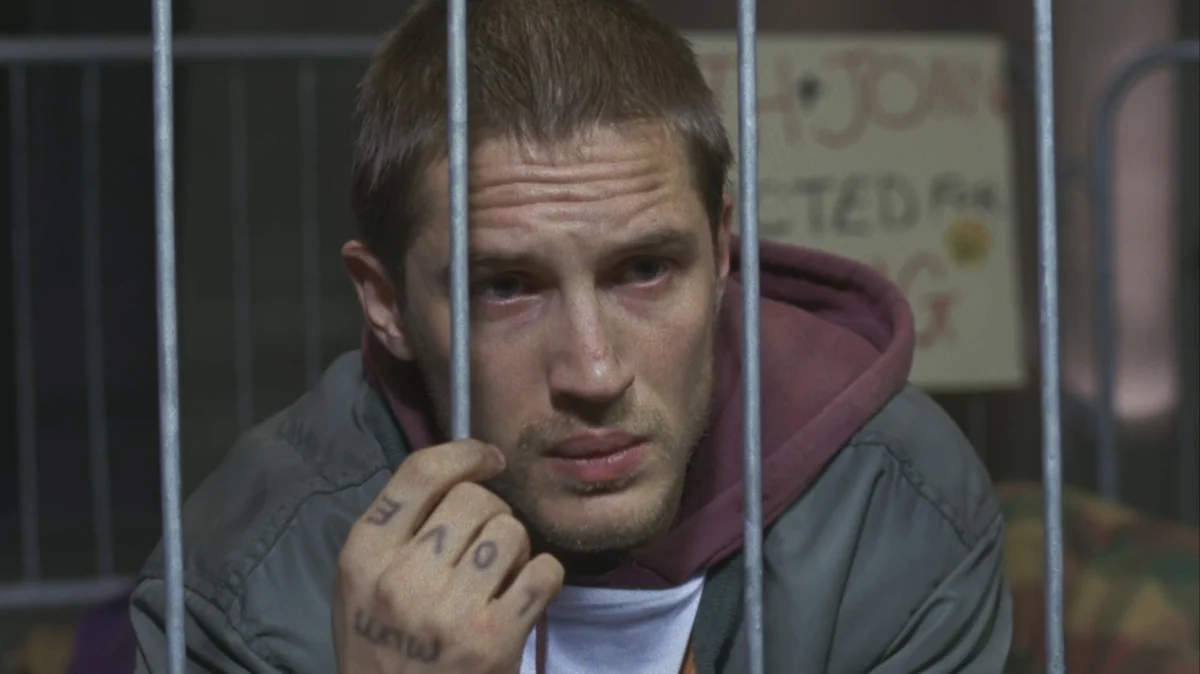
In the contemporary cinematic landscape, the names Tom Hardy and Benedict Cumberbatch carry the weight of global superstardom. One is the chameleonic force behind Bronson, Mad Max: Fury Road, and Venom; the other is the intellectual heavyweight of Sherlock, The Imitation Game, and the Marvel Cinematic Universe’s Doctor Strange. However, three years before Cumberbatch donned the deerstalker and five years before Hardy broke Batman’s back as Bane, the two shared the screen in a gritty, heart-wrenching BBC/HBO co-production that remains one of the most significant yet under-seen entries in their respective filmographies.
Stuart: A Life Backwards (2007) is more than just a curiosity for fans of its leading men. It is a profound exploration of trauma, social exclusion, and the redemptive power of an unlikely friendship. Directed by David Attwood and adapted from Alexander Masters’ award-winning biography, the film serves as a visceral time capsule of two masters-in-the-making honing their craft through a narrative that refuses to offer easy answers.
Main Facts: A Collaboration of Giants in the Making
Released in September 2007, Stuart: A Life Backwards is a television film that tells the true story of Stuart Clive Shorter (Hardy), a homeless alcoholic with a violent past, and his friendship with Alexander Masters (Cumberbatch), a writer and academic who seeks to document Stuart’s life. The film was produced by Neal Street Productions—the firm co-founded by Academy Award-winner Sam Mendes—marking their first major foray into television drama.
The production was a rare collaboration between the British Broadcasting Corporation (BBC) and the American premium cable giant HBO. This partnership ensured that while the film maintained a distinctly British grit and localized setting (primarily Cambridge), it possessed the high-end production values and international reach characteristic of HBO’s "Golden Age" of television.
At its core, the film is a character study. It bypasses the tropes of the "inspirational" biopic, opting instead for a raw, often uncomfortable look at the devastating effects of childhood abuse, muscular dystrophy, and the failures of the British social care system. It earned Tom Hardy a BAFTA nomination for Best Actor, a nod that many critics now view as the definitive moment the industry realized his potential as a leading man of immense psychological depth.
Chronology: The Narrative and Career Timelines
The "Backwards" Structure
The film’s title and structure are derived from a suggestion made by the real Stuart Shorter. When Alexander Masters began writing the biography, Stuart reviewed the early drafts and found them conventional. He famously told Masters to "write it backwards," suggesting that the story should function like a "Tom Clancy murder mystery."
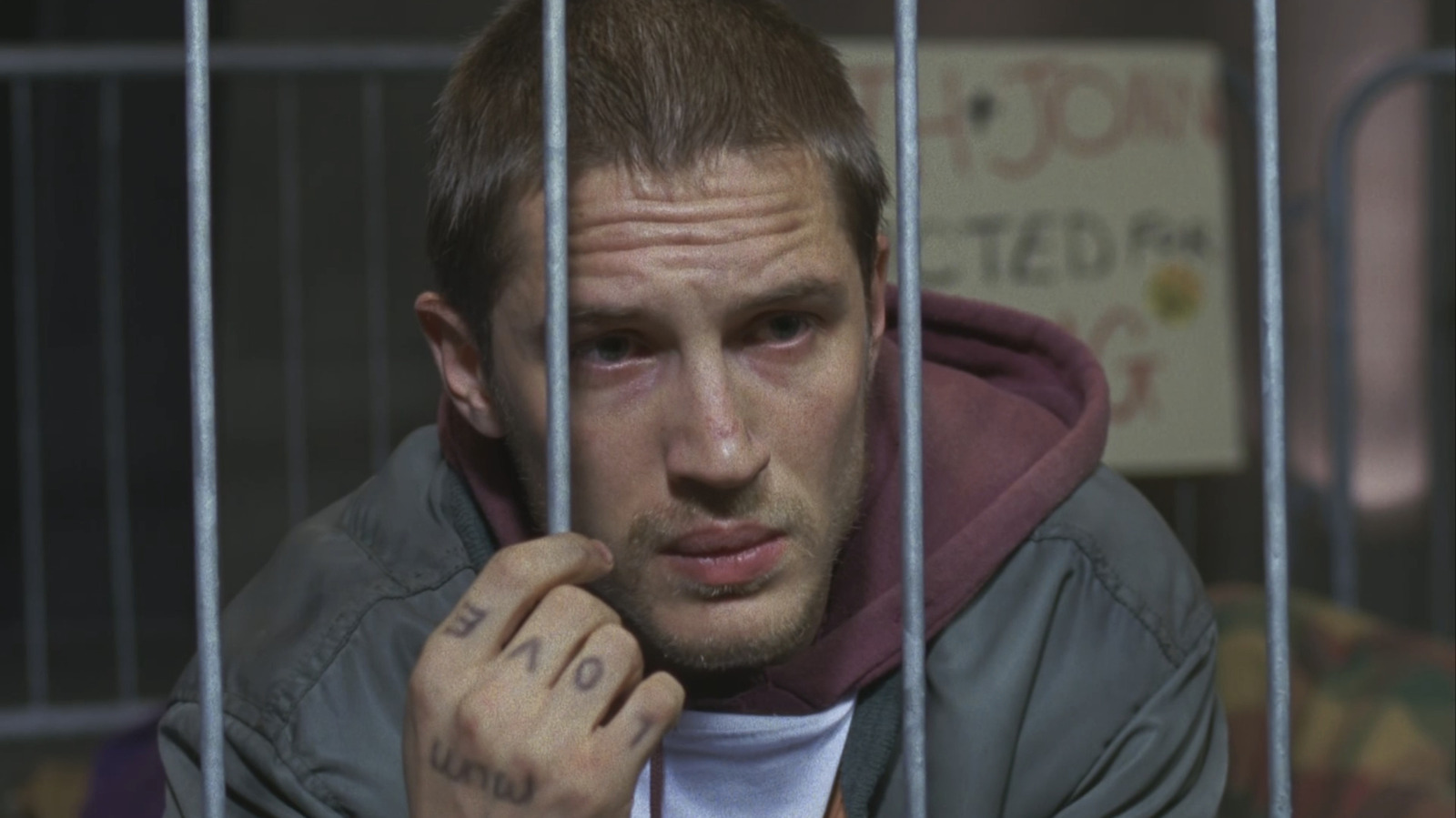
The narrative begins in the present (the early 2000s), introducing Stuart as a chaotic, twitching, yet oddly charismatic man living on the fringes of Cambridge society. From there, the film peels back the layers of his life in reverse chronological order:
- The Activist Years: Stuart’s involvement in the campaign to release Ruth Wyner and John Brock, two charity workers imprisoned for the drug-related activities of the homeless people they served.
- The Cycle of Incarceration: His adult life spent drifting between prison, the streets, and psychiatric wards.
- The Turning Point: The discovery of the traumatic events of his adolescence and childhood that "murdered" the boy he once was.
- The Origin: The realization that Stuart was born with a form of muscular dystrophy, which, combined with systemic abuse, set him on a path of near-inevitable destruction.
Career Context for the Leads
To understand the significance of this film, one must look at where Hardy and Cumberbatch stood in 2007.
Tom Hardy was 30 years old and, despite a notable role in Star Trek: Nemesis (2002), was struggling to find his footing in Hollywood. He had recently appeared in the indie thriller Dot the I and was beginning to experiment with the physical transformations and vocal tics that would later become his trademark. His portrayal of Stuart—incorporating the physical limitations of muscular dystrophy and a slurred, high-pitched vocal delivery—was a precursor to the transformative work he would later do in Bronson (2008).
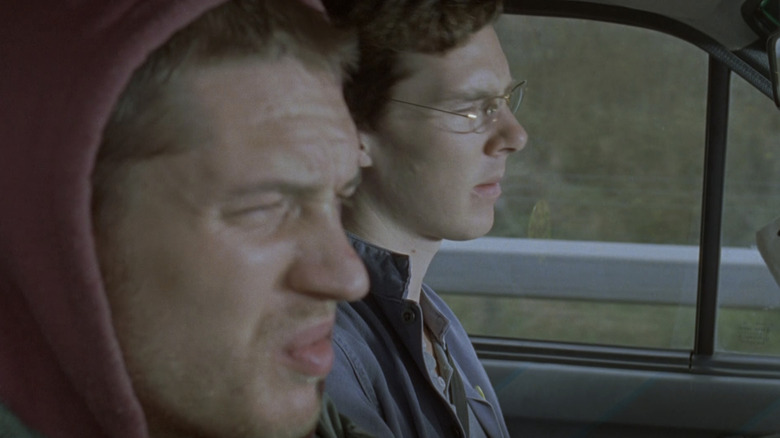
Benedict Cumberbatch, 31, was already a respected stage and television actor, having earned acclaim for playing Stephen Hawking in the 2004 TV movie Hawking. However, he was still years away from the "Cumberbatch-mania" that would follow Sherlock (2010). In Stuart: A Life Backwards, he plays the "straight man," the audience surrogate whose posh, academic background contrasts sharply with Stuart’s lived reality. This dynamic would be revisited in 2011 when the two actors reunited for the Cold War thriller Tinker Tailor Soldier Spy.
Supporting Data: Critical Reception and Literary Success
The film was adapted from Alexander Masters’ 2005 book, which was a literary sensation in the United Kingdom. The biography won the Guardian First Book Award and the Hawthornden Prize, and was shortlisted for the Samuel Johnson Prize (now the Baillie Gifford Prize).
Key Data Points:
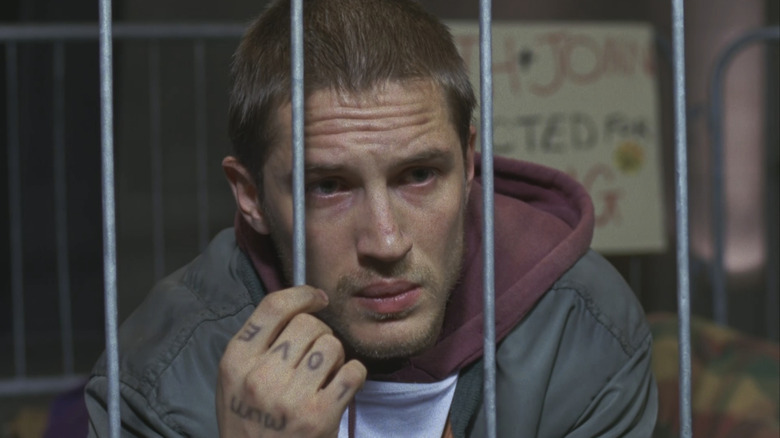
- Hardy’s Transformation: Hardy reportedly spent a significant amount of time with the real Alexander Masters and Stuart’s family to perfect the mannerisms associated with Stuart’s condition and personality.
- Awards: In addition to Hardy’s BAFTA nomination, the film received critical praise for David Attwood’s direction. Attwood had previously worked with Cumberbatch on the miniseries To the Ends of the Earth.
- Educational Impact: Following its broadcast, Neal Street Productions noted that the film was utilized by schools, colleges, and homeless charities as a tool for empathy and understanding regarding the "socially excluded."
Despite the acclaim, the book and film were not without controversy. The Washington Post’s Carolyn See critiqued a passage in the book where Masters invited Stuart to a retreat to be "judged" by his well-to-do friends, questioning the ethics of the author-subject relationship. However, the film mitigates some of this discomfort by focusing on the genuine, albeit volatile, bond between the two men.
Official Responses and Personal Insights
The legacy of Stuart: A Life Backwards is deeply tied to the real-life family of Stuart Shorter. In a 2006 interview with The Guardian, Stuart’s sister, Zoe, reflected on the impact of the book and the subsequent film. She noted that Stuart’s suggestion to write the story "backwards" was a way for him to reclaim his narrative—to show that he wasn’t just a "homeless man," but a person who had been systematically dismantled by his environment.
Alexander Masters himself has spoken at length about the complexity of his subject. He described Stuart as "the most complicated man I ever met." The film captures this by refusing to sentimentalize him. Stuart is shown as someone capable of great kindness and activism, but also someone capable of terrifying violence and self-destruction.
The BBC and HBO’s official stance on the project emphasized its role as a "socially conscious drama." By airing it on major networks, they brought the issue of the "unseen" homeless population into the living rooms of millions, challenging the stigma associated with mental health and addiction.
Implications: The Enduring Relevance of Stuart’s Story
The implications of Stuart: A Life Backwards extend far beyond its role as a launchpad for two A-list actors. It remains a staggering indictment of how society treats its most vulnerable members.
1. Representation of Disability and Mental Health
The film is a masterclass in representing the intersection of physical disability (muscular dystrophy) and mental health (Borderline Personality Disorder). It avoids the "poverty porn" trap by giving Stuart agency and a wicked sense of humor. Hardy’s performance, in particular, highlights the exhaustion of living in a body and mind that are constantly at war with themselves.
2. The Ethics of Biography
The film raises important questions about who has the right to tell a story. Through Cumberbatch’s portrayal of Masters, we see the internal struggle of a writer trying to do justice to a life that he cannot fully comprehend. It serves as a meta-commentary on the act of storytelling itself, acknowledging that any biography is, at best, an approximation of a human soul.
3. The Tragic Reality of the Cycle
The real Stuart Shorter died in 2002, hit by a train near his home village of Waterbeach. While the coroner’s report was inclusive regarding whether it was an accident or suicide, the film treats his death as the final, inevitable chapter of a life defined by "too much weight." His death serves as a somber reminder that for many people like Stuart, the "system" does not provide a safety net, but a sieve.
4. A Template for Future Actors
For aspiring actors, Stuart: A Life Backwards is a textbook example of "character acting" within a leading role. Hardy’s work here influenced a generation of performers to seek out the "weirdness" in their characters, proving that specificity in voice and movement can create a more universal emotional resonance than traditional "heroic" acting.
Conclusion
Stuart: A Life Backwards is a rare gem in the history of 21st-century television. It captures two of the world’s greatest actors at a pivotal moment in their development, working on a project of immense social and emotional weight. For viewers today, it offers a chance to see Tom Hardy and Benedict Cumberbatch stripped of their blockbuster armor, delivering raw, vulnerable performances that stay with the audience long after the credits roll.
As the film continues to stream on platforms like HBO Max (Max), it invites a new generation of viewers to look backward at a life that society tried to forget, ensuring that Stuart Shorter’s voice—and the voices of those like him—continues to be heard. It is a haunting, beautiful, and essential piece of cinema that proves the most powerful stories are often found in the places we are most afraid to look.