The Temporal Paradox of Samuel Clemens: How Mark Twain Became the First Human to Meet a Klingon
In the expansive tapestry of Star Trek lore, "First Contact" is more than just a historical event; it is the foundational myth of a utopian future. Officially, the history books of the United Federation of Planets record April 5, 2063, as the day humanity’s destiny shifted forever. On that day, Zefram Cochrane’s warp flight attracted the attention of a passing Vulcan survey ship, ending human isolation in the cosmos. However, as any seasoned temporal investigator in Starfleet would attest, the timeline is rarely a straight line.
While the "official" first meeting between humans and Klingons occurred in the year 2151, a closer examination of the chronological records reveals a startling anomaly. Due to the complexities of temporal mechanics, the legendary American satirist Mark Twain—born Samuel Langhorne Clemens—holds the distinction of being the first human, by birth date, to ever come face-to-face with a Klingon warrior. This encounter, depicted in the celebrated Star Trek: The Next Generation two-part episode "Time’s Arrow," serves as a profound intersection between 19th-century skepticism and 24th-century idealism.
The Official Record: A Brief History of First Contacts
To understand the significance of Mark Twain’s encounter, one must first establish the baseline of the Star Trek timeline. For decades, fans operated under the assumption that humanity remained blissfully—or perhaps ignorantly—unaware of extraterrestrial life until the mid-21st century.
The Vulcan Initiative (2063)
The cinematic event Star Trek: First Contact solidified the 2063 date. Following the devastation of World War III, humanity was fractured and cynical. Cochrane’s successful warp jump signaled to the Vulcans that Earth was ready for induction into the galactic community. This meeting is credited with ending poverty, disease, and war on Earth within a single generation.
The Klingon Incident (2151)
In the pilot episode of Star Trek: Enterprise, titled "Broken Bow," the "official" first contact with the Klingon Empire takes place. A Klingon courier named Klaang crashes in a cornfield in Oklahoma while being pursued by the Suliban. This event serves as the catalyst for the launch of the first Enterprise (NX-01) under Captain Jonathan Archer. Prior to 2151, the Klingon Empire was a mystery to Earth’s fledgling space programs.
The Anomalies
Despite these official dates, various episodes have revealed "shadow" first contacts. In the Enterprise episode "Carbon Creek," it is revealed that a Vulcan crew lived secretly in a small Pennsylvania town in 1957. In The Original Series episode "The City on the Edge of Forever," Spock and Captain Kirk visit 1930s New York, though they remain incognito. However, none of these instances involved a 19th-century human being transported to the future to witness the full diversity of the Federation.
Chronology of "Time’s Arrow": A 500-Year Mystery
The narrative of Mark Twain’s involvement begins in the 24th century with a macabre discovery. During an excavation of a cavern system beneath San Francisco, Federation scientists find the severed head of the android Lieutenant Commander Data. Forensic analysis reveals the head has been buried for nearly five centuries, dating back to the late 1800s.
This discovery triggers a predestination paradox. Data, acknowledging the inevitability of his own timeline, joins the crew in investigating a group of shapeshifting aliens known as Devidians. These entities have been traveling back to 1893 San Francisco to consume the "neural energy" (souls) of humans, disguised as a cholera outbreak.
When Data is accidentally pulled through a temporal portal to 1893, he attempts to blend in by entering a poker game and eventually masquerading as a high-society gentleman. It is here that he encounters two pivotal figures: a younger version of the long-lived El-Aurian, Guinan, and the inquisitive, cigar-chomping Samuel Clemens.
The Skeptic in the 24th Century: Supporting Data on Twain’s Journey
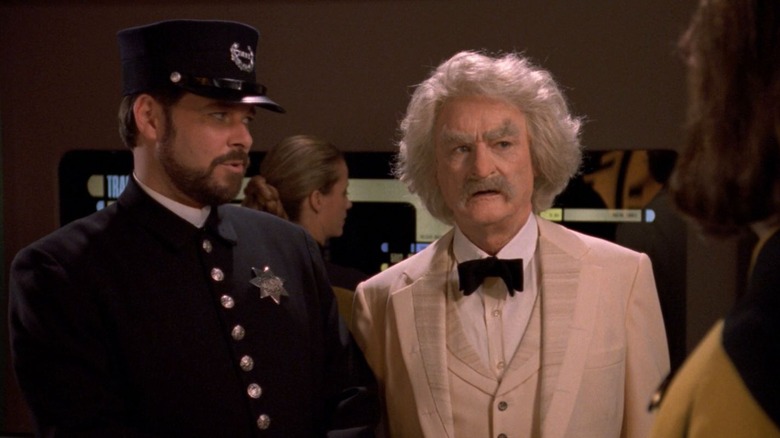
Samuel Clemens, portrayed with iconic vigor by actor Jerry Hardin, is introduced not as a whimsical cameo, but as a formidable intellectual antagonist. True to his historical persona, the Star Trek version of Twain is deeply suspicious of authority and technological "magic."
The Investigative Journalist
Twain becomes convinced that Data and Guinan are part of a sinister conspiracy. He spies on their meetings, eventually discovering their futuristic technology. His motivation is rooted in his 19th-century worldview: he believes that any sufficiently advanced group must be hiding a scheme to exploit the common man.
The Leap of Faith
In the climax of the episode, as the Enterprise-D crew (who have traveled back to rescue Data) prepares to return to their own time through the Devidian portal, Twain follows them. Driven by a mix of journalistic curiosity and a desire to protect his era from "future invaders," he leaps through the rift and emerges on the USS Enterprise-D in the year 2368.
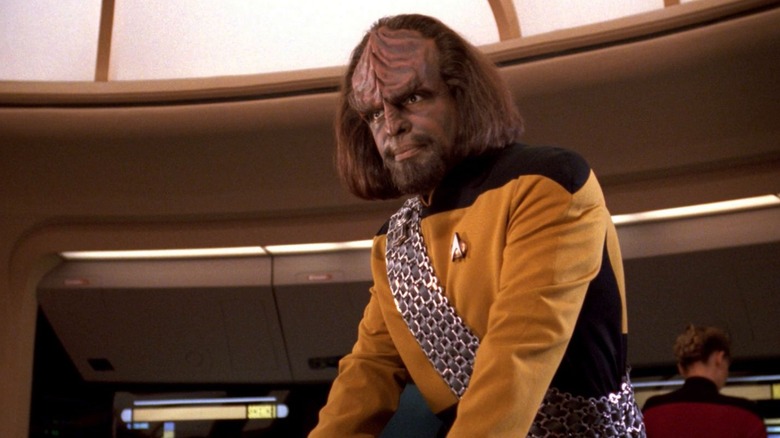
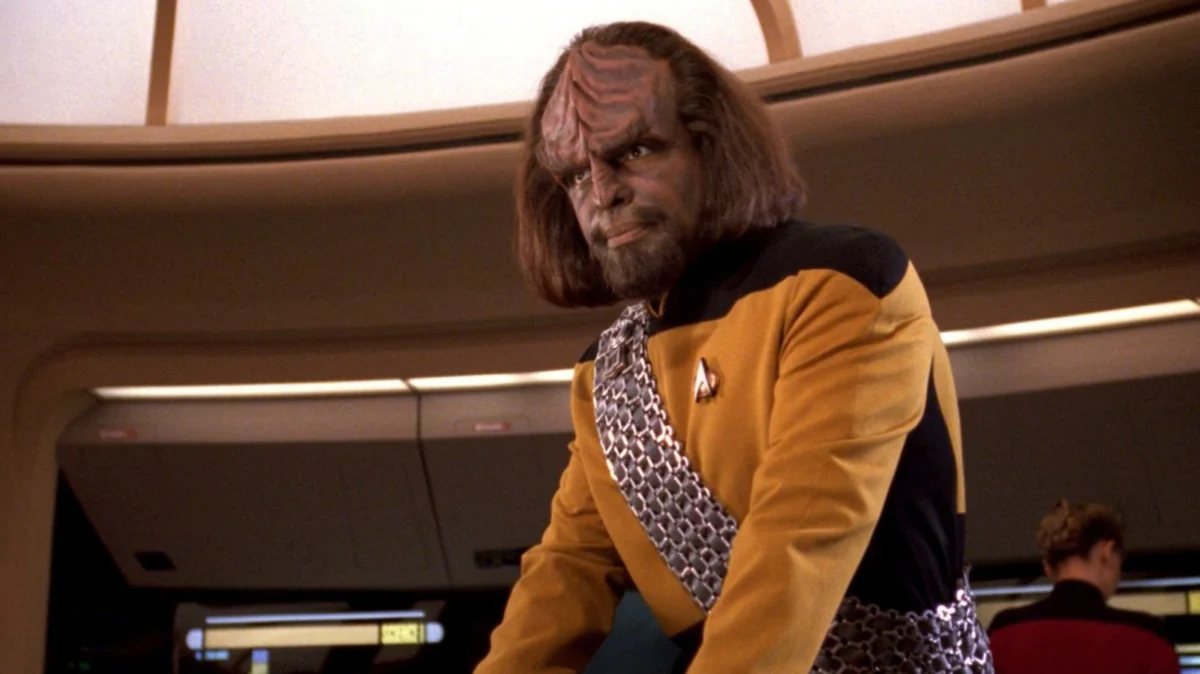
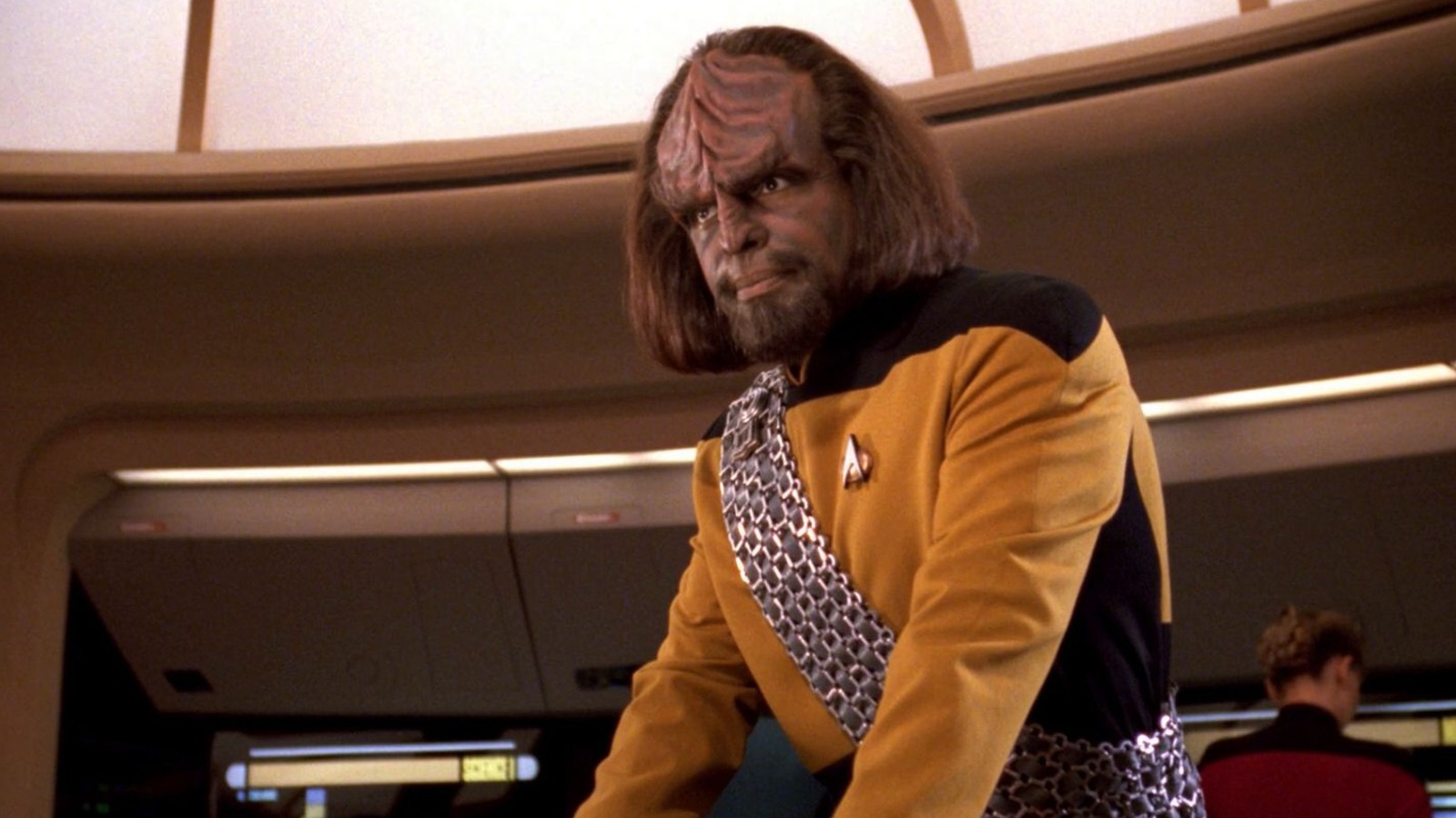
It is at this moment that the chronological "First Contact" occurs. As Twain wanders the corridors of the Galaxy-class starship, he encounters Lieutenant Worf. Standing over six feet tall, with a prominent cranial ridge and a sash of Klingon honor, Worf represents everything the 19th-century mind would find "alien." Twain’s reaction is one of stunned silence. Worf, with characteristic brevity, simply states, "I am Klingon."
Because Twain was born in 1835, his interaction with Worf in 2368—before he was returned to his proper place in 1893—technically makes him the earliest-born human in history to meet a member of the Klingon species.
Official Responses: The Philosophy Behind the Character
The decision to include Mark Twain in The Next Generation was a deliberate creative choice by the show’s writers, including Joe Menosky and Jeri Taylor. The goal was to provide a "fish out of water" perspective that challenged the perceived perfection of the 24th century.
Challenging the Utopia
In a pivotal scene, Twain is comforted by Counselor Deanna Troi. He expresses his fear that the Enterprise is a vessel of conquest. He tells her, "I come from a time when men achieve power and wealth by standing on the backs of the poor… where prejudice and intolerance are commonplace and power is an end unto itself."
Troi’s response—that poverty and greed have been eliminated—serves as the ultimate "official response" of the Star Trek universe to its critics. By using Twain, a man known for his cynical take on human nature, the showrunners validated the Federation’s ideals. If the man who wrote The Gilded Age could be convinced that humanity had finally grown up, then the audience could believe it too.
Casting the Legend
Jerry Hardin’s portrayal was so well-received that it became the definitive version of the author for a generation of sci-fi fans. Hardin, who had previously appeared in TNG as the character Radue, captured Twain’s cadence and wit, making the character’s transition from a suspicious antagonist to an inspired ally feel earned.
Implications: Why the Twain Encounter Matters
The encounter between Mark Twain and the Klingon Worf is more than a trivia fact for Trekkies; it has significant thematic implications for the franchise.
1. The Validation of Human Progress
Twain represents the "Old World"—a time of coal, steam, and social stratification. By placing him on the Enterprise, the writers used him as a proxy for the viewer. His eventual acceptance of the crew’s altruism suggests that the path from the 19th century to the 24th is one of genuine moral evolution, not just technological advancement.
2. Temporal Mechanics and Lore Consistency
The episode reinforces the idea that the Star Trek timeline is "self-healing." Despite Twain’s knowledge of the future, he returns to 1893 and lives out his life as history intended. His experiences in the future may have subtly influenced his later writings, adding a layer of meta-fiction to his real-world bibliography. In the Star Trek universe, perhaps Twain’s later fascination with science and technology was fueled by the memory of a golden-eyed android and a warrior with a ridged forehead.
3. Redefining "First Contact"
The story challenges the notion of "First Contact" as a singular, monolithic event. It suggests that the universe is far more interconnected than history books suggest. While the masses of Earth needed the 2063 event to change their society, individuals like Samuel Clemens were capable of navigating the shock of the alien much earlier, provided they were met with the patience and diplomacy of Starfleet’s finest.
Conclusion
When Samuel Clemens returned to 1893, he left behind his pocket watch—a relic found by Data in the 24th century, completing the temporal loop. But he took back something far more valuable: the knowledge that humanity would not only survive its "adolescence" but would eventually thrive among the stars alongside species as formidable as the Klingons.
In the final analysis, Mark Twain’s status as the first human to meet a Klingon is a testament to the enduring spirit of Star Trek. It bridges the gap between our historical past and our fictional future, suggesting that the curiosity of a 19th-century writer is the same fire that drives a 24th-century explorer. As Twain himself might have observed, history doesn’t repeat itself, but in the case of Star Trek, it certainly rhymes.