Unveiling the Blasphemous Chronicle: The Scroll of the Forgotten Worm
Ptolus, Imperial City – In a discovery that has sent ripples of dread through esoteric academic circles and religious institutions alike, a horrifying artifact – a scroll meticulously fashioned from human skin and stitched into a Möbius strip – has been unearthed. This grotesque document, now dubbed "The Scroll of the Forgotten Worm," purports to be a foundational text of a long-dormant, profoundly malevolent cult known as the Followers of the Forgotten Worm. Its contents detail a history of cosmic horror, forbidden rites, and terrifying prophecies that challenge the very fabric of known reality.
The scroll’s unsettling physical form mirrors its cyclical, blasphemous narrative, with its end seamlessly merging into its beginning. Linguistic and arcane scholars who have cautiously examined the artifact report that it chronicles the worship of a cosmic entity referred to variously as "The Worm of the Void," "The One Who is of Many Doors," and "The Mouth of the Void." The cult’s philosophy, steeped in the "truth of annihilation" and "truth of blood," describes a dark path to "wisdom" achieved through grotesque physical and spiritual transformation.
A Relic of Horrific Craftsmanship
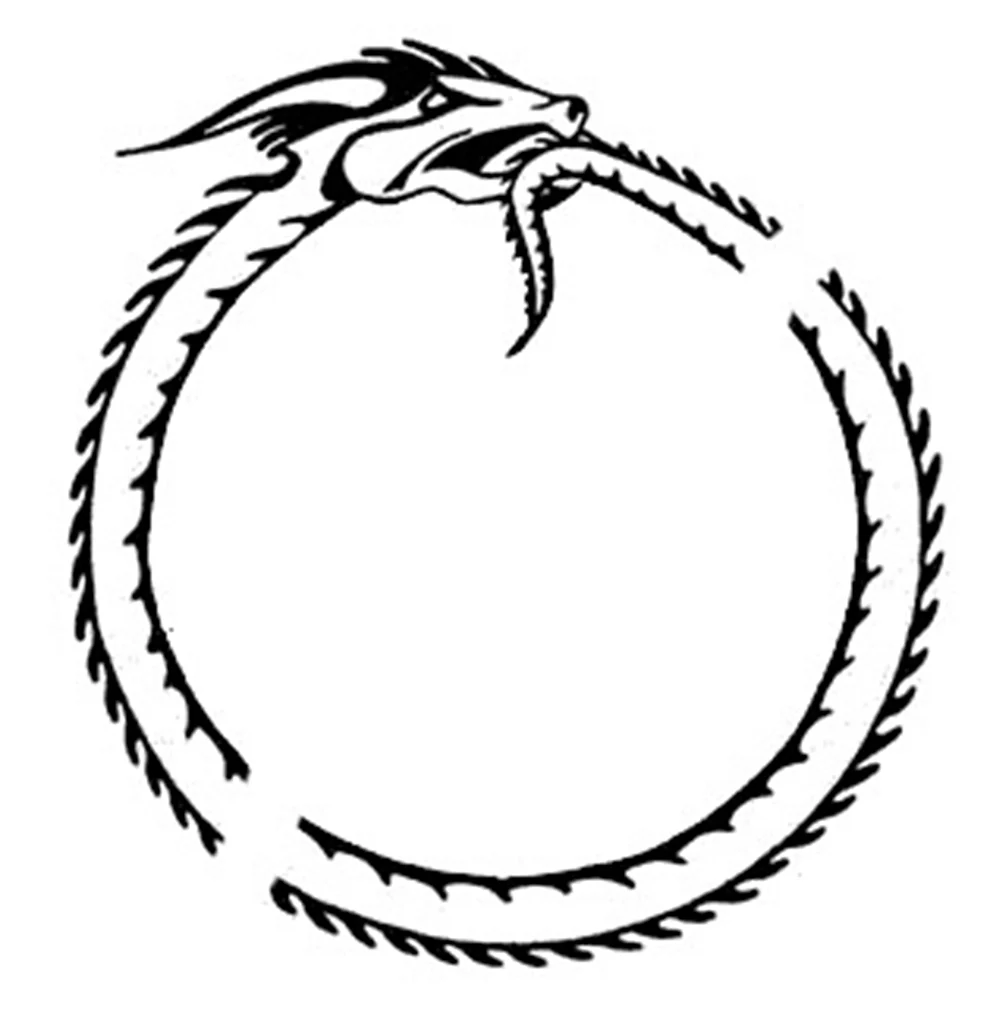
The artifact itself is a testament to the cult’s depravity. Measuring approximately two meters in length when unrolled and about thirty centimeters in width, the scroll is composed of numerous strips of human dermis, meticulously tanned, treated, and then stitched together with a dark, sinewy thread that some speculate may also be of organic origin. The skin, remarkably preserved, bears a pallid, parchment-like hue, marred in places by faint, reddish-brown stains that defy conventional identification. Its most disturbing feature is its construction: a seamless Möbius strip, designed to have no true beginning or end, perfectly encapsulating the cult’s cyclical prophecies and the eternal nature of their dread deity.
The script, etched into the skin with what appears to be a sharpened bone stylus and an ink made from a viscous, metallic-smelling fluid, is an archaic, serpentine form of the Old Tongue, intermingled with ideograms and sigils of unknown, unsettling provenance. Dr. Aris Thorne, a leading xenolinguist and historical occultist at the Imperial University of Ptolus, described the script as "both mesmerizing and profoundly disturbing, imbued with a palpable sense of alien consciousness." He noted that the very act of reading the scroll evoked a subtle, disorienting unease, a sensation corroborated by several other researchers. "The language itself," Dr. Thorne posited, "seems designed not merely to convey information, but to subtly warp the reader’s perception, aligning it with the cult’s horrific worldview."
The Whispers of Annihilation: Core Tenets
At the heart of the Followers of the Forgotten Worm’s doctrine lies a chilling acceptance, even embrace, of annihilation. The scroll proclaims:
“In the days before the Slumber, the One Who is of Many Doors came unto those who saw the truth of annihilation. And they who drank of the Truth of Blood reached through the Mouth of the Void and grasped the Worm of Which There is One and Many, and drew it forth from that place unto this. And in that birth-death of separation-completion, the arc of wisdom leapt.”
This passage, repeated with variations throughout the scroll, reveals the cult’s central practice: the physical extraction and subsequent grafting of entities referred to as "worms" from a dimensional rift known as "the Mouth of the Void." These "worms" are not biological organisms in the conventional sense, but rather parasitic, sentient extensions of their cosmic progenitor, the Worm of the Void. The act of "drinking of the Truth of Blood" is interpreted by scholars as a ritualistic sacrifice, a communion that prepares the initiate for the ultimate transformation.
The ultimate goal of this grotesque communion was to achieve a state of "wisdom," which the text clarifies as becoming "one with wisdom and one with the Mouth." The consequence of this horrific enlightenment is explicitly stated: "Their hearts were as the hearts of demons." This transformation, both spiritual and presumably physical, was not merely an individual pursuit but a societal one, aimed at bringing entire populaces under the thrall of the Forgotten Worm.
A Dark Chronology: Rise, Slumber, and Decline
The Scroll of the Forgotten Worm offers a unique, albeit terrifying, historical perspective, delineating the cult’s trajectory through distinct epochs: the period "before the Slumber," the enigmatic "Slumber" itself, and the subsequent era of decline.
Before the Slumber: Ascendancy of the Cult
According to the scroll, the cult experienced a period of formidable growth and influence in an era preceding a mysterious event referred to as "the Slumber." During this time, the Followers of the Forgotten Worm were not merely a fringe sect but a dominant force, spreading their doctrines and practices with alarming efficacy. The text boasts of a time when "entire cities were enthralled to wisdom," suggesting a widespread acceptance, or perhaps imposition, of their horrific beliefs.
Archaeological fragments and obscure historical footnotes, primarily from the archives of the ancient Sorcerers’ Collegium, hint at isolated incidents of mass societal collapse and strange epidemics of psychic contagion in forgotten civilizations. While direct links have been tenuous until now, the discovery of this scroll offers a chilling new context. It paints a picture of cultists actively recruiting and converting, performing the "grafting" rituals on a massive scale, thereby creating a populace whose hearts were indeed "as the hearts of demons." The "wisdom" they propagated was a shared consciousness, a hive-mind perhaps, directly connected to the Worm of the Void, eroding individual will and replacing it with a collective, annihilistic fervor. This period, before the cosmic disruption, represents the apex of the cult’s power, a time when their alien god held direct and potent sway over mortal realms.
The Enigmatic Slumber and Its Aftermath
The scroll then speaks of a cataclysmic turning point: "the Slumber." The nature of this event is shrouded in ambiguity, but its consequences are clear. After the Slumber, "it apparently became more difficult to gain access to the Mouth of the Void." This suggests a significant cosmic or planar shift, perhaps a withdrawal of the Worm’s direct influence, or a disruption of the veil between dimensions. Speculation among arcane scholars ranges from a localized magical cataclysm to a broader cosmic realignment, or even a deliberate act by a rival divine or primordial entity.
Regardless of its cause, the Slumber severed the cult’s primary conduit to their deity, rendering the essential "worms" scarce. The scroll dedicates lengthy, desperate passages to the cultists’ subsequent attempts at "care and breeding of the Worms that remained." These efforts, however, are described as "difficult or even impossible." The failure to replenish their primary means of conversion and transformation proved catastrophic. Without a steady supply of these parasitic extensions, the cult’s power waned, its grip on the "enthralled cities" loosened, and its hierarchical structure crumbled. This period marked the rapid decline of the Followers, leading to the eventual overthrow of their once-dominant cities. The former thralls, perhaps freed from the Worm’s influence or consumed by its absence, turned upon their former masters, shattering their dominion.
The Fractured Remnants
In the present day, the Scroll of the Forgotten Worm indicates that the cult exists only in "small sects." These scattered remnants are speculated to "perhaps prospering among the jungle isles of the southern Teeth of Light." This geographical detail, though vague, aligns with known historical records of reclusive, aberrant societies inhabiting remote and untamed regions, often shielded by natural barriers and forgotten by mainstream civilization.
Despite their diminished numbers and the apparent withdrawal of the Mouth from this plane, the scroll insists that "contact with him does not seem wholly impossible." The text provides a cryptic explanation for this enduring connection: "As he is beyond time, beyond beginning, beyond ending – so like a fractured mirror which is yet whole can he be seen beyond the borders of the possible." This suggests that the Worm of the Void exists outside conventional spatio-temporal constraints, making it accessible through esoteric means even when its physical manifestations are absent. The scroll refers to a specific ritual designed for this purpose: the "Shadow Harbinging," though regrettably, its intricate details are not elaborated upon within the discovered text.
Supporting Lore: The Worm, The Mouth, and Forbidden Rites
To fully grasp the magnitude of this discovery, it is essential to delve deeper into the nature of the cult’s deity and their abhorrent practices.
The Cosmic Entity: One Who is of Many Doors
The Worm of the Void, also identified as Dhar Rhyth in certain obscure texts (such as Chaositech), is not merely a monstrous beast but a primordial cosmic force. Its epithets, "The One Who is of Many Doors" and "The Mouth of the Void," hint at its role as a nexus point between dimensions, a gateway to annihilation. Scholars like Professor Elara Vance, an expert in planar metaphysics at the Ptolus Academy of Arcane Arts, interpret "Many Doors" as signifying its multi-dimensional nature, existing simultaneously across countless realities, or perhaps acting as a conduit to them. "The Mouth of the Void," therefore, isn’t just a metaphor for consumption, but a literal point of ingress and egress for its parasitic extensions, and potentially for more profound, reality-shattering entities.
The description of the Worm as "beyond time, beyond beginning, beyond ending" aligns with the understanding of true cosmic horrors – entities whose existence predates and transcends mortal comprehension of causality. Its presence, even when unseen, can warp reality. The scroll states:
“So he serves as the stalking herald of the Shadow That Never Passes. And those who are touched by his wisdom are blessed by that which is seldom seen in the light of darkened days.”
This chilling declaration positions the Worm not as an ultimate destroyer, but as a precursor, an advance guard for an even greater, unnamed "Shadow That Never Passes." This suggests a hierarchical structure of cosmic dread, with the Worm as a terrifying, yet subservient, harbinger.
The Abominable Graft: Transformation and Control
The act of grafting the "worms" from the Mouth of the Void onto themselves and others was the cornerstone of the cult’s power. While the scroll is vague on the precise anatomical location of these grafts, historical parallels with other chaos cults suggest it might involve the heart, the brain, or major nerve clusters. The process was likely excruciating, involving arcane surgery and dark rituals. The immediate effect was the establishment of a psychic link to the Worm, granting the initiate "wisdom" – a shared, collective consciousness that erased individuality and implanted the nihilistic tenets of their god.
The statement "Their hearts were as the hearts of demons" is not mere poetic flourish. It implies a profound physiological and spiritual alteration. This could manifest as heightened resilience to pain, an absence of empathy, an insatiable hunger for destruction, or even literal changes in the cultists’ internal anatomy, making them monstrous vessels for their deity’s will. The "enthralled cities" were not merely coerced; their citizens were fundamentally altered, their collective will subsumed into the horrific agenda of the Worm. This transformation allowed the cult to maintain absolute control, transforming entire populations into extensions of the Worm’s own consciousness.
The Shadow Harbinging: Reaching Beyond the Possible
The existence of the "Shadow Harbinging" ritual is a particularly ominous detail. It implies that even without direct access to the Mouth of the Void, the cult has developed a means to commune with their cosmic patron. The phrase "beyond the borders of the possible" strongly suggests that this ritual might involve extreme forms of psychic projection, planar traversal, or even temporary ruptures in reality. Given the Worm’s nature as "beyond time," the Shadow Harbinging might allow cultists to glimpse or interact with their deity across temporal or dimensional barriers, drawing fragmented insights or even fleeting, intangible influences from it. The absence of details regarding this rite is a cause for grave concern, as it represents a potential pathway for the cult to regain some semblance of its former power, even in its current diminished state.
Scholarly and Ecclesiastical Responses
The unearthing of the Scroll of the Forgotten Worm has provoked a range of reactions, from scholarly fascination to profound religious alarm.
Historical Context and Linguistic Analysis
Dr. Aris Thorne, who led the initial translation efforts, emphasized the scroll’s immense value as a primary source for understanding ancient, aberrant cults. "This isn’t just a fantasy," Dr. Thorne stated in a recent press conference, "it’s a chilling historical document detailing the rise and fall of a terrifyingly effective organization. The linguistic intricacies, the fusion of esoteric symbols with common archaic script, suggest a sophisticated, albeit malevolent, intellectual tradition. It forces us to re-evaluate our understanding of societal decay and the insidious power of radical belief systems." He also noted the striking parallels between the "Worm of the Void" and various entities described in other forbidden texts, particularly those categorized under "Chaositech" lore, confirming the entity’s identification with Dhar Rhyth, a known cosmic horror.
Professor Vance added, "The cyclical nature of the scroll, the way its end feeds into its beginning, is not just a clever literary device. It reflects the cult’s core belief in an eternal, inescapable cycle of annihilation and rebirth, not as renewal, but as a continuous unfolding of cosmic horror. It’s a closed loop of terror, designed to psychologically entrap the reader as much as to inform them."
Theological Condemnation and Warnings
The discovery has been met with unequivocal condemnation from mainstream religious authorities. Grand Inquisitor Seraphina Vane of the Holy Church of Ptolus issued a stern decree, denouncing the Followers of the Forgotten Worm as "heretics of the most vile order, whose doctrines represent an affront to all life and divine creation." She urged the faithful to remain vigilant against any whispers of such a cult, emphasizing the importance of spiritual fortitude. "The ‘wisdom’ offered by this ‘Worm’ is a poison, a spiritual plague that seeks to corrupt the soul and turn hearts to demonic emptiness," Inquisitor Vane proclaimed. "We must stand firm against such cosmic nihilism, for it promises only destruction and the erasure of all that is sacred." The Church has initiated efforts to cross-reference the scroll’s contents with its own extensive archives of forbidden lore, hoping to identify any historical instances or potential resurgence points of the cult.
Magical Theory and Dimensional Threats
From an arcane perspective, the scroll presents a terrifying case study in planar instability and parasitic metaphysics. Professor Vance explained, "The ‘Mouth of the Void’ isn’t just a metaphor for a gate; it’s likely a localized thinning of the dimensional fabric, a point where the boundaries between our reality and the primordial chaos are blurred. The Worm, Dhar Rhyth, exploits these vulnerabilities. Its ‘withdrawal’ during the Slumber could indicate a natural planar shift, or perhaps a successful counter-intervention by other, benevolent cosmic forces that temporarily sealed or stabilized the rift."
She further elaborated on the concept of "fractured mirror which is yet whole," suggesting it describes an entity whose true form is so vast and multi-faceted that only distorted, incomplete reflections can penetrate mortal understanding. "The ability to contact such an entity ‘beyond the borders of the possible’ implies rituals that transcend conventional summoning, perhaps involving direct mental interface with the chaotic fabric of reality itself. This is exceptionally dangerous territory, even for seasoned planar mages."
Foretelling the End: Prophecies of Unseen Stars
The scroll’s final (and initial) passages transition from historical narrative into vague, yet profoundly disturbing, prophecies of a future culminating in a cosmic convergence.
The Communion of Worlds: A Cosmic Convergence
The text speaks of "the time of greatest congregation which shall become the communion of worlds." This chilling phrase suggests a future event where disparate realities, or perhaps all sentient beings across multiple planes, will be drawn together into a singular, horrific union. This "communion" is unlikely to be one of peaceful coexistence but rather a forced amalgamation, a forced assimilation into the consciousness of the Worm, or the "Shadow That Never Passes." It implies a complete breakdown of individual and planetary boundaries, a cosmic absorption into a singular, annihilistic entity.
This prophecy aligns with the cult’s core tenet of annihilation, envisioning a state where all discrete existence dissolves into a unified, void-like consciousness under their deity’s influence. It represents the ultimate triumph of the Worm, transforming the multiverse into a single, dark reflection of its own being.
The Obscured Sun and the End of All Slumbers
The climax of these prophecies is described with stark, cosmic imagery:
“So shall it be when the corona of the obscured sun shall reveal the stars which are never seen. Such shall presage the end of all slumbers.”
This passage has generated considerable discussion among arcane prognosticators. "The obscured sun" could refer to a literal astronomical event, a celestial body eclipsing the sun in an unprecedented manner, or it could be a metaphor for a fundamental obscuring of universal light and hope. The "stars which are never seen" are interpreted as hidden cosmic horrors, entities from beyond the known universe, or perhaps the true, terrifying forms of the Worm’s brethren, previously veiled from mortal perception.
"The end of all slumbers" is particularly chilling. It could signify the awakening of dormant cosmic evils, the cessation of any protective forces that once kept such entities at bay, or even the end of mortal consciousness as it is understood. If "the Slumber" was a period of cosmic reprieve, then its "end" heralds a return to the Worm’s full, unhindered influence, an era of unrestrained chaos and annihilation.
Implications for the Present and Future
The discovery of the Scroll of the Forgotten Worm is not merely an archaeological curiosity; it is a stark warning.
The Persistent Threat of Resurgence
Despite their current diminished state, the very existence of small, scattered sects, coupled with the details of the "Shadow Harbinging" ritual, suggests that the Followers of the Forgotten Worm remain a latent, persistent threat. Their ability to make contact "beyond the borders of the possible" means that a physical suppression of the cult may not be enough to eradicate their influence entirely. A successful "Shadow Harbinging" could potentially re-establish a stronger connection to the Worm, leading to a resurgence of its power and the renewed ability to acquire or manifest its parasitic "worms." Should these sects coalesce or discover a more potent method of accessing the Mouth, the horrors of the "days before the Slumber" could once again threaten civilization.
Vigilance Against the Forgotten
The obscurity of the cult in modern times underscores the danger of forgetting such ancient evils. The fact that the Worm of the Void (Dhar Rhyth) is a known entity in specific esoteric lore, yet largely unknown to the broader public, highlights the gaps in collective memory and vigilance. Authorities, both mundane and arcane, are now faced with the daunting task of identifying and monitoring any potential cult activities, particularly in remote regions or among marginalized groups who might be susceptible to the promises of "wisdom" and "annihilation." The scroll serves as a stark reminder that some threats do not simply vanish; they recede into the shadows, awaiting the opportune moment to re-emerge.
A Reminder of Cosmic Horrors
Ultimately, the Scroll of the Forgotten Worm forces a confrontation with the uncomfortable truth of cosmic horrors – entities and forces that operate on scales far beyond human comprehension and often with motives antithetical to life itself. The Worm of the Void, a herald of a "Shadow That Never Passes," represents a profound existential threat, not just to individual lives or nations, but to the very concept of existence. The prophecies of "communion of worlds" and "end of all slumbers" paint a future so bleak, so devoid of light and hope, that it serves as a chilling testament to the nihilistic vision of the cult. As the scroll cyclically returns to its beginning, so too does the dread of the Forgotten Worm loom, a perpetual shadow on the periphery of consciousness, reminding all of the fragile veneer of order that overlays an abyss of primordial chaos. The task now falls to scholars, mages, and defenders of the realm to decipher these dark portents and prepare for a potential future where the stars reveal what was never meant to be seen.