Forging a New World Order: The Birth of the United Nations from the Ashes of War
Main Facts
The devastating conflagration of the Second World War (1939-1945) served as a brutal catalyst for an unprecedented global undertaking: the creation of a robust international framework designed to prevent future conflicts and foster enduring peace and cooperation. From 1941 to 1945, amidst the turmoil of the deadliest war in human history, Allied leaders convened a series of pivotal conferences. Their collective ambition was to architect a world where diplomacy superseded destruction, and shared prosperity replaced destructive rivalry. This ambitious vision culminated in the establishment of the United Nations (UN), an organization conceived as a beacon of global collaboration, alongside a suite of crucial international bodies including the International Monetary Fund (IMF), the World Bank (initially the International Bank for Reconstruction and Development, IBRD), and the International Court of Justice (ICJ). These institutions were designed to facilitate free trade, stabilize global economies, and provide critical aid for war-ravaged and developing nations. The hope was profound: that the immense suffering of the global conflict would at least yield a lasting solution for peace, fundamentally reshaping international relations.
Chronology: From Failed League to Global Forum
The road to the United Nations was paved with both idealistic aspirations and the bitter lessons of past failures, most notably those of its predecessor, the League of Nations.
The Shadow of the League of Nations
The concept of a global political body to maintain peace was not new. The first such ambitious endeavor was the League of Nations, born from the Treaty of Versailles, which formally ended the First World War (1914-1918). Driven by the progressive vision of US President Woodrow Wilson (1856-1924), the League was founded in January 1920 with the explicit aim of promoting world peace and welfare. Its Geneva headquarters served as a forum where 44 nations initially pledged to resolve international disputes peacefully. The cornerstone of its doctrine was "collective security," a revolutionary idea where an attack on one member state would trigger collective action from all others, initially through economic sanctions and, if necessary, military intervention. Beyond conflict resolution, the League also championed international cooperation in economic and social spheres, particularly in health and communications.
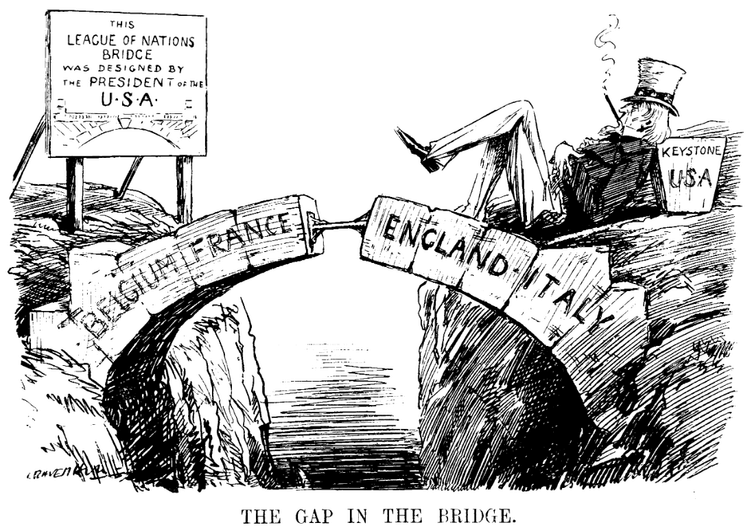
However, the League of Nations was inherently flawed. Perhaps its most critical weakness was the conspicuous absence of the United States, a consequence of the isolationist sentiment that dominated post-war US politics and led the Senate to reject ratification of the League Covenant. This deprived the organization of a crucial global power. Furthermore, the League proved woefully inadequate in responding to direct challenges to international order. Its inability to effectively counter Japan’s occupation of Manchuria in China in 1931 and Italy’s invasion of Abyssinia (modern Ethiopia) in 1935 severely eroded its credibility. These failures underscored the fragility of collective security without the commitment of all major powers and the willingness to enforce its principles. By 1939, as Europe teetered on the brink of another catastrophic war, the League had been largely marginalized, its idealistic principles overshadowed by resurgent nationalism and military aggression. Yet, the fundamental idea of a collective international body would be revived, even as the world plunged into an even greater conflict.
Laying the Foundations Amidst War (1941-1943)
As the Second World War raged, Allied leaders, notably from the US, Britain, France, and the USSR, began to coalesce around a shared understanding: that lasting peace was inextricably linked to free trade, the absence of protectionist tariffs, and robust economic and political stability. The economic nationalism and lack of international cooperation that characterized the 1930s were widely perceived as significant contributing factors to the outbreak of WWII.
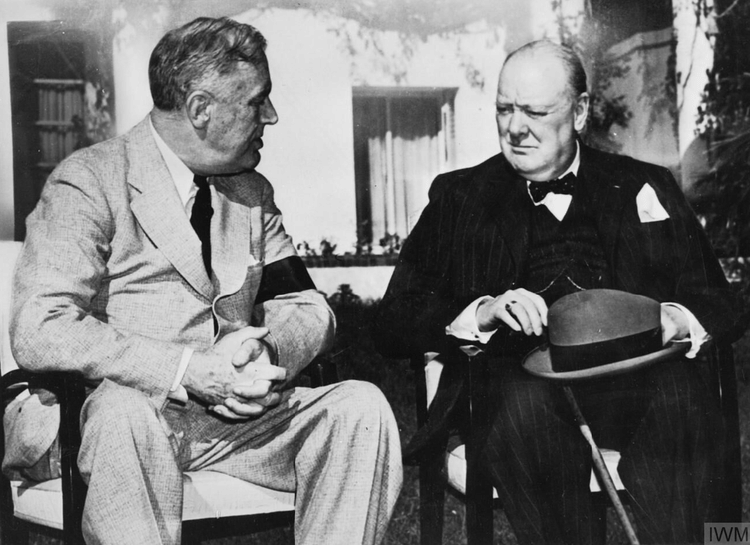
US President Franklin D. Roosevelt (1882-1945) emerged as a fervent advocate for a successor organization to the League of Nations, one that could effectively promote global peace once the war concluded. This organization would eventually be named the United Nations (UN). Roosevelt’s early diplomatic efforts bore fruit with the signing of the Atlantic Charter alongside British Prime Minister Winston Churchill (1874-1965) on August 14, 1941. This landmark document, drafted aboard the HMS Prince of Wales, articulated a vision for the post-war world, proclaiming that all peoples – victors and vanquished alike – were "entitled to self-determination and a fair share of the world’s resources" (Boatner, 647), emphasizing access to vital natural resources and global trade networks. This was a crucial statement of principles, signaling a move away from imperial ambitions towards shared global access and equality.
The concept gained further momentum with the United Nations Declaration of January 1, 1942. Issued jointly by Roosevelt and Churchill, this declaration marked the first official use of the term ‘United Nations’ to refer to an international organization dedicated to cooperation. It was initially signed by the US, UK, USSR, and China, with 22 other states subsequently adding their signatures. This was followed by the Four-Power Declaration, signed in Moscow on October 30, 1943, by the foreign ministers of the US, UK, USSR, and China. This declaration reiterated the firm promise that an international organization dedicated to peace and cooperation would be established after the war. The sentiment was powerfully reinforced at the Tehran Conference in November-December 1943, where Roosevelt, Soviet Premier Joseph Stalin, and Churchill met, solidifying their commitment to the future global body.
Shaping the Institutions: Key Conferences (1944-1945)
The conceptual framework for the UN began to take concrete shape through a series of specialized conferences in the final years of the war.
Bretton Woods Conference (July 1944)
The Bretton Woods Conference, officially known as the United Nations Monetary and Financial Conference, convened in Bretton Woods, New Hampshire, from July 1 to July 22, 1944. Delegates from 44 Allied nations gathered, driven by the desire to prevent a recurrence of the economic chaos that contributed to the rise of fascism and global conflict in the 1930s. The intellectual architects behind many of the conference’s enduring decisions were two towering economic figures: John Maynard Keynes (1883-1946), the influential British economist and government adviser, and Harry Dexter White (1892-1948), then the US Treasury Assistant Secretary.
At Bretton Woods, the idea of global economic governance took a significant leap forward. A pivotal outcome was the decision to create the International Monetary Fund (IMF). Operational by December 1945 with 22 participating countries, the IMF was designed to act as a global financial stabilizer, assisting member states in redressing imbalances of international payments. The hope was that this would stabilize international exchange rates, thereby preventing competitive devaluations and discouraging the use of protectionist trade barriers such as tariffs, which had choked global commerce in the pre-war era.
Complementing the IMF, the Bretton Woods delegates also established the International Bank for Reconstruction and Development (IBRD), which would later become universally known as the World Bank. The IBRD was endowed with a substantial initial capital of $10 billion (equivalent to over $160 billion today) to commence its critical mission: facilitating the reconstruction of Europe and Asia after the widespread destruction and disruption of WWII. Crucially, the IBRD was also envisioned as a long-term source of aid for developing countries, laying the groundwork for post-colonial economic development.
It is important to note that not all states present fully endorsed the decisions taken at Bretton Woods. The USSR, Haiti, Liberia, and New Zealand, for various reasons including concerns over sovereignty and alignment with the proposed capitalist-leaning financial system, declared that they would not be subject to the conference’s decisions. This early divergence highlighted the complex geopolitical realities that would continue to shape the new world order.
Dumbarton Oaks Conference (August-October 1944)
Following the economic blueprint laid at Bretton Woods, the focus shifted to the political and structural architecture of the new international body at the Dumbarton Oaks Conference. Held at Harvard University, this conference unfolded in two phases. The first, from August 21 to September 28, 1944, involved delegates from the US, UK, and USSR. In the second phase, from September 29 to October 7, the USSR delegation was replaced by one from China, reflecting the complex diplomatic landscape of the time.
The Dumbarton Oaks discussions were highly detailed, culminating in a 12-chapter text that meticulously outlined how the United Nations would be run. Key decisions included the establishment of a Security Council with executive powers and a General Assembly comprising all member states. The Security Council was envisioned as the primary organ for maintaining international peace and security, capable of making binding decisions. The General Assembly, while having less executive power, would serve as a deliberative body where all member states could voice their concerns and contribute to policy recommendations. The conference also determined the creation of an International Court of Justice (ICJ), providing a judicial mechanism for resolving disputes between states according to international law.
Yalta Conference (February 1945)
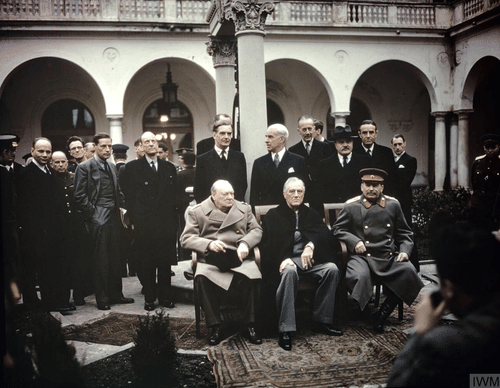
The crucial promise of Soviet participation in the future United Nations organization was finally secured at the Yalta Conference, held from February 4 to February 11, 1945. Meeting once again, Roosevelt, Churchill, and Stalin solidified the commitment of the "Big Three" to the new world body. A reluctant Stalin was also persuaded to agree to France being granted a permanent seat on the UN’s executive arm, the Security Council. With the agreement of the world’s most powerful nations, a genuinely international organization that included all the major players now seemed a realistic and achievable possibility.
Despite this breakthrough, plenty of doubters remained. Many cynical diplomats and politicians expressed skepticism, convinced that powerful states would ultimately be unwilling to cede a significant portion of their national sovereignty to the UN. They believed that world politics would continue, as it always had, to be primarily driven by the self-interest of certain powerful countries. Time, they argued, would tell if this view was overly pessimistic or a pragmatic assessment of international relations.
The United Nations is Formed (April-October 1945)
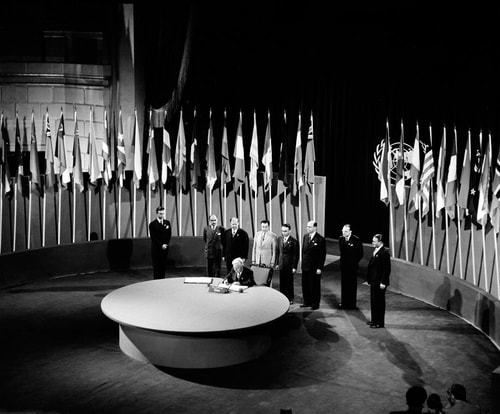
The culmination of years of planning and negotiation arrived with the San Francisco Conference, formally known as the United Nations Conference on International Organization, which ran from April 25 to June 26, 1945. The conference opened under the shadow of profound change: President Roosevelt had died suddenly on April 12, casting doubt on the conference’s immediate future. However, Roosevelt’s vice president, Harry S. Truman (1884-1972), swiftly became the new president and gave the green light for the conference to proceed. Truman later reflected on this pivotal decision: "I said that it was what Roosevelt had wanted, and it had to take place if we were going to keep the peace. And that’s the first decision I made as President of the United States" (Moskin, 9). Truman’s opening speech to the delegates was emphatic, declaring: "We can no longer permit any nation, or group of nations, to attempt to settle their arguments with bombs and bayonets" (Moskin, 146).
Fifty countries participated in the San Francisco conference, and on June 26, they signed the seminal United Nations Charter. This document formally established the UN Security Council, structured according to the principles laid out at Dumbarton Oaks. It designated five permanent members: the United States, the Soviet Union, the United Kingdom, China, and France. Each of these permanent members was granted a crucial right of veto over substantive Security Council resolutions. Initially, the USSR had sought an even broader veto power, including the ability to reject even the discussion of an issue. However, this stance was softened to a veto applicable once an issue was debated by the Security Council. Six other non-permanent members would join the council on a rotation basis, elected by the General Assembly. While smaller states expressed displeasure with the veto power accorded to the "Big Five," it was widely understood that without this provision, it was highly unlikely that either the US or the USSR, the two emerging superpowers, would have joined the UN at all. All signatory nations could send a five-person delegation to the General Assembly, where each member state held a single vote, embodying the principle of sovereign equality.
A critical divergence from the League of Nations’ fate was the enthusiastic reception of the UN Charter by the US Senate, which ratified it by an overwhelming vote of 89 to two. Truman lauded this outcome, commenting that "The action of the Senate substantially advances the cause of world peace" (Moskin, 234). Despite the broad consensus, there were still some contentious issues to resolve, notably the inclusion of pro-fascist Argentina as a member while pro-Communist Poland was initially excluded (though Poland would sign the charter four months later, becoming an original member).
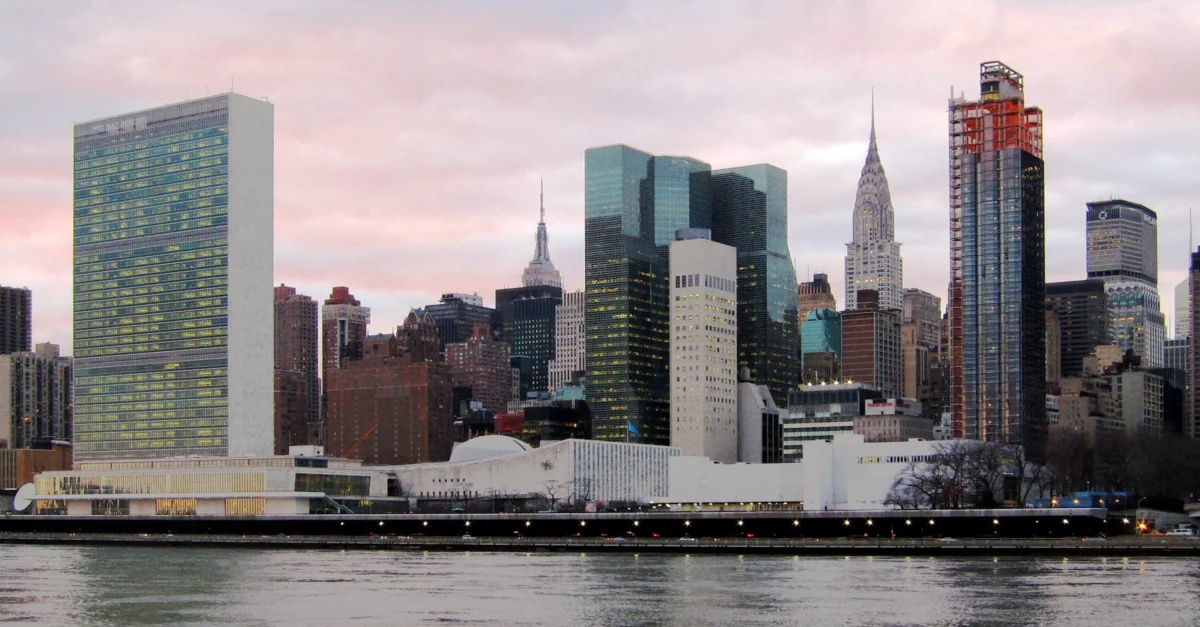
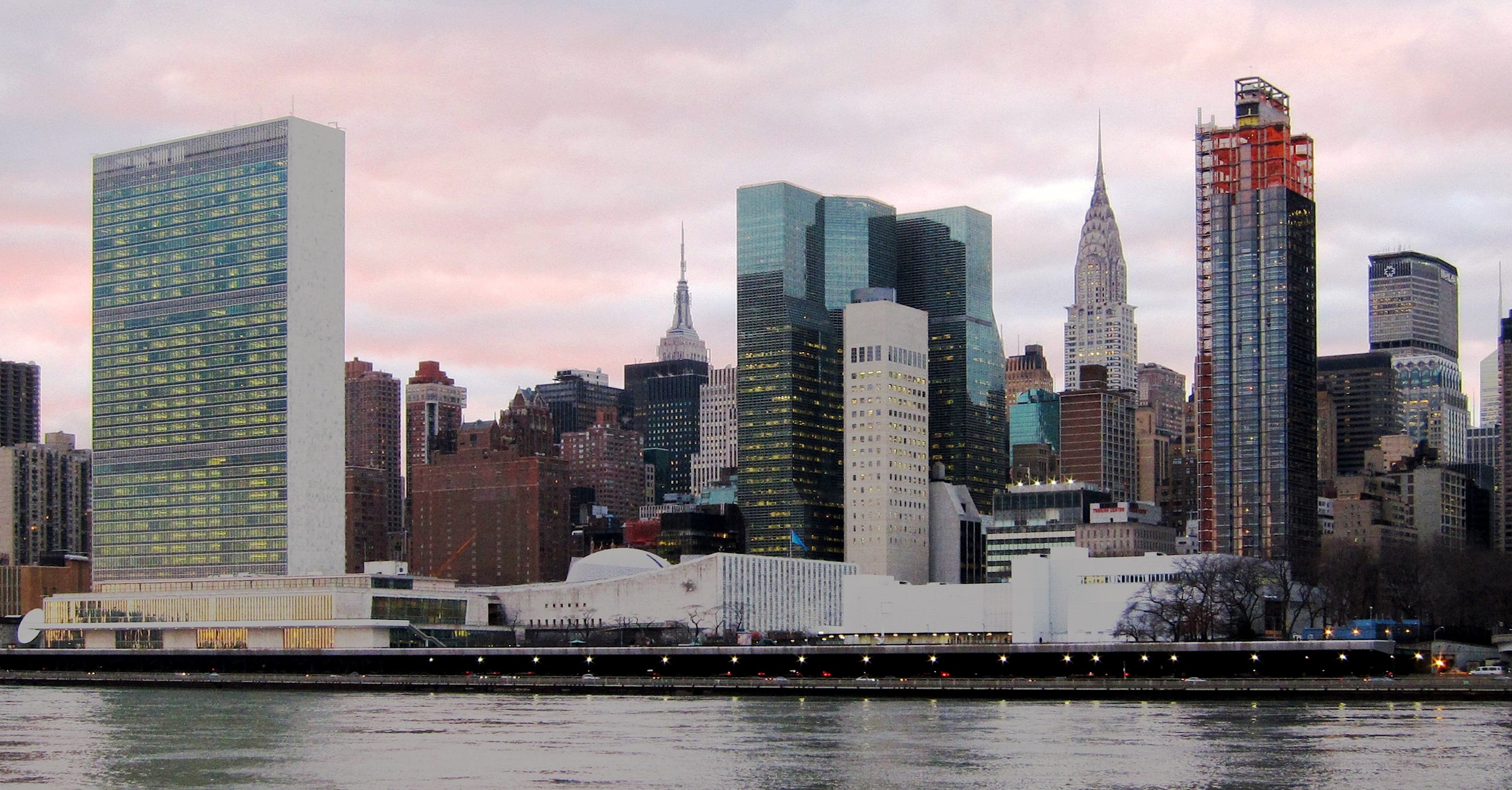
The United Nations Organization (UNO) officially commenced operations on October 24, 1945, with its headquarters established in New York City. This date is now celebrated worldwide as United Nations Day. The first meeting of the UN General Assembly was held on January 10, 1946, and within two weeks, its first resolution was passed, focusing on the peaceful uses of atomic energy and the elimination of atomic weapons – a direct response to the dawn of the nuclear age. On January 17, the Security Council convened its inaugural meeting. The League of Nations, having effectively ceased to function years earlier, was formally terminated in April 1946, and its treaties, assets, and responsibilities were systematically transferred to its successor, the United Nations.
Supporting Data
The creation of the United Nations was a monumental undertaking, underpinned by extensive diplomatic activity and specific agreements.
- Conferences:
- Atlantic Charter: August 14, 1941 (Roosevelt & Churchill)
- UN Declaration: January 1, 1942 (US, UK, USSR, China + 22 others)
- Four-Power Declaration (Moscow): October 30, 1943 (US, UK, USSR, China)
- Tehran Conference: Nov-Dec 1943 (Roosevelt, Stalin, Churchill)
- Bretton Woods Conference: July 1-22, 1944 (44 states participated)
- Dumbarton Oaks Conference: Aug 21-Oct 7, 1944 (39 states participated)
- Yalta Conference: Feb 4-11, 1945 (Roosevelt, Churchill, Stalin)
- San Francisco Conference: April 25-June 26, 1945 (50 countries signed)
- Financial Commitments: The International Bank for Reconstruction and Development (IBRD) was initially capitalized with $10 billion, a significant sum for post-war reconstruction and development aid.
- US Senate Ratification: The decisive 89-2 vote in the US Senate for the UN Charter stood in stark contrast to its rejection of the League of Nations, signaling a profound shift in American foreign policy from isolationism to international engagement.
- Key Quotes:
- "were entitled to self determination and a fair share of the world’s resources" (Boatner, 647) – Atlantic Charter.
- "I said that it was what Roosevelt had wanted, and it had to take place if we were going to keep the peace. And that’s the first decision I made as President of the United States" (Moskin, 9) – Harry S. Truman on proceeding with the San Francisco Conference.
- "We can no longer permit any nation, or group of nations, to attempt to settle their arguments with bombs and bayonets" (Moskin, 146) – Harry S. Truman, opening speech at San Francisco.
- "The action of the Senate substantially advances the cause of world peace" (Moskin, 234) – Harry S. Truman on UN Charter ratification.
Official Responses
The official responses to the formation of the UN were marked by a mixture of profound hope, strategic negotiation, and lingering skepticism. President Truman’s unwavering commitment to the UN after Roosevelt’s death was instrumental, demonstrating a crucial continuity of vision from the highest office in the US. The overwhelming US Senate ratification underscored a national consensus for international engagement that had been conspicuously absent a generation earlier. This signaled to the world that the United States was prepared to shoulder its responsibilities in a new global order.
The Big Three’s willingness to compromise, particularly Stalin’s eventual agreement to participate and the softening of the USSR’s initial demands regarding the veto power, demonstrated a pragmatic understanding of the necessity for great power cooperation. The inclusion of France as a permanent Security Council member, though initially a point of contention, reflected a desire to rebuild Europe and acknowledge its historical significance. However, the veto power itself was a subject of considerable debate, with smaller states expressing significant reservations, viewing it as an undemocratic concession to great power politics. Despite these concerns, it was widely acknowledged that without the veto, the participation of key powers like the US and USSR would have been jeopardized, rendering the organization largely ineffective from its inception.
The initial controversies regarding membership, such as the inclusion of Argentina and the temporary exclusion of Poland, highlighted the geopolitical complexities and ideological divisions that persisted even among the victorious Allies. These early disputes foreshadowed the Cold War tensions that would soon test the nascent organization. Nevertheless, the prevailing official sentiment was one of cautious optimism, a collective belief that humanity had learned from its past mistakes and was finally ready to build a structure for enduring peace.
Implications
The formation of the United Nations had profound and far-reaching implications, fundamentally altering the landscape of international relations.
A New Era of Global Governance
The most immediate implication was the formal establishment of a new era of global governance. Unlike the League of Nations, the UN was endowed with a more robust structure, broader membership, and, critically, the full participation of the United States. This signified the end of American isolationism, committing the world’s burgeoning superpower to collective security and multilateral diplomacy. The UN Charter, as a foundational document of international law, codified principles of sovereignty, non-intervention, and the peaceful resolution of disputes, providing a moral and legal framework for state conduct.
Balancing Power and Idealism
The UN’s structure, particularly the Security Council with its five permanent members and their veto power, reflected a pragmatic acknowledgment of the realities of great power politics. While idealistic in its aims, the UN was also designed to manage the interests of the most powerful states, understanding that their buy-in was essential for any global peace effort to succeed. This inherent tension between the sovereign equality of all nations (as expressed in the General Assembly) and the unequal distribution of power (as institutionalized in the Security Council) remains a defining characteristic and a continuous challenge for the organization. The "doubters" who questioned whether powerful states would truly cede sovereignty have, in many instances, seen their concerns borne out, as national interests often clash with collective action.
Economic and Social Foundations
Beyond political security, the Bretton Woods institutions (IMF and World Bank) established a new global economic order aimed at fostering stability and growth. The IMF’s role in stabilizing exchange rates and preventing trade wars, and the World Bank’s mandate for reconstruction and development, laid critical groundwork for post-war recovery and the subsequent rise of globalization. These bodies intertwined economic interdependence with political stability, reinforcing the idea that shared prosperity could be a bulwark against conflict.
Evolution and Enduring Relevance
From its initial 50 signatories, the United Nations has expanded to include 193 member states, reflecting the decolonization movement and the growth of the international community. Its four core aims – maintaining international peace and security, developing friendly relations between nations, promoting cooperation to solve international problems and respect human rights, and ensuring the UN acts as a harmonizing focal point – remain the guiding principles of its vast and diverse work.
While the UN has faced numerous challenges, criticisms, and instances of perceived failure throughout its history, its longevity, adaptability, and indispensable role as the primary forum for global dialogue and cooperation cannot be overstated. It has prevented countless conflicts, provided humanitarian aid on an unprecedented scale, championed human rights, and facilitated international cooperation on issues ranging from climate change to disease eradication. The legacy of the UN is one of persistent, imperfect striving towards a more peaceful and cooperative world, a testament to the enduring hope that emerged from the ashes of the Second World War. The annual celebration of United Nations Day on October 24 serves as a poignant reminder of this collective endeavor to secure a future free from the horrors of global conflict.