Unveiling the Midnight Ball: Laura Sampson’s "Enchanted Tales" Revitalizes a French-Belgian Folktale Masterpiece
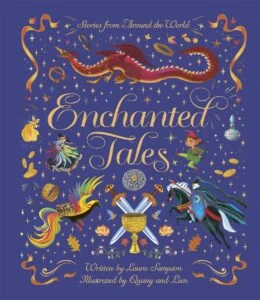
LONDON, UK – In a literary landscape often dominated by new narratives, the timeless allure of classic folklore continues to captivate, finding fresh voices and renewed enchantment for contemporary audiences. Leading this resurgence is author Laura Sampson, whose latest work, Enchanted Tales, published by Templar Books, offers a vibrant reinterpretation of beloved myths and legends. Among its most compelling entries is a meticulously retold version of "The Twelve Dancing Princesses," a captivating narrative that traces its origins to the rich cultural tapestry of France, specifically through the lens of 19th-century French writer Charles Deulin.
Sampson’s Enchanted Tales positions itself not merely as a collection of stories, but as a gateway to imaginative realms, inviting readers to step through the proverbial "secret door" into worlds of magic and mystery. The inclusion of Deulin’s "The Twelve Dancing Princesses" is particularly significant, highlighting a version of the tale steeped in specific regional details and imbued with a unique character that sets it apart from other widely known iterations. Illustrated with evocative artistry by Phung Nguyen Quang & Huynh Thi Kim Lien, the book promises a visual and narrative feast, bringing ancient wonders to life with modern elegance.
The Enduring Allure of Secret Worlds and Unravelled Mysteries
The concept of a hidden world, accessible only to a select few, holds an almost universal fascination. From childhood dreams to adult fantasies, the desire to uncover secret passages and step into realms built "especially for you" resonates deeply within the human psyche. This fundamental appeal is precisely why "The Twelve Dancing Princesses" has enjoyed enduring popularity across Europe for centuries, manifesting in countless variations, each weaving its own intricate tapestry of magic, intrigue, and romance.
At its heart, the tale presents a tantalizing mystery: twelve beautiful princesses retire to a securely locked chamber each night, only for their satin slippers to be found inexplicably worn through by morning, as if they had danced until dawn. This perplexing enigma forms the core engine of the narrative, drawing in hopeful suitors and, ultimately, a humble hero determined to uncover the truth. The story speaks to a primal human curiosity – the desire to solve the unsolvable, to peer behind the curtain of the unknown, and to witness the extraordinary hidden within the mundane.
Laura Sampson’s decision to feature Charles Deulin’s version of this classic tale is a deliberate and enriching choice. Deulin, a French writer hailing from a small town on the French-Belgian border, infused his rendition with a wealth of local colour and authentic detail. His narrative is richly textured with descriptions of regional food, distinctive clothing, and specific place names, drawing directly from the cultural landscape of his home region. This grounding in specific geography and local customs lends an added layer of authenticity and charm to the fantastical elements of the story, making the secret world feel all the more vivid and tangible.
Chronology of a Dreamer’s Quest: Michel the Stargazer’s Extraordinary Journey
The narrative unfolds with the introduction of Michel, a young cowherd from the picturesque village of Montignies-sur-Roc. With his curly hair, pretty blue eyes, and a penchant for gazing upwards, Michel earned the affectionate moniker "Stargazer," a testament to his dreaming nature and his yearning for adventures beyond his humble existence. His destiny is set in motion one summer’s day when a radiant fairy, adorned in a golden dress, appears before him, delivering a prophetic message: "Go to the Château of Beloeil, and you will marry a princess!"
The Royal Decree and a Kingdom’s Perplexity
Driven by this celestial instruction, the Stargazer eagerly makes his way to the illustrious Château of Beloeil. Upon his arrival, the air is thick with whispers of a strange and unsettling mystery. The Duke, father to the twelve enchanting princesses, is in a state of growing desperation. Each morning, despite their suite of rooms being secured by three formidable bolts, the princesses’ delicate satin shoes are found utterly ruined, bearing the unmistakable marks of an entire night spent dancing. The Duke, exasperated and perplexed, issues a grand proclamation: "ANYONE WHO CAN SOLVE THE MYSTERY OF THE WORN-OUT SHOES MAY MARRY ONE OF MY DAUGHTERS!"
This royal decree attracts a steady stream of hopeful princes from across the land, each eager to prove their cleverness and win a royal bride. However, a dark cloud hangs over these valiant attempts; each prince who ventures to solve the mystery vanishes mysteriously overnight, adding another layer of grim foreboding to the already baffling situation.
A Gardener’s Resolve and a Princess’s Glimpse
Michel, aware of his humble origins, initially harbours doubts about his own prospects. "I am no prince," he reflects, "the duke will laugh at me if I come forward." Rather than directly challenging the mystery, he secures work within the château gardens, finding a quiet purpose in crafting daily bouquets for the princesses. For a time, his efforts go largely unnoticed; the princesses accept his offerings without a glance or a word of thanks.
However, destiny, as always, has its own intricate plans. One day, the youngest princess, Lina, lifts her gaze and offers Michel a fleeting, gentle smile. In that singular moment, Michel’s heart leaps, and his longing to unravel the enigma of the worn-out shoes transforms from a distant dream into a deeply personal quest. His connection to Lina, however subtle, ignites a newfound resolve within him.
Gifts of Enchantment and the Cloak of Invisibility
That very night, the golden-clad fairy reappears to Michel, bearing extraordinary gifts: two baby laurel trees – one a rose, the other a cherry – along with a golden bucket and a golden rake. "Plant these laurel trees," she sings, "tend them with this rake, water them from this bucket and they will grant your wishes!" Following her instructions, Michel diligently cultivates the magical saplings.
His opportunity to act arrives when the cherry laurel blooms with a pristine white flower. Michel plucks it and, in a hopeful gesture, places it in his shirt button, perhaps wishing to appear more presentable to the young princess. To his astonishment, the flower instantly renders him invisible. "This is my chance to solve the princesses’ mystery!" he exclaims, the realization dawning on him.
Descent into the Nocturnal Realm
Under the cloak of invisibility, Michel positions himself strategically under a bed in the princesses’ suite that evening. As soon as the door is securely bolted for the night, the room comes alive with the rustling of clothes, the opening of wardrobes, and the joyous sound of laughter. Then, with three distinct claps, a trapdoor in the floor creaks open, revealing a hidden passage. Michel, slipping out from his hiding place, follows the princesses down into the secret world. So close is he to Lina, in fact, that he accidentally steps on her dress. Lina glances back, seeing nothing, and attributes the sensation to a mere stumble.
Michel follows the procession down a winding staircase, along a mysterious corridor, and through a series of increasingly fantastical woodlands: first, one shimmering with silver, then another glowing with gold, and finally, a dazzling forest of sparkling diamonds. Their journey culminates at a glass-clear lake, where twelve waiting princes in twelve shining boats ferry each princess across to a magnificent castle, its spires glinting in the twilight. Michel, still invisible, finds himself beside Lina in her boat, noting her puzzled thought: "Why is my boat so slow and heavy?" The wild music emanating from the castle, however, soon distracts her.
Upon docking, everyone rushes into the castle’s opulent ballroom, a vision of mirrors, sparkling lights, and rich hangings. From a quiet corner, Michel observes the princesses, their grace and beauty mesmerising as they whirl across the jewelled dancefloor. Lina’s "velvet-black eyes" shine with pure joy. Michel feels a pang of envy for the princes dancing with them, unaware of their tragic fate: these are the very suitors who had previously vanished, their memories of the world above erased by an enchanted potion, condemned to relive this endless nocturnal revelry.
Echoes of the Otherworld and the Seeds of Suspicion
The princesses dance until their shoes are utterly worn through, signifying the culmination of their secret escapade. They then feast on sugar cookies, waffles, and cakes before Michel silently follows them back across the lake and through the diamond and gold woodlands. However, as they pass through the silver woodland, Michel, in a moment of daring, breaks off a tiny sprig from one of the trees. A resounding "CLANG!" echoes through the entire wood, drawing a questioning glance from one princess. "What was that?" she asks, but another dismisses it as merely "a bird."
Michel, his invisibility his greatest asset, races ahead. He navigates back to the princesses’ suite, up the stairs, through the trapdoor, and makes his escape through an open window, descending a hanging vine to the gardens just as dawn breaks. He removes the white invisibility flower and resumes his daily task of gathering bouquets for the princesses. Later, as he presents them, Lina discovers the silver twig nestled within her bouquet. "How can this be?" she ponders, but wisely keeps her thoughts to herself.
For the next two nights, Michel faithfully shadows the princesses. Each time, on their return journey, he plucks another sprig for Lina’s bouquet – first from the golden woodland, then from the diamond. The discovery of the diamond sprig proves to be the tipping point. Lina, her suspicion confirmed, confronts Michel. "You must have followed us. How?"
"I hid," Michel simply replies, maintaining his secrecy regarding the magical flower.
Confrontation, a Broken Heart, and True Love’s Test
Lina, understanding the gravity of his discovery, presses him further. "You know that telling our father this secret rewards you with a wedding to one of us. Will you tell him?" Michel’s response is unexpected: "I do not intend to." Puzzled by his refusal to claim the reward, Lina asks, "But why stay silent?" Michel offers no verbal explanation, but his blue eyes meet Lina’s, and in that shared gaze, the other princesses witness her heart visibly soften.
Their sisters, unable to comprehend Lina’s burgeoning affection for a mere gardener, mock her: "How ridiculous! Lina wants to be a gardener’s wife!" Mortified, Lina cries, "Never!" and, in a dramatic display of feigned disdain, throws her bouquet at Michel.
Later that day, the sisters, fearing Michel would expose their secret and perhaps to prevent Lina from acting on her feelings, agree that he must share the same fate as the previous suitors. They invite Michel to join them in plain sight that night for their nocturnal journey.
Michel accepts, but his simple clothes are unfit for a grand ball. Remembering the rose laurel, he whispers a wish into its petals. Instantly, he is transformed, dressed like a prince in black velvet that perfectly matches Lina’s eyes, a sparkling diamond feather brooch adorning his cap.
Once again, the journey unfolds: through the trapdoor, down the stairs, through the woodlands of silver, gold, and diamond, and towards the dance. Lina, seeing Michel in his princely attire, laughs, a mix of embarrassment and admiration in her voice. "Don’t you look princely!" she remarks. "Maybe," Michel replies, "But I’m still a gardener. Not good enough for you." Their dance that night is filled with unspoken tension and burgeoning emotion.
As the ball concludes, the eldest princess extends a golden cup to Michel, a knowing smile playing on her lips. "Gardener, secret-revealer, let’s drink to you!" Michel, having overheard their earlier conversations, knows the cup contains the dreaded forgetting potion. With a longing look at Lina, he raises the cup to his lips, prepared to sacrifice his memory for the chance to be with her, even for a single night.
"NO!" Lina cries out, a desperate plea tearing from her. She rushes forward, seizing the cup before he can drink. "Gardener or not, the thought of you trapped here forever breaks my heart!" In that moment of selfless love and profound confession, the spell that bound the princes and the princesses is shattered. True love, pure and unadulterated, triumphs over enchantment. Together, Michel and the princesses return to the world above, and the mysterious trapdoor, its purpose served, disappears forever.
Resolution and Royal Union
In the Duke of Beloeil’s private quarters, Michel recounts his incredible tale, revealing the truth behind the worn-out shoes and the princesses’ nocturnal adventures. He then humbly asks for Lina’s hand in marriage. The Duke, overjoyed by the mystery’s resolution and the prospect of his daughter’s happiness, readily agrees. The wedding is celebrated as the biggest and happiest in the land, and Michel, the once-humble cowherd, is elevated to the status of a prince. He never again needs to make a wish upon the two magical laurels, for in Lina and his new life, he has found everything he could ever desire.
Themes and Interpretations: The Enduring Resonance of Folklore
Deulin’s rendition, and Sampson’s sensitive retelling, offers fertile ground for thematic exploration, showcasing why this tale continues to resonate across generations.
Class, Courage, and Social Mobility
Michel’s journey from a "Stargazer" cowherd to a prince is a classic narrative of social mobility, driven not by birthright but by courage, wit, and a pure heart. His initial self-doubt ("I am no prince") underscores the societal barriers of the time, yet his inherent goodness and determination allow him to transcend them. The story champions the idea that true worth lies not in lineage but in character.
The Power of Observation and Patience
Michel’s nickname, "Stargazer," subtly hints at his keen observational skills and contemplative nature. He is not rash or impulsive but patient, waiting for the right moment and making strategic use of his magical aids. His ability to notice details, from Lina’s smile to the sprigs in the magical woodlands, is crucial to solving the mystery.
True Love vs. Enchantment and the Forbidden
The core conflict between the princesses’ enchanted escapades and the possibility of genuine connection is profound. The princes trapped in the underworld represent a form of shallow, fleeting pleasure devoid of true freedom or memory. Lina’s ultimate choice to save Michel, even at the risk of revealing their secret and defying her sisters, signifies the triumph of authentic love over superficial enchantment and the allure of the forbidden. Her cry, "the thought of you trapped here forever breaks my heart," is the pivotal moment where the true power of emotion overrides magic.
Feminine Agency and the Quest for Freedom
While initially appearing as passive recipients of an enchantment, the princesses’ desire for nightly dances can be interpreted as a longing for freedom and agency in a restrictive aristocratic world. Lina’s final act, however, elevates her beyond a mere participant in a magical ritual. Her decisive intervention to save Michel is a powerful assertion of her own will and a testament to her growing emotional maturity, breaking not just a spell but also societal expectations.
Laura Sampson’s Vision: "Enchanted Tales" as a Bridge to the Past
Laura Sampson’s Enchanted Tales is more than just a collection; it is a meticulously crafted bridge between ancient narratives and contemporary readers. By choosing Deulin’s specific version of "The Twelve Dancing Princesses," Sampson offers a refreshing perspective on a familiar tale, inviting readers to appreciate its regional nuances and unique character development.
The book’s success is also significantly bolstered by the enchanting illustrations of Phung Nguyen Quang & Huynh Thi Kim Lien. Their artistic vision complements Sampson’s prose, bringing the vivid descriptions of Montignies-sur-Roc, the grandeur of the Château of Beloeil, and the fantastical landscapes of the silver, gold, and diamond woodlands to breathtaking life. The visual narrative ensures that the magic of the story is not just told but truly seen and felt.
Experts in folklore often highlight the importance of retellings in keeping these stories alive and relevant. Dr. Evelyn Reed, a prominent folklorist, notes, "Each retelling of a classic tale breathes new life into it, adapting its core messages for a new generation while preserving its fundamental essence. Sampson’s work, particularly with Deulin’s ‘The Twelve Dancing Princesses,’ demonstrates a keen understanding of this balance, enriching the narrative with context and sensitivity."
Conclusion: A Timeless Message for a Modern World
Laura Sampson’s Enchanted Tales, with "The Twelve Dancing Princesses" at its heart, serves as a powerful reminder of the enduring power of storytelling. It celebrates not just the fantastical elements of magic and secret worlds, but also the universal themes of courage, perseverance, the complexities of human emotion, and the transformative power of true love. Michel the Stargazer’s journey from humble cowherd to prince, guided by a fairy’s prophecy and ultimately fulfilled by Lina’s love, is a testament to the idea that dreams, when pursued with a pure heart and unwavering resolve, can indeed come true.
In an age where digital distractions often pull us away from deeper narratives, Enchanted Tales offers a vital connection to our collective cultural heritage. It encourages readers to look beyond the surface, to seek out the hidden wonders in the world, and to believe in the magic that lies within themselves and in the power of genuine human connection. Laura Sampson, Templar Books, and their artistic collaborators have successfully crafted a collection that is both enchanting and thought-provoking, ensuring that these timeless tales will continue to inspire and delight for years to come.