Reclaiming the Everyday: Why Embracing Folklore is Your Next Essential Ritual
London, UK – Folklore, often relegated to the dusty shelves of academic study or the quaint curiosities of bygone eras, is experiencing a quiet renaissance. Far from being mere "flim flam" or a collection of obscure practices like wart charming or the antler-wearing men of Abbotts Bromley, these living traditions, rituals, and customs are woven into the very fabric of our daily existence. From the way we brew our morning tea to the unspoken rules governing our social interactions, folklore subtly guides our lives.
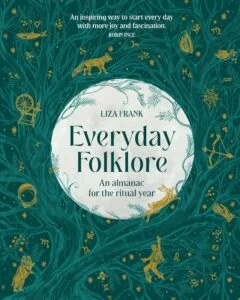
A new voice in this evolving conversation is author Liza Frank, whose recent book, Everyday Folklore: An Almanac for the Ritual Year, emerges from a deeply personal, year-long immersion into these practices. Documenting her journey from St Distaff’s Day 2020 to Twelfth Night 2021, Frank meticulously practiced ritual year folklore every single day, transforming her experiences into a practical guide for contemporary engagement. For those with even a passing interest in the subject, Frank’s work serves as a compelling call to action: to consciously integrate a little bit of folklore into our lives, to "feel the folklore fear and do it anyway."
This article explores Frank’s compelling arguments for why everyone should actively participate in the living tapestry of folklore, outlining its profound benefits for slowing down time, fostering celebration, combating ennui, enriching knowledge, and crafting memorable personal narratives.
The Overlooked Omnipresence of Folklore: Main Facts
Folklore is frequently misunderstood. It’s not just ancient tales told by hearth light or the peculiar habits of distant cultures. As Frank posits, it encompasses everything from the spreading of jam before cream on a scone to the annual decorating of a Christmas tree. It’s the unwritten script that informs countless everyday actions and beliefs, often operating below the level of conscious thought. Yet, this ubiquitous presence belies its often-underestimated power to enrich and ground modern life.
Frank’s central thesis, encapsulated in Everyday Folklore, is that by deliberately engaging with these traditions, individuals can unlock a deeper connection to their environment, their communities, and themselves. The book is not merely a compendium of practices but an invitation to active participation, transforming passive observation into meaningful, lived experience. It challenges the perception of folklore as an "other people" activity, asserting its universal relevance and accessibility.
The author’s journey, which forms the empirical backbone of her almanac, highlights the transformative potential of consistent engagement. By embracing the ritual year, Frank demonstrates that folklore can serve as a powerful tool for mindfulness, cultural preservation, and personal well-being in an increasingly fast-paced and disconnected world.
A Year of Living Folklorishly: The Chronology of Discovery
Liza Frank’s "Everyday Lore Project" laid the foundation for her book, marking a significant personal chronology that became a public testament to the power of daily folkloric engagement. Commencing on St Distaff’s Day in 2020 and concluding on Twelfth Night 2021, Frank embarked on an ambitious personal challenge: to actively observe and participate in a ritual, tradition, or custom tied to each day of the year. This immersive period transcended theoretical study, transforming folklore from an academic subject into a lived reality.
The project wasn’t merely about ticking off a list of ancient customs; it was an exploration of how these practices resonated in a modern context. Frank’s experiences, documented daily, chronicled the subtle shifts in her perception, her connection to the seasons, and her appreciation for the passage of time. From performing simple household rituals to engaging with more elaborate seasonal celebrations, her year became a practical laboratory for understanding folklore’s contemporary relevance.
This chronological commitment allowed Frank to build a unique repository of knowledge and personal insight. It revealed how even seemingly minor acts, when performed with intention, could bring meaning and structure to the daily grind. The project culminated in Everyday Folklore, a direct outgrowth of this intensive, year-long engagement, offering readers a similar pathway to integrate these traditions into their own lives. The almanac, therefore, is not a dry academic text but a vibrant, experiential guide, rooted in the author’s personal chronology of discovery.
Five Pathways to a Richer Life: Supporting Data
Frank distills her extensive experience into five compelling reasons why conscious engagement with folklore offers tangible benefits, providing a robust framework for her call to action. These points serve as the "supporting data" for her argument, illustrating the practical advantages of embracing the ritual year.
1. Finding Stillness in the Whirlwind: Slowing Down
In an age defined by accelerated living and digital distraction, the deliberate practice of folklore offers a potent antidote: a chance to slow down and be present. While folklore may not literally stop time (though charms for such feats are certainly part of its canon), its seasonal and date-specific rituals inherently encourage a more attentive relationship with the rhythm of the year.
Frank observes that without such anchors, days blur into weeks, and months dissolve into seasons, leaving one lamenting the rapid passage of time. Engaging in practices tied to the natural world – like wassailing in January to influence the apple harvest, or counting fogs in August to predict winter snowfalls – creates a direct stake in the environment. These acts foster a deeper appreciation for the cyclical nature of life, connecting individuals to ancient agricultural rhythms and meteorological observations.
Beyond grand ceremonies, even simple acts like observing the hedgerows transform from barren to budding to fecund and back again can recalibrate one’s internal clock. This mindful observation cultivates a slower pace, which, in turn, opens the individual to "possibility and wonder." It’s a form of practical mindfulness, grounding one in the immediate environment and fostering a sense of continuity with the past. This deliberate deceleration contrasts sharply with the demands of modern life, offering a much-needed mental respite and fostering a more engaged state of being.
2. An Abundance of Joy: Celebrating More
Life is replete with occasions for joy, but folklore amplifies this potential exponentially. Beyond personal milestones, religious holidays, and secular events, the ritual year offers an endless array of excuses to celebrate. This expansion of celebratory opportunities is not mere indulgence but a powerful mechanism for well-being and community building.
From dedicated days for trees to festivals celebrating "innies and outies" (belly buttons) in June and July, or specific dates to raise a glass to wine (August 19), gin (second Saturday of June), and rum (July 31), the calendar is brimming with possibilities. Even popular culture has woven itself into this fabric, with "Back to the Future," "Star Trek," and "Star Wars" (May the Fourth) days providing modern touchstones for collective enjoyment.
Frank highlights the joy found not just in established celebrations but also in the completion of folkloric tasks, such as counting seven stars on seven consecutive nights to have a wish granted. Such practices infuse the mundane with magic and anticipation. The ritual year, therefore, serves as a continuous reminder to mark the passage of time with moments of happiness, fostering a celebratory mindset that can uplift spirits and strengthen social bonds. It encourages a proactive search for joy, transforming ordinary days into opportunities for shared festivity and personal delight.
3. Banishing the Blues: Staving Off Boredom and Ennui
In an era of endless digital distractions, boredom and ennui remain pervasive challenges. Folklore, however, offers a dynamic and imaginative solution, providing a wealth of activities that engage creativity, practical skills, and a sense of playful adventure. Frank’s year of "living folklorishly" underscored the endless possibilities for active engagement.
Consider the humble leftover Christmas cake: in Manitou Springs, Colorado, it becomes the star of the Great Fruitcake Toss in January, transforming waste into a whimsical competitive event. The kitchen becomes a laboratory for recreating ritual year recipes like Heg Peg Dumps, Harvest Shot, or knotting-sowins, or simply baking a batch of scones for National Cream Tea Day. (Though Frank humorously advises caution with "plum duffs," especially when involving vegetarian suet and cherished tea towels!)
For those with a penchant for performance, folklore offers opportunities to don costumes – from becoming King for a weekend at the Porthcawl Elvis Festival to embodying a badger for St Piran’s Day. For the truly daring, there are physical challenges like the Cooper’s Hill cheese rolling in May or the Dorking Wife Carrying Race in March. Even solitary activities, such as "conducting an exorcism at midnight by spitting black beans and walking backwards" (as Frank recounts for Lemuralia), provide unique, engaging experiences that combat stagnation and spark the imagination. These activities are not merely diversions; they are invitations to participate actively in cultural narratives, fostering a sense of purpose and combating the passive consumption that often leads to ennui.
4. The Unexpected Sage: Winning Pub Quizzes and Gaining Knowledge
Folklore is a treasure trove of peculiar facts, unexpected wisdom, and cultural esoterica, making it an invaluable resource for general knowledge and, indeed, pub quiz glory. Delving into its depths reveals fascinating insights into human beliefs, natural phenomena, and the interconnectedness of seemingly disparate elements.
For instance, who knew that spiders apparently prefer classical music to techno? (Frings & Frings, 1966). This seemingly trivial fact takes on a folkloric dimension when paired with the belief that an uptick of indoor spiders in March augurs rain, suggesting a subtle interplay between natural observation and cultural interpretation. Similarly, the long-standing tradition of Baikonur cosmonauts watching the 1970 Russian Civil War comedy The White Sun of the Desert before space missions (Hollingham, 2014) highlights how ritualized practices are embedded even in highly scientific and technological endeavors.
Beyond charming anecdotes, folklore often reveals crucial ecological connections. Frank points out that bats, often maligned as the Devil’s messengers, are vital pollinators of agave plants (Menchaca et al., 2020). Without these winged wonders, our Margaritas would disappear, forcing a shift to Manhattans – a vivid illustration of how cultural beliefs intertwine with environmental realities and daily pleasures. The "folklore rabbit hole" is thus not just a path to quirky facts but a journey into deeper understandings of history, science, and the intricate web of life. It broadens one’s perspective, fostering a more holistic appreciation for the world around us.
5. Crafting Your Own Narrative: Tales to Tell
Perhaps one of the most immediate and delightful benefits of engaging with folklore is the acquisition of unique and often humorous personal stories. Some folkloric practices are inherently "bonkers," as Frank charmingly puts it, and diving into them guarantees a wealth of memorable anecdotes.
Consider the delightful absurdity of staking out a Leicestershire churchyard on June 1st to see if St Wistan’s hair sprouts amongst the headstones – an activity that Frank readily admits identifies "your kind of people." The journey into folklore is rich with such potential for the unusual and the unexpected.
These experiences translate into captivating narratives. Imagine recounting the time you thought you detected the whiff of demonic sulphur while "a-nutting" in September, or swearing that a cabbage leaf miraculously reduced a boil on your neck. Or the wistful tale of slipping a sprig of rosemary and a crooked sixpence under your pillow on St Luke’s Eve, hoping for a vision of your true love (and perhaps, like Frank, seeing Mark Hamill, who, disappointingly, has yet to call).
These stories are more than just entertainment; they are personal narratives that connect us to a broader cultural heritage, offering shared laughter and insight. Frank offers a humorous, yet wise, caveat: while your personal triumph over detecting "vampire activity in your gardening implements" (Vukanovic, 1958) might be impressive to you, perhaps save that particular anecdote for a second date. These tales become part of one’s personal mythology, enriching social interactions and fostering a unique sense of identity and shared experience.
Beyond the Anecdote: The Scholarly View and Official Responses
While Frank’s approach is deeply personal and practical, it resonates with broader academic understandings of folklore’s significance. The scholarly community recognizes folklore not as static relics but as dynamic cultural expressions that reflect societal values, anxieties, and aspirations. The footnotes in Frank’s original piece, referencing academic journals and BBC articles, subtly underline this expert validation.
For instance, the citation of Warshaver (1991) on "Postmodern Folklore" suggests that folklore is not merely ancient but continuously evolving, adapting to contemporary contexts and even being created anew in modern societies. This academic perspective lends weight to Frank’s assertion that folklore is "all around us," extending beyond traditional rural practices to urban legends, internet memes, and even workplace rituals.
The study of folklore, known as folkloristics, examines the role of these traditions in shaping identity, fostering community, and providing coping mechanisms. Academics like Frank herself, through her extensive research and the "Everyday Lore Project," contribute to this field by demonstrating how theoretical concepts manifest in lived experience. Her work serves as an "official response" to the common misconception of folklore as irrelevant, asserting its profound psychological, social, and cultural utility.
Moreover, the act of documenting and sharing these practices, as Frank does, contributes to cultural preservation. In a world of increasing homogenization, consciously engaging with specific local or seasonal traditions helps maintain the diversity of human experience and the unique character of communities. From an expert standpoint, Frank’s book is not just a self-help guide but a valuable contribution to the ongoing dialogue about cultural heritage and its contemporary relevance.
Weaving a Richer Tapestry: Implications for Modern Life
The implications of consciously incorporating folklore into daily life extend far beyond individual amusement or curiosity. Frank’s call to action carries profound consequences for personal well-being, community cohesion, and cultural resilience.
Enhanced Well-being and Mindfulness: By encouraging a slower pace and a greater appreciation for seasonal rhythms, folklore acts as a powerful antidote to the stress and disconnectedness of modern life. It fosters a form of "situated mindfulness," grounding individuals in their immediate environment and the cyclical nature of time. This can lead to reduced anxiety, increased presence, and a deeper sense of belonging to the natural world.
Strengthened Community and Connection: Many folkloric practices are inherently communal, from wassailing to shared feasts. Engaging in these traditions offers opportunities for collective celebration, storytelling, and the strengthening of social bonds. In an era where digital interactions often replace face-to-face connections, folklore provides organic, meaningful avenues for community building and shared cultural experience.
Cultural Preservation and Innovation: Active participation in folklore ensures its continuity. It prevents traditions from becoming mere historical footnotes, instead keeping them alive, adapting them, and even creating new ones that resonate with contemporary concerns. This dynamic engagement is crucial for maintaining cultural diversity and ensuring that future generations inherit a rich and vibrant heritage. Frank’s work implicitly encourages both the preservation of existing lore and the innovative creation of personal and communal traditions.
Personal Empowerment and Creativity: The active nature of folkloric engagement – whether baking, crafting, performing, or observing – empowers individuals to be creators and participants rather than passive consumers. It sparks creativity, problem-solving skills, and a sense of agency in shaping one’s own lived experience and cultural narrative.
In essence, Frank’s Everyday Folklore suggests that by consciously embracing these ancient yet ever-present practices, we can weave a richer, more meaningful tapestry for our lives. It’s about reclaiming agency over our time, our joy, and our connection to the world around us.
A Resolution Worth Keeping
As the year turns, many reflect on resolutions for self-improvement. Liza Frank’s message offers a unique and enriching path forward: make it your New Year’s resolution to consciously add a bit of folklore into your life. Be more curious, try new things, make new traditions, and challenge yourself to see the magic in the mundane.
While January 19th is often cited as the day most people abandon their resolutions, Frank offers a comforting thought. The ritual year, with its multitude of New Year’s Days celebrated across various cultures and traditions, provides endless opportunities for a "do-over." If one resolution falters, another chance to begin anew is never far away in the cyclical embrace of folklore.
Everyday Folklore: An Almanac for the Ritual Year is out now, serving as your practical companion on this journey of rediscovery and enchantment.
References:
[1] Warshaver, G. E. (1991) On Postmodern Folklore. Western Folklore, 50(3), 219–229. https://doi.org/10.2307/1499876
[2] Frank, L. (2021) The Everyday Lore Project. https://liza-frank.com/the-everyday-lore-project/
[3] Frings, H. and Frings, M. (1966) Reactions of Orb-Weaving Spiders (Argiopidae) to Airborne Sounds. Ecology, 47, 578-588. https://doi.org/10.2307/1933935
[4] Hollingham, R. (2014) The strangest space launch rituals. BBC Future. https://www.bbc.com/future/article/20140610-the-strange-rituals-of-cosmonauts
[5] Menchaca, A., Arteaga, M.C., Medellin, R.A., Jones, G. (2020) Conservation units and historical matrilineal structure in the tequila bat (Leptonycteris yerbabuenae). Global Ecology and Conservation, Volume 23. https://doi.org/10.1016/j.gecco.2020.e01164
[6] Vukanovic, T. P. (1958) The Vampire. Journal of the Gypsy Lore Society, 37(1), 21-31. https://www.proquest.com/scholarly-journals/vampire/docview/1299021299/se-2