
"Wolfskin": A Deep Dive into Jeremy Szal’s Harrowing Galactic Saga and the Art of Creation
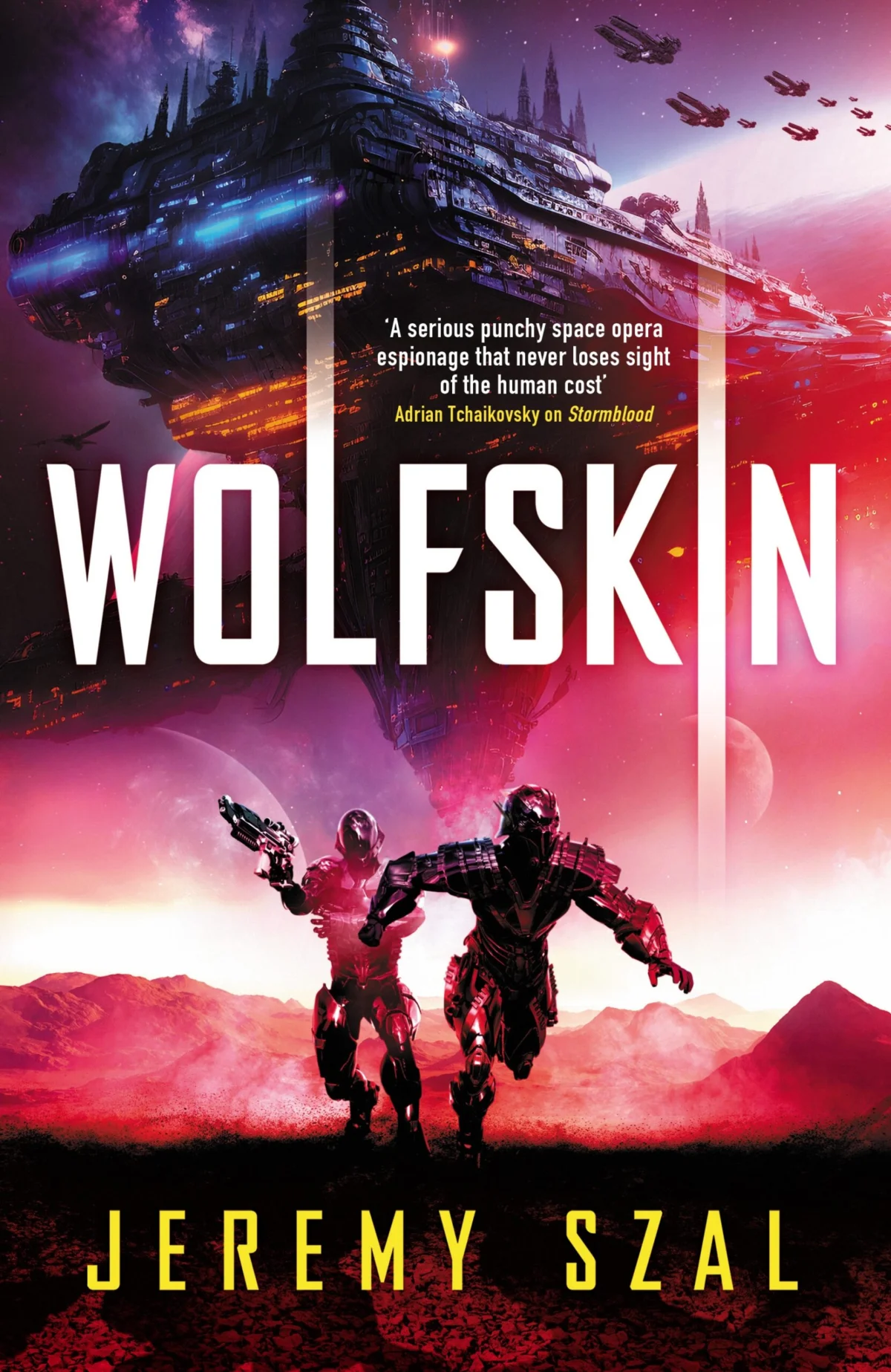
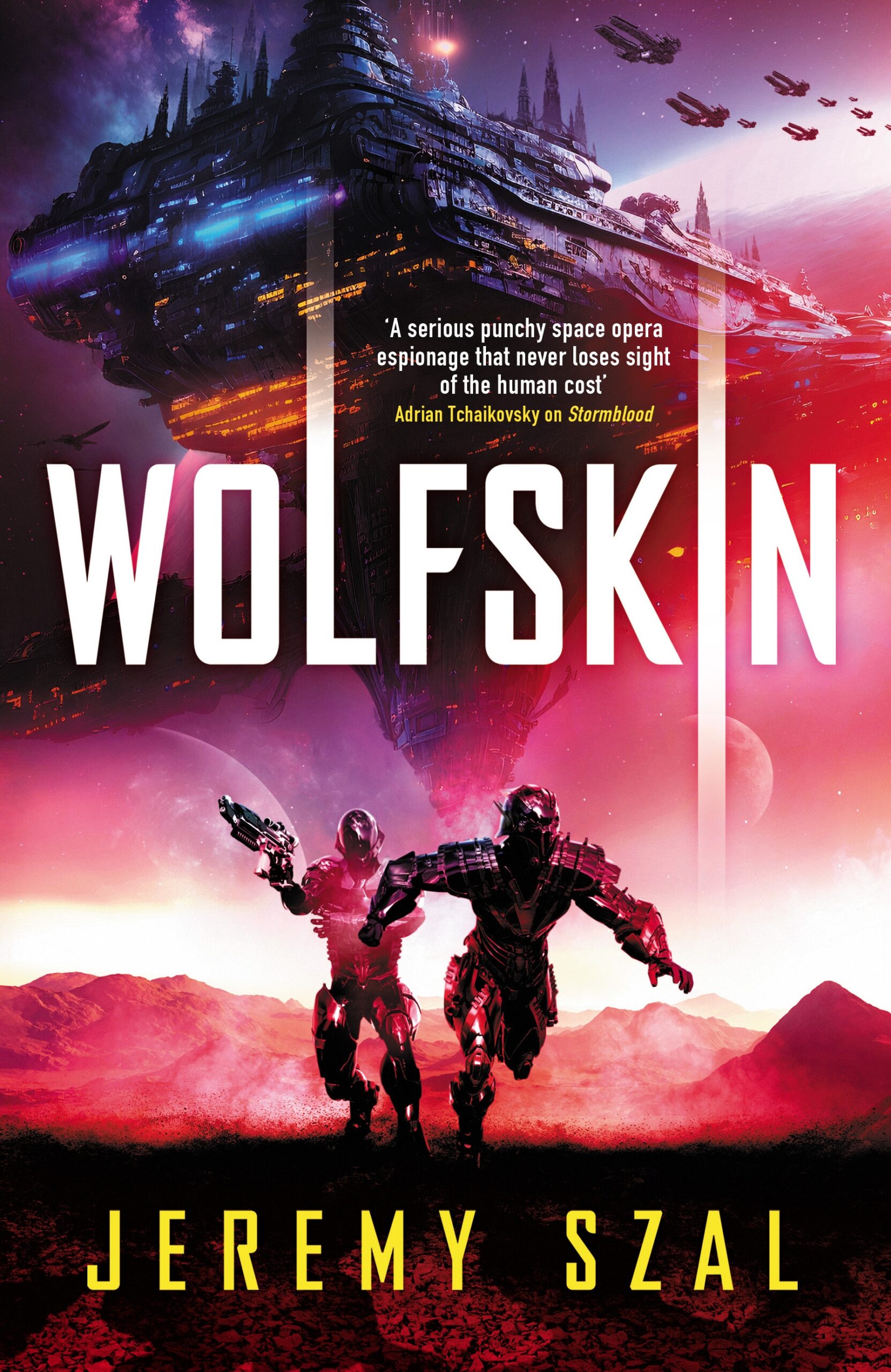
The galaxy teeters on the brink of annihilation in Jeremy Szal’s latest offering, "Wolfskin," a dark space opera that plunges readers into a brutal conflict where survival hinges on the courage of broken heroes and the very essence of self. Beyond the visceral action and high-stakes interstellar war, Szal offers a profound insight into the creative process, sharing five invaluable lessons learned through the arduous journey of bringing this ambitious novel to life.
The narrative of "Wolfskin" centers on Vakov Fukasawa, a protagonist pushed to the absolute limit of human endurance. Captured and systematically tortured by the malevolent House of Suns, Vakov is a shadow of his former self, his body and mind systematically dismantled. Yet, in this desperate hour, he and his brother Artyom represent the last flickering hope for the Common. Their struggle is not merely personal; it is a galaxy-spanning war that has engulfed entire star systems, leaving planets ablaze and species facing extinction. The situation is dire, amplified by the successful summoning of the genocidal Shenoi, a cosmic threat that plunges billions into the abyss of impending doom.
To safeguard his kin and his home, Vakov must embark on a monumental task: forging an intergalactic army. He is called upon to embody the hero and legend his people desperately need, drawing upon every reserve of courage to rally loyalty and ignite the fury necessary for survival. This is the crucible in which Vakov must transform into "The Black Wolf." But the ultimate question looms: is he willing to pay the devastating price that such a victory demands?
The Genesis of "Wolfskin": A Writer’s Crucible
Jeremy Szal, a rising star in the realm of character-driven, morally grey science fiction and fantasy, has opened a window into the intricate and often challenging process behind "Wolfskin." His reflections, shared following the novel’s release, offer a compelling narrative of artistic growth, resilience, and the unwavering pursuit of a singular vision.
Embracing the Unforeseen: Allowing Scenes to Dictate the Narrative
Szal’s first major revelation stems from a significant shift in his writing methodology. In contrast to his previous work, "Blindspace," the sequel to "Stormblood," which was meticulously outlined and rigidly adhered to, "Wolfskin" embraced a more organic approach. "Blindspace" was written under contract, and Szal’s commitment to his pre-defined outline, while intended to maintain narrative coherence, ultimately presented significant creative hurdles.
"I developed an outline and kept to it pretty strictly, not wanting to let myself get side-tracked with ideas that did not fit my self-imposed narrative," Szal explains. "But that caused problems. A lot of them."
This experience led to a crucial recalibration for "Wolfskin." While the overarching structure of the story remained within his intended vision, Szal consciously decided to allow for greater flexibility. This openness permitted unexpected elements to emerge and flourish. "I learned to loosen things up for Wolfskin," he states. "Sure, the overall shape of the story fits my vision, but I allowed myself to be a little faster and looser with how things swerved to reach that point."
This newfound freedom manifested in the spontaneous emergence of new characters who demanded their own narrative space and compelling storylines. Szal recounts the experience of writing a particular scene that he initially doubted he would "get away with," a testament to its audacious nature. Furthermore, a pivotal chapter preceding the novel’s midpoint was entirely "pantsed" – written without prior planning. This section saw the introduction of several new characters, alien races, and intricate world-building details, all woven together against the backdrop of a dynamic set-piece.
"Neither of those things were in the outline, or the first draft," Szal emphasizes. "And yet, they turned out exceptionally well, because I allowed the characters and the scene and the story’s momentum to guide me. And I had enormous fun in doing so." This approach underscores the power of creative intuition and the ability to surrender to the story’s emergent voice.
The Resurgence of Authenticity: Trusting One’s Own Voice
A significant emotional and artistic challenge for Szal during the writing of "Blindspace" involved grappling with negative feedback. This experience left him deeply insecure, questioning his narrative voice, his stylistic choices, and the very direction of his storytelling. The impact was profound, manifesting as a debilitating writer’s block, where the anticipation of criticism paralyzed his ability to put words on the page.
"For a variety of reasons, I had a bad experience when working on Blindspace, Book 2, where I was exposed to a slew of very negative feedback about my work," Szal reveals. "And it left me doubting everything about my story. My voice. My style. My storytelling. The direction I wanted to go and the method in which I wanted to go there. I struggled to even get a single paragraph down, already imagining the inevitable criticisms and dissecting that it would be exposed to, and how I might be forced to change things."
He candidly connects this struggle to his neurodivergence, acknowledging how it amplified the impact of external criticism. "I’ve always known that I was neurodivergent. But all this made me realise how deeply it was impacting me."
The arduous process of overcoming this creative paralysis involved a conscious effort to reclaim his artistic agency. "So I had to learn, all over again, how to give myself permission to do what I wanted to do," Szal asserts. "To remind myself that, yes, as the creator and CEO of this savage little world of mine, there was no objective right or wrong way for me to tell this story: only the way I wanted it to go."
This journey of self-reclamation was not instantaneous. It demanded a year of persistent effort, of daily commitment to pushing through the self-doubt and adhering to his original goals and vision. "And I’m hella glad I did, because there are a lot of risks and bold decisions that I had to take in order to finish Wolfskin, and I don’t think I could have done it if I hadn’t built up that muscle." This lesson highlights the critical importance of inner resilience and the courage to defend one’s authentic artistic voice against external pressures.
The Unvarnished Truth: Good Writing is Not Always Easy
Szal addresses a common misconception about the creative process: that writing should always be a joyous and effortless endeavor. While the act of storytelling is inherently rewarding, he posits that professional, published writing demands a different kind of commitment.
"Most of us aren’t writing to get rich (ha!) or for untold fame," Szal observes. "We do it because we enjoy telling stories and putting our thoughts on paper. And ultimately, yes, the act should be enjoyable." However, he clarifies, "But does it mean it will be easy? Or always fun? Absolutely not."
He contrasts the perceived ease of writing fanfiction in his youth, which was both enjoyable and relatively effortless, with the rigorous demands of professional publication. "Writing professionally, for publication, is much harder," he states. "It’s harder to show up day after day, writing hundreds and hundreds of pages with a close attention to craft and detail, making sure every scene is working as hard as it can, scraping entire chapters and characters if they do not fit, and sculpting a story that arrows towards a conclusion that is logical and surprising and satisfying and half a hundred other things."
Szal acknowledges the inherent difficulty, particularly for ambitious projects. "It’s much harder. And there will be days when you won’t love it, where it won’t always be fun, and where writing will feel frustrating and difficult and overwhelming (if someone says otherwise, they’re lying!). The more ambitious the project, the more intense these feelings can be."
Crucially, he offers validation for these challenging periods. "And that’s okay." He reiterates the particular relevance of this lesson for individuals with ADHD, emphasizing the importance of self-compassion. "As someone with ADHD, all this is especially true. And I’ve had to learn the hard way not to beat myself up when a given day’s writing does not rock the world, or when I’m not jumping out of bed to get to work everyday. You are allowed to have those days. You should not feel terrible if some projects are tougher to get done than others. You’re allowed to be human." This pragmatic perspective demystifies the writing process, acknowledging its inherent struggles while advocating for self-acceptance.
The Power of Resonance: Crafting "Bad-Ass" Moments
Beyond the technical aspects of storytelling, Szal emphasizes the importance of creating impactful, memorable moments for the reader. He refers to these as "stand up and cheer moments," where a sense of catharsis, liberation, and profound satisfaction is achieved.
"Sure, I write for myself. But I also write to be read, to leave an impact on the reader," Szal declares. "And so I invested heavily in writing some epic ‘stand up and cheer moments,’ where there is a feeling of catharsis and liberation and satisfaction."
These moments are characterized by the characters’ triumph over adversity, their defiance of limitations imposed by their tormentors. They represent instances where characters shed their constraints, "go after them with their fangs bared and wild fury in their eyes." These are also the moments where narrative threads converge, where "all the pieces fall into place and the curtain is whisked away and a grin starts slowly spreading across the face of the reader as it all dawns on them all that has been in play behind the scenes."
Szal admits that crafting such scenes is not a simple feat. "It’s not easy, writing these scenes. But pulling them off successfully and making everything sync up together like clockwork? Immensely satisfying." He recognizes their power to elevate a narrative, stating, "And it showed me that, when done right, how they can raise a novel to new and riveting heights!" This insight highlights the deliberate artistry involved in creating resonant moments that forge a deep connection with the audience.
The Internal Landscape: Where Darkness Originates
The exploration of inner turmoil is a cornerstone of "Wolfskin," with the protagonist Vakov grappling with profound emotional darkness. Szal delves into anxiety, depression, rage, hatred, self-loathing, and hopelessness, acknowledging the deliberate choice to confront these difficult themes rather than sidestep them for the sake of narrative expediency.
"For plot-related reasons that I do not wish to spoil, there’s a lot of dark emotional ground that is explored in Wolfskin, through the main character Vakov, especially at the start of the novel," Szal explains. "Anxiety, depression, rage, hatred, self-loathing, hopelessness." He admits the temptation to streamline these elements for pacing: "I did have the option to cut through these, and it would have been much better for the pacing. But I couldn’t. It would have been a betrayal, both to the main character, and me."
The personal resonance of these themes is deeply intertwined with Szal’s own experiences. "These issues were things that I myself had either endured, or was currently working on, and seeing them there, as part of my story, was hugely cathartic for me." The act of channeling this darkness was undeniably challenging, a process of self-exposure on the page. "Was it hard to channel up that darkness, to expose myself on the page like that? Yes. Unquestionably."
However, this difficult exploration yielded significant personal and artistic growth. "But it also taught me a great deal about my own mind, and allowed me to have a higher level of empathy, both for my character and even for myself, as strange as that may sound," Szal reflects. "And I think it has added a depth to my writing that readers will appreciate." This profound lesson underscores the transformative power of confronting personal darkness within the creative process, leading to greater self-understanding and enriched storytelling.
A Bonus Reflection: The Inevitable Drive to Create
In a final, poignant reflection, Szal touches upon an intrinsic motivation that transcends external challenges. He acknowledges the significant obstacles encountered during the writing and publication of his books, particularly amidst the backdrop of global events like the COVID-19 pandemic.
"As you may have guessed from the above, writing and publishing these books have come with some significant challenges, during a time that was already challenging (COVID, anyone?)" Szal muses. He recalls selling his first novel, "Stormblood," at the young age of 23, acknowledging the inherent bewilderment of the publishing world for any author, regardless of age.
However, underlying these difficulties is an unyielding imperative: "But I could not not write them the way that they had to be." This sentiment speaks to a lifelong pursuit of artistic expression and the deep-seated need to share his unique perspective. "All my life, I’ve been seeking a way to be a writer. To get my vision and voice into the hands of other people. To rise above the limits imposed upon me, either by others or myself, and to let my fury shine."
Szal concludes by framing his personal journey and the narrative of his books as intrinsically linked. "In many ways, this is my story. And now, that journey that I’ve been on, the ups and downs, has been worked into these books. Crystallized in flawed memory. Every description, every insight into human nature, is mine." He extends an invitation to readers, emphasizing the communal nature of experiencing life and narrative: "And I hope you’ll come on the adventure with me, because, like life, we cannot survive it on our own."
Authorial Profile: Jeremy Szal
Jeremy Szal, born in 1995, is an author whose work is deeply rooted in character-driven, morally grey narratives that span epic fantasy and dark space opera. His formative years, humorously attributed to being "raised by wild dingoes," may offer a unique perspective on his distinctive storytelling. His central series, the Common trilogy published by Gollancz/Hachette, includes "Stormblood," "Blindspace," and the recently released "Wolfskin." These novels explore a compelling premise involving a drug derived from alien DNA that induces a permanent state of adrenaline and aggression in its users.
Beyond his novels, Szal is a prolific short story writer, with over fifty tales translated into sixteen languages, many of which are collected in his volume "Broken Stars." He also served as the editor for the Hugo-winning StarShipSofa until 2020, further solidifying his standing in the speculative fiction community. Szal holds a BA in Film Studies and Creative Writing from UNSW and currently resides in Sydney, Australia, with his family. His personal interests include eclectic cinema, Japanese cuisine, urban exploration, language acquisition, cold weather, and dark humor.
For those eager to embark on the "Wolfskin" adventure, it is available through Bookshop.org and Amazon.




Leave a Comment