Xreal Democratizes Augmented Reality: The Launch of the xbx a01+ and the Rise of Lifestyle AR
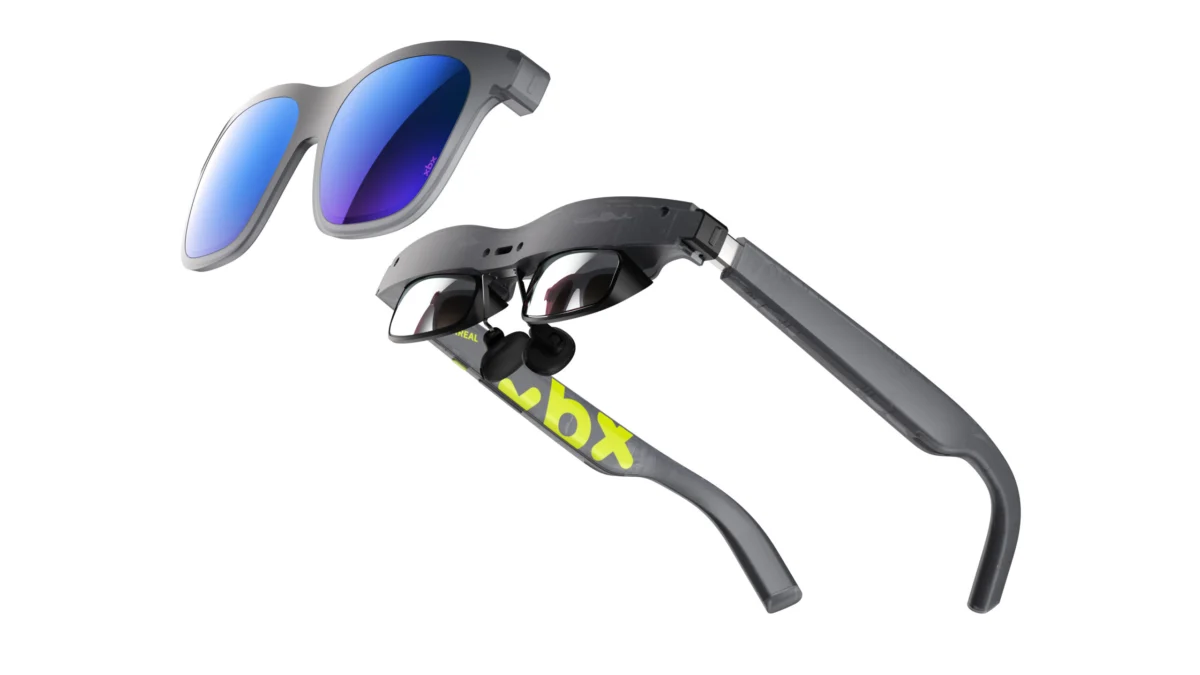
The landscape of augmented reality (AR) is currently undergoing a seismic shift. For years, the industry was bifurcated between high-end, expensive spatial computing rigs and low-quality, experimental prototypes. Today, Xreal, a dominant force in the AR glasses market, has signaled a strategic pivot intended to bridge this gap. By launching a new sub-brand, X By Xreal (xbx), and its debut product, the xbx a01+, the company is attempting to bring the "big-screen experience" to a mainstream audience at a price point—$299—that challenges the status quo of the wearable display market.
This move marks a departure from the complex "spatial computing" narrative often pushed by industry titans like Apple and Meta, focusing instead on a more immediate, practical utility: portable, high-fidelity entertainment and gaming.
1. Main Facts: The xbx a01+ at a Glance
The xbx a01+ is not merely a "budget" version of Xreal’s flagship products; it represents a specialized branch of the company’s hardware tree. While the flagship Xreal One series pushes the boundaries of 6DoF (six degrees of freedom) tracking and native spatial processing, the xbx a01+ is engineered for the "plug-and-play" consumer.
Key Specifications and Availability
- Price and Channels: Retailing at $299, the a01+ is available immediately in the United States. Distribution is aggressive, spanning Xreal’s direct-to-consumer website, Amazon, and major tech retailers including Best Buy, B&H Photo, and Micro Center.
- Display Technology: The device utilizes dual-layer Micro-OLED displays, capable of reaching a peak brightness of 1,600 nits. It supports HDR10 and features real-time SDR-to-HDR conversion.
- Virtual Real Estate: Xreal claims the glasses simulate a 147-inch screen as viewed from a distance of four meters.
- Performance: A 50-degree field of view (FoV) is paired with a refresh rate of up to 120Hz, positioning it as a primary accessory for competitive gaming and high-definition streaming.
- Ergonomics: At just 62 grams, it is significantly lighter than most VR headsets and even its own "spatial" siblings, designed for extended wear during long flights or gaming sessions.
2. Chronology: The Evolution of Xreal’s Hardware Strategy
To understand the significance of the xbx a01+, one must look at the trajectory of Xreal (formerly Nreal) over the past several years. The company has methodically moved from being a niche developer-focused firm to a consumer-centric hardware powerhouse.
The Foundation (2022–2023)
The original Xreal Air glasses set the stage by proving there was a market for "display glasses"—devices that didn’t necessarily need onboard computing but could act as a high-quality monitor for smartphones and laptops. This period saw Xreal capturing a significant share of the AR market, particularly among Steam Deck and Nintendo Switch users.
The Spatial Pivot (Early 2024)
Earlier this year, Xreal doubled down on "Spatial Computing" with the Xreal One and One Pro. These devices introduced the X1 chip, enabling native 3DoF (three degrees of freedom) tracking. This allowed users to "pin" screens in physical space, a feature essential for multi-tasking and professional workflows. A major firmware update subsequently brought 120Hz support to these models, improving text readability and power management.
The Diversification (Mid-2024)
Recognizing that not every user requires a spatial computer, Xreal launched the Beam Pro, an Android-based companion device. This allowed users to capture stereoscopic 3D content and manage dual-window multitasking without relying on a third-party smartphone.
The Launch of xbx (July 2026)
The introduction of the "X By Xreal" sub-brand marks the final stage of this evolution. By separating the "lifestyle and entertainment" (xbx) from the "spatial computing and professional" (Xreal One), the company can target different price brackets and use cases without diluting its brand identity. The a01+ is the inaugural product of this new, more accessible era.

3. Supporting Data: Technical Innovations and Ergonomic Science
Xreal’s decision to price the a01+ at $299 does not appear to have resulted in a significant downgrade of the visual experience. In fact, the supporting technical data suggests a highly optimized piece of hardware.
Display Fidelity and Processing
The a01+ features a dedicated image-enhancement chip co-engineered with Pixelworks, a leader in video processing solutions. This chip handles the heavy lifting of color calibration and SDR-to-HDR conversion, ensuring that even standard content looks vibrant on the Micro-OLED panels.
- Color Accuracy: The device boasts 1.07 billion colors and 145% sRGB coverage, exceeding the color gamut of many high-end laptops and gaming monitors.
- Viewing Profiles: To accommodate different environments, Xreal included three software-level profiles: Cinema (optimized for contrast), Eye Care (blue light reduction), and Standard.
The Ergonomics of 62 Grams
One of the primary hurdles for wearable tech is "face fatigue." Xreal’s engineering team reportedly utilized data from over 2,000 facial profiles to refine the nose pad system.
- Customization: The a01+ ships with three different nose bridge fits and features adjustable arms and flexible hinges.
- Certifications: The glasses have secured TUV Rheinland 5-star Eye Comfort, Low Blue Light, and Flicker-Free certifications, critical metrics for a device intended for long-duration media consumption.
Aesthetic and Community Integration
Unlike the more clinical, tech-heavy look of the Xreal One, the a01+ adopts a "sporty" aesthetic. It features a translucent body and a hidden fluorescent logo. Perhaps most interestingly, Xreal is leaning into the "maker" community. The glasses support snap-on front frames, and the company has released 3D-printable designs on MakerWorld, allowing users to customize their glasses’ appearance at home.
4. Official Responses and Strategic Positioning
Xreal executives have positioned the xbx sub-brand as a "gateway" to the broader AR ecosystem. While the flagship products are meant to compete with the likes of the Apple Vision Pro in terms of capability, the xbx line is meant to compete with traditional screens—TVs, monitors, and tablets.
Xreal’s Market Philosophy
The company describes the a01+ as a "practical" solution. In official statements, the focus remains on the "portable big-screen experience." By stripping away the X1 spatial computing chip found in the One series, Xreal reduced the cost and weight, focusing entirely on the quality of the "dumb" display (which becomes "smart" when paired with the Beam Pro).
The Google Partnership
It is also worth noting Xreal’s high-end ambitions. Even as they launch the budget-friendly a01+, the company is deep in collaboration with Google on Project Aura. This initiative aims to create an Android XR-powered device, signaling that Xreal intends to own both the entry-level entertainment market and the high-end spatial computing market simultaneously.
5. Implications: The Future of Portable Media and Spatial Computing
The release of the xbx a01+ carries significant implications for the consumer electronics industry at large.

1. The Disruption of the Portable Monitor Market
Until recently, users wanting a larger screen for their Steam Deck or MacBook on a plane had to carry a flat, 15-inch portable monitor. The a01+ renders these devices largely obsolete. At $299, it is price-competitive with high-end portable monitors while offering a significantly larger perceived screen and better privacy.
2. The Bifurcation of AR
Xreal is successfully arguing that "AR" doesn’t always have to mean "Digital objects interacting with the real world." Sometimes, AR is simply "A giant screen that doesn’t block your peripheral vision." By separating these two definitions into the Xreal One and xbx lines, they are allowing the market to decide which version of the future it wants to pay for.
3. Lowering the Barrier to Spatial Computing
While the a01+ is a display-first device, its compatibility with the Beam Pro means it can still participate in the spatial ecosystem. Users can start with the $299 glasses and later add the Beam Pro to gain 3D video capture and multi-window capabilities. This modular approach is much more consumer-friendly than demanding a $3,500 upfront investment for an all-in-one headset.
4. Pressure on Competitors
Meta’s Ray-Ban glasses have been a hit, but they lack a display. Apple’s Vision Pro has an incredible display but is too heavy and expensive for casual use. Xreal is occupying the "Goldilocks zone"—providing the high-fidelity display of a headset in the form factor of a pair of sunglasses.
Conclusion
The xbx a01+ is a calculated move to dominate the "screen-on-face" market. By focusing on gaming and entertainment—two of the most proven use cases for AR—Xreal is moving away from the "novelty" phase of augmented reality and into the "utility" phase. Whether consumers are ready to swap their TVs for a 62-gram pair of glasses remains to be seen, but at $299, the cost of entry has never been more tempting.
As the company continues its work with Google on Project Aura and expands its 6DoF capabilities with accessories like the Xreal Eye, it is clear that Xreal is building a multi-tiered empire. From the casual gamer using an a01+ on a bus to the professional using an Xreal One Pro in an office, the company is ensuring that no matter the budget or the use case, there is a pair of Xreal glasses ready to meet the demand.