
Anu: The Architect of the Cosmos in Ancient Mesopotamia
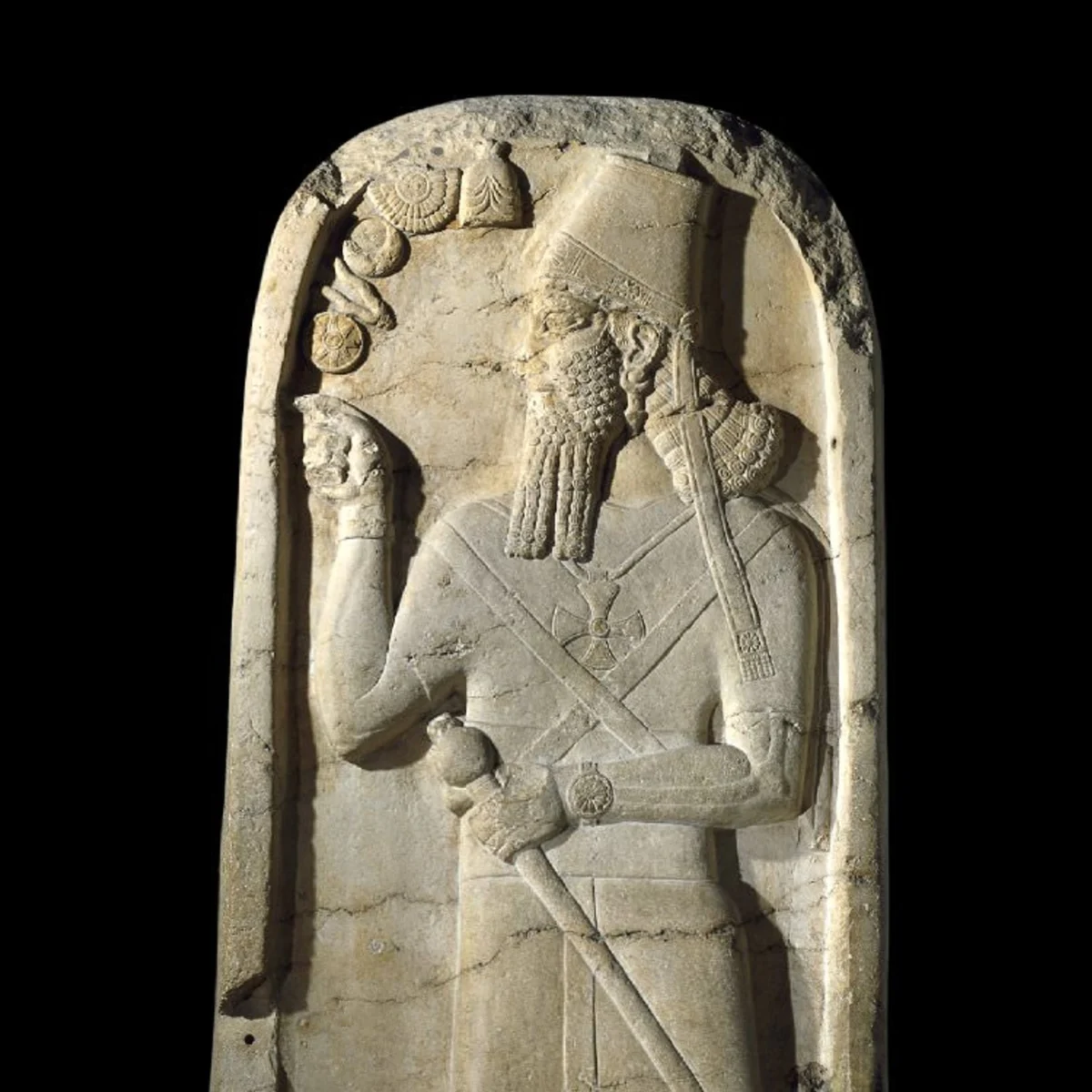
Mesopotamia, the cradle of civilization, gave birth to a pantheon of deities whose stories and influence shaped the ancient world. Among these, Anu (also known as An), the primordial sky god, stands as a figure of immense, albeit often distant, authority. Initially a Sumerian sky deity, Anu evolved into the revered Father of the Gods and the ultimate ruler of the heavens, a position whose mantle of active governance would eventually pass to his successors, including his renowned son, Enlil.
Anu’s narrative is one of cosmic orchestration, embodying the profound shift in religious thought from an active, interventionist deity to a remote, supreme being who establishes the fundamental order of the universe. His story, deeply interwoven with foundational myths like the Enuma Elish and the Myth of Adapa, offers a unique window into the Mesopotamian understanding of creation, divine hierarchy, and humanity’s place in the cosmos.
Main Facts: The Celestial Sovereign
Anu, whose name literally translates to "sky" in Sumerian (An) and "heaven" in Akkadian, occupies a singular position at the apex of the Mesopotamian pantheon. He is genealogically situated as the son of Anshar and Kishar (heaven and earth, respectively), making him the second-born generation from the primordial chaos embodied by Apsu (freshwater) and Tiamat (saltwater). His primary domain is the highest heaven, where he presides over the divine assembly and dictates the cosmic laws, known as the meh, that govern all existence.
Though often depicted as a more withdrawn figure in later myths, his foundational role as the ultimate source of authority remained unquestioned. He is the original "King of the Gods," a title subsequently bestowed upon other prominent deities like Enlil, Marduk, and Assur, always with Anu’s implicit blessing and elevation. His iconography, typically a crown or a crown upon a throne, powerfully symbolizes his regal and celestial status. Anu’s influence permeates the very fabric of Mesopotamian cosmology, representing the overarching structure and order from which all other divine and earthly elements emanate.
Chronology: Evolution of a Divine Patriarch
Anu’s journey from a prominent sky deity to a remote, ultimate authority mirrors the complex evolution of Mesopotamian civilization and its religious landscape.
Early Emergence in Sumer
The earliest textual references to Anu, then known as An, date back to the Early Dynastic period in Mesopotamia (circa 2900 to 2350/2334 BCE). During this era, Sumerian city-states began to codify their religious beliefs, and An was recognized as the supreme deity responsible for the celestial sphere. His presence was foundational, representing the unyielding expanse of the heavens above.
Akkadian Adoption and Imperial Legitimacy
Circa 2375 BCE, with the rise of the Akkadian Empire, the Sumerian An was adopted and assimilated into the Akkadian pantheon as Anu, "heaven." This period marked a significant expansion of his cult and a solidification of his supreme status. Sargon the Great of Akkad (reign 2334-2279 BCE), the formidable founder of the Akkadian Empire, frequently invoked Anu in his inscriptions. This was not merely an act of piety; it served a crucial political function. By associating his rule and conquests with the blessing of Anu and Inanna (a powerful goddess also invoked by Sargon), the king sought to legitimize his imperial ambitions and reinforce the divine mandate for his authority. Anu’s endorsement provided a cosmic seal of approval for earthly power.
The Succession of Power
As Mesopotamian civilization progressed and new political centers emerged, the active leadership within the divine hierarchy often shifted. Anu’s "King of the Gods" title, while originating with him, was eventually transferred to his son Enlil (the god of wind, air, earth, and storms), then to Marduk (the patron god of Babylon), and later to Assur (the national god of Assyria). This succession was typically depicted as Anu’s blessing or elevation of these younger gods, indicating a transfer of active governance while Anu retained his overarching, foundational supremacy. This divine "passing of the torch" often coincided with the rise of new imperial powers, allowing the patron deity of the dominant city or empire to assume the most active role in the pantheon while still acknowledging Anu’s ultimate authority.
Enduring Veneration and Gradual Retreat
Despite the rise of other active deities, Anu’s veneration persisted for millennia. His temple-ziggurat in Uruk, a city where Inanna was the patron deity, remained operational from approximately 2000 BCE to 150 BCE. This enduring presence attests to his fundamental importance. However, his role gradually became more remote. He transformed from an actively involved sky god to a more abstract, transcendental figure—the ultimate orchestrator of cosmic order, but less directly involved in daily human affairs. This shift allowed other gods to become more prominent in popular cults, serving as intermediaries to the distant, supreme Anu.

His worship continued well into the Hellenistic period of Mesopotamian history and, through his association with Marduk, even up to circa 141 BCE, after the Parthians took control of the region and Zoroastrianism began to gain wider acceptance. This remarkable longevity underscores his deep entrenchment in the Mesopotamian religious consciousness, even as the specific forms and intensity of his direct worship evolved.
Supporting Data: Cosmology, Pantheon, and Mythic Roles
Anu’s significance is best understood through his place within Mesopotamian cosmology, his familial connections, and his pivotal, though often indirect, roles in foundational myths.
Family and Divine Kinship
Anu’s lineage places him firmly within the primordial divine generation. He is the son of Anshar and Kishar, personifications of the celestial and terrestrial horizons, who themselves sprang from the primeval couple Apsu (freshwater) and Tiamat (saltwater)—the chaotic waters from which all creation emerged. This makes Anu a central figure in the lineage that transitions from primal chaos to ordered cosmos.
His principal consort is Antu (also known as Uras), the goddess of the earth. Together, they sired numerous deities, including the Annunaki, a group of powerful gods of the earth and judges of the dead, and Nisaba, the Sumerian goddess of writing and accounts. In another tradition, he is also depicted as the husband of his sister, Ki (earth), with whom he begets Enlil, a deity who would eventually eclipse Anu in active governance. These varied familial connections highlight Anu’s role as a progenitor and the ultimate source of divine authority for many subsequent generations of gods.
The Divine Triads and Powers
Anu was a crucial member of the major divine triads that structured the Mesopotamian pantheon. In one version, he formed a governing triad with Enlil and Enki (the god of wisdom and freshwater), collectively overseeing the heavens, earth, and underworld. In another, this triad governed heaven, the sky, and the earth. His consistent presence in these highest echelons underscores his role as a fundamental pillar of cosmic order.
He was also listed among the Seven Divine Powers, a group of the oldest and most influential gods: Anu, Enki, Enlil, Inanna, Nanna (moon god), Ninhursag (mother goddess), and Utu-Shamash (sun god). This inclusion further solidifies his status as a foundational and enduring figure in Mesopotamian religion, representing the ultimate celestial power from which the others derived their authority.
Iconography and the Transfer of Authority
Anu’s representation in iconography is strikingly minimalist yet profoundly symbolic. He is most often depicted by a horned crown, sometimes resting on a throne. This absence of a full anthropomorphic form, particularly in later periods, emphasizes his abstract and supreme nature. The crown itself is the ultimate symbol of kingship and divine authority. The transfer of this "King of the Gods" status to Enlil, Marduk, and Assur was not a usurpation but an elevation sanctioned by Anu. This act reinforced the legitimacy of the succeeding deities and, by extension, the empires they patronized. It implied a continuous lineage of divine authority originating from Anu, even as the active wielders of that power changed.
Anu’s Pivotal Role in the Enuma Elish
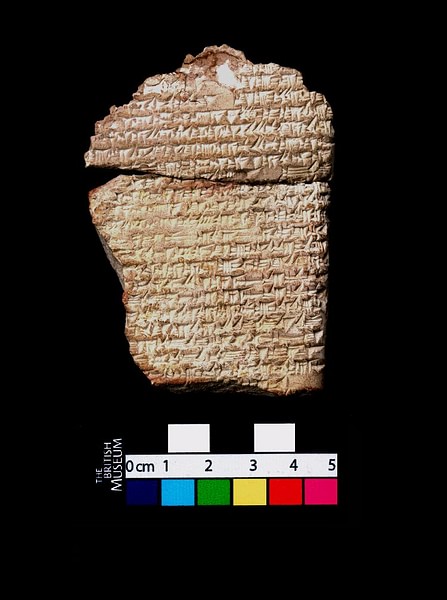
The Babylonian epic of creation, the Enuma Elish (circa 1200 BCE, but thought to be much older), provides a crucial narrative for understanding Anu’s character and his indirect yet decisive influence. The epic describes the creation of the world from the primordial chaos of Apsu and Tiamat, who give birth to successive generations of gods. When the younger gods, including Anu’s lineage, become too boisterous, Apsu decides to destroy them. Tiamat, warned by Enki, is horrified by Apsu’s death at Enki’s hands and retaliates by creating an army of monsters to annihilate the younger gods.
In this cosmic conflict, the younger gods suffer repeated defeats. At this critical juncture, Anu volunteers to mediate, approaching Tiamat to resolve the crisis diplomatically. However, upon facing the monstrous Tiamat, Anu is "cowed" and retreats, reporting his failure. This apparent weakness, far from diminishing his significance, proves to be a catalyst for the younger gods’ ultimate victory. Anu’s failed diplomacy forces the pantheon to confront their limitations and abandon old paradigms. It creates the vacuum that allows Marduk, Enki’s son, to step forward and offer to champion them if they elect him as their king. Marduk subsequently defeats Tiamat and her champion Quingu, establishing a new cosmic order. Anu’s failure, therefore, is not an act of inadequacy but a necessary step that ushers in a fundamental change in divine leadership and a new era of creation under Marduk.
The Enigma of Anu in the Myth of Adapa
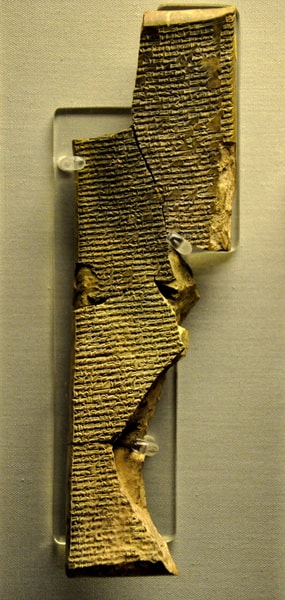
Anu’s compassionate yet distant nature is further illuminated in the Myth of Adapa. Adapa, the first man, created by Enki and endowed with immense wisdom, serves as high priest of Eridu. Enki, while loving Adapa, deliberately withholds immortality, fearing humanity might become too god-like. When Adapa, in a fit of rage, breaks the wings of the South Wind, Anu summons him to the heavens to account for his actions.
Enki, fearing Anu’s wrath, instructs Adapa to refuse any food or drink offered by Anu, claiming it would be the "food of death" and "water of death." However, Anu, impressed by Adapa’s wisdom, honesty, and the injustice of a mortal wise enough to comprehend his own mortality but unable to escape it, offers him the "Food of Life" and "Water of Life," intending to grant him immortality. Adapa, following Enki’s deceptive advice, refuses, thereby forfeiting eternal life. The damaged tablets suggest Anu becomes angered by Enki’s deception and punishes him.
This myth profoundly illustrates Anu’s benevolence and his role as a dispenser of justice and compassion. His offer of immortality is a testament to his understanding and empathy, standing in stark contrast to Enki’s protective deception. The narrative also highlights the delicate balance the gods sought to maintain between divine and human realms, a theme echoed in the biblical tale of the Fall of Man, where Yahweh prevents Adam and Eve from eating from the Tree of Life after they gain knowledge. Anu, in his wisdom, recognized a potential for harmony between humanity and divinity that Enki, in his prudence, sought to prevent.
Official Responses: Institutionalizing the Divine Order
The "official responses" to Anu’s divinity are embedded within the institutional structures and state-sanctioned narratives of ancient Mesopotamia, reflecting how rulers, priests, and scribes formally defined and perpetuated his worship.
Royal Inscriptions and State Religion
The invocations of Anu by rulers like Sargon the Great serve as clear "official responses." By explicitly mentioning Anu’s support for their reigns and conquests, kings affirmed Anu’s supreme authority as the source of kingship and imperial legitimacy. These inscriptions were not merely personal prayers but public declarations, carved into monuments and tablets, intended to convey a divinely ordained right to rule to their subjects. This integration into state propaganda solidified Anu’s position as a patron of kingship, even as his direct involvement in myths became more abstracted.
Canonical Epics and Hymns
The Enuma Elish itself, as a foundational creation epic, represents a canonical "official response" to the question of cosmic origins and divine hierarchy. While it depicts Anu’s diplomatic failure, it ultimately reinforces his role as the progenitor and ultimate source of authority for the younger gods, including Marduk. The epic’s widespread dissemination and recitation in religious festivals indicate its status as a foundational theological text, shaping the official understanding of the pantheon.
Similarly, hymns dedicated to Anu, such as the one from Uruk, exemplify formal worship and theological recognition:
"O Prince of the gods, whose utterance ruleth over the obedient company of the gods; Lord of the horned crown, which is marvellously splendid; thou travellest hither and thither on the raging storm; thou standest in the royal chamber to be admired as a king. At thy word the gods cast themselves on the ground in a body like a reed on the stream; they command blows like the wind and causes food and drink to thrive; at the word the angry gods turn back to their habitations. May all the gods of heaven and earth appear before thee with gifts and offerings; may the kings of the countries bring to thee heavy tribute; may men stand before thee daily with sacrifices, prayers, and adorations. To Uruk, thy city, do thou show abundant favor; O great god Anu, avenge thy city in hostile lands." (Wallis Budge, 106-107)
This hymn, praising his absolute power, the obedience of other gods, and his role in sustaining life and avenging his city, serves as an "official" articulation of his enduring veneration and the profound respect he commanded within the religious establishment.
Temple Complexes and Scholarly Institutions
The continued operation of Anu’s temple-ziggurat in Uruk for over 1,800 years is another institutional "response." This complex was not only a center of worship but also served as an astronomical observatory and library. This indicates an official recognition of Anu’s domain over the celestial bodies and his association with wisdom and knowledge, reinforcing his role as the cosmic orchestrator whose divine order could be studied and understood through scientific observation. The maintenance of such a significant religious and intellectual center demonstrates a sustained, institutional commitment to his cult.
Implications: Cosmic Order and Enduring Legacy
Anu’s pervasive presence, even from a distance, carried profound implications for Mesopotamian society, governance, and religious thought.
The Foundation of Cosmic Order and Justice
As the supreme source of authority and the god who ordered and maintained all aspects of existence, Anu embodied the Mesopotamian understanding of cosmic order. Scholar Stephen Bertman aptly describes him as the "august and revered ‘chairman of the board’ of the Mesopotamian pantheon" who controlled the meh, the divine decrees that governed the universe. This concept implied that all earthly order, from political structures to moral laws, was ultimately derived from and sanctioned by Anu. His distant yet ever-present authority provided a stable, unchanging backdrop against which the more active, and sometimes volatile, younger gods operated. This ensured a sense of cosmic stability and predictability, essential for an agricultural society reliant on natural cycles.
Divine Succession and Political Legitimacy
The transfer of Anu’s "King of the Gods" title to Enlil, Marduk, and Assur had significant political implications. These divine successions often paralleled the rise and fall of earthly empires. When Babylon ascended to prominence, its patron deity Marduk was elevated, often with narrative support that depicted Anu’s blessing. Similarly, the Assyrian empire’s rise saw Assur assume many of Anu’s and Enlil’s characteristics. This divine mirroring provided a powerful theological justification for imperial dominance, suggesting that the reigning empire’s authority was divinely ordained by the highest cosmic power. Anu’s role, therefore, was not just religious but deeply political, providing the ultimate celestial endorsement for earthly rule.
Anthropological and Theological Insights
Anu’s evolution from an active sky god to a remote, supreme orchestrator offers valuable anthropological and theological insights. This trajectory aligns with the concept of a deus otiosus, a "retired god" or "hidden god," common in many ancient religions, where the creator deity establishes the world but then withdraws, leaving daily affairs to younger, more accessible gods. This reflects a developing sophistication in religious thought, moving towards a more abstract understanding of ultimate divinity. Anu’s remoteness also facilitated the rise of other cults and personal piety focused on more approachable deities, while still providing a transcendent source for all divine power.
Furthermore, the Myth of Adapa highlights a recurring theological tension: the boundary between humanity and divinity. Anu’s compassionate offer of immortality underscores a divine willingness to bridge this gap, contrasted with Enki’s pragmatic decision to maintain it. This narrative explores the profound questions of human mortality, divine wisdom, and the predetermined limitations placed upon humankind, resonating with themes found in later Abrahamic traditions.
Enduring Cultural Echoes
Even as direct worship of Anu waned and Mesopotamia transitioned through different empires and religious influences (like Zoroastrianism), his conceptual legacy persisted. The idea of a supreme, overarching deity who sets the cosmic laws and is the ultimate source of authority remained a powerful theological archetype. His figure influenced later conceptions of a "Most High God" who governs the universe, even if not directly intervening in every mundane event. Anu’s persistence through the Hellenistic period, a time of significant cultural syncretism, speaks to the enduring power of his foundational role in shaping the Mesopotamian worldview—a worldview that profoundly influenced subsequent civilizations and their understanding of the divine. His story, therefore, is not merely a historical footnote but a testament to the enduring human quest to understand the heavens, the origins of existence, and the ultimate source of order in a chaotic world.



Leave a Comment